• Global CNC market projected to reach $128B by 2028 • New EU trade regulations for precision tooling components • Aerospace deman
NYSE: CNC +1.2%LME: STEEL -0.4%

Industrial lathe demand is strongest in heavy part processing
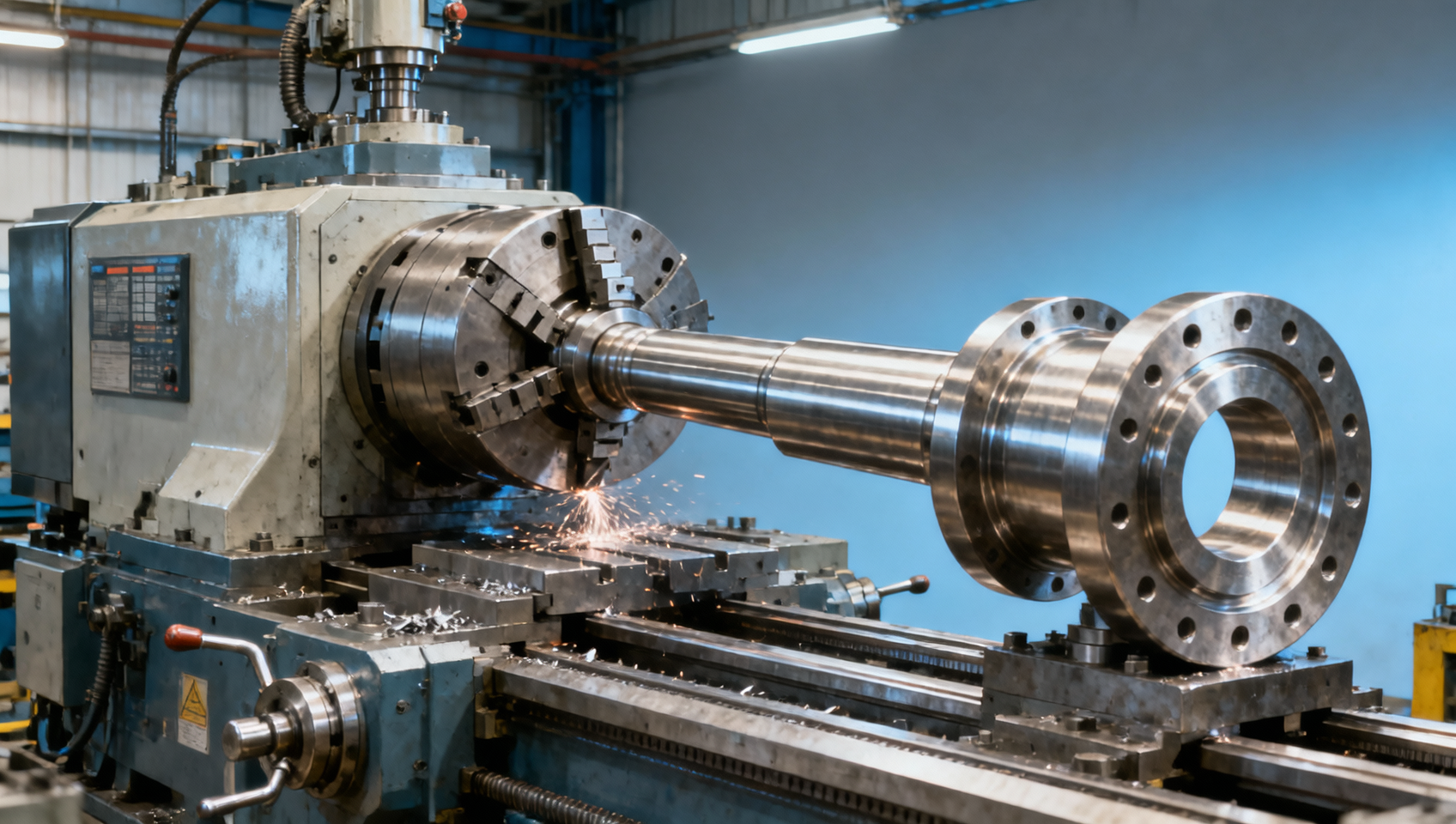
Demand for the industrial lathe is strongest in heavy part processing, where metal machining requires rigidity, precision, and stable automated production. From shaft parts to large structural components, industrial CNC, CNC metalworking, and vertical lathe solutions are becoming essential across the Manufacturing Industry, helping buyers, operators, and decision-makers improve production process efficiency and compete in the evolving Machine Tool Market.
For companies machining large forgings, thick-wall rings, long shafts, valve bodies, flanges, and energy equipment parts, the choice of industrial lathe directly affects cycle time, dimensional consistency, labor intensity, and downstream assembly quality. In heavy part processing, even a small deviation such as 0.02 mm in roundness or unstable vibration under high torque can create scrap, rework, or delayed delivery.
This article examines why industrial lathe demand is concentrated in heavy-duty applications, which machine configurations are most suitable, what buyers should evaluate before investment, and how operators and managers can improve long-term equipment utilization. The focus is practical: rigidity, automation, maintainability, and return on production capacity.
Why Heavy Part Processing Drives the Strongest Industrial Lathe Demand
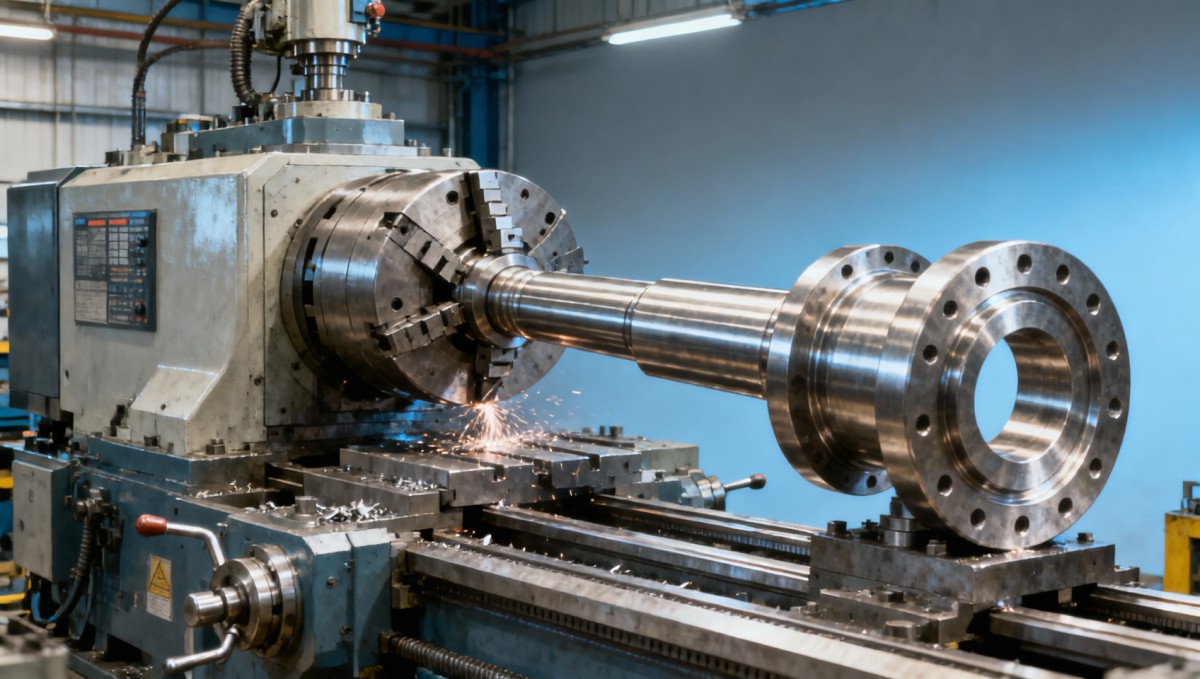
Heavy part processing places a different burden on machine tools than light precision work. Components weighing 500 kg, 2 tons, or even more than 10 tons generate higher cutting loads, stronger vibration tendencies, and greater spindle stress. In these conditions, an industrial lathe is not simply a turning machine; it becomes the core stability platform for the entire machining process.
Industries such as oil and gas, shipbuilding, rail transit, power generation, mining equipment, and aerospace subcontracting rely on turning operations for large shafts, sleeves, bearing seats, couplings, and pressure-retaining parts. These workpieces often require multiple machining steps within tolerance bands from ±0.01 mm to ±0.05 mm, while maintaining acceptable surface roughness and concentricity across long production runs.
A standard light-duty CNC lathe may deliver acceptable results for small batches, but it usually struggles when parts are long, heavy, or interrupted in shape. Heavy-duty industrial CNC equipment offers stronger bed construction, larger spindle bores, higher torque at lower speeds, and more reliable chip evacuation. These characteristics are critical when roughing thick material stock or holding stable dimensions for 8-hour to 24-hour production cycles.
Key demand drivers in the Manufacturing Industry
The first driver is part size. Once diameters move beyond 500 mm or lengths exceed 1,500 mm, machine rigidity and support systems become much more important. The second driver is material difficulty. Alloy steel, stainless steel, heat-resistant materials, and forged blanks require cutting force control that entry-level equipment cannot maintain consistently. The third driver is automation. Buyers now expect repeatability, reduced manual intervention, and integration with loaders, probes, or production planning systems.
The table below outlines how heavy part requirements differ from medium-duty turning environments and why the Machine Tool Market continues to favor robust lathe platforms for industrial use.
The main conclusion is clear: demand rises where machining risk rises. Heavy components magnify every weakness in spindle performance, guideway stiffness, setup accuracy, and operator workload. That is why industrial lathe investment is often highest in facilities that process large-value parts with tight delivery windows.
Typical pain points buyers and operators report
- Frequent chatter when roughing forged blanks at deeper cuts above 4 mm.
- Inconsistent concentricity on long shafts over 2,000 mm without proper tailstock or steady rest support.
- Excessive setup time, often 30–90 minutes per part, due to difficult clamping and re-centering.
- Tool wear spikes when heat and chip control are not matched to material grade.
Choosing Between Horizontal CNC Lathes, Vertical Lathes, and Heavy-Duty Turning Systems
Not every industrial lathe should be selected on spindle power alone. In practice, configuration choice depends on part geometry, loading method, floor logistics, and process mix. A horizontal CNC lathe is commonly preferred for shafts, rollers, threaded tubular parts, and long cylindrical workpieces. A vertical lathe is often better for large-diameter discs, rings, housings, and heavy flanges because gravity supports clamping stability.
For procurement teams, one common mistake is buying a machine based only on maximum swing. A more reliable evaluation includes at least 6 checkpoints: chuck capacity, spindle torque curve, bed structure, turret or ram rigidity, support accessories, and control compatibility. These factors influence whether the machine can hold process stability at batch volumes of 20, 200, or 2,000 parts.
Operators usually pay attention to practical details that decision-makers should not ignore. These include chip removal in deep roughing, accessibility for tool changes, coolant delivery pressure, ease of program adjustment, and machine response during interrupted cutting. A machine that looks powerful on paper may still create downtime if maintenance points are difficult to access or if the control system is overly complex for the shop team.
Selection guidance by workpiece type
The following comparison helps buyers align machine type with actual manufacturing tasks rather than generic catalog specifications.
In many heavy industries, the vertical lathe gains attention because large-diameter parts can be loaded more safely, especially when diameters reach 1,000 mm to 3,500 mm. However, for long shafts or rotors, a horizontal platform with a robust tailstock and steady rest remains the more suitable solution. The right answer depends on the workpiece family, not on a one-machine-fits-all assumption.
A practical 5-point buying checklist
- Confirm maximum part envelope, including weight, diameter, and unsupported length.
- Review torque and power in the actual speed range used for roughing, not only peak values.
- Check automation options such as hydraulic clamping, tool presetting, probes, and loader compatibility.
- Estimate maintenance intervals, spare-part lead time, and service response within 24–72 hours.
- Request trial cutting or sample process review for representative materials and tolerances.
Critical Parameters That Affect Precision, Throughput, and Production Stability
In heavy part machining, machine parameters are not abstract specifications. They directly shape tool life, pass count, thermal behavior, and output per shift. For example, a machine with high nominal power but weak low-speed torque may underperform when rough-turning large-diameter forgings. Likewise, a generous swing capacity means little if the guideway system cannot suppress vibration at heavy chip loads.
Buyers should compare core parameters in relation to real production demands. Typical review items include spindle bore, maximum turning diameter, bed type, chuck size, rapid traverse, turret station count, coolant pressure, and axis positioning accuracy. For many heavy applications, repeatability is often more valuable than top speed, especially when the same part family runs weekly or daily.
For operators, process consistency depends on matching the machine to cutting conditions. A roughing pass on forged alloy steel may involve cutting depths of 3 mm–8 mm, feed rates of 0.2 mm/rev to 0.6 mm/rev, and spindle speeds below 300 rpm. If the machine structure, clamping, and tooling are not balanced for these ranges, precision loss and unplanned stoppages become more likely.
Parameter ranges commonly reviewed in heavy-duty CNC metalworking
The ranges below are not universal standards, but they reflect common evaluation bands used when selecting industrial CNC equipment for medium-to-heavy turning tasks.
These parameter bands should be linked to production planning. If the current part weight is 2 tons but the business expects contracts in the 4-ton to 6-ton range within 12–24 months, under-specifying the lathe can create a costly second purchase. On the other hand, excessive oversizing increases capital cost, floor space use, and energy consumption without corresponding output gains.
Common selection mistakes
- Focusing on peak spindle speed when the real process runs mostly below 400 rpm.
- Ignoring workholding and support accessories that determine setup stability.
- Choosing a complex control package without considering operator training time of 2–6 weeks.
- Not reviewing coolant filtration and chip management for continuous heavy cutting.
Implementation, Maintenance, and Workflow Optimization for Long-Term Value
An industrial lathe creates value only when machine capability is converted into repeatable output. That requires more than installation. Shops need a structured implementation plan covering foundation checks, power and coolant readiness, machine leveling, process prove-out, operator training, and maintenance scheduling. In heavy-duty CNC applications, poor installation can reduce accuracy before production even begins.
A typical commissioning process takes 5 to 15 working days depending on machine size and whether the line includes automation modules. Operators usually need 3 stages of training: control operation, process setup, and preventive care. For buyers and plant managers, this matters because hidden ramp-up time can delay the return on investment if training and sample parts are not planned early.
Maintenance strategy is equally important. Heavy cutting generates sustained loads, heat, and chip volume, so lubrication, hydraulic condition, turret alignment, chuck performance, and coolant cleanliness must be checked on a fixed schedule. A preventive inspection every 250 to 500 operating hours is common for key mechanical systems, while daily checks should cover pressure, noise, and chip evacuation behavior.
Recommended implementation workflow
- Verify foundation strength, lifting access, and utility supply before shipment arrival.
- Complete installation, leveling, and alignment with trial movement checks on all axes.
- Run sample parts using representative materials, tools, and tolerance targets.
- Train operators, programmers, and maintenance staff separately to reduce handover gaps.
- Set maintenance intervals, spare-part lists, and failure response procedures from day one.
FAQ for buyers, operators, and decision-makers
The questions below reflect common search intent in the Machine Tool Market and support more informed purchasing and production planning.
How do I know if a vertical lathe is better than a horizontal machine?
If the part is large in diameter, heavy in weight, and relatively short in axial length, a vertical lathe is often the better choice. It reduces loading risk and improves clamping stability. If the part is a long shaft, rotor, or sleeve requiring tailstock support over 1,500 mm to 3,000 mm, a horizontal CNC lathe is usually more practical.
What delivery and ramp-up period should procurement teams expect?
For standard industrial CNC equipment, production and delivery often fall in the 6–16 week range, while larger customized heavy-duty systems may require longer. After arrival, installation and initial qualification commonly take 1–3 weeks, depending on site readiness and whether sample process validation is included.
Which indicators matter most during acceptance?
Three indicators deserve priority: positioning accuracy, repeatability under load, and process stability on actual parts. A machine may pass dry-run motion tests but still struggle with chatter, thermal drift, or clamping consistency during real cutting. Acceptance should therefore include a trial part or a verified cutting demonstration whenever possible.
How can shops improve utilization after purchase?
Start with process standardization. Define fixture methods, tooling packages, offset procedures, and inspection checkpoints for each part family. Shops that reduce setup variation and track downtime causes weekly often gain better spindle utilization within 60–90 days than shops that rely only on machine capacity upgrades.
Industrial lathe demand remains strongest in heavy part processing because this is where machine rigidity, torque, precision, and stable automation produce the highest operational impact. Whether the target application is large shafts, structural rings, power equipment parts, or complex metalworking components, the right CNC turning solution improves safety, reduces setup burden, and supports predictable production at scale.
For information researchers, operators, procurement teams, and business decision-makers, the best results come from matching machine type to part geometry, validating critical parameters against real workloads, and planning implementation with maintenance and training in mind. If you are evaluating industrial CNC, vertical lathe, or heavy-duty CNC metalworking solutions, now is the right time to compare options based on actual production goals.
Contact us today to discuss your application, get a tailored equipment recommendation, or learn more about practical solutions for heavy part processing in the global Manufacturing Industry.
Recommended for You
![]() Iranian LNG Vessels Breach U.S. Strait Blockade; Shanghai Crude Surges 4%Manufacturing Market Research Center
Iranian LNG Vessels Breach U.S. Strait Blockade; Shanghai Crude Surges 4%Manufacturing Market Research Center![]() Pakistan Launches CNC Localization Tender for CPEC II Smart Manufacturing ParkGlobal Machine Tool Trade Research Center
Pakistan Launches CNC Localization Tender for CPEC II Smart Manufacturing ParkGlobal Machine Tool Trade Research Center![]() NVIDIA Joins $1T Club; AI-Driven CNC Digital Twin Gains Global TractionCNC Machining Technology Center
NVIDIA Joins $1T Club; AI-Driven CNC Digital Twin Gains Global TractionCNC Machining Technology Center![]() World's First 5-Axis Middle-Grade Wire EDM Machine Enters Mass ProductionMachine Tool Industry Editorial Team
World's First 5-Axis Middle-Grade Wire EDM Machine Enters Mass ProductionMachine Tool Industry Editorial Team![]() China’s CNC Machine Tool Export Prices Up 11.3% in Q1 2026Global Machine Tool Trade Research Center
China’s CNC Machine Tool Export Prices Up 11.3% in Q1 2026Global Machine Tool Trade Research Center![]() Saudi Energy Security Boosts CNC Import Efficiency in Middle EastGlobal Machine Tool Trade Research Center
Saudi Energy Security Boosts CNC Import Efficiency in Middle EastGlobal Machine Tool Trade Research Center


Aris Katos
Future of Carbide Coatings
15+ years in precision manufacturing systems. Specialized in high-speed milling and aerospace grade alloy processing.
▶
UMC Q1 Revenue Up 18.3%; WLCSP Substrate Capacity Ramps in SuzhouManufacturing Market Research Center▶
Machine tool supplier: Why ‘in-stock’ labels don’t guarantee same-week delivery anymoreManufacturing Market Research Center▶
Vertical Lathe Demand Is Rising in Energy Equipment SupplyManufacturing Market Research Center▶
CNC Industrial Demand Is Moving Toward Mid Size FactoriesManufacturing Market Research Center▶
Is Industrial CNC Retrofitting Better Than New Equipment?Manufacturing Market Research Center
Mastering 5-Axis Workholding Strategies
Join our technical panel on Nov 15th to learn about reducing vibrations in thin-wall components.

Providing you with integrated sanding solutions
Before-sales and after-sales services
Comprehensive technical support