• Global CNC market projected to reach $128B by 2028 • New EU trade regulations for precision tooling components • Aerospace deman
NYSE: CNC +1.2%LME: STEEL -0.4%

When does industrial machining equipment become too costly to keep?
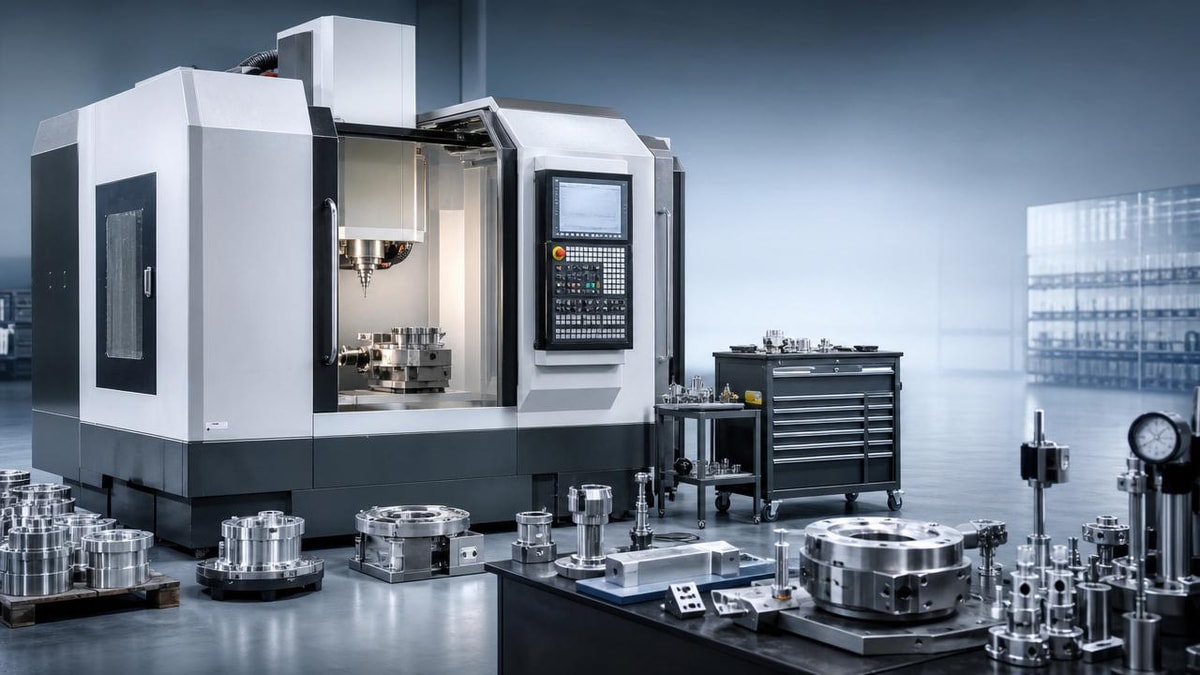
For manufacturers, the real question is not whether industrial machining equipment will age, but when it starts costing more to keep than to replace. As production demands, maintenance expenses, and efficiency targets continue to rise, knowing the tipping point can protect margins and long-term competitiveness. This article explores the key signs business decision-makers should watch before outdated assets begin limiting growth.
What does “too costly to keep” really mean for industrial machining equipment?
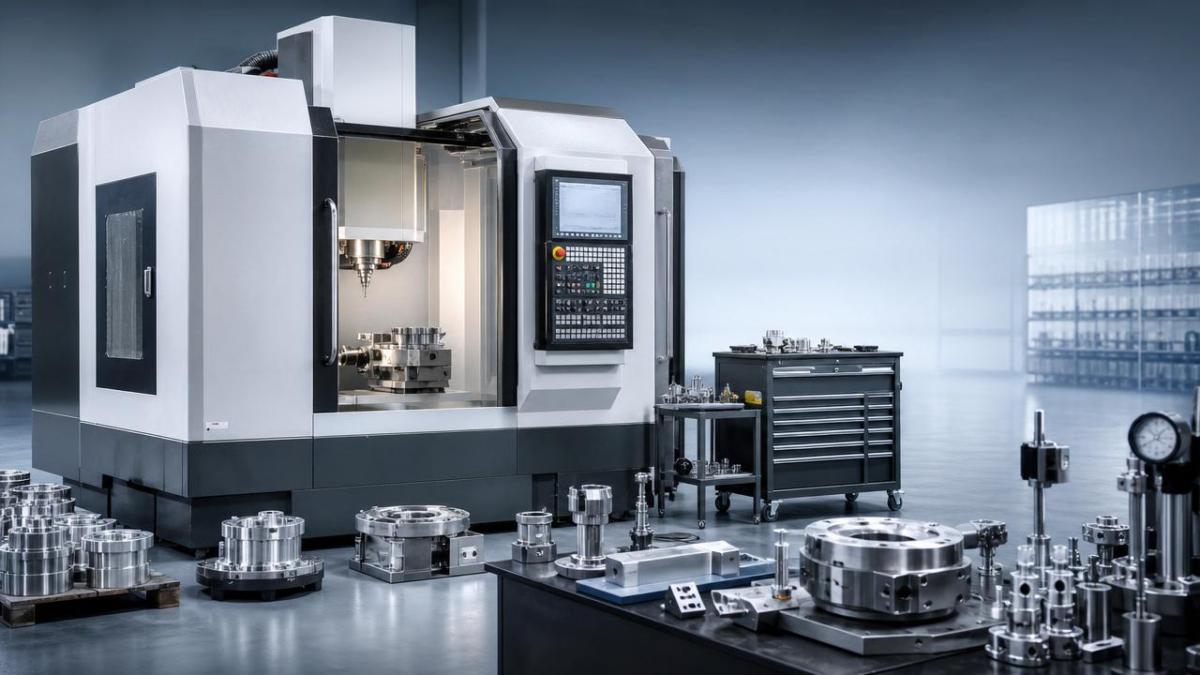
In the CNC and precision manufacturing sector, the cost of owning industrial machining equipment extends far beyond repair invoices. A machine may still run, produce acceptable parts, and remain fully depreciated on paper, yet still drain profitability through low uptime, inconsistent quality, higher energy use, slow setup, and limited integration with modern production systems.
For business decision-makers, the practical threshold is reached when the total cost of maintaining the existing asset overtakes the commercial value it creates. This is especially relevant in industries such as automotive, aerospace, electronics, and energy equipment, where tolerances tighten, lead times shrink, and traceability requirements become more demanding.
Aging industrial machining equipment often becomes a hidden operational risk rather than an obvious technical problem. The issue is not simply whether the spindle turns or the axes move. The real issue is whether the machine still supports profitable throughput, reliable quality, skilled labor efficiency, and future production planning.
- It takes more maintenance hours each month to sustain normal operation.
- It creates bottlenecks that delay higher-value or time-sensitive orders.
- It struggles to meet current precision, repeatability, or automation expectations.
- It cannot connect well with digital production management, monitoring, or smart factory workflows.
Which cost signals show that replacement may be smarter than continued repair?
Many companies keep industrial machining equipment too long because direct repair costs appear manageable in isolation. A spindle rebuild this quarter and a control retrofit next quarter may seem cheaper than capital expenditure. However, decision quality improves when all cost layers are reviewed together instead of one invoice at a time.
The table below helps compare common warning signs and what they usually mean for operational economics.
When two or more of these signals persist for several quarters, the conversation should move from maintenance budgeting to lifecycle strategy. That does not always mean immediate replacement, but it does mean that the current industrial machining equipment should be reviewed against measurable alternatives.
Look beyond maintenance invoices
An older machining center can remain deceptively affordable if management focuses only on parts and labor for repairs. The larger losses often come from production instability, delayed order release, operator intervention, and poor machine utilization. In high-precision industries, one unstable machine can disrupt an entire cell or automated line.
Assess opportunity cost
If the existing asset cannot support tighter tolerances, unattended machining, faster cycle times, or digital process monitoring, the company may be losing business it never records as a machine cost. For decision-makers, lost opportunity is often the clearest sign that industrial machining equipment has become too expensive to keep.
How should decision-makers compare repair, retrofit, and replacement?
The right answer depends on part complexity, annual machine load, quality requirements, labor structure, and the role of the machine inside the wider production system. A simple binary view is risky. In many plants, the best path is a structured comparison between continued repair, targeted retrofit, and full replacement.
The table below provides a practical decision framework for industrial machining equipment planning.
A retrofit is often attractive when the machine structure remains rigid, the geometry can still be corrected, and the process itself has not changed drastically. Replacement becomes more compelling when strategic needs have changed, such as multi-axis machining, lights-out production, automatic tool management, or traceable process data collection.
Questions that sharpen the decision
- Can the current machine consistently hit the required tolerances under real production conditions, not only during short tests?
- Does it support the tooling, fixture strategy, and cycle-time targets needed for the next three to five years?
- Can it connect with automation, MES, data monitoring, or predictive maintenance systems without excessive customization?
- Will another major repair create only temporary relief before the next bottleneck appears?
Which performance gaps matter most in modern manufacturing?
Industrial machining equipment is now expected to do more than remove material accurately. It must operate as part of a broader production ecosystem. In smart manufacturing environments, machine tools are evaluated by throughput, reliability, data visibility, and their ability to support standardized, scalable workflows.
Decision-makers should pay close attention to the following technical and operational gaps.
- Repeatability drift that forces more in-process inspection or manual correction.
- Insufficient spindle speed, torque range, or axis dynamics for newer materials and geometries.
- Limited tool capacity or poor chip management, reducing stable unmanned machining time.
- Weak compatibility with robots, pallet systems, probing, or automated loading systems.
- Inadequate safety, guarding, or electrical compliance when plants update internal standards.
Why these gaps are growing faster now
Global machine tool development is moving toward higher precision, more automation, and tighter digital integration. That means older industrial machining equipment does not become less useful only because it is old. It becomes less competitive because the surrounding manufacturing system evolves faster than the machine itself.
In sectors like aerospace and electronics, even small process instability can have large downstream consequences. In automotive and energy equipment, cycle time and consistency often carry more commercial weight than the nominal age of the machine. This is why lifecycle decisions should be tied to the production model, not just the machine birth year.
How to build a practical replacement threshold for industrial machining equipment
A useful replacement threshold combines financial, technical, and strategic criteria. It should not depend on opinion alone or on one emergency failure. The most reliable approach is to establish an internal review model that converts machine condition into business language.
A workable assessment model
Many manufacturers use a rolling 12-month review that includes downtime cost, maintenance spend, scrap cost, output loss, and the value of delayed capability upgrades. Even without complex analytics, this method makes decisions more objective.
- Track total maintenance cost per machine, not only per event.
- Measure downtime in lost production hours and missed shipment value.
- Quantify scrap, rework, and extra inspection caused by machine instability.
- Estimate labor inefficiency from manual intervention, setup burden, and troubleshooting.
- Compare these costs against the payback of a replacement or upgrade scenario.
When replacement usually becomes urgent
Urgency increases when old industrial machining equipment affects customer commitments, prevents automation projects, or blocks entry into higher-margin work. It also increases when serviceability becomes uncertain because key electronic components or control systems are nearing obsolescence in the support market.
For executive teams, the strongest signal is not one expensive failure. It is the pattern of recurring failures combined with strategic limitation. A machine that can still run but cannot help the business move forward is often already too costly to keep.
What procurement teams should check before replacing legacy assets
Once replacement is justified, the next risk is buying the wrong solution. Industrial machining equipment selection should start from actual part families, tolerance bands, materials, shift patterns, and automation goals. Buying based on generic machine size or catalog appeal often leads to underused capacity or fresh bottlenecks.
The table below outlines practical evaluation dimensions for a replacement decision.
This type of structured review is especially useful in global sourcing environments, where buyers may compare suppliers from China, Germany, Japan, South Korea, and other major machine tool regions. The goal is not simply to compare purchase price, but to compare production fit and lifecycle value.
Common procurement mistakes
- Replacing one old machine with a similar specification without addressing the process bottleneck.
- Ignoring fixture, tooling, chip handling, and automation compatibility during machine selection.
- Underestimating training and process validation time after installation.
- Focusing on list price while overlooking serviceability and digital integration.
FAQ: common questions about aging industrial machining equipment
How old is too old for industrial machining equipment?
Age alone is not the deciding factor. Some machines remain productive for many years if they are mechanically sound, properly maintained, and matched to the process. The better question is whether the equipment still delivers acceptable uptime, precision, supportability, and integration value for current production needs.
Should we retrofit CNC controls before replacing the whole machine?
A CNC retrofit can make sense when the machine frame, guideways, spindle system, and geometry remain in good condition. It is less effective when the machine suffers from structural wear, repeated accuracy drift, or capability limits that a new control cannot fix. A retrofit should be judged by expected output improvement, not by electronics cost alone.
What if the current machine is fully paid off?
A depreciated asset can still be expensive to operate. If fully paid industrial machining equipment causes downtime, scrap, scheduling instability, and extra labor, it may be costing more than a financed replacement. Accounting status should not override production economics.
Which industries feel the replacement pressure first?
Typically, industries with tight tolerances, traceability requirements, complex geometries, or strong automation demand feel it earlier. Aerospace, automotive, precision electronics, and energy equipment manufacturing often reach the replacement threshold sooner because performance gaps translate quickly into quality risk and lost capacity.
Why work with a specialized industry platform before making the next move?
Industrial machining equipment decisions now sit at the intersection of technology, sourcing, production planning, and long-term competitiveness. That is why decision-makers benefit from support that goes beyond product brochures. A specialized CNC machining and precision manufacturing platform can help compare market options, interpret technology trends, and narrow selection criteria based on real application needs.
If you are reviewing aging machine tools, planning a line upgrade, or comparing replacement paths across different supplier regions, we can support your evaluation with focused information and sourcing guidance.
- Discuss machine parameters, process fit, and production goals before shortlisting options.
- Compare replacement, retrofit, and automation upgrade scenarios for your part families.
- Review likely delivery timelines, installation considerations, and plant integration requirements.
- Clarify certification expectations, safety compliance issues, and digital connectivity needs.
- Request support for supplier comparison, quotation communication, and customized solution planning.
If your current industrial machining equipment is showing signs of rising cost, shrinking flexibility, or poor fit for future production, now is the right time to review the numbers carefully. A well-timed decision can protect output, improve quality consistency, and create a stronger foundation for smart manufacturing growth.
PREVIOUS ARTICLE
Recommended for You
![]() Beijing’s New E-Bike Lock Regulation Spurs CNC Housing DemandGlobal Machine Tool Trade Research Center
Beijing’s New E-Bike Lock Regulation Spurs CNC Housing DemandGlobal Machine Tool Trade Research Center![]() New Drone Standard GB/T 44723–2026 Takes Effect May 2026Manufacturing Policy Research Center
New Drone Standard GB/T 44723–2026 Takes Effect May 2026Manufacturing Policy Research Center![]() New Maritime Code Takes Effect May 1, 2026: CNC Equipment Shipping Rules UpdatedManufacturing Market Research Center
New Maritime Code Takes Effect May 1, 2026: CNC Equipment Shipping Rules UpdatedManufacturing Market Research Center![]() 2026 China Cycle Shanghai: CNC E-Bike Frame Capacity Draws ODM FocusManufacturing Market Research Center
2026 China Cycle Shanghai: CNC E-Bike Frame Capacity Draws ODM FocusManufacturing Market Research Center![]() 2026 Foshan Tanzhou Auto Expo: EV Parts Sourcing FocusGlobal Machine Tool Trade Research Center
2026 Foshan Tanzhou Auto Expo: EV Parts Sourcing FocusGlobal Machine Tool Trade Research Center![]() New Hazardous Chemicals Safety Law Takes Effect May 2026Manufacturing Policy Research Center
New Hazardous Chemicals Safety Law Takes Effect May 2026Manufacturing Policy Research Center


Aris Katos
Future of Carbide Coatings
15+ years in precision manufacturing systems. Specialized in high-speed milling and aerospace grade alloy processing.
▶
2026 China Cycle Shanghai: CNC E-Bike Frame Capacity Draws ODM FocusManufacturing Market Research Center▶
What to compare before choosing CNC production equipment in 2026Manufacturing Market Research Center▶
When does industrial machining equipment become too costly to keep?Manufacturing Market Research Center▶
Industrial lathe capacity gaps that hurt job schedulingManufacturing Market Research Center▶
Where the Manufacturing Industry Is Creating New CNC DemandManufacturing Market Research Center
Mastering 5-Axis Workholding Strategies
Join our technical panel on Nov 15th to learn about reducing vibrations in thin-wall components.

Providing you with integrated sanding solutions
Before-sales and after-sales services
Comprehensive technical support