• Global CNC market projected to reach $128B by 2028 • New EU trade regulations for precision tooling components • Aerospace deman
NYSE: CNC +1.2%LME: STEEL -0.4%

Where the Manufacturing Industry Is Creating New CNC Demand
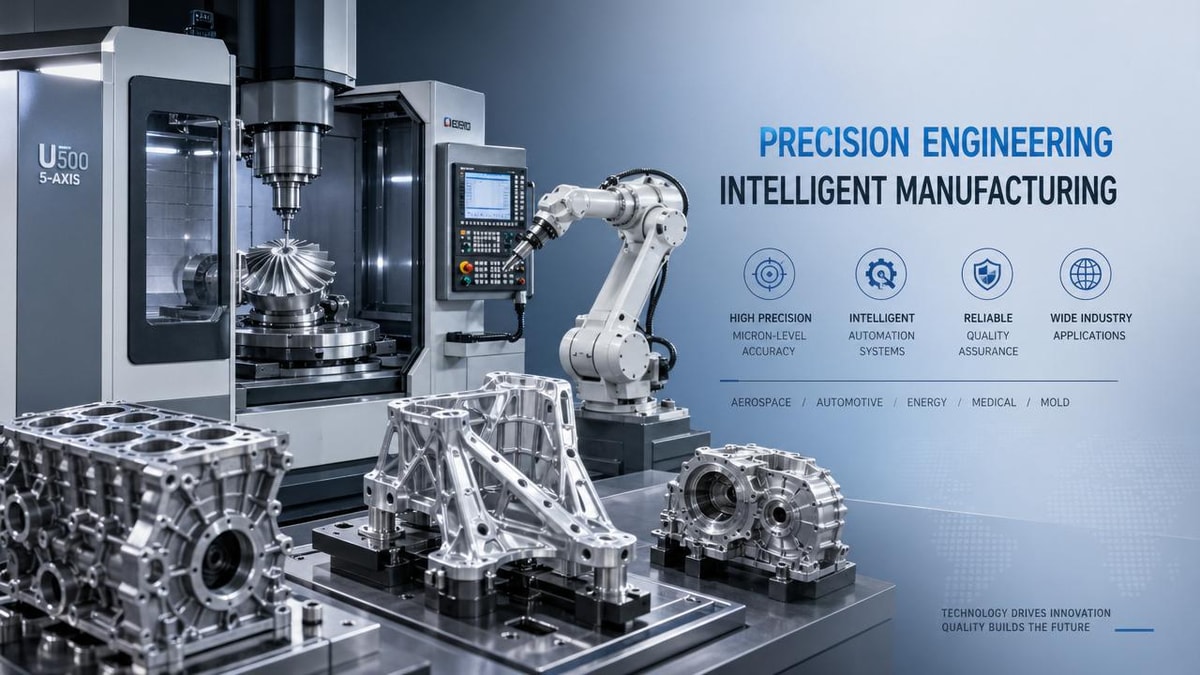
The Manufacturing Industry is creating new CNC demand as manufacturers pursue higher precision, faster production, and smarter automation across global supply chains. From automotive and aerospace to energy and electronics, companies are investing in advanced machine tools, multi-axis systems, and digital production technologies to stay competitive. For business decision-makers, understanding where this demand is growing can reveal valuable opportunities in equipment planning, market expansion, and long-term industrial strategy.
Why scenario differences matter in new CNC demand
Not every segment of the Manufacturing Industry is buying CNC capacity for the same reason. One factory may need tighter tolerances for safety-critical parts, while another is focused on shortening lead times, reducing labor dependence, or consolidating multiple operations into one setup. This is why broad market growth figures alone are not enough for strategic planning. Decision-makers need to understand which application scenarios are driving demand, what machine capabilities each scenario requires, and where investment returns are most likely to appear.
In practical terms, CNC demand is no longer shaped only by replacement cycles. It is increasingly driven by product redesign, supply-chain localization, labor shortages, electrification, tighter quality standards, and the expansion of automated production lines. For companies involved in machine tools, tooling, automation, components, or industrial services, the key question is not simply whether demand is rising, but where in the Manufacturing Industry the strongest and most durable demand pockets are forming.
Where the Manufacturing Industry is creating the strongest CNC demand
Automotive and EV production: speed, repeatability, and flexible changeovers
Automotive remains one of the largest sources of CNC demand, but the mix is changing. Traditional programs still require high-volume machining of shafts, housings, transmission parts, brake components, and engine-related structures. At the same time, electric vehicle production is creating demand for battery tray machining, motor housings, lightweight structural parts, thermal management components, and more flexible fixture strategies.
In this scenario, the Manufacturing Industry values cycle-time reduction, repeatability across shifts, and the ability to integrate automation. Companies are looking for CNC lathes, horizontal machining centers, and multi-axis systems that support fast part changeovers and stable output under continuous production. For suppliers, this is a volume-driven market, but buyers also expect strong uptime, predictive maintenance support, and digital production visibility.
Aerospace: fewer parts, higher complexity, much higher value
Aerospace creates a different kind of CNC demand. Volumes are lower than in automotive, but part complexity, traceability, and material challenges are significantly higher. Airframe components, turbine-related parts, landing system structures, and precision assemblies often require multi-axis machining, difficult material handling, and strict dimensional consistency.
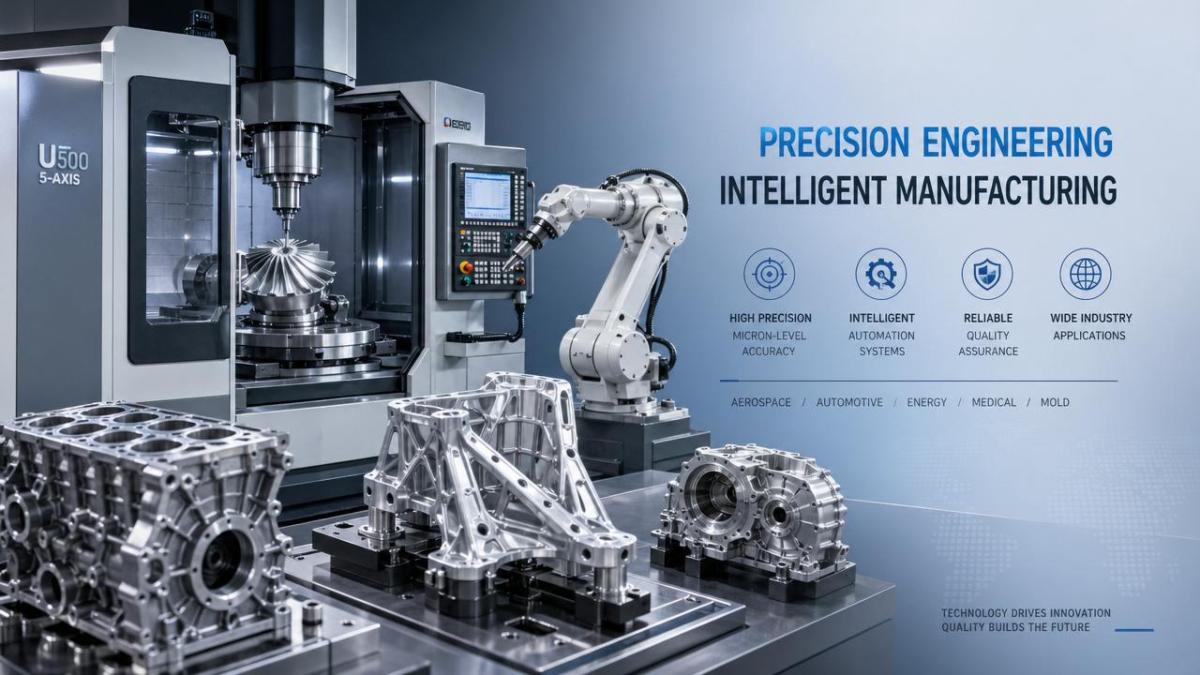
Here, the Manufacturing Industry is not buying CNC equipment mainly for throughput. It is buying capability. Five-axis machining centers, advanced tool management, probing systems, and process verification software become essential. This scenario favors suppliers that can provide technical application support, process optimization, and confidence in machining titanium, high-temperature alloys, and complex geometries.
Energy equipment: large parts, reliability, and long project cycles
The energy segment is another important growth area across the Manufacturing Industry. Demand comes from wind power components, oil and gas equipment, power generation systems, valves, pumps, and heavy-duty transmission parts. These applications often involve larger workpieces, tougher materials, and a strong emphasis on reliability because the finished components operate in demanding environments.
In this scenario, CNC demand is tied to machining envelope, rigidity, and process stability. Large turning centers, boring mills, gantry systems, and heavy-duty machining platforms are often more relevant than compact high-speed machines. Buyers in this market also tend to evaluate service response, spare parts availability, and long-term machine durability more closely than companies focused only on short-run output.
Electronics and precision components: miniaturization drives accuracy
Electronics production is creating CNC demand through enclosures, connectors, heat sinks, precision frames, semiconductor-related tooling, and compact structural parts. As products become smaller and more function-dense, manufacturers need better surface quality, tighter tolerance control, and reduced scrap rates.
For this part of the Manufacturing Industry, spindle stability, thermal control, fine-feature machining, and efficient tooling strategy matter more than machine size. Demand often leans toward high-speed machining centers, precision milling platforms, and automated loading systems for small parts. This scenario is especially attractive for suppliers with expertise in micro-machining, fixture design, and process repeatability.
Medical and high-spec precision manufacturing: compliance meets customization
Medical devices and related precision manufacturing represent a smaller but highly valuable application area. Orthopedic components, surgical instrument parts, dental hardware, and specialized enclosures require precision, traceability, and increasingly shorter development cycles. Unlike some mass-production industries, demand here may include small batches, frequent design variation, and strict inspection requirements.
This means the Manufacturing Industry is creating CNC demand not just for production equipment, but also for process validation, integrated measurement, and stable documentation. Machine buyers in this scenario typically prioritize consistency, quality control compatibility, and the ability to support regulated production environments.
Scenario comparison: what each CNC demand pocket really needs
The table below helps business leaders compare how CNC demand differs across major Manufacturing Industry scenarios. This is useful when evaluating product strategy, sales focus, investment planning, or partnership priorities.
How demand differs by company type and operating model
The Manufacturing Industry does not create CNC demand in the same way for every buyer. Large OEMs often invest based on platform launches, capacity planning, and plant-level automation goals. Tier suppliers usually focus on cost-per-part, contractual quality metrics, and multi-program flexibility. Contract manufacturers tend to value machine versatility because they serve changing customer mixes and shorter production runs.
This difference matters when evaluating market opportunities. A supplier targeting OEM accounts may need stronger digital integration, line automation compatibility, and long-term support capability. A supplier targeting small and mid-sized machining businesses may win more often with flexible configurations, operator-friendly controls, and faster ROI. In other words, CNC demand within the Manufacturing Industry is shaped not only by sector, but also by business model, customer concentration, and production maturity.
Scenario-based guidance for equipment planning and market entry
If the goal is expansion into high-volume production
Prioritize scenarios such as automotive, EV subsystems, and repeat-order industrial components. These areas of the Manufacturing Industry reward investments in automation-ready CNC machines, standardized fixtures, tool life monitoring, and data-driven scheduling. The key question is whether the machine can protect output consistency over long production cycles.
If the goal is higher margins through technical capability
Aerospace, medical, and advanced precision components are more suitable. In these scenarios, demand is built on complexity rather than pure volume. Companies should evaluate multi-axis capability, software support, metrology integration, and application engineering strength. The right CNC investment here should improve quoting power as well as machining accuracy.
If the goal is resilience in uncertain supply chains
Look at sectors where regional production is being localized. Across the Manufacturing Industry, reshoring and supplier diversification are increasing interest in flexible CNC cells, modular automation, and machines that can handle part-family variation. Buyers should confirm whether planned equipment can support both current contracts and future substitute programs.
Common misjudgments when reading CNC demand in the Manufacturing Industry
One common mistake is assuming that every growing market requires the same machine architecture. For example, EV growth does not automatically mean all suppliers need the same equipment mix. Some will need aluminum structural machining, others will need precision turning for e-drive parts, and some will benefit more from automation upgrades than new machine purchases.
Another misjudgment is overvaluing headline precision while undervaluing process fit. A machine with excellent technical specifications may still be the wrong choice if it does not match part size, material flow, operator skill level, or maintenance support conditions. In the Manufacturing Industry, demand quality matters as much as demand quantity.
A third issue is treating digital features as optional add-ons. In many real production scenarios, data connectivity, remote diagnostics, and tool monitoring directly affect uptime and labor efficiency. As smart manufacturing expands, CNC demand increasingly includes software capability, not just mechanical performance.
FAQ: business questions decision-makers often ask
Which Manufacturing Industry scenarios are most likely to sustain CNC demand over the next few years?
Automotive transformation, aerospace recovery and modernization, energy equipment investment, and precision electronics all show durable demand signals. The most resilient opportunities usually combine structural market need with ongoing pressure for better quality, faster output, and more automation.
How should companies decide between buying for capacity and buying for capability?
Start with the target scenario. If the Manufacturing Industry segment you serve is high volume and stable, capacity and uptime may deliver the best returns. If your customers value complexity, compliance, or premium tolerances, capability investments are often the smarter route. The right answer depends on customer mix, quoting strategy, and production risk.
What should be confirmed before entering a new CNC-driven market segment?
Confirm part types, material requirements, tolerance ranges, batch patterns, automation expectations, and after-sales support demands. Many companies underestimate the gap between having a machine and having a competitive process. The strongest positions in the Manufacturing Industry come from matching equipment, tooling, software, and application know-how to the actual production scenario.
Turning scenario insight into action
The Manufacturing Industry is creating new CNC demand in multiple directions, but the smartest opportunities are highly scenario-specific. Automotive and EV programs reward speed and automation. Aerospace rewards technical depth. Energy rewards heavy-duty reliability. Electronics and medical manufacturing reward precision and process discipline. For decision-makers, the advantage comes from identifying which scenarios align with internal strengths, customer demand, and investment timing.
Before expanding, purchasing, or repositioning product strategy, map your target applications against real production needs: part complexity, volume pattern, tolerance risk, digital integration level, and service expectations. That scenario-based approach makes CNC planning more accurate, strengthens market positioning, and helps companies capture the most valuable demand emerging across the Manufacturing Industry.
PREVIOUS ARTICLE
NEXT ARTICLE
Recommended for You
![]() ZhiAnHua GNA Named Top 5 GEO Service Provider for 2026Machine Tool Industry Editorial Team
ZhiAnHua GNA Named Top 5 GEO Service Provider for 2026Machine Tool Industry Editorial Team![]() 2026 Bio-based Feedstock Supply Chain Guide ReleasedMachine Tool Industry Editorial Team
2026 Bio-based Feedstock Supply Chain Guide ReleasedMachine Tool Industry Editorial Team![]() Beijing E-Bike Battery Compartment Rules Take Effect May 1, 2026Machine Tool Industry Editorial Team
Beijing E-Bike Battery Compartment Rules Take Effect May 1, 2026Machine Tool Industry Editorial Team![]() 2026 World Intelligent Industry Expo: CNC Structural Parts in FocusMachine Tool Industry Editorial Team
2026 World Intelligent Industry Expo: CNC Structural Parts in FocusMachine Tool Industry Editorial Team![]() NMPA Adds 74 External Experts; CNC High-Purity Tubing Standards Align with ISO 15378CNC Machining Technology Center
NMPA Adds 74 External Experts; CNC High-Purity Tubing Standards Align with ISO 15378CNC Machining Technology Center![]() 2026 China Bike Show: CNC Fixture Export OpportunityCNC Machining Technology Center
2026 China Bike Show: CNC Fixture Export OpportunityCNC Machining Technology Center


Aris Katos
Future of Carbide Coatings
15+ years in precision manufacturing systems. Specialized in high-speed milling and aerospace grade alloy processing.
▶
Where the Manufacturing Industry Is Creating New CNC DemandManufacturing Market Research Center▶
Is CNC Production Still the Best Fit for Short Runs?Manufacturing Market Research Center▶
Q1 2026 Lithium Battery Sector Sustains High Momentum, Storage Drives CNC Structural Part DemandManufacturing Market Research Center▶
Which Machine Tool Suits the Automotive Industry BestManufacturing Market Research Center▶
Which Machine Tool Fits Energy Equipment Production BestManufacturing Market Research Center
Mastering 5-Axis Workholding Strategies
Join our technical panel on Nov 15th to learn about reducing vibrations in thin-wall components.

Providing you with integrated sanding solutions
Before-sales and after-sales services
Comprehensive technical support