• Global CNC market projected to reach $128B by 2028 • New EU trade regulations for precision tooling components • Aerospace deman
NYSE: CNC +1.2%LME: STEEL -0.4%

Industrial lathe capacity gaps that hurt job scheduling
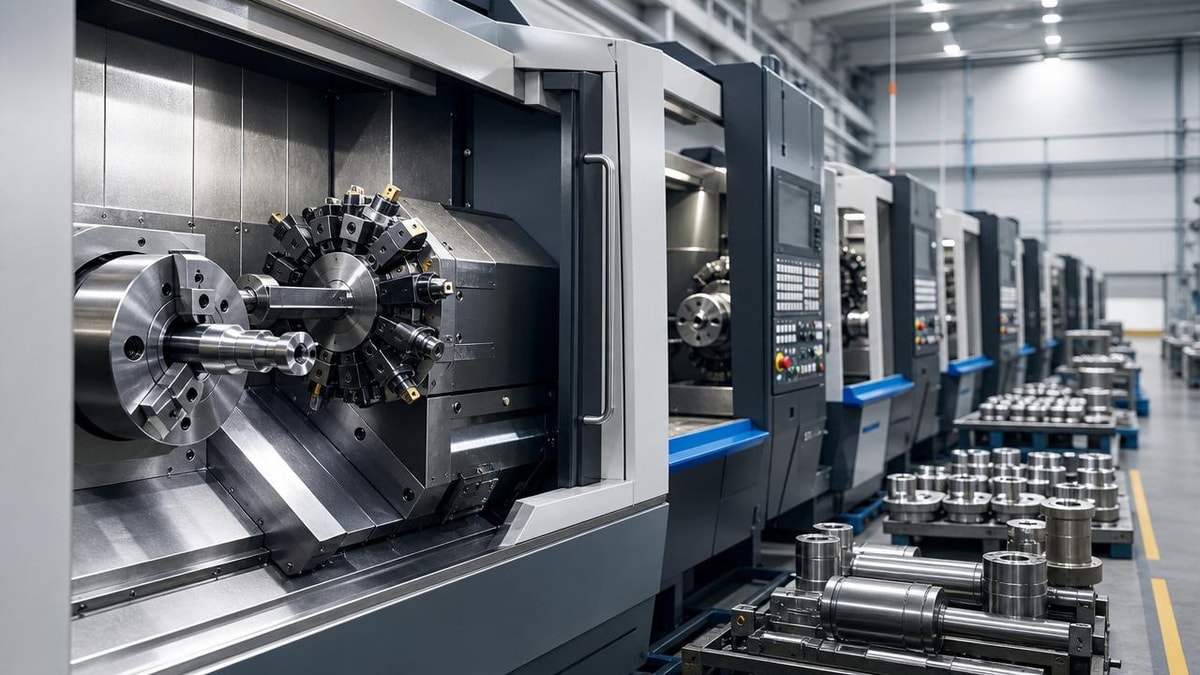
When industrial lathe capacity falls out of sync with order complexity, delivery windows, or changeover demands, job scheduling starts to break down in costly ways. For business evaluators, understanding these hidden capacity gaps is essential to judging production resilience, supplier reliability, and investment priorities in modern manufacturing operations.
Why scenario differences matter in industrial lathe capacity review
An industrial lathe is rarely constrained by spindle power alone. In real production environments, scheduling performance depends on how machine hours, operator skills, setup time, tooling readiness, maintenance windows, inspection flow, and part mix interact. That is why the same installed capacity can look sufficient in one factory and dangerously tight in another.
For business evaluators, this topic is especially important because supplier risk often hides behind headline numbers. A plant may report many machines, high utilization, and strong monthly output, yet still miss deadlines when orders require short runs, frequent engineering changes, or difficult materials. In other words, the true question is not whether the company owns enough equipment, but whether its industrial lathe capacity matches the scheduling patterns of the work it actually accepts.
This is highly relevant across automotive, aerospace, energy equipment, electronics, and general industrial supply chains. CNC turning operations often sit at the center of a broader process route. When lathe capacity is the bottleneck, downstream milling, grinding, assembly, and inspection resources become underused, while customer commitments become more fragile.
Where industrial lathe capacity gaps usually appear
Capacity gaps do not always show up as idle queues in front of every machine. Often they appear in more subtle operating signals. A business evaluator reviewing an industrial lathe supplier should look for patterns such as repeated overtime, unstable lead times, outsourcing of key turning operations, high WIP before setup-intensive jobs, or recurring reshuffling of promised ship dates.
Common gap drivers include:
- Mismatch between machine specification and part complexity
- Too many small batches consuming setup capacity
- Insufficient live tooling, bar feeding, or automation support
- Limited staffing on second or third shifts
- Inspection bottlenecks for tight-tolerance turned parts
- Poor routing flexibility between CNC lathes and turning centers
- Unplanned downtime or weak preventive maintenance discipline
Because these issues affect different order profiles differently, scenario-based assessment gives a much clearer picture than a simple machine count.
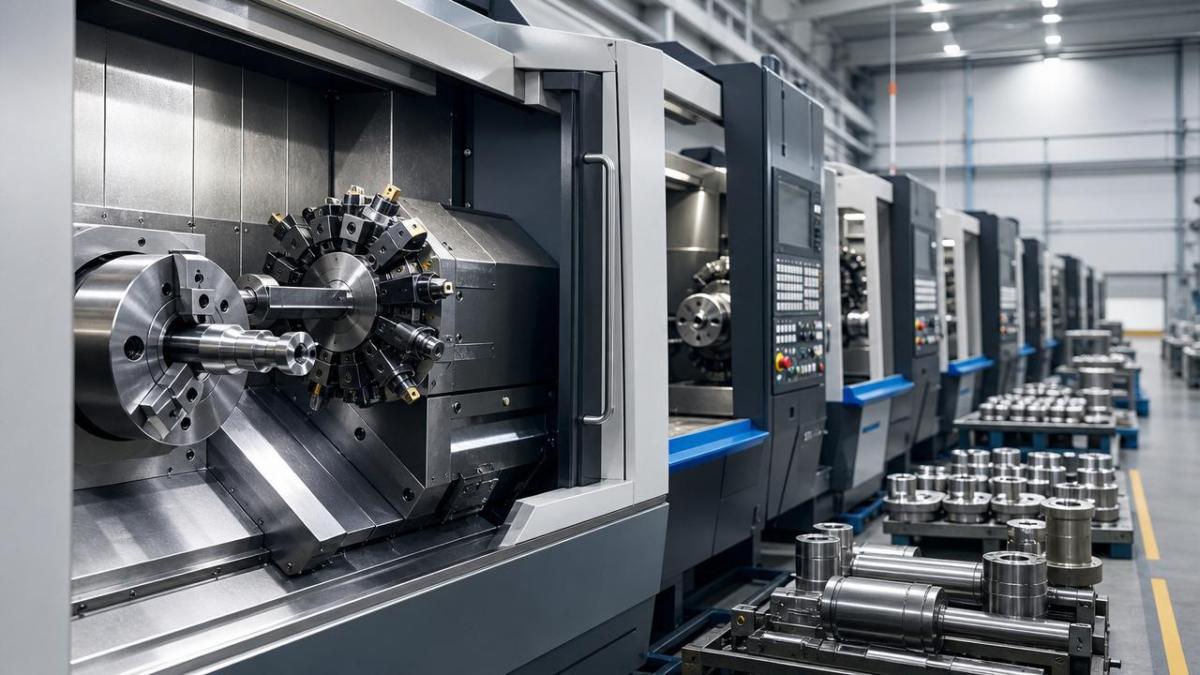
Typical business scenarios and what evaluators should check
High-volume repeat parts
In automotive and appliance supply chains, an industrial lathe operation may produce shafts, bushings, rings, or threaded components in steady demand. Here, capacity gaps are less about programming complexity and more about uptime, automation, tool life stability, and line balancing. If one turning cell stops, large downstream disruption can follow quickly.
For this scenario, evaluators should test whether the supplier has redundant capacity, standardized fixtures, stable cycle times, and planned maintenance routines. A plant with only one heavily loaded machine for a critical family of parts carries greater scheduling risk than a plant with multiple interchangeable resources.
High-mix, low-volume custom jobs
Job shops serving industrial equipment, repair, or project-based manufacturing face a different problem. The industrial lathe may not be cutting all day, but scheduling still suffers because setup hours dominate. Every new drawing, material grade, or chucking method reduces effective available capacity. In this environment, a quoted utilization rate can be misleading.
Business evaluators should focus on setup reduction practices, programming workflow, tooling libraries, and dispatching discipline. The key question is whether the supplier can absorb variability without pushing every urgent job to the front and delaying all others.
Tight-tolerance and regulated parts
Aerospace, medical-related industrial supply, and energy applications often require exacting process control. Here, industrial lathe capacity is constrained not only by machining time but by first-article approval, in-process measurement, traceability, and quality documentation. A machine may be technically available while the quality gate is not.
In this scenario, the evaluator should examine how quickly jobs move from setup to validated production, whether the metrology team is matched to machine throughput, and whether nonconformance handling causes schedule drift.
Large parts and heavy-duty turning
For energy equipment, mining, marine, or large industrial systems, heavy industrial lathe capacity can become a strategic constraint. These machines are fewer in number, harder to replace, and often linked to long setup and crane dependency. One delayed casting, one tooling issue, or one spindle problem can shift the entire weekly schedule.
Evaluators should assess not just machine ownership, but lifting support, floor planning, operator experience, and contingency planning. Heavy turning is often the area where capacity concentration creates hidden delivery risk.
Scenario comparison table for scheduling risk
The table below helps compare how industrial lathe capacity gaps affect different operating scenarios and what evidence business evaluators should request.
Different buyer and evaluator priorities by business context
Not every organization should judge industrial lathe capacity the same way. A procurement team sourcing standard parts may care most about sustained output and price stability. A commercial due diligence team may prioritize concentration risk, capital expenditure needs, and resilience under demand swings. An investor evaluating an acquisition may focus on whether scheduling issues indicate underinvestment, weak planning systems, or a non-scalable customer mix.
For large OEMs, the central question is usually delivery assurance across multiple product programs. For smaller industrial buyers, responsiveness to urgent or modified orders may matter more. For cross-border sourcing, the issue expands further: if the supplier’s industrial lathe schedule is already unstable, logistics variability will magnify the risk.
What good scenario fit looks like
A strong match between installed industrial lathe capacity and business scenario usually has visible operational signs. The shop can explain which machine groups serve which part families. Planned utilization leaves room for urgent demand without destroying the whole schedule. Setup-intensive jobs are clustered intelligently. Quality checks are built into the flow instead of becoming a release obstacle. And scheduling decisions are based on realistic process times rather than optimistic assumptions.
In practical terms, a good fit means the supplier does not rely on heroics to meet dates. Overtime may still exist, but it is not the core scheduling strategy. Outsourcing may still occur, but it is controlled and not used to hide chronic turning bottlenecks.
Common misjudgments that distort industrial lathe evaluation
Several recurring mistakes cause buyers and evaluators to overestimate true industrial lathe capacity:
- Assuming installed machine count equals usable scheduling capacity
- Ignoring setup hours when reviewing high-mix production
- Treating operator shortages as separate from equipment capacity
- Overlooking inspection, deburring, and material handling constraints
- Using average lead time instead of variability and on-time delivery by part family
- Failing to distinguish between standard CNC lathes and flexible turning centers
These errors matter because scheduling problems are cumulative. If the industrial lathe work center is overloaded, every upstream and downstream promise becomes less reliable. That weakens customer confidence and can eventually limit growth even when demand is healthy.
How to assess industrial lathe capacity gaps in practice
A practical review should combine data, interviews, and scenario testing. Business evaluators do not need to become process engineers, but they should ask evidence-based questions that reveal how the supplier performs under realistic conditions.
Useful checks include:
- Load by machine type, shift, and part family
- Setup time as a share of available hours
- On-time delivery performance during demand spikes
- Scrap and rework effect on schedule stability
- Maintenance backlog and spare parts readiness
- Use of subcontract turning to absorb overload
- Cycle-time assumptions versus actual shop-floor history
It is also valuable to ask how the plant handles a rush order, an engineering revision, or an unexpected machine outage. The quality of that answer often reveals more than standard capacity charts.
FAQ for business evaluators reviewing industrial lathe operations
Does high utilization always mean strong performance?
No. In an industrial lathe environment, very high utilization can mean there is no buffer for urgent jobs, maintenance, or quality interruptions. Sustainable scheduling usually needs controlled slack.
What is the biggest hidden risk in high-mix turning shops?
Setup complexity. A shop may own enough industrial lathe assets on paper, yet lose effective capacity through frequent changeovers, tool adjustments, and first-piece verification.
When should a buyer be cautious about delivery promises?
Be cautious when one supplier depends on a small number of critical turning machines, has wide lead-time variation, or often expedites through overtime and outsourcing. Those are signs that industrial lathe capacity may be stretched.
Final decision guidance
The most useful way to evaluate industrial lathe capacity is to match it against the actual business scenario: repeat production, high-mix customization, precision-controlled output, or heavy-component turning. Each scenario has different scheduling pressure points, and each demands a different review lens.
For business evaluators, the goal is not simply to confirm that machines exist. It is to determine whether turning resources, quality flow, staffing, tooling, and operational discipline are aligned well enough to support reliable delivery and scalable growth. If your organization is comparing suppliers, reviewing plant performance, or assessing manufacturing investment priorities, start by mapping your demand pattern to the supplier’s real industrial lathe operating scenario. That is where the strongest conclusions about resilience, risk, and long-term fit will come from.
PREVIOUS ARTICLE
NEXT ARTICLE
Recommended for You
 Industrial Robotics payback depends on one hidden variableManufacturing Market Research Center
 Shaft Parts machining problems linked to concentricity lossCNC Machining Technology Center
 Production Process changes that quietly raise defect ratesCNC Machining Technology Center
 Industrial Automation projects stall without process mappingCNC Machining Technology Center
 CNC metal cutting heat issues behind poor surface finishCNC Machining Technology Center
 High precision lathe claims that deserve a closer lookMachine Tool Industry Editorial Team



Aris Katos
Future of Carbide Coatings
15+ years in precision manufacturing systems. Specialized in high-speed milling and aerospace grade alloy processing.
▶
Industrial lathe capacity gaps that hurt job schedulingManufacturing Market Research Center▶
Where the Manufacturing Industry Is Creating New CNC DemandManufacturing Market Research Center▶
Is CNC Production Still the Best Fit for Short Runs?Manufacturing Market Research Center▶
Q1 2026 Lithium Battery Sector Sustains High Momentum, Storage Drives CNC Structural Part DemandManufacturing Market Research Center▶
Which Machine Tool Suits the Automotive Industry BestManufacturing Market Research Center
Mastering 5-Axis Workholding Strategies
Join our technical panel on Nov 15th to learn about reducing vibrations in thin-wall components.

Providing you with integrated sanding solutions
Before-sales and after-sales services
Comprehensive technical support