• Global CNC market projected to reach $128B by 2028 • New EU trade regulations for precision tooling components • Aerospace deman
NYSE: CNC +1.2%LME: STEEL -0.4%

Is Industrial Automation worth it for rising labor costs
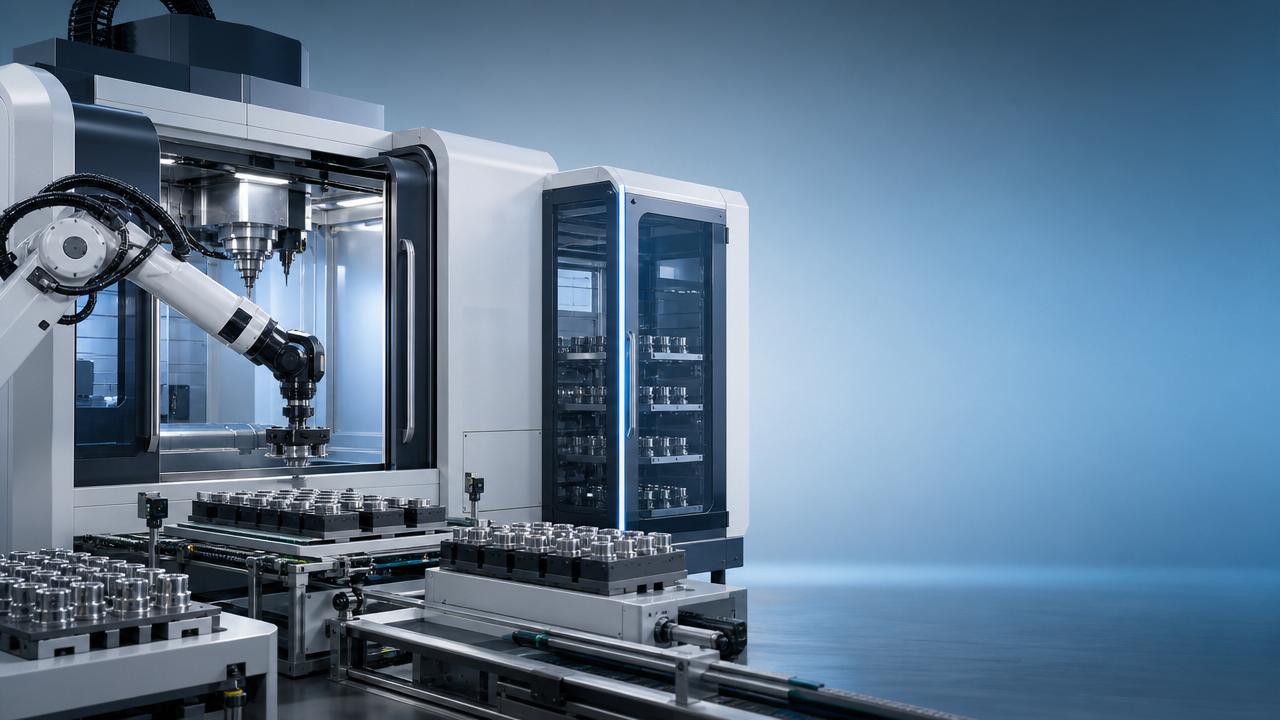
As labor costs continue to rise across global manufacturing, the value of Industrial Automation is under closer financial review.
In CNC machining and precision production, wages are only one part of the equation.
Output stability, scrap reduction, machine utilization, and delivery reliability often shape the real return.
For operations handling tight tolerances and repetitive processes, Industrial Automation can offset labor inflation through better cycle control and less process variation.
Still, automation is not automatically profitable in every factory, product mix, or production stage.
A sound decision depends on volume patterns, part complexity, workforce structure, digital readiness, and capital planning.
Industrial Automation in modern manufacturing
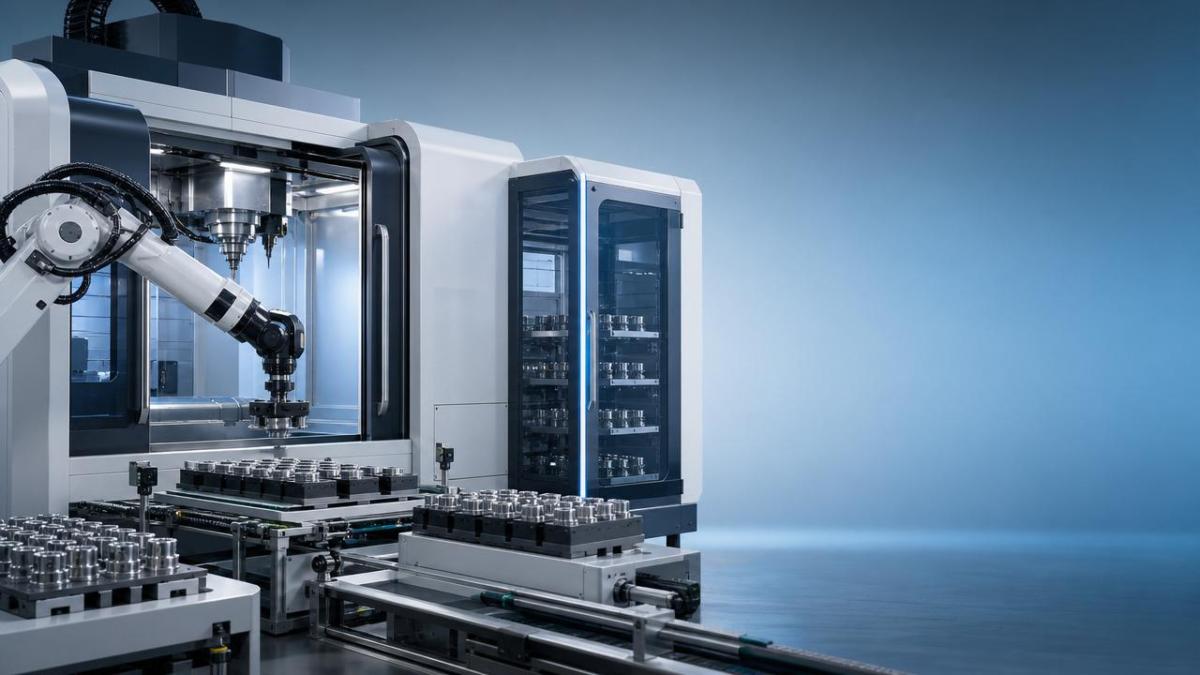
Industrial Automation refers to the use of control systems, software, robotics, sensors, and integrated machines to reduce manual intervention.
In the CNC machine tool sector, it often includes automatic loading, tool monitoring, robotic handling, pallet systems, and linked production cells.
It also covers digital scheduling, machine data collection, predictive maintenance, and quality feedback loops.
The objective is not simply replacing people.
The objective is making production more predictable, scalable, and less dependent on unstable labor availability.
In machining environments, this matters because precision, repeatability, and spindle uptime directly affect profitability.
When labor costs rise, manual workflows become more expensive to maintain, especially across multi-shift operations.
Industrial Automation can convert variable labor pressure into more controllable equipment-driven output.
Why rising labor costs are changing investment priorities
Labor inflation affects far more than hourly wages.
It increases overtime costs, training expense, turnover risk, scheduling gaps, and quality inconsistency during staffing changes.
These pressures are especially visible in machining, assembly, inspection, and material handling.
Across the broader manufacturing landscape, several signals are pushing Industrial Automation higher on the agenda.
- Difficulty filling skilled positions in CNC operation and maintenance.
- Demand for shorter lead times without proportional workforce growth.
- Customer expectations for tighter consistency and traceable production data.
- Pressure to run longer hours with fewer interruptions.
- Greater cost sensitivity in export-oriented manufacturing.
These trends are not limited to one region.
China, Germany, Japan, South Korea, and emerging industrial markets all face some combination of wage pressure and productivity expectations.
That is why Industrial Automation is no longer viewed only as a technology upgrade.
It is increasingly evaluated as a cost structure strategy.
Where Industrial Automation creates measurable value
The strongest case for Industrial Automation appears when gains are measured across multiple cost and performance categories.
A narrow wage comparison may underestimate the real benefit.
Productivity and machine utilization
Automated loading and unloading reduce idle time between machining cycles.
Pallet changers and robotic cells can support lights-out production during evenings or weekends.
This increases output without matching labor expansion.
Quality consistency and scrap reduction
Manual variation often causes dimensional drift, handling damage, and inconsistent setup practices.
Industrial Automation improves repeatability through programmed motion, monitored parameters, and standard cycle execution.
Less scrap means lower material waste and fewer downstream delays.
Labor allocation and skill leverage
Automation does not always remove labor.
Often, it shifts labor toward programming, process optimization, preventive maintenance, and quality control.
That shift can raise the value generated per employee.
Planning and delivery reliability
Stable cycle times make scheduling more accurate.
This supports better order planning, fewer rush disruptions, and stronger customer confidence.
Typical scenarios where automation is worth the investment
Industrial Automation tends to deliver the clearest returns in environments with repeatability, process discipline, and sustained throughput demand.
- High-volume CNC turning or milling with standardized part families.
- Multi-shift production where labor coverage is difficult or expensive.
- Precision parts requiring stable handling and documented consistency.
- Operations with recurring bottlenecks in loading, transfer, or inspection.
- Facilities seeking smart factory integration and production traceability.
In these cases, Industrial Automation supports both immediate efficiency and longer-term digital transformation.
This is especially relevant in automotive components, aerospace structures, electronics housings, and energy equipment parts.
Limits, risks, and hidden costs to evaluate
Industrial Automation is not a universal solution.
Poor planning can create underused assets, integration problems, or unrealistic payback expectations.
Several cost areas deserve attention before approval.
- Capital expenditure for machines, robots, controls, tooling, and safety systems.
- Software integration with existing CNC equipment and production data platforms.
- Operator and technician training for stable daily use.
- Maintenance capability, spare parts availability, and service response time.
- Production disruption during installation, testing, and ramp-up.
Another common issue is automating the wrong process.
If cycle times are already unstable because of tooling, fixturing, or programming errors, automation may amplify those weaknesses.
Process discipline should come before scaling with Industrial Automation.
A practical framework for deciding whether Industrial Automation is worth it
A disciplined evaluation should combine financial, technical, and operational factors.
A simple decision framework can improve investment quality.
1. Measure current loss points
Track downtime, setup delays, overtime hours, scrap rates, and labor intensity per machine.
2. Identify repeatable processes
Prioritize stable products, recurring orders, and stations with clear repetitive work.
3. Model total return
Include labor savings, extra output, scrap reduction, maintenance costs, and implementation risk.
4. Start with scalable scope
Pilot one cell, one line, or one bottleneck area before expanding plant-wide.
5. Plan workforce transition
Successful Industrial Automation requires people who can monitor, adjust, and continuously improve the system.
In many cases, the best result comes from combining skilled labor with automation, not choosing one over the other.
That hybrid model is increasingly common in advanced precision manufacturing.
Conclusion and next-step direction
Industrial Automation is often worth it when rising labor costs are paired with repeatable production, quality pressure, and capacity constraints.
Its true value comes from better utilization, stable output, lower waste, and stronger delivery control.
In CNC machining and precision manufacturing, those gains can be substantial when implementation matches process reality.
The most effective next step is to review one production area with high labor intensity and measurable repetition.
Map current costs, estimate automation impact, and compare phased options rather than relying on broad assumptions.
With that approach, Industrial Automation becomes a strategic decision grounded in data, not just a response to wage pressure.
PREVIOUS ARTICLE
NEXT ARTICLE
Recommended for You
![]() Delta NC5 CNC System Gains TÜV Safety Certification, Enters BMW Production ValidationMachine Tool Industry Editorial Team
Delta NC5 CNC System Gains TÜV Safety Certification, Enters BMW Production ValidationMachine Tool Industry Editorial Team![]() Vietnam's Draft AI Safety Rule for CNC Machines Requires Dual CertificationManufacturing Policy Research Center
Vietnam's Draft AI Safety Rule for CNC Machines Requires Dual CertificationManufacturing Policy Research Center![]() First CNC Machine Carbon Footprint Guide Released in ChinaManufacturing Policy Research Center
First CNC Machine Carbon Footprint Guide Released in ChinaManufacturing Policy Research Center![]() Brazil INMETRO Launches Spot Inspections on CNC LathesMachine Tool Industry Editorial Team
Brazil INMETRO Launches Spot Inspections on CNC LathesMachine Tool Industry Editorial Team![]() Japan METI Green Subsidy: Up to ¥4M for Chinese High-Efficiency CNC SystemsManufacturing Policy Research Center
Japan METI Green Subsidy: Up to ¥4M for Chinese High-Efficiency CNC SystemsManufacturing Policy Research Center![]() Red Sea Shipping Crisis Escalates: CNC Equipment Delays Hit 14.2 Days on Asia-Europe RoutesManufacturing Market Research Center
Red Sea Shipping Crisis Escalates: CNC Equipment Delays Hit 14.2 Days on Asia-Europe RoutesManufacturing Market Research Center


Aris Katos
Future of Carbide Coatings
15+ years in precision manufacturing systems. Specialized in high-speed milling and aerospace grade alloy processing.
▶
Is Industrial Automation worth it for rising labor costsManufacturing Market Research Center▶
When does Industrial Automation actually pay for itself?Manufacturing Market Research Center▶
Is Industrial Automation worth it for mid-size factories now?Manufacturing Market Research Center▶
Is Industrial Automation worth the upfront investment?Manufacturing Market Research Center▶
Is Industrial Automation worth the upfront costManufacturing Market Research Center
Mastering 5-Axis Workholding Strategies
Join our technical panel on Nov 15th to learn about reducing vibrations in thin-wall components.

Providing you with integrated sanding solutions
Before-sales and after-sales services
Comprehensive technical support