• Global CNC market projected to reach $128B by 2028 • New EU trade regulations for precision tooling components • Aerospace deman
NYSE: CNC +1.2%LME: STEEL -0.4%

When does Industrial Automation actually pay for itself?
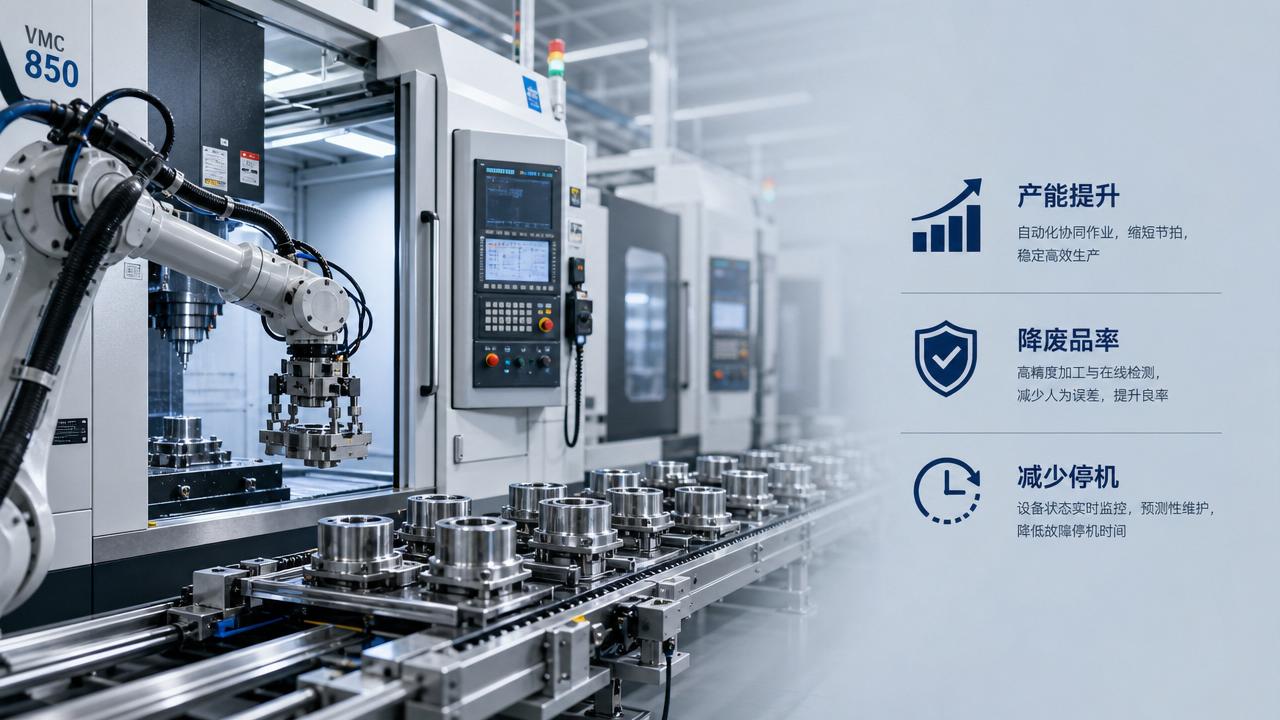
Industrial Automation pays for itself when it removes a proven production constraint and converts that improvement into measurable financial gain. In CNC machining, precision manufacturing, and automated lines, the strongest cases usually come from labor shortages, unstable quality, unplanned downtime, bottleneck operations, and slow changeovers. The real decision is not whether Industrial Automation is modern. It is whether the investment creates faster throughput, lower unit cost, and a return timeline that can be tracked with confidence.
What does “pay for itself” mean in Industrial Automation?
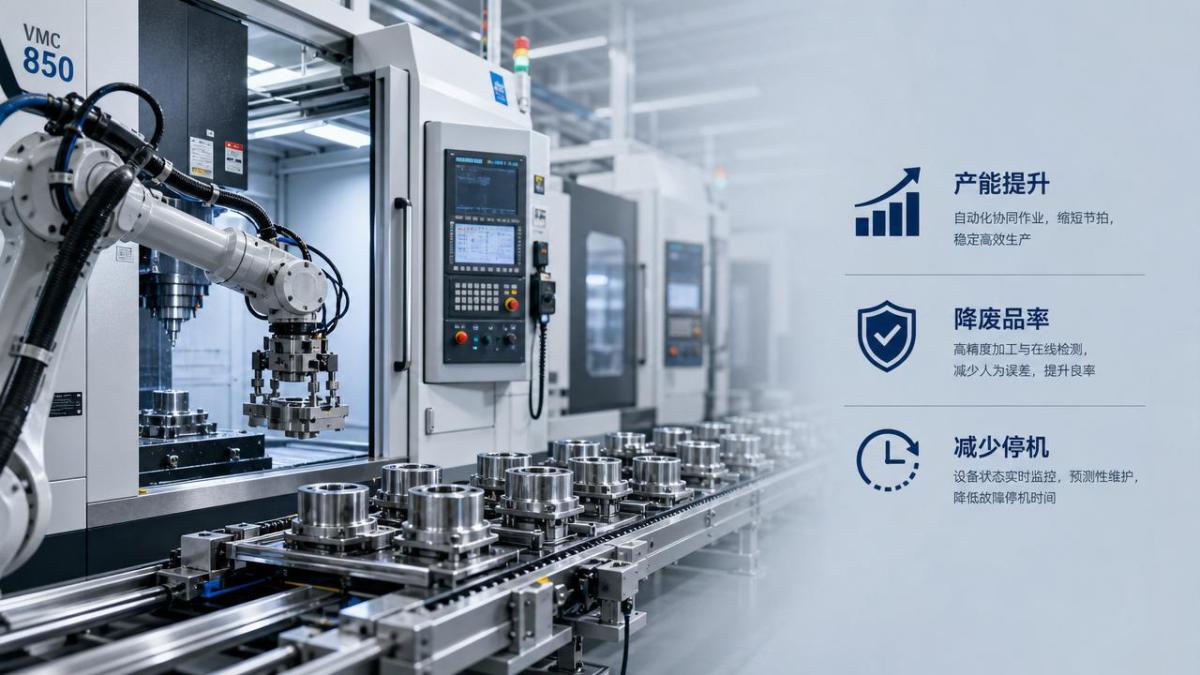
Industrial Automation pays for itself when annual savings and added margin exceed the full cost of ownership within an acceptable period. That period varies by process complexity and market pressure.
Many projects are judged by payback period, ROI, internal rate of return, and cash flow impact. In practice, payback is often the first screen.
For CNC and machine tool environments, the full cost includes equipment, integration, tooling changes, software, installation, training, maintenance, and ramp-up losses.
The benefit side is broader than labor savings alone. Industrial Automation often delivers value through higher spindle utilization, lower scrap, reduced rework, better cycle consistency, and more available production hours.
A simple example helps. If an automated loading system raises machine utilization from 55% to 75%, the extra output can often justify the project faster than direct labor reduction.
This is why Industrial Automation should be tied to a real production constraint, not to a general desire for modernization.
Which cost bottlenecks make Industrial Automation profitable fastest?
The fastest payback usually appears where one recurring problem is already expensive and visible. These are the most common high-value triggers.
- Labor gaps on repetitive machine tending or part transfer tasks.
- High scrap from manual inconsistency, poor positioning, or unstable process control.
- Downtime caused by operator dependency, delayed loading, or slow response to alarms.
- Long changeovers that reduce available production time.
- Quality escapes that create warranty, sorting, or delivery penalties.
- Bottleneck cells that cap output across the entire factory.
In CNC machining, unattended operation often changes the economics dramatically. A machine that cuts well but waits too long between cycles is an ideal automation candidate.
In precision manufacturing, small deviations can become expensive across large volumes. Industrial Automation strengthens repeatability, which directly supports quality and margin.
Automated inspection can also pay back quickly when tolerances are tight. Detecting drift earlier prevents scrap from multiplying through later operations.
The key is to quantify the bottleneck first. If the current loss is vague, the return case will remain weak.
How can you calculate the payback period for Industrial Automation?
A practical Industrial Automation calculation should start with current-state data, not vendor assumptions. Measure before modeling.
Track baseline values for cycle time, uptime, scrap rate, labor hours, overtime, changeover time, WIP, and on-time delivery. Then estimate the realistic improvement range.
A simple formula is:
Payback period = Total project cost / Annual net financial benefit
Annual net financial benefit can include several items:
- Reduced direct labor or overtime
- Increased throughput and contribution margin
- Lower scrap and rework cost
- Less downtime and improved asset utilization
- Lower quality claims or expedited shipping costs
Be careful with double counting. If more output is possible but demand is weak, throughput gains may not become immediate revenue.
A more reliable method uses three scenarios: conservative, expected, and aggressive. Industrial Automation decisions improve when downside and ramp-up risk are included.
For many CNC projects, a payback under 24 months is considered attractive. Highly constrained operations may justify even shorter targets.
Quick payback checklist
Where does Industrial Automation create the strongest returns in CNC and precision manufacturing?
Industrial Automation creates the best returns where machines are technically capable but commercially underused. This is common in advanced machine tool operations.
Machine tending is a leading example. CNC lathes and machining centers often lose value during loading, unloading, and staging delays.
Robotic tending, pallet systems, and automated storage can convert idle minutes into productive machining time. That changes cost per part quickly.
Multi-axis machining also benefits when setups are complex. Industrial Automation can standardize handling, reduce fixture errors, and improve repeatability from first article to final batch.
Automated tool monitoring is another strong case. Tool wear that goes undetected can damage parts, cause scrap spikes, and interrupt schedules.
In high-mix environments, flexible automation matters more than maximum speed. Quick recipe changes, modular fixtures, and software integration often outperform rigid systems.
For energy equipment, aerospace, automotive, and electronics production, Industrial Automation also improves traceability. Better data supports compliance, process control, and customer confidence.
What common mistakes delay or destroy Industrial Automation ROI?
The biggest mistake is automating a bad process. If root causes are unstable, Industrial Automation may amplify waste instead of removing it.
Another mistake is oversizing the solution. Expensive systems with unnecessary features can extend payback without adding proportional value.
Poor data is also dangerous. If cycle times, scrap, and downtime are estimated loosely, the business case becomes optimistic by default.
Integration is frequently underestimated. CNC controls, sensors, robots, fixtures, MES links, and safety systems must work together reliably.
Training gaps can slow adoption. Industrial Automation only pays back when operators, programmers, and maintenance teams can support daily performance.
One more error is ignoring product mix. A system designed for one part family may struggle when orders shift toward smaller batches or new geometries.
Mistake versus better approach
How should you decide whether now is the right time for Industrial Automation?
The right time is usually when three conditions meet. The cost problem is measurable, demand is credible, and the process is stable enough to automate.
Start by ranking operations by financial loss, not by visibility. The loudest production issue is not always the most valuable automation target.
Then test feasibility. Ask whether the part flow, fixturing, tolerances, and upstream variation support reliable Industrial Automation.
Pilot projects are often useful. A smaller automation cell can validate cycle assumptions, maintenance needs, and operator interaction before wider rollout.
It also helps to define success metrics before installation. Good metrics include OEE improvement, scrap reduction, labor redeployment, throughput growth, and payback speed.
In global manufacturing, timing also depends on competition. When precision, delivery reliability, and traceability become market requirements, Industrial Automation shifts from optional to strategic.
Practical next-step framework
- Measure one costly bottleneck for four to eight weeks.
- Build a conservative Industrial Automation business case.
- Include integration, training, and maintenance costs.
- Validate process stability and part-family fit.
- Launch a pilot and review real performance against baseline.
Industrial Automation actually pays for itself when it is linked to a specific operational loss and measured against hard financial outcomes. In CNC machining and precision manufacturing, the best returns usually come from higher utilization, lower scrap, better consistency, and more productive hours. The smartest next step is not a broad automation push. It is a focused analysis of one high-cost bottleneck, followed by a realistic pilot, clear metrics, and a disciplined ROI review.
PREVIOUS ARTICLE
NEXT ARTICLE
Recommended for You
![]() Vietnam Suspends CNC Equipment Import Licenses Amid New Tech RulesManufacturing Policy Research Center
Vietnam Suspends CNC Equipment Import Licenses Amid New Tech RulesManufacturing Policy Research Center![]() First Global CNC Machine Carbon Footprint Guide ReleasedManufacturing Policy Research Center
First Global CNC Machine Carbon Footprint Guide ReleasedManufacturing Policy Research Center![]() Japan METI Launches CNC Green Upgrade SubsidyManufacturing Market Research Center
Japan METI Launches CNC Green Upgrade SubsidyManufacturing Market Research Center![]() Brazil INMETRO Mandates IoT Modules for CNC Lathes from July 2026Manufacturing Policy Research Center
Brazil INMETRO Mandates IoT Modules for CNC Lathes from July 2026Manufacturing Policy Research Center![]() EU Launches Anti-Subsidy Investigation on Chinese Laser Cutting Heads and High-Power Fiber LasersManufacturing Policy Research Center
EU Launches Anti-Subsidy Investigation on Chinese Laser Cutting Heads and High-Power Fiber LasersManufacturing Policy Research Center![]() Red Sea Crisis Deepens: Suez Canal CNC Ship Delays Hit 11.4 DaysGlobal Machine Tool Trade Research Center
Red Sea Crisis Deepens: Suez Canal CNC Ship Delays Hit 11.4 DaysGlobal Machine Tool Trade Research Center


Aris Katos
Future of Carbide Coatings
15+ years in precision manufacturing systems. Specialized in high-speed milling and aerospace grade alloy processing.
▶
When does Industrial Automation actually pay for itself?Manufacturing Market Research Center▶
Is Industrial Automation worth it for mid-size factories now?Manufacturing Market Research Center▶
Is Industrial Automation worth the upfront investment?Manufacturing Market Research Center▶
Is Industrial Automation worth the upfront costManufacturing Market Research Center▶
When Industrial Automation saves money and when it does notManufacturing Market Research Center
Mastering 5-Axis Workholding Strategies
Join our technical panel on Nov 15th to learn about reducing vibrations in thin-wall components.

Providing you with integrated sanding solutions
Before-sales and after-sales services
Comprehensive technical support