• Global CNC market projected to reach $128B by 2028 • New EU trade regulations for precision tooling components • Aerospace deman
NYSE: CNC +1.2%LME: STEEL -0.4%

Is Industrial Automation worth the upfront investment?
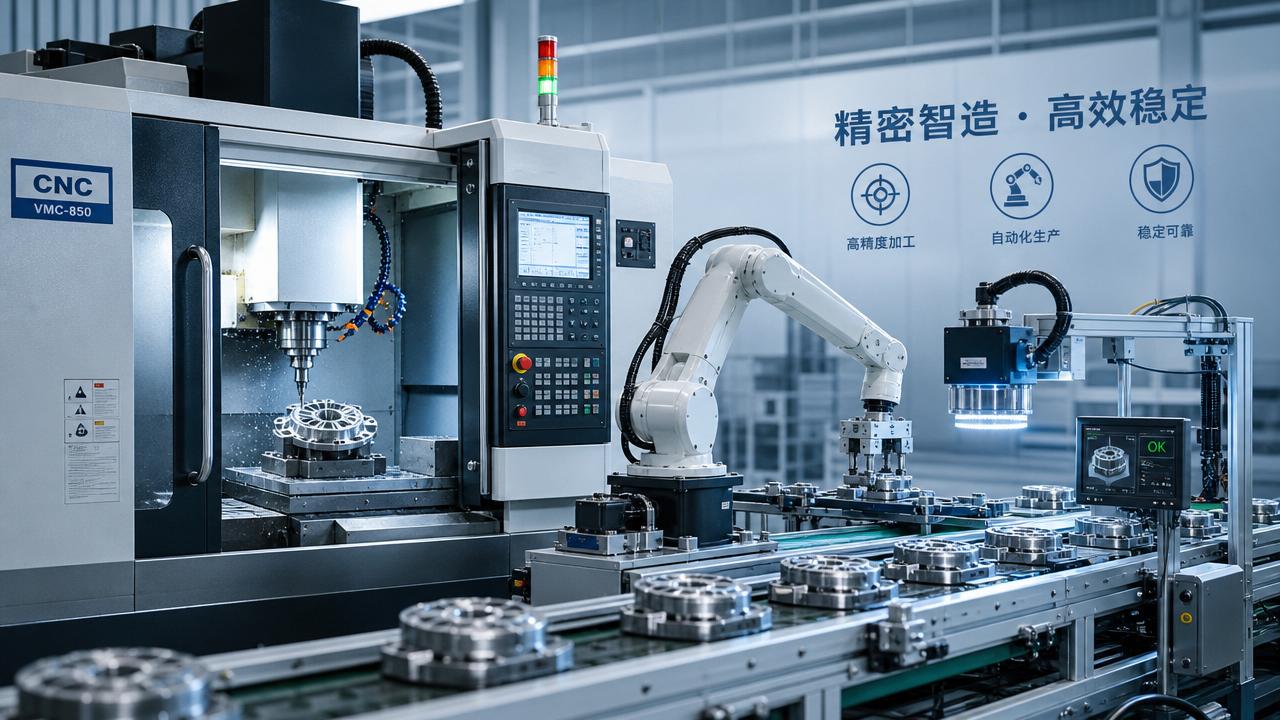
Is Industrial Automation worth the upfront investment? In modern manufacturing, that question reaches far beyond machine prices and installation budgets.
For CNC machining, precision tooling, and automated production, Industrial Automation affects productivity, quality consistency, labor structure, and long-term operational resilience.
The real decision should balance capital expenditure with measurable gains in throughput, uptime, traceability, and competitiveness across changing global supply chains.
Industrial Automation as a Manufacturing Investment Framework
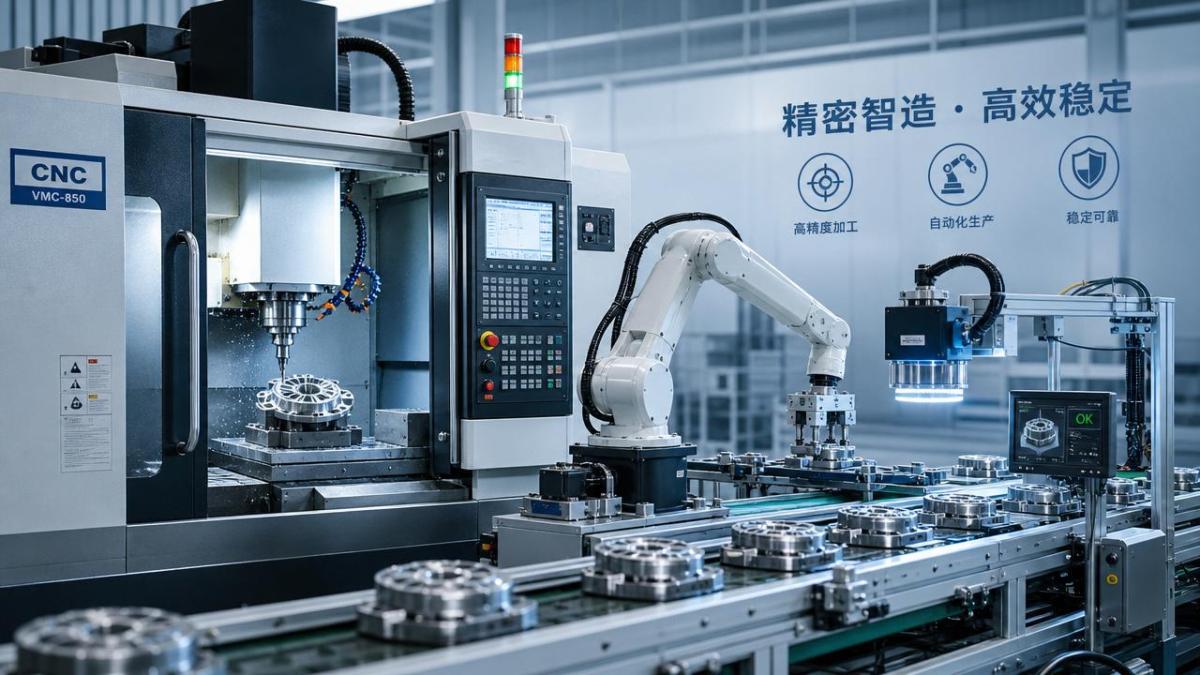
Industrial Automation refers to using control systems, CNC equipment, robotics, sensors, software, and connected workflows to reduce manual intervention in production.
In the machine tool industry, Industrial Automation often includes CNC lathes, machining centers, pallet changers, automatic loading, tool monitoring, and production data systems.
This investment is rarely one item. It usually combines hardware, software, integration, training, maintenance planning, and process redesign.
That is why upfront cost can appear high. Yet cost alone does not describe value, especially in sectors demanding precision, stable cycle times, and repeatable quality.
Industrial Automation should therefore be evaluated as a system-level capability rather than a single equipment purchase.
Core cost elements
- CNC machines, robots, conveyors, fixtures, and safety systems
- Programming, integration, and commissioning work
- Operator training and engineering support
- Software licenses, monitoring tools, and cybersecurity measures
- Planned maintenance and spare parts readiness
Current Industry Signals Shaping Industrial Automation Decisions
Global manufacturing is moving toward higher precision, shorter lead times, and stronger digital coordination across factories and suppliers.
These changes are especially visible in automotive, aerospace, energy equipment, electronics, and high-mix precision component production.
Industrial Automation is becoming central because manual systems struggle to match modern requirements for speed, accuracy, and traceable process control.
Countries with strong machine tool ecosystems are accelerating digital integration, making Industrial Automation a strategic baseline rather than an optional upgrade.
Business Value Beyond Equipment Cost
The strongest case for Industrial Automation comes from cumulative performance gains over time, not from one isolated financial metric.
When applied well, automation improves machine utilization, reduces human error, supports unattended operation, and increases planning visibility.
Where returns usually appear
- Higher output from existing floor space
- Lower scrap and rework rates
- Improved spindle uptime and labor efficiency
- Faster changeovers on repeatable jobs
- Better delivery reliability for customers and partners
In CNC environments, automatic tool management and integrated measurement can protect process stability and prevent costly quality deviations.
In flexible production lines, Industrial Automation also helps balance high-volume efficiency with the need for smaller batch responsiveness.
This matters in mixed production settings where part complexity, tolerance control, and delivery commitments must all be maintained together.
Common ROI indicators
Typical Industrial Automation Scenarios in Precision Manufacturing
Industrial Automation does not look the same in every factory. Its value depends on product type, production rhythm, and process complexity.
Representative scenarios
- CNC turning cells for shafts, sleeves, and threaded components
- Machining centers for discs, housings, and structural parts
- Multi-axis systems for aerospace geometries and complex surfaces
- Automated inspection linked to production data records
- Robot-assisted loading for continuous batch production
High-volume, repeatable production often reaches payback faster because downtime reduction and labor savings accumulate quickly.
However, low-volume and high-mix operations can also benefit when setup accuracy, scheduling visibility, and part traceability are business priorities.
The best Industrial Automation projects match the level of automation to actual bottlenecks, instead of automating every step immediately.
Risks, Limits, and Evaluation Points
Industrial Automation is not automatically profitable. Poor integration, weak process discipline, or unrealistic production assumptions can delay returns.
A machine with advanced automation cannot compensate for unstable tooling, inaccurate fixturing, or inconsistent upstream material quality.
Frequent evaluation mistakes
- Comparing only purchase cost, not lifecycle value
- Ignoring training and change management requirements
- Overestimating production volume stability
- Underestimating maintenance readiness and spare strategy
- Automating a weak process without standardization first
A practical review should include current OEE trends, bottleneck mapping, scrap history, labor allocation, order variability, and machine loading patterns.
It is also useful to test whether Industrial Automation supports future expansion, not only present output targets.
Practical Steps for a Sound Automation Decision
A disciplined rollout usually performs better than a large, rushed transformation. Industrial Automation should start with measurable production problems.
- Define the exact constraint, such as labor shortage, scrap, low uptime, or delivery inconsistency.
- Quantify baseline metrics before investment.
- Select automation that fits part families and realistic scheduling conditions.
- Plan integration between machines, tooling, fixtures, and software.
- Set post-launch review points for output, quality, and utilization.
Pilot cells are often effective in CNC and precision machining because they reveal programming, fixturing, and maintenance needs early.
If results confirm stable gains, the Industrial Automation model can then expand across additional lines or product groups.
Next-Step Outlook for Industrial Automation Investment
Industrial Automation is usually worth the upfront investment when precision, output stability, and long-term competitiveness are strategic requirements.
Its strongest value appears when automation aligns with process discipline, demand patterns, and a clear roadmap for digital production improvement.
The next step is to review one production area with repeatable constraints, collect baseline data, and compare projected gains against full lifecycle cost.
That approach turns Industrial Automation from a budget concern into a structured investment decision grounded in manufacturing performance.
PREVIOUS ARTICLE
Recommended for You
![]() Vietnam Suspends CNC Equipment Import Licenses Amid New Tech RulesManufacturing Policy Research Center
Vietnam Suspends CNC Equipment Import Licenses Amid New Tech RulesManufacturing Policy Research Center![]() First Global CNC Machine Carbon Footprint Guide ReleasedManufacturing Policy Research Center
First Global CNC Machine Carbon Footprint Guide ReleasedManufacturing Policy Research Center![]() Japan METI Launches CNC Green Upgrade SubsidyManufacturing Market Research Center
Japan METI Launches CNC Green Upgrade SubsidyManufacturing Market Research Center![]() Brazil INMETRO Mandates IoT Modules for CNC Lathes from July 2026Manufacturing Policy Research Center
Brazil INMETRO Mandates IoT Modules for CNC Lathes from July 2026Manufacturing Policy Research Center![]() EU Launches Anti-Subsidy Investigation on Chinese Laser Cutting Heads and High-Power Fiber LasersManufacturing Policy Research Center
EU Launches Anti-Subsidy Investigation on Chinese Laser Cutting Heads and High-Power Fiber LasersManufacturing Policy Research Center![]() Red Sea Crisis Deepens: Suez Canal CNC Ship Delays Hit 11.4 DaysGlobal Machine Tool Trade Research Center
Red Sea Crisis Deepens: Suez Canal CNC Ship Delays Hit 11.4 DaysGlobal Machine Tool Trade Research Center


Aris Katos
Future of Carbide Coatings
15+ years in precision manufacturing systems. Specialized in high-speed milling and aerospace grade alloy processing.
▶
When does Industrial Automation actually pay for itself?Manufacturing Market Research Center▶
Is Industrial Automation worth it for mid-size factories now?Manufacturing Market Research Center▶
Is Industrial Automation worth the upfront investment?Manufacturing Market Research Center▶
Is Industrial Automation worth the upfront costManufacturing Market Research Center▶
When Industrial Automation saves money and when it does notManufacturing Market Research Center
Mastering 5-Axis Workholding Strategies
Join our technical panel on Nov 15th to learn about reducing vibrations in thin-wall components.

Providing you with integrated sanding solutions
Before-sales and after-sales services
Comprehensive technical support