• Global CNC market projected to reach $128B by 2028 • New EU trade regulations for precision tooling components • Aerospace deman
NYSE: CNC +1.2%LME: STEEL -0.4%

When Industrial Automation saves money and when it does not
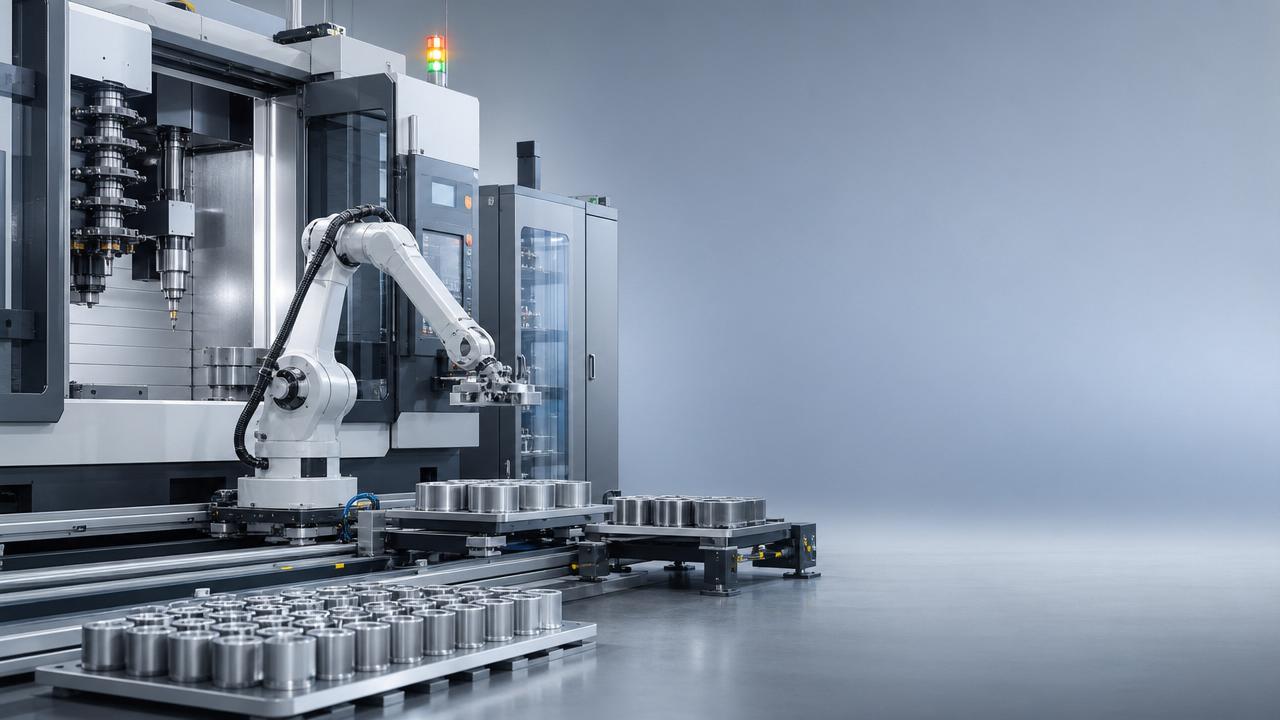
Industrial Automation can cut labor expense, stabilize quality, and improve machine utilization. Yet the economics are never automatic. Savings appear only when process design, batch size, uptime goals, and capital discipline align.
In CNC machining and precision manufacturing, the key issue is practical return. A faster robot or smarter cell matters less than payback, throughput, scrap reduction, and long-term production flexibility.
Why Industrial Automation is under sharper financial review now
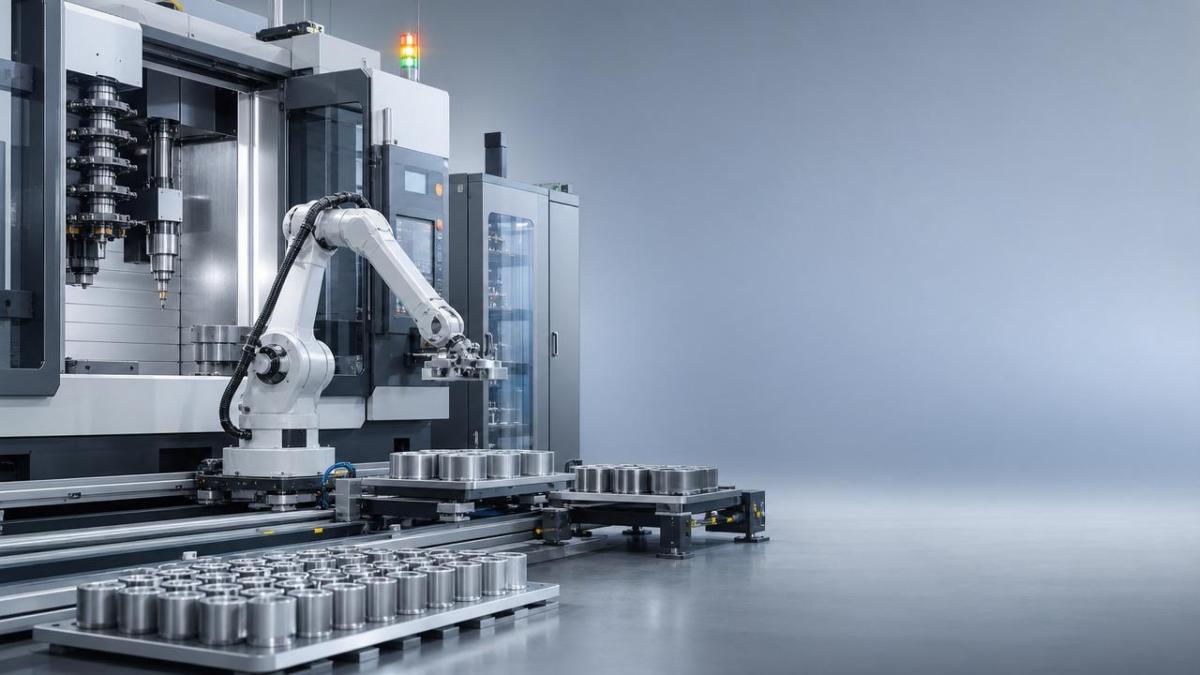
Across global manufacturing, Industrial Automation is moving from a technology discussion to an investment discipline. Higher wages, tighter tolerances, and unstable labor availability are raising pressure on production economics.
At the same time, CNC machine tools are becoming more connected. Sensors, machine data, tool monitoring, and robotic handling now support decisions once based on assumptions.
This shift is especially visible in automotive parts, aerospace components, electronics housings, and energy equipment. In these sectors, downtime and scrap can erase margins faster than labor alone.
However, not every line benefits equally. Some manual or semi-automatic processes remain cheaper, more flexible, and easier to manage than a heavily automated setup.
The strongest trend signals behind Industrial Automation adoption
Several clear signals explain why Industrial Automation is expanding in the machine tool industry and broader precision production environment.
These signals do not guarantee savings. They simply create conditions where Industrial Automation may outperform labor-based production under the right operating model.
When Industrial Automation clearly saves money
Industrial Automation creates the strongest financial returns when cost reduction comes from multiple sources, not only direct labor replacement.
1. High-volume and repeatable CNC production
If part families are stable and demand is predictable, automation spreads fixed investment across many cycles. That lowers cost per part and shortens payback.
Examples include shaft machining, disc parts, valve bodies, and standardized housings. Robotic loading, automatic gauging, and pallet systems work best in such environments.
2. Expensive downtime and unattended production opportunities
When a machining center sits idle between jobs, labor is not the only loss. Capital equipment produces no output while overhead continues.
Industrial Automation can reduce non-cutting time, support lights-out production, and improve overnight spindle utilization. In many plants, this is where the real savings begin.
3. Quality losses are larger than labor losses
In aerospace, medical-adjacent precision parts, and energy equipment, scrap can be extremely costly. One failed workpiece may consume material, machine time, tooling, and delivery margin.
Industrial Automation often improves repeatability in loading, clamping, measuring, and transfer. That lowers variation and protects value in tight-tolerance processes.
4. Labor shortages limit output growth
Where skilled operators are difficult to find, expansion through hiring may be unrealistic. Automation can support growth by letting existing teams manage more equipment.
In this case, Industrial Automation saves money indirectly. It protects revenue opportunity and avoids the hidden cost of unmet demand.
When Industrial Automation does not save money
Industrial Automation fails financially when complexity, instability, or poor implementation outweigh the expected gains. This is common in mixed-model production and weakly standardized operations.
- Low-volume, high-mix parts with frequent changeovers.
- Unstable drawings, inconsistent raw material, or frequent engineering revisions.
- Manual processes not yet standardized before automation begins.
- Overdesigned systems with too much integration for actual production needs.
- Weak maintenance support causing automated downtime.
- Projects justified only by labor savings while ignoring setup and support cost.
A common mistake is automating a bad process. If tool paths, fixture design, inspection flow, or scheduling are unstable, Industrial Automation often scales the inefficiency instead of removing it.
Another issue is underutilization. A robot cell that runs one shift, handles small batches, and waits on material may never recover its full capital burden.
The real drivers of Industrial Automation ROI in precision manufacturing
The return on Industrial Automation usually depends on five measurable drivers. Reviewing them early improves decision quality and reduces investment bias.
- Machine utilization before and after automation.
- Changeover time and batch stability.
- Scrap, rework, and first-pass yield performance.
- Tool life consistency and process capability.
- Maintenance capacity, spare parts, and technical support readiness.
In many CNC environments, the biggest gain comes from combining automated handling with process discipline. Automation alone rarely fixes poor program control or weak fixture repeatability.
How the cost impact differs across business links
Industrial Automation affects more than the machining station. Its financial impact spreads across planning, inspection, maintenance, logistics, and delivery performance.
This is why plant-wide evaluation matters. A profitable automation cell can still disappoint if surrounding workflows remain manual, delayed, or poorly synchronized.
What deserves the closest attention before committing capital
- Verify part family stability over at least 12 to 24 months.
- Measure actual idle time, not assumed idle time.
- Separate labor savings from throughput and quality gains.
- Estimate integration cost, training cost, and recovery cost.
- Check whether fixtures, tooling, and programs are automation-ready.
- Model best-case, expected-case, and weak-demand scenarios.
Industrial Automation decisions improve when they are tied to capacity strategy. The right question is not “Can this be automated?” but “Will this process create durable financial advantage?”
A practical way to judge whether Industrial Automation will pay off
A simple decision framework can reduce risk and make Industrial Automation evaluation more realistic.
- Map the current process and identify where cost is truly lost.
- Confirm whether the loss comes from labor, downtime, quality, or missed capacity.
- Pilot the smallest useful automation step first.
- Track output, scrap, uptime, and intervention frequency for several months.
- Expand only when the first stage proves repeatable returns.
For many facilities, semi-automation is the better starting point. Pallet changers, tool monitoring, bar feeders, or simple robotic tending may deliver stronger returns than full-line transformation.
Industrial Automation saves money when it improves throughput, quality, and equipment use in a stable process. It does not save money when complexity rises faster than productivity.
The next step is to review one production family, quantify current hidden losses, and test where Industrial Automation can create measurable gains with manageable risk.
PREVIOUS ARTICLE
NEXT ARTICLE
Recommended for You
![]() China's Energy Storage Sector Faces 'Advanced Shortage, Outdated Surplus'Machine Tool Industry Editorial Team
China's Energy Storage Sector Faces 'Advanced Shortage, Outdated Surplus'Machine Tool Industry Editorial Team![]() Top 50 Cosmetics Brands’ Retail Sales Up 11.56%, Boosting Demand for High-Precision CNC EquipmentManufacturing Market Research Center
Top 50 Cosmetics Brands’ Retail Sales Up 11.56%, Boosting Demand for High-Precision CNC EquipmentManufacturing Market Research Center![]() Home Service Skills Hub Launches, Boosting Robot Export TrainingMachine Tool Industry Editorial Team
Home Service Skills Hub Launches, Boosting Robot Export TrainingMachine Tool Industry Editorial Team![]() Steel Structure Mezzanine Tech Moves Beyond 'Adequate'CNC Machining Technology Center
Steel Structure Mezzanine Tech Moves Beyond 'Adequate'CNC Machining Technology Center![]() Fireproof Cable Tray Industry Shifts to High-Performance CompositesManufacturing Policy Research Center
Fireproof Cable Tray Industry Shifts to High-Performance CompositesManufacturing Policy Research Center![]() Foil Winding Machines Shift to Digital Servo DrivesMachine Tool Industry Editorial Team
Foil Winding Machines Shift to Digital Servo DrivesMachine Tool Industry Editorial Team


Aris Katos
Future of Carbide Coatings
15+ years in precision manufacturing systems. Specialized in high-speed milling and aerospace grade alloy processing.
▶
When Industrial Automation saves money and when it does notManufacturing Market Research Center▶
Industrial Automation Costs That Are Easy to Miss Before ApprovalManufacturing Market Research Center▶
Industrial Robotics Payback Looks Different in 2026Manufacturing Market Research Center▶
Manufacturing Industry pressure points that affect expansion plansManufacturing Market Research Center▶
Where the Manufacturing Industry is adding capacity in 2026Manufacturing Market Research Center
Mastering 5-Axis Workholding Strategies
Join our technical panel on Nov 15th to learn about reducing vibrations in thin-wall components.

Providing you with integrated sanding solutions
Before-sales and after-sales services
Comprehensive technical support