• Global CNC market projected to reach $128B by 2028 • New EU trade regulations for precision tooling components • Aerospace deman
NYSE: CNC +1.2%LME: STEEL -0.4%

How machine tool market demand differs between Tier-1 aerospace suppliers and Tier-2 subcontractors
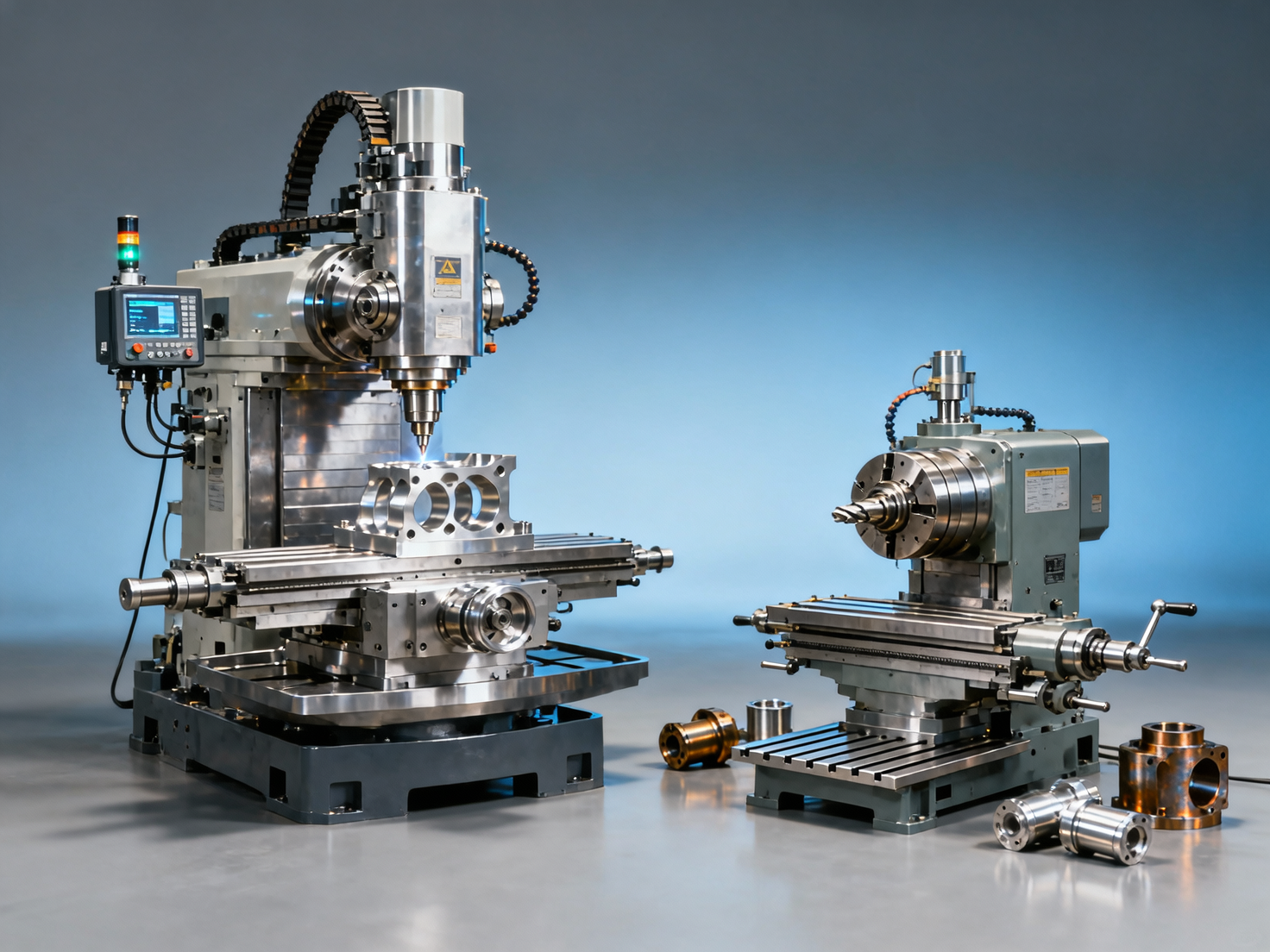
Understanding how machine tool market demand diverges between Tier-1 aerospace suppliers and Tier-2 subcontractors is critical for industrial CNC stakeholders—from procurement teams to enterprise decision-makers. While Tier-1s prioritize high-precision, automated production lines and multi-axis CNC milling for complex shaft parts and structural components, Tier-2s often seek cost-effective, flexible metal machining solutions like CNC lathes and vertical lathes for batched CNC metalworking. This dynamic shapes global manufacturing strategies, CNC programming requirements, and adoption of industrial robotics and automated lathe systems—key drivers across the Machine Tool Market and broader Industrial Automation landscape.
Precision vs. Flexibility: Core Demand Drivers Across Tiers
Tier-1 aerospace suppliers operate under strict AS9100 Rev D and NADCAP-certified workflows, where part traceability, thermal stability, and sub-micron repeatability are non-negotiable. Their machine tool investments typically target ±0.002 mm positional accuracy, spindle runout under 1.5 µm, and real-time thermal compensation systems validated across 72-hour continuous cycles. These specifications directly impact qualification timelines—aircraft structural brackets or turbine disk blanks may require 3–6 months of process validation before first-article approval.
In contrast, Tier-2 subcontractors serve multiple OEMs and Tier-1s with shorter-run, higher-variability workloads. Over 68% of their contracts involve lot sizes under 50 pieces, demanding rapid changeover (target: <12 minutes per setup) and multi-material capability (e.g., Inconel 718, Ti-6Al-4V, and aluminum 7075 on the same platform). Their ROI focus centers on uptime (>92% MTBF), tool life predictability (±5% deviation in cutting-edge wear forecasts), and CNC programming adaptability—not absolute micron-level fidelity.
This divergence creates distinct procurement pathways: Tier-1s commonly issue RFQs with 12–18 month lead times and require OEM-level integration support (e.g., Siemens Sinumerik Edge API access, MTConnect v1.7 compliance), while Tier-2s evaluate vendors based on 4-week demo availability, local service response (<4 hours for critical alarms), and retrofit compatibility with legacy Fanuc 31i-B or Heidenhain TNC 640 controls.
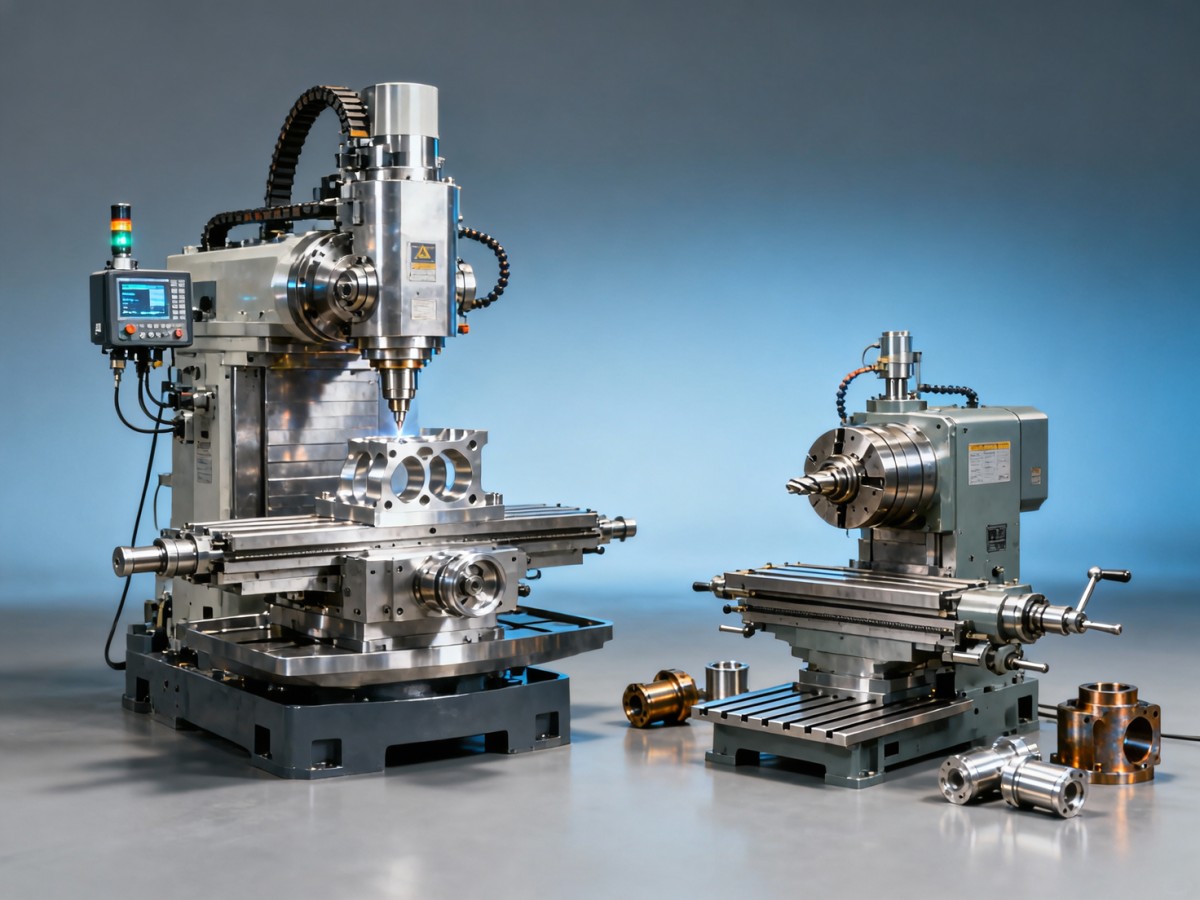
The table above highlights how tolerance thresholds, lot economics, and digital infrastructure readiness create fundamentally different machine tool evaluation matrices. For example, a Tier-1’s investment in a 5-axis gantry mill with laser interferometer calibration (cost: $2.8M–$4.3M) reflects long-term program commitments—often tied to 10-year airframe contracts. A Tier-2 evaluating the same model would instead prioritize modular tooling interfaces (HSK-A100 or Capto C8) enabling quick swaps between aerospace and energy-sector jobs without requalification.
CNC Programming & Workflow Implications
Programming complexity scales nonlinearly across tiers. Tier-1s routinely deploy NX CAM or Mastercam Multi-Axis with integrated simulation for 7-axis simultaneous milling of integrally bladed rotors (IBRs), requiring G-code verification against CAD models with GD&T callouts for every surface. Their NC programs average 1,200–3,500 lines and undergo three-stage validation: offline simulation, dry-run on dedicated test benches, and first-piece inspection using coordinate measuring machines (CMMs) with ISO 10360-2 certified probes.
Tier-2 shops rely heavily on conversational programming (Fanuc Manual Guide i, Mazak Smooth Technology) and post-processors optimized for rapid iteration. Over 74% use parametric templates for common aerospace features—e.g., countersunk fastener holes in titanium plates—with adjustable depth/tolerance fields. Their typical NC program length is 180–620 lines, validated via in-machine probing (Renishaw MP700) rather than full CMM inspection—reducing first-article turnaround from 5 days to under 14 hours.
This variance drives hardware selection: Tier-1s specify 64-bit CNC controllers with ≥4 GB RAM and dual Ethernet ports for redundant network paths; Tier-2s favor controllers with built-in HMI touchscreens and USB-C port accessibility for operator-driven edits during shift changes. Both require ISO 13849-1 PL e safety integration—but Tier-1s mandate SIL2-rated emergency stop logic, while Tier-2s accept Category 3 architecture with validated stop-time measurements ≤120 ms.
Procurement Decision Framework: 6 Key Evaluation Criteria
When selecting machine tools, procurement teams must weigh tier-specific trade-offs across six interdependent dimensions:
- Thermal Drift Compensation: Tier-1s require active coolant temperature control (±0.2°C stability) and real-time laser-based axis correction; Tier-2s accept passive thermal modeling with bi-monthly recalibration.
- Tool Change Cycle Time: Tier-1s target ≤2.8 seconds for ATC (Automatic Tool Changer); Tier-2s prioritize reliability over speed—<3.5 sec with >99.97% success rate is acceptable.
- Digital Twin Readiness: Tier-1s demand OPC UA PubSub support and embedded MQTT brokers; Tier-2s need only Modbus TCP and basic JSON export for shop-floor dashboards.
- Maintenance Access Design: Tier-1s require front-accessible hydraulic manifolds and modular drive cabinets (service time ≤45 min per module); Tier-2s value side-panel hatches enabling tooling adjustments without full enclosure removal.
- Fixture Interface Standardization: Tier-1s enforce ISO 26220-2 pallet pools with RFID tracking; Tier-2s adopt modular T-slot bases compatible with 3rd-party vises and vacuum chucks.
- Documentation Compliance: Tier-1s require full IEC 61508 SIL2 certification packages and raw sensor data logs; Tier-2s accept CE+ISO 14001 documentation with 24-month retention policies.
The weighting differences underscore strategic priorities: Tier-1s treat machine tools as long-life assets within certified production systems, while Tier-2s optimize for operational agility and rapid capital recovery. A Tier-2’s 3-year payback threshold contrasts sharply with Tier-1’s 7–10 year total cost of ownership (TCO) models—including lifecycle software licensing, calibration services, and obsolescence management.
Future-Proofing Strategies for Both Tiers
Both tiers face converging pressures: supply chain resilience demands localized capacity, while sustainability mandates reduce energy consumption by ≥35% per part (per ISO 50001 benchmarks). Forward-looking suppliers are adopting hybrid architectures—such as modular machine bases accepting interchangeable spindles (high-torque for heavy roughing, high-RPM for finish milling) and open-control platforms supporting Python-based adaptive algorithms.
For Tier-1s, this means specifying machines with future-ready hardware abstraction layers (HAL) that decouple motion control from vendor-specific firmware—enabling AI-driven feed optimization without controller replacement. Tier-2s benefit from cloud-connected edge devices (e.g., Siemens Desigo CC or Rockwell FactoryTalk Edge Gateway) that aggregate cycle data across heterogeneous fleets, generating predictive maintenance alerts with >89% accuracy for bearing failures 72–120 hours in advance.
Ultimately, alignment begins with shared language: procurement teams must translate business KPIs—on-time delivery (OTD), first-pass yield (FPY), and energy cost per kilogram—into measurable machine tool specifications. Whether selecting a 5-axis machining center for wing spar fabrication or a high-speed CNC lathe for landing gear bushings, technical due diligence must anchor every decision in verifiable performance data—not just catalog claims.
To align your machine tool strategy with tier-specific operational realities—and accelerate ROI through precision-engineered procurement—contact our aerospace manufacturing specialists today for a customized capability assessment and equipment specification review.
Recommended for You
![]() Fuxing EMU Trainset Procurement Reaches ¥4.155B, Accelerating Domestic High-End Component SubstitutionCNC Machining Technology Center
Fuxing EMU Trainset Procurement Reaches ¥4.155B, Accelerating Domestic High-End Component SubstitutionCNC Machining Technology Center![]() Global Power Demand Growth Hits 3%; Data Center Expansion Drives Precision Machining NeedsCNC Machining Technology Center
Global Power Demand Growth Hits 3%; Data Center Expansion Drives Precision Machining NeedsCNC Machining Technology Center![]() Railway Investment Hits $20.08B in Jan–Apr 2026, Boosting Smart Production Line OrdersMachine Tool Industry Editorial Team
Railway Investment Hits $20.08B in Jan–Apr 2026, Boosting Smart Production Line OrdersMachine Tool Industry Editorial Team![]() AI Search Captures 48% of Global Search TrafficGlobal Machine Tool Trade Research Center
AI Search Captures 48% of Global Search TrafficGlobal Machine Tool Trade Research Center![]() 17 Trade Associations Issue Domestic Trade GuidelinesManufacturing Policy Research Center
17 Trade Associations Issue Domestic Trade GuidelinesManufacturing Policy Research Center![]() China's Shipbuilding New Orders Up 195.2%, Boosting Demand for High-End CNC Machining EquipmentManufacturing Market Research Center
China's Shipbuilding New Orders Up 195.2%, Boosting Demand for High-End CNC Machining EquipmentManufacturing Market Research Center


Aris Katos
Future of Carbide Coatings
15+ years in precision manufacturing systems. Specialized in high-speed milling and aerospace grade alloy processing.
▶
What Is Shaping the Machine Tool Market in 2026?Manufacturing Market Research Center▶
How the Machine Tool Market Is Shifting in 2026Manufacturing Market Research Center▶
Why the Machine Tool Market Feels Uneven Across RegionsManufacturing Market Research Center▶
Is the Machine Tool Market Cooling or Just Rebalancing?Manufacturing Market Research Center▶
Machine Tool Market signals worth watching in 2026Manufacturing Market Research Center
Mastering 5-Axis Workholding Strategies
Join our technical panel on Nov 15th to learn about reducing vibrations in thin-wall components.

Providing you with integrated sanding solutions
Before-sales and after-sales services
Comprehensive technical support