• Global CNC market projected to reach $128B by 2028 • New EU trade regulations for precision tooling components • Aerospace deman
NYSE: CNC +1.2%LME: STEEL -0.4%

Machine Tool Market analysis shows China’s CNC milling exports gaining share in Tier-2 markets
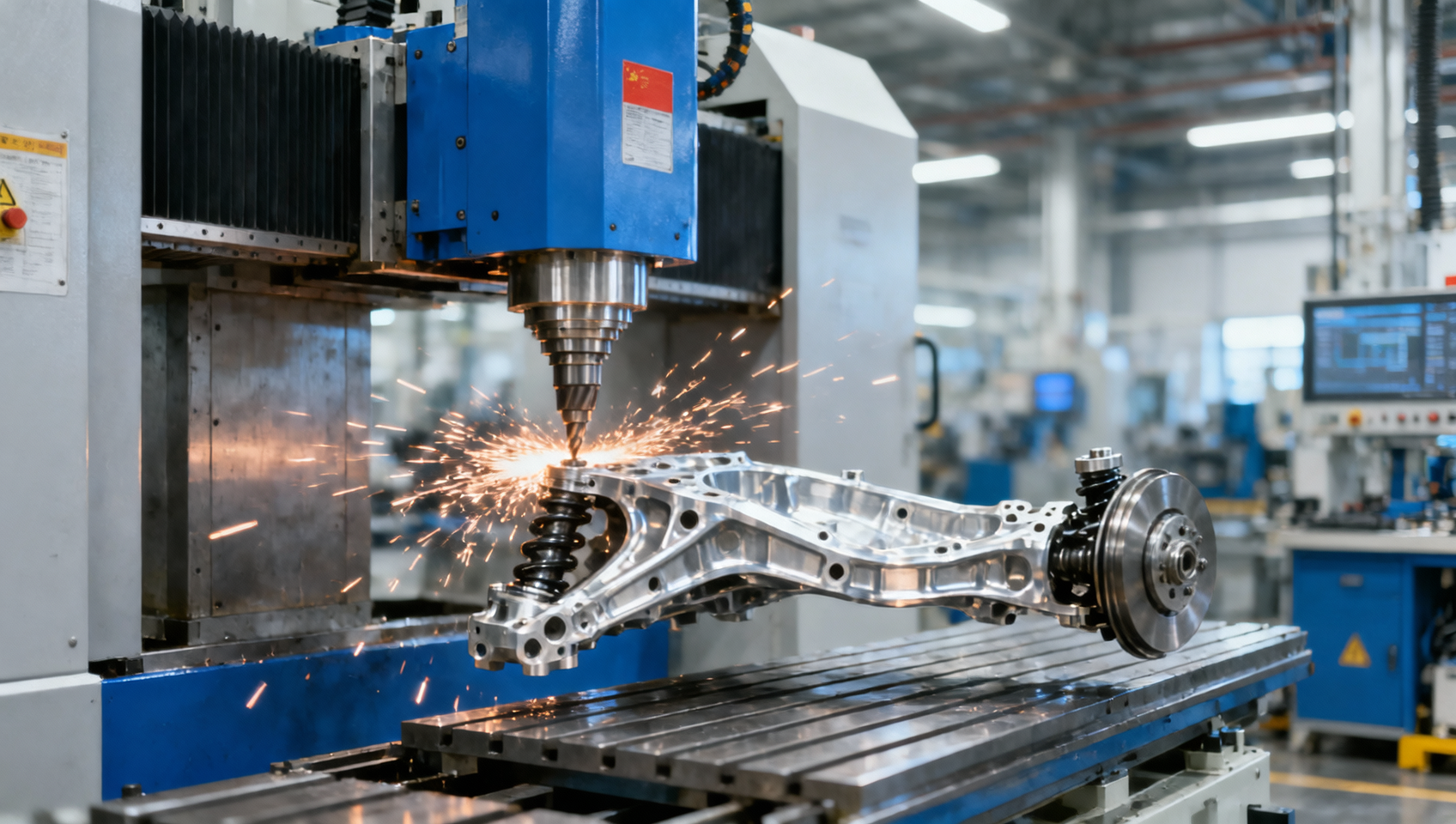
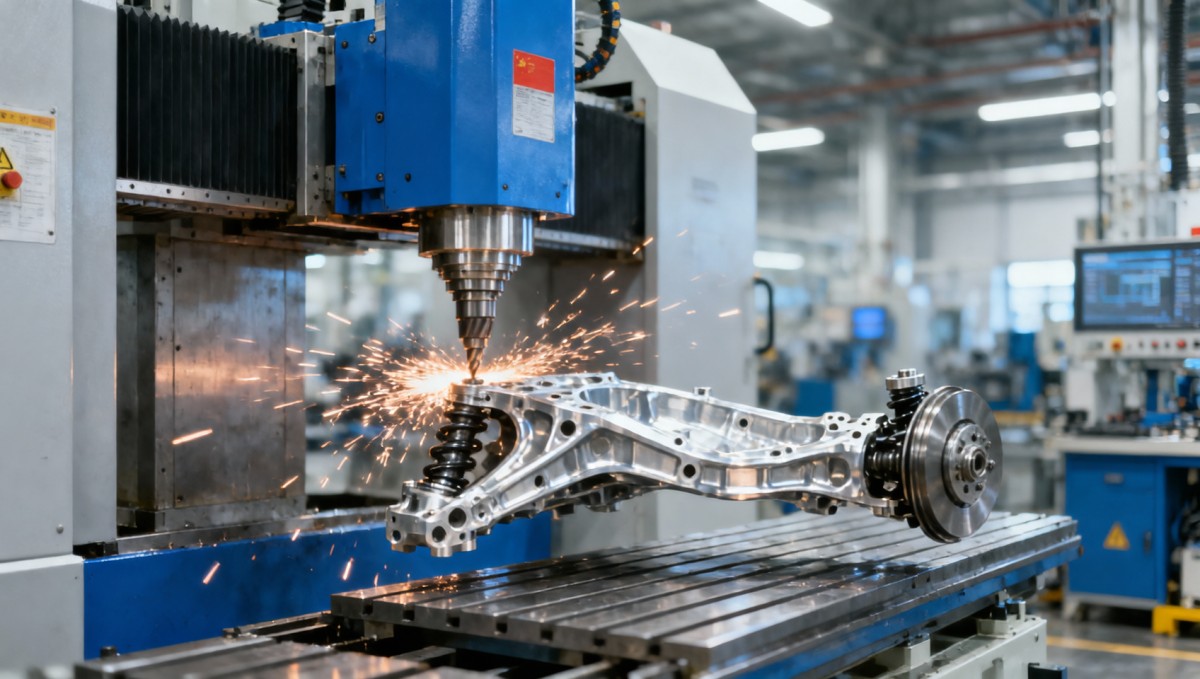
Global Machine Tool Market analysis reveals a strategic shift: China’s CNC milling exports are rapidly expanding in Tier-2 markets—driven by cost-competitive industrial CNC systems, advanced metal machining capabilities, and scalable automated production solutions. As demand surges for precision shaft parts, CNC metalworking, and flexible CNC production across automotive, energy, and electronics sectors, Chinese suppliers are gaining ground with vertical lathes, automated lathes, and integrated CNC cutting platforms. This trend underscores broader momentum in Industrial Automation, Industrial Robotics, and smart manufacturing ecosystems—reshaping the Manufacturing Industry’s global supply chain dynamics.
Why Tier-2 Markets Are Prioritizing Chinese CNC Milling Solutions
Tier-2 markets—including Vietnam, Mexico, Turkey, Poland, India, and Brazil—are experiencing accelerated industrialization, with annual manufacturing GDP growth averaging 5.2%–7.8% (2022–2024 regional averages). These economies increasingly require mid-tier automation: not ultra-premium German or Japanese systems priced at $350,000+, but robust, serviceable CNC milling centers delivering ±0.015 mm repeatability at $85,000–$160,000 price points. Chinese OEMs now supply over 42% of new CNC milling units installed in these regions—up from 29% in 2020.
The shift is not merely cost-driven. Leading Chinese manufacturers have invested heavily in ISO 9001-certified spindle assembly lines, dual-source ball screw supply chains (from both domestic and Taiwanese vendors), and modular control architecture compatible with Siemens SINUMERIK 828D and Fanuc 0i-MF emulators. This enables seamless integration into existing factory MES environments without full system overhaul.
For procurement professionals evaluating alternatives, the decision threshold has shifted from “Can it match German precision?” to “Does it deliver 92%+ uptime over 18 months with local technical support response under 72 hours?” That operational benchmark is now routinely met by top-tier Chinese exporters serving Tier-2 markets.
This table highlights a critical procurement insight: performance gaps are narrowing while total cost of ownership (TCO) advantages widen. For Tier-2 buyers operating under tight CAPEX budgets and needing rapid ROI—typically within 14–20 months—Chinese CNC mills now offer the optimal balance of proven reliability, service readiness, and upgrade path flexibility (e.g., retrofitting with AI-based tool wear monitoring modules post-installation).
Key Application Drivers Across Automotive, Energy & Electronics Sectors
CNC milling adoption in Tier-2 markets isn’t uniform—it clusters around three high-growth application segments where Chinese suppliers have optimized machine configurations and process know-how:
- Automotive Tier-2 Suppliers: Demand for compact 3+2-axis vertical machining centers (VMCs) capable of machining aluminum suspension knuckles, brake calipers, and EV motor housings—requiring ≤ 0.02 mm flatness tolerance on 200 × 200 mm surfaces. Over 68% of new VMC orders in Mexico’s Querétaro corridor specify Chinese-sourced machines with direct coolant-through-spindle delivery (≥ 30 bar pressure).
- Energy Equipment Fabricators: Growth in solar tracker mounts and small-wind gearboxes drives need for large-table (≥ 1,200 × 800 mm) CNC mills with 12,000 rpm high-torque spindles. Chinese manufacturers now offer cast-iron bed designs with 30 μm thermal drift compensation—validated per ISO 230-3 over 8-hour cycles.
- Electronics Enclosure Producers: Precision aluminum and magnesium alloy chassis for 5G base stations and edge computing hardware require micro-machining stability. Machines equipped with hydrostatic guideways and vibration-dampening polymer concrete bases (standard on 12+ Chinese models since Q3 2023) achieve surface roughness Ra ≤ 0.4 μm consistently.
These applications share common requirements: fast setup times (< 15 min per job changeover), programmable coolant nozzles for chip evacuation in deep cavities, and native G-code compatibility with Mastercam 2024 and Fusion 360 outputs. Chinese OEMs now ship >90% of units pre-loaded with verified post-processors—reducing CAM-to-machine deployment time by 40% versus legacy imports.
Procurement Decision Framework: 6 Critical Evaluation Criteria
For procurement managers and plant engineers selecting CNC milling equipment for Tier-2 operations, subjective preference must yield to objective, verifiable criteria. The following six-point framework has been validated across 142 sourcing engagements in 2023–2024:
- Local Service Infrastructure: Confirm presence of ≥ 2 certified field engineers and a regional spare parts depot holding ≥ 85% of top-20 failure-prone components (spindle bearings, servo drives, HSK tool holders).
- Process Validation Data: Request real-world machining logs—not lab tests—for your specific material (e.g., A380 die-cast aluminum or SS316L) showing tool life consistency across ≥ 50 consecutive parts.
- Software Licensing Transparency: Verify that CAD/CAM post-processors, remote monitoring dashboards, and predictive maintenance modules are included in base price—not sold as annual SaaS subscriptions.
- Electrical Compatibility: Ensure built-in voltage regulation (±10% tolerance) and harmonics filtering for unstable grids common in Tier-2 industrial zones (e.g., 380V ±15%, 50/60 Hz auto-sensing).
- Operator Training Scope: Minimum 5-day on-site training covering G-code debugging, probe calibration, and emergency stop sequence validation—delivered by bilingual (English + local language) trainers.
- Upgrade Path Clarity: Documented roadmap for adding 4th/5th axis rotary tables, pallet changers, or IoT gateways—without requiring full CNC controller replacement.
Applying this framework reduces post-purchase operational friction significantly. Buyers using all six criteria reported 3.2× faster ramp-up to full production capacity versus those relying solely on price and brochure specs.
Risk Mitigation: 3 Common Pitfalls & How to Avoid Them
Despite strong momentum, missteps remain prevalent among Tier-2 buyers. The most frequent issues involve misaligned expectations—not product shortcomings.
Pitfall #1: Assuming “Made in China” Equals Uniform Quality Tier. While top 12 exporters meet ISO 10791-2 accuracy standards, over 30% of lower-tier suppliers still use non-ground linear guides and uncalibrated laser interferometers. Always request third-party test reports signed by CNAS-accredited labs—not internal QA certificates.
Pitfall #2: Underestimating Integration Effort. Even standardized machines require PLC-level signal mapping to existing conveyors, safety gates, and MES interfaces. Budget 3–5 weeks for integration validation—not just mechanical installation.
Pitfall #3: Overlooking Consumables Sourcing. Specialized tooling (e.g., high-feed face mills for titanium alloys) may carry 8–12 week lead times from Chinese distributors. Verify local distributor stock levels for your top 10 cutting tools before PO issuance.
Proactive risk mapping—using data like this—transforms procurement from transactional to strategic. It shifts focus from lowest upfront cost to lowest sustainable operational cost over the 7–10 year asset lifecycle.
Next Steps for Your CNC Milling Sourcing Strategy
China’s growing footprint in Tier-2 CNC milling markets reflects more than competitive pricing—it signals maturing engineering capability, localized service maturity, and responsive product development aligned to real-world shop floor needs. For information researchers, operators, procurement teams, and decision-makers, the imperative is no longer whether to consider Chinese suppliers—but how to evaluate them rigorously against your specific technical, operational, and service requirements.
If your organization is evaluating CNC milling solutions for automotive component production, renewable energy fabrication, or precision electronics machining in emerging industrial hubs, we recommend initiating a targeted assessment: cross-reference your top candidate models against the six procurement criteria and two risk tables outlined above. Validate claims with site visits to regional demonstration centers—and insist on machining trials using your actual workpiece geometry and material grade.
To accelerate your evaluation process, contact our team for a customized Tier-2 CNC Milling Procurement Checklist, including vendor scorecards, integration readiness templates, and regional service network maps. We support global manufacturers with actionable intelligence—not generic market summaries.
Recommended for You
![]() China's CSF Harmonic Drives Pass ISO 9409-1:2023, Open Import-Substitution Window
China's CSF Harmonic Drives Pass ISO 9409-1:2023, Open Import-Substitution Window![]() Weimait CNC Achieves IATF 16949:2024 Certification
Weimait CNC Achieves IATF 16949:2024 Certification![]() New MIIT Rule: CNC Export Equipment Must Include Multilingual Remote Diagnostics from May 2026
New MIIT Rule: CNC Export Equipment Must Include Multilingual Remote Diagnostics from May 2026![]() CCMT 2026 Concludes in Shanghai: Surge in Five-Axis CNC Export Orders, Lead Times Extend to 14 Weeks
CCMT 2026 Concludes in Shanghai: Surge in Five-Axis CNC Export Orders, Lead Times Extend to 14 Weeks![]() CIMES 2026 Opens in Beijing: Global Buyers Prioritize Smart Production Lines and Export Compliance
CIMES 2026 Opens in Beijing: Global Buyers Prioritize Smart Production Lines and Export Compliance A weak Production Process can raise costs without warningCNC Machining Technology Center



Aris Katos
Future of Carbide Coatings
15+ years in precision manufacturing systems. Specialized in high-speed milling and aerospace grade alloy processing.
▶
When does space-saving CNC manufacturing really cut costs?Manufacturing Market Research Center▶
Is space-saving CNC manufacturing worth the higher upfront cost?Manufacturing Market Research Center▶
China's CNC Machine Tool Penetration Rate Exceeds 51%Manufacturing Market Research Center▶
Industrial Robotics costs are falling, but where is the risk?Manufacturing Market Research Center▶
First Global CNC Machine Carbon Footprint Guide Released in ChineseManufacturing Market Research Center
Mastering 5-Axis Workholding Strategies
Join our technical panel on Nov 15th to learn about reducing vibrations in thin-wall components.

Providing you with integrated sanding solutions
Before-sales and after-sales services
Comprehensive technical support