• Global CNC market projected to reach $128B by 2028 • New EU trade regulations for precision tooling components • Aerospace deman
NYSE: CNC +1.2%LME: STEEL -0.4%

Global Manufacturing shifts that are changing machine demand
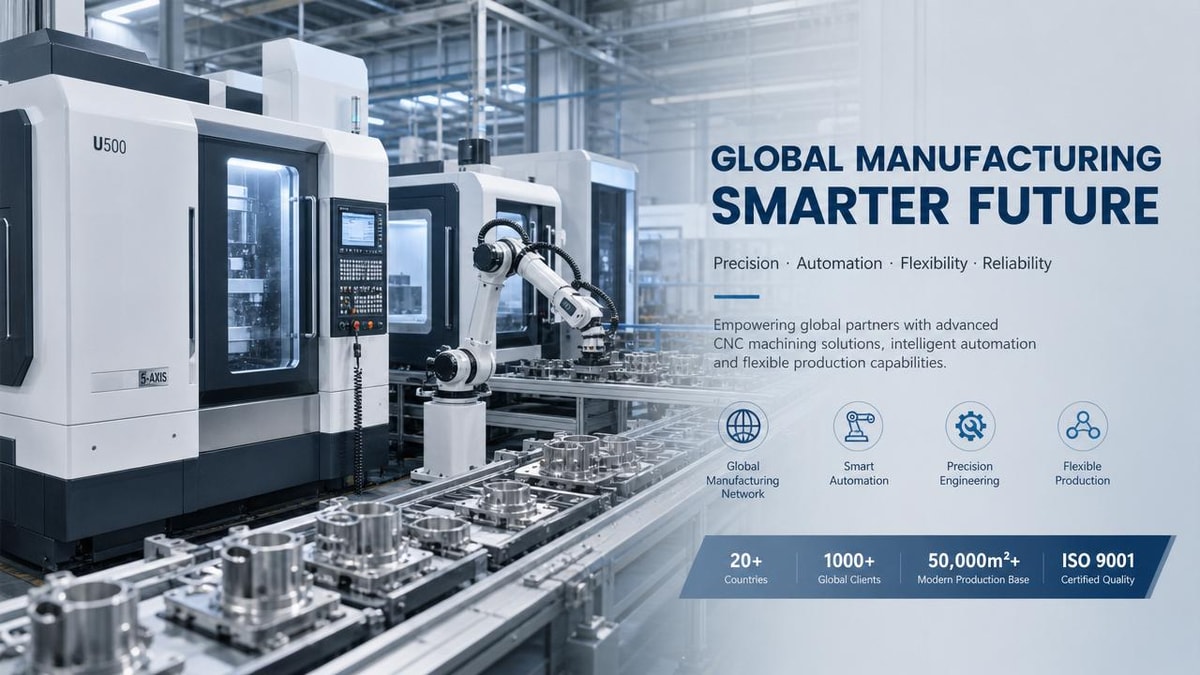
Global Manufacturing is undergoing a major realignment, reshaping how companies evaluate machine tool demand, investment timing, and supply chain resilience. For business assessment professionals, understanding these shifts is essential to identify growth markets, technology priorities, and sourcing risks across CNC machines, automation systems, and precision manufacturing equipment.
Why Global Manufacturing shifts are changing machine demand patterns
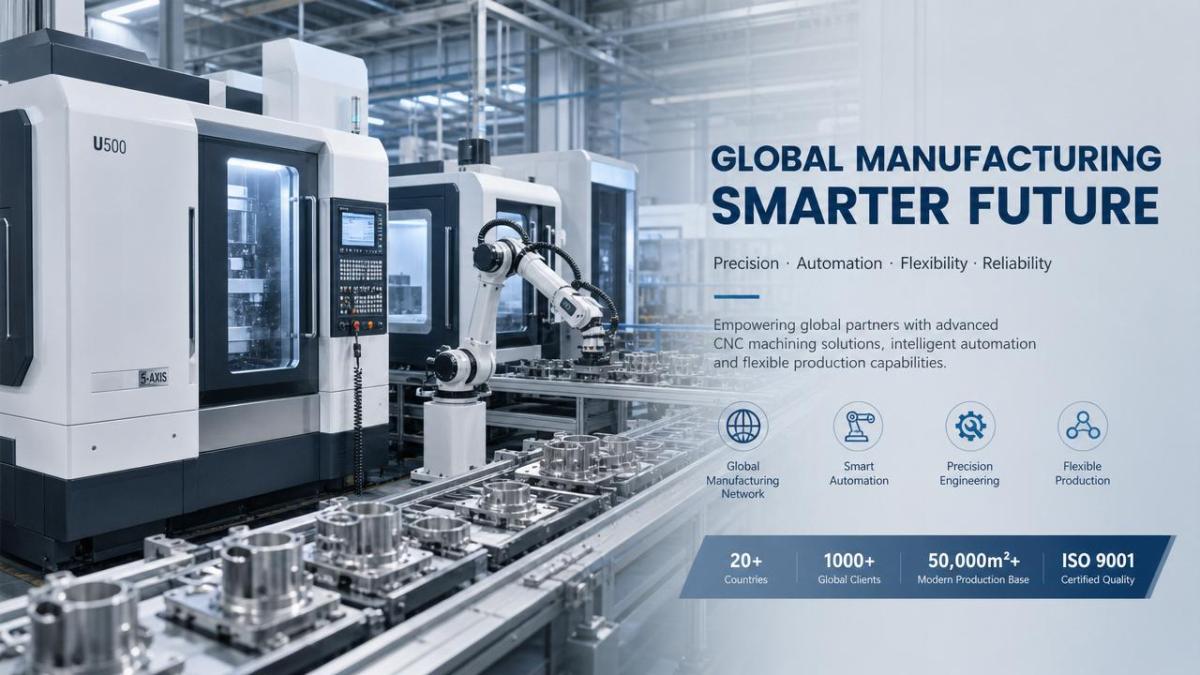
Machine demand no longer follows a simple cycle of expansion and slowdown. In Global Manufacturing, demand is now shaped by regional localization, labor pressure, industrial policy, energy transition, and digital production targets. For business assessment teams, this means a machine tool purchase can no longer be judged only by unit price or nominal capacity.
The CNC machine tool industry sits at the center of this transition. CNC lathes, vertical and horizontal machining centers, five-axis systems, precision grinding equipment, robotic loading cells, and automated lines are all being reevaluated through a new lens: how fast they support flexible production, how reliably they fit multi-country supply chains, and how well they align with future product complexity.
This change affects more than automotive or aerospace. Energy equipment, electronics, industrial components, medical parts, and general engineering are all adjusting production footprints. As Global Manufacturing becomes more fragmented yet more connected digitally, machine demand becomes more selective, more technical, and more dependent on scenario-based evaluation.
- Higher demand for automation where labor costs, skill shortages, or output consistency create bottlenecks.
- Stronger interest in flexible machine platforms that can handle low-volume, high-mix production.
- Closer scrutiny of machine uptime, spare parts access, and service response in cross-border sourcing.
- Greater focus on precision stability, traceability, and digital integration rather than only spindle power.
What business assessment professionals should track first
When Global Manufacturing shifts accelerate, assessment work becomes more complex because demand signals can be misleading. A rise in equipment orders may reflect capacity relocation, not end-market growth. A decline in standard machine sales may hide a shift toward more expensive multi-axis or automated cells. The first task is to separate volume change from value change.
Core indicators behind real machine demand
Instead of relying on broad manufacturing sentiment alone, assessment teams should combine capital expenditure intent, order backlog quality, localization policies, and end-use industry complexity. In many cases, precision requirements and process integration matter more than aggregate factory output.
- Track whether buyers are replacing old equipment, expanding capacity, or reshoring production. Each motive drives different machine specifications.
- Review part geometry and tolerance trends. More complex shafts, housings, discs, and structural components usually increase demand for advanced CNC platforms.
- Examine labor availability and training levels. Regions with operator shortages often move faster toward robotic loading, tool monitoring, and unattended machining.
- Measure supplier concentration risk. Heavy dependence on one country or one key component source can alter procurement timing even when demand is healthy.
Which Global Manufacturing trends are driving the strongest equipment demand
The table below highlights how major Global Manufacturing shifts influence machine tool categories, buyer priorities, and investment logic. This is useful when comparing whether a market requires standard machines, high-precision systems, or integrated automation solutions.
A key insight is that Global Manufacturing demand is shifting toward machines that reduce decision risk over the full production lifecycle. Equipment that looks more expensive upfront may produce a better business case if it lowers fixture count, setup time, scrap exposure, and dependence on scarce operators.
How to compare machine categories under changing market conditions
Business assessment professionals often need a fast comparison framework. The right choice depends on part mix, target industries, delivery pressure, and long-term production planning. In Global Manufacturing, the best investment is often the one that balances flexibility, throughput, and serviceability rather than maximizing one metric alone.
Comparison by production objective
The following comparison table can support internal reviews when evaluating whether standard CNC machines, advanced multi-axis systems, or automated cells better match the current demand environment.
This comparison shows why Global Manufacturing shifts rarely support one universal equipment strategy. Companies serving multiple industries may need a hybrid structure: standard machines for capacity coverage, multi-axis systems for higher value jobs, and automation where labor or delivery constraints are most severe.
Procurement guide: what to evaluate before approving a machine investment
Procurement decisions in the machine tool sector are often delayed because decision makers lack a common framework between engineering, sourcing, finance, and operations. A practical evaluation model helps business assessment teams avoid under-specification, overspending, or poor implementation timing.
Five decision questions that matter most
- What part family will dominate machine loading over the next 24 to 36 months? A machine optimized for a short-term project can become a bottleneck later.
- How many setups can be eliminated? In Global Manufacturing, setup reduction often delivers more value than small gains in nominal cutting speed.
- What is the acceptable risk around lead time, installation, and training? Fast delivery has little value if commissioning drags on.
- Does the supplier support local compliance, documentation, and service coordination? This is critical in cross-border equipment sourcing.
- Can the machine support future digital integration, tooling upgrades, or automation retrofits without major rework?
A simple internal checklist
- Confirm workpiece size range, material type, tolerance bands, and annual volume assumptions.
- Map required tools, fixturing complexity, and automation interfaces before requesting quotations.
- Compare total cost of ownership, including training, downtime exposure, maintenance, utilities, and support response.
- Review documentation expectations such as manuals, electrical standards, inspection records, and acceptance criteria.
Cost, alternatives, and timing: how to protect ROI in Global Manufacturing
Budget pressure is one of the most common pain points for assessment professionals. Yet in Global Manufacturing, a lower initial quote does not always mean lower total investment risk. Timing, tooling compatibility, operator learning curve, and future adaptability often determine the real payback period.
Where costs usually expand beyond the machine price
Hidden cost areas include fixture redesign, foundation or utility preparation, cutting tool optimization, trial production scrap, and delays in post-installation support. These costs are especially relevant when equipment is sourced internationally or placed into a mixed-vendor automation environment.
Alternative strategies can also make sense. Instead of buying the most advanced configuration immediately, some manufacturers phase investment by starting with a capable base machine, then adding probing, palletization, or robotic tending after process stability is proven. This staged model can reduce capital risk without blocking future upgrades.
Standards, compliance, and supplier readiness checks
As Global Manufacturing becomes more international, compliance is not a secondary issue. Buyers should confirm whether machine documentation, electrical configuration, guarding approach, and inspection routines match destination market expectations. Even when specific certifications vary by country, general readiness can be assessed early.
- Check machine safety functions, emergency stop logic, and guarding design against the destination plant’s internal rules.
- Review whether measurement, calibration, and acceptance procedures are clearly defined before shipment.
- Verify software language, electrical standards, voltage compatibility, and data connection requirements.
- Ask about spare parts planning, remote diagnostics, and escalation paths for commissioning issues.
For business assessment teams, supplier readiness is often as important as machine performance. A technically strong solution can still become a poor investment if communication, documentation, and after-sales coordination are weak.
Common misconceptions and FAQ about Global Manufacturing machine demand
Does rising manufacturing investment always mean stronger demand for all machine types?
No. Global Manufacturing investment may shift toward specific processes, such as multi-axis machining, inspection integration, or automated loading, while demand for older standard configurations softens. Assessment should focus on where value is moving, not just whether capital spending is increasing.
Are low-cost machines the best option in uncertain markets?
Not necessarily. In unstable markets, flexibility and service access often matter more than the lowest purchase price. A cheaper machine may require more setups, produce more scrap during ramp-up, or create support delays that outweigh the initial savings.
Which applications are most likely to upgrade first?
Applications involving complex shaft parts, precision housings, energy components, aerospace structures, and electronics hardware tend to upgrade sooner because tolerance pressure, traceability, and production consistency are becoming stricter. These segments often lead machine demand shifts within Global Manufacturing.
What is the most overlooked risk in cross-border machine procurement?
Many teams focus on factory acceptance and overlook installation readiness. Utility mismatch, missing fixtures, unclear training scope, and weak spare parts planning can delay production more than shipping time. A procurement plan should cover the entire implementation path, not just the order date.
Trend outlook: where Global Manufacturing may shift next
The next stage of Global Manufacturing is likely to reward suppliers and buyers that combine precision capability with operational adaptability. Demand should continue shifting toward digitally connected CNC systems, modular automation, energy-aware production planning, and flexible lines that support shorter product cycles.
For assessment professionals, the opportunity lies in building a decision model that links market movement to machine architecture. Instead of asking only whether demand is up or down, the better question is this: what kind of production capability is becoming strategically necessary, and where will equipment choices create the most resilience?
Why choose us for market insight and sourcing evaluation
We focus on the global CNC machining and precision manufacturing industry, covering machine tools, automation systems, supplier trends, and international trade developments that matter to real purchasing and investment decisions. This allows business assessment teams to move from general market noise to practical evaluation criteria.
You can contact us for specific support on machine parameter confirmation, equipment selection logic, production scenario matching, supplier comparison, delivery cycle review, customization possibilities, documentation and compliance concerns, sample feasibility discussion, and quotation communication. If your team is assessing how Global Manufacturing shifts may affect future equipment demand, we can help structure the questions before capital is committed.
PREVIOUS ARTICLE
NEXT ARTICLE
Recommended for You
![]() ANVISA New Rule: Portuguese Biocompatibility Labels for Medical CNC Machines in BrazilManufacturing Policy Research Center
ANVISA New Rule: Portuguese Biocompatibility Labels for Medical CNC Machines in BrazilManufacturing Policy Research Center![]() EMO Hannover 2027 Booth Booking Opens: China AI-Machining Pavilion LaunchesGlobal Machine Tool Trade Research Center
EMO Hannover 2027 Booth Booking Opens: China AI-Machining Pavilion LaunchesGlobal Machine Tool Trade Research Center![]() KATS Updates KC Rules: CNC Cybersecurity Modules Must Meet IEC 62443-4-2Manufacturing Policy Research Center
KATS Updates KC Rules: CNC Cybersecurity Modules Must Meet IEC 62443-4-2Manufacturing Policy Research Center![]() Shanghai Port Launches Green Clearance Channel for CNC EquipmentManufacturing Market Research Center
Shanghai Port Launches Green Clearance Channel for CNC EquipmentManufacturing Market Research Center![]() ISO 23218-3:2026 Published: CNC Digital Twin Interoperability StandardCNC Machining Technology Center
ISO 23218-3:2026 Published: CNC Digital Twin Interoperability StandardCNC Machining Technology Center![]() Vietnam Cuts CNC Equipment Import Tariff to 3.8% from June 2026Global Machine Tool Trade Research Center
Vietnam Cuts CNC Equipment Import Tariff to 3.8% from June 2026Global Machine Tool Trade Research Center


Aris Katos
Future of Carbide Coatings
15+ years in precision manufacturing systems. Specialized in high-speed milling and aerospace grade alloy processing.
▶
Global Manufacturing shifts that are changing machine demandManufacturing Market Research Center▶
Global Manufacturing Is Rebalancing Faster Than ExpectedManufacturing Market Research Center▶
What Global Manufacturing shifts mean for machine sourcingManufacturing Market Research Center▶
2026 Global Trade & Investment Summit: AI, Manufacturing-Service IntegrationManufacturing Market Research Center▶
Global Manufacturing Shifts Are Rewriting Machine Sourcing PlansManufacturing Market Research Center
Mastering 5-Axis Workholding Strategies
Join our technical panel on Nov 15th to learn about reducing vibrations in thin-wall components.

Providing you with integrated sanding solutions
Before-sales and after-sales services
Comprehensive technical support