• Global CNC market projected to reach $128B by 2028 • New EU trade regulations for precision tooling components • Aerospace deman
NYSE: CNC +1.2%LME: STEEL -0.4%

Global Manufacturing Is Rebalancing Faster Than Expected
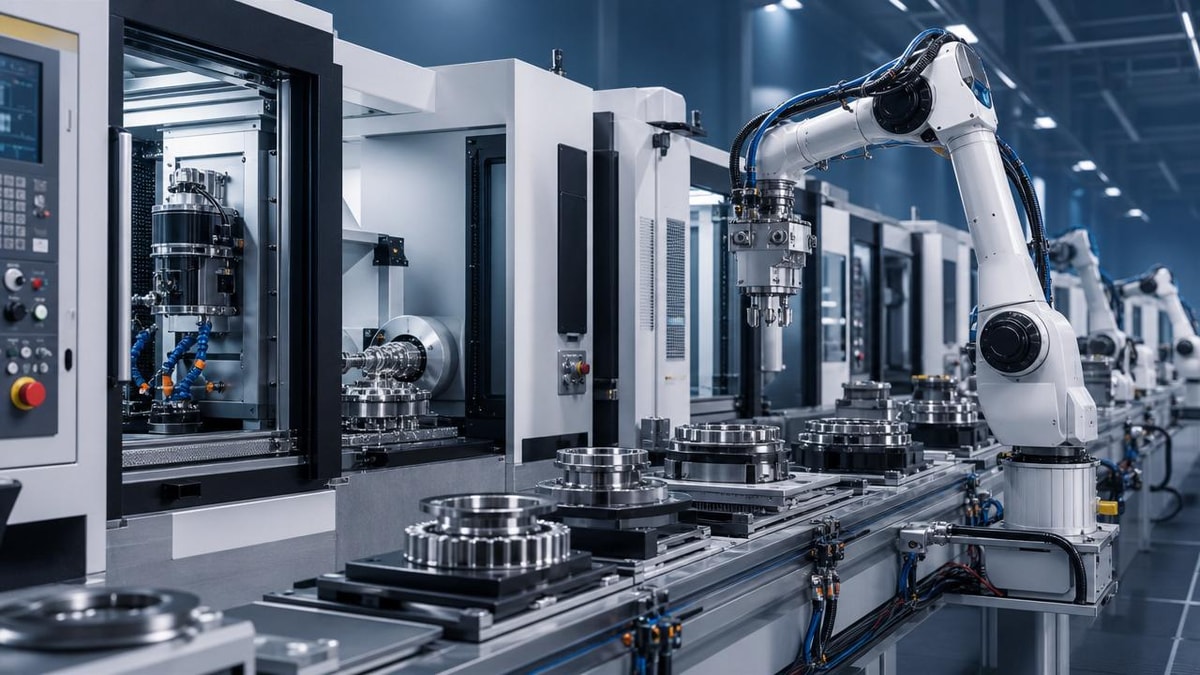
Global Manufacturing is rebalancing faster than expected, reshaping supply chains, investment priorities, and competitive dynamics across industrial markets. For business decision-makers in CNC machining and precision manufacturing, this shift creates both pressure and opportunity, from automation upgrades to cross-border sourcing and capacity planning. Understanding where production is moving, why it is accelerating, and how machine tool demand is evolving is now essential for making smarter strategic decisions.
Global Manufacturing is shifting from efficiency-first to resilience-first
The strongest signal in Global Manufacturing today is not simply that factories are moving. It is that the logic behind location decisions has changed. For years, many industrial companies optimized around labor cost, scale concentration, and just-in-time delivery. Now they are balancing those goals against geopolitical risk, tariff exposure, energy uncertainty, logistics disruption, and the need for faster regional response.
This has created a more distributed production map. Instead of one dominant sourcing base, manufacturers are building regional networks across Asia, North America, and Europe. Some are expanding in China for domestic demand and supplier depth, while also adding capacity in Southeast Asia, India, Mexico, Eastern Europe, or local home markets. In CNC machining and precision manufacturing, this matters because machine tools are often among the earliest capital investments made when production footprints are reconfigured.
For decision-makers, the key insight is that Global Manufacturing is not moving in one direction. It is splitting into multiple strategies at once: nearshoring, friend-shoring, dual sourcing, localized final assembly, and selective automation in high-cost regions. The companies that read this change correctly are not waiting for a perfect new equilibrium. They are adjusting capacity step by step.
Why the rebalancing is accelerating across industrial sectors
Several forces are speeding up the current rebalancing of Global Manufacturing. None of them acts alone, but together they have changed boardroom decisions in a relatively short time.
For machine tool suppliers and precision manufacturers, these drivers mean demand is becoming less predictable by country but more strategic by application. Investment is flowing less toward generic capacity and more toward flexible, high-precision, digitally connected production assets.
What this means for CNC machine tools and factory investment
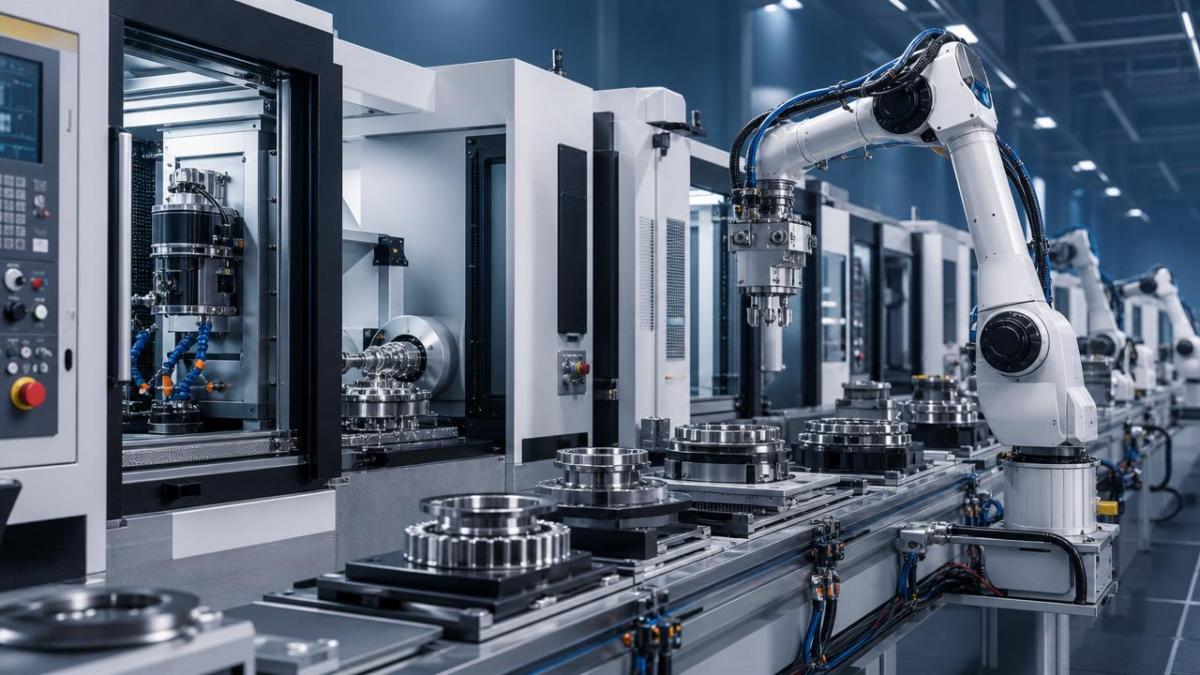
In Global Manufacturing, rebalancing does not automatically reduce factory spending. In many cases, it increases it. When companies duplicate supply chains, launch backup production sites, or localize machining operations, they need more equipment, more tooling, and more process control. This is especially true in industries with tight tolerances, traceability requirements, or frequent model changes.
That creates a favorable but more selective environment for CNC machine tools. Buyers are not just asking whether a machine can hit target precision. They are asking whether it can support skilled labor shortages, fast changeovers, remote diagnostics, energy efficiency, and integration with automation systems. Machining centers, multi-axis systems, and CNC lathes that fit these needs are more aligned with the current phase of Global Manufacturing than machines positioned only on basic output.
Another important change is the growing value of process stability. As manufacturers build new sites or qualify secondary suppliers, repeatability becomes critical. Cutting tools, fixtures, probing systems, software, and training support now influence purchase decisions more directly. Equipment vendors that can help customers shorten ramp-up time will be more competitive than those offering only standalone hardware.
The impact is uneven across markets, customers, and production stages
Not every segment of Global Manufacturing is changing at the same speed. Decision-makers should avoid broad assumptions and focus on where demand is truly shifting.
The strongest effects are often felt in the middle of the value chain: contract manufacturers, precision component suppliers, machine integrators, tooling partners, and industrial distributors. These companies must respond to customer relocation decisions quickly, often before long-term volumes are fully visible. That raises the importance of modular equipment planning and stronger supplier partnerships.
The next competitive advantage is flexible capacity, not just low cost
One of the clearest lessons from Global Manufacturing over the past few years is that low cost alone no longer defines competitiveness. A factory that is cheap but slow to adapt can lose business to a higher-cost site that offers faster qualification, better automation, and more reliable delivery. In precision manufacturing, flexibility now means several things at once: the ability to switch product mix, handle small-to-medium batch runs efficiently, maintain quality across shifts, and integrate inspection and data collection into the process.
This is why many capital expenditure decisions are favoring equipment ecosystems rather than single machines. Business leaders are increasingly evaluating spindle uptime, software compatibility, spare parts access, local service coverage, and operator training. In a rebalanced Global Manufacturing environment, weak after-sales support can become a strategic risk if a new regional plant depends on a narrow equipment base.
The same logic applies to suppliers of cutting tools, workholding, metrology, and automation cells. Their role is expanding from component supply to production assurance. Companies that help customers reduce ramp-up errors and stabilize throughput will likely gain share as factory networks become more fragmented.
Signals business decision-makers should watch now
Because Global Manufacturing is rebalancing unevenly, leaders need a practical framework for reading signals instead of reacting to headlines. Several indicators deserve regular review.
- Customer requests for dual sourcing, local content, or shorter lead times
- Changes in machine tool orders tied to specific industries rather than broad market sentiment
- Industrial policy incentives affecting domestic production, tax credits, or strategic sectors
- Supplier delivery variability for castings, controls, bearings, electronics, and tooling materials
- Labor availability and skill constraints in target expansion regions
- Energy price stability and infrastructure quality for new production sites
These signals help separate temporary volatility from structural change. For example, a short-term fall in orders may not mean weaker long-term demand if customers are simply delaying purchases while redesigning supply footprints. On the other hand, repeated requests for regional production can indicate a durable shift that justifies local machining or assembly investment.
How companies in Global Manufacturing can respond without overreacting
The right response is rarely a dramatic relocation. More often, it is a sequence of targeted moves that improve optionality. For CNC manufacturers, contract machining firms, and industrial suppliers, that usually starts with portfolio clarity. Which products require proximity to customers? Which processes depend on specialized labor or supplier clusters? Which sites could scale with automation rather than headcount?
A sensible next step is to segment equipment and capacity planning into three layers: core production that must remain highly stable, flexible capacity that can be added regionally, and experimental or pilot lines for new applications. This approach reduces the risk of locking too much capital into one scenario while still preparing for the continued rebalancing of Global Manufacturing.
Companies should also strengthen technical collaboration across borders. As new plants or suppliers come online, process documentation, digital programming standards, inspection routines, and maintenance discipline become more important than before. In precision manufacturing, scale without process transfer capability can create costly inconsistency.
A practical decision framework for the next 12 to 24 months
What to confirm before making major moves
Global Manufacturing will likely remain in a period of selective redistribution rather than full decoupling or full re-centralization. That means business leaders should test assumptions carefully. Before committing to new equipment, new markets, or new supplier structures, confirm whether the demand shift is strategic, whether service capability exists locally, whether process quality can be replicated, and whether the investment strengthens resilience as well as output.
For companies in CNC machining and precision manufacturing, the biggest opportunity may not be chasing every new geography. It may be becoming the most reliable, automation-capable, and regionally responsive partner as Global Manufacturing evolves. If your business wants to judge how this trend affects its own operations, focus first on four questions: where your customers are adding production, which parts require localized precision capacity, which technologies reduce dependence on unstable labor or logistics, and which supplier relationships need reinforcement before the next shift arrives.
PREVIOUS ARTICLE
NEXT ARTICLE
Recommended for You
 CNC Milling Capacity Gaps Can Hurt Small Batch ProfitabilityManufacturing Market Research Center
 Industrial Robotics Payback Is Changing in Mid-Size PlantsManufacturing Market Research Center
 Shaft Parts Machining Problems That Show Up at Final InspectionCNC Machining Technology Center
 Production Process Delays Usually Start Before Machining BeginsCNC Machining Technology Center
 Industrial Automation Projects Often Miss This Integration StepCNC Machining Technology Center
 CNC Metal Cutting Tool Wear Is Costing More Than You ThinkCNC Machining Technology Center


Aris Katos
Future of Carbide Coatings
15+ years in precision manufacturing systems. Specialized in high-speed milling and aerospace grade alloy processing.
▶
Global Manufacturing Is Rebalancing Faster Than ExpectedManufacturing Market Research Center▶
What Global Manufacturing shifts mean for machine sourcingManufacturing Market Research Center▶
2026 Global Trade & Investment Summit: AI, Manufacturing-Service IntegrationManufacturing Market Research Center▶
Global Manufacturing Shifts Are Rewriting Machine Sourcing PlansManufacturing Market Research Center▶
Where the Manufacturing Industry is adding automation fastestManufacturing Market Research Center
Mastering 5-Axis Workholding Strategies
Join our technical panel on Nov 15th to learn about reducing vibrations in thin-wall components.

Providing you with integrated sanding solutions
Before-sales and after-sales services
Comprehensive technical support