• Global CNC market projected to reach $128B by 2028 • New EU trade regulations for precision tooling components • Aerospace deman
NYSE: CNC +1.2%LME: STEEL -0.4%

How Global Manufacturing is reshaping sourcing risk
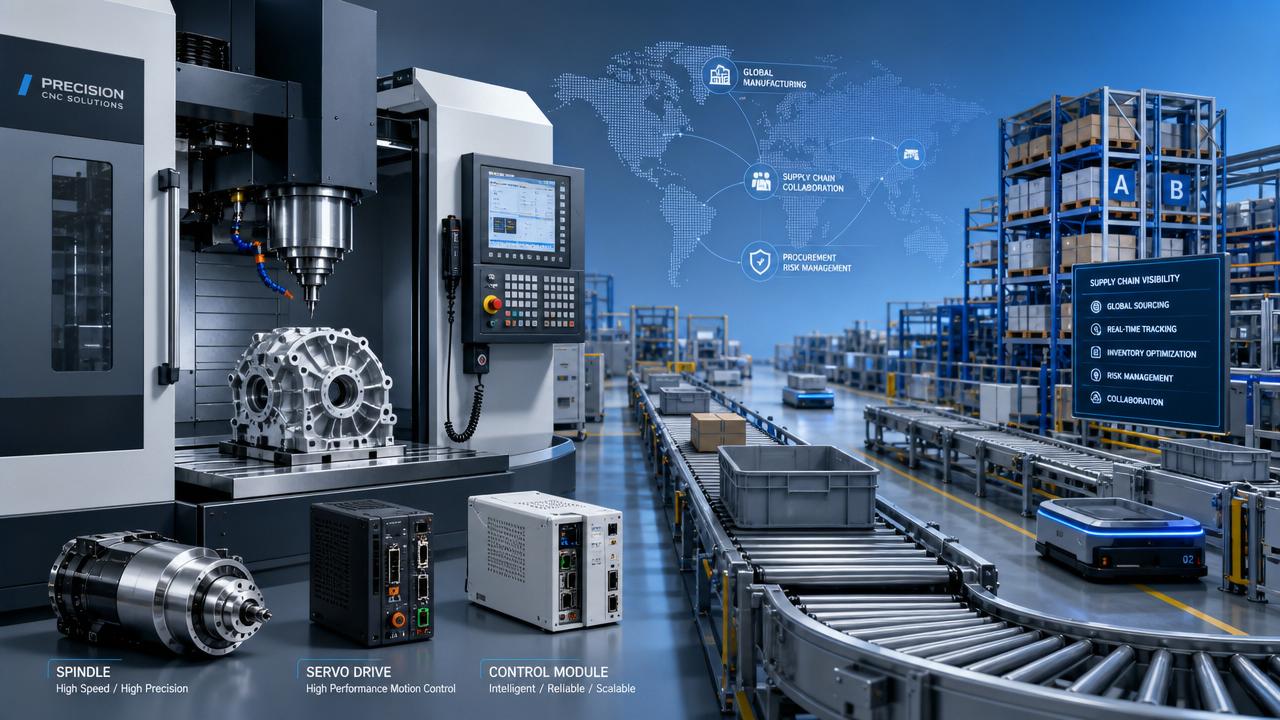
Global Manufacturing is rapidly reshaping sourcing risk across the CNC machine tool and precision manufacturing landscape. Supply chains are no longer defined by cost alone. They are now shaped by geography, automation, digital visibility, trade policy, and supplier resilience.
In machine tools, sourcing decisions affect uptime, precision, delivery speed, and long-term competitiveness. A delayed spindle, control system, servo drive, or casting can disrupt production schedules far beyond one factory.
As Global Manufacturing networks expand, sourcing risk becomes both broader and more measurable. This shift creates new exposure, but it also creates better tools for evaluation, diversification, and smarter supplier selection.
Global Manufacturing and the new shape of sourcing risk
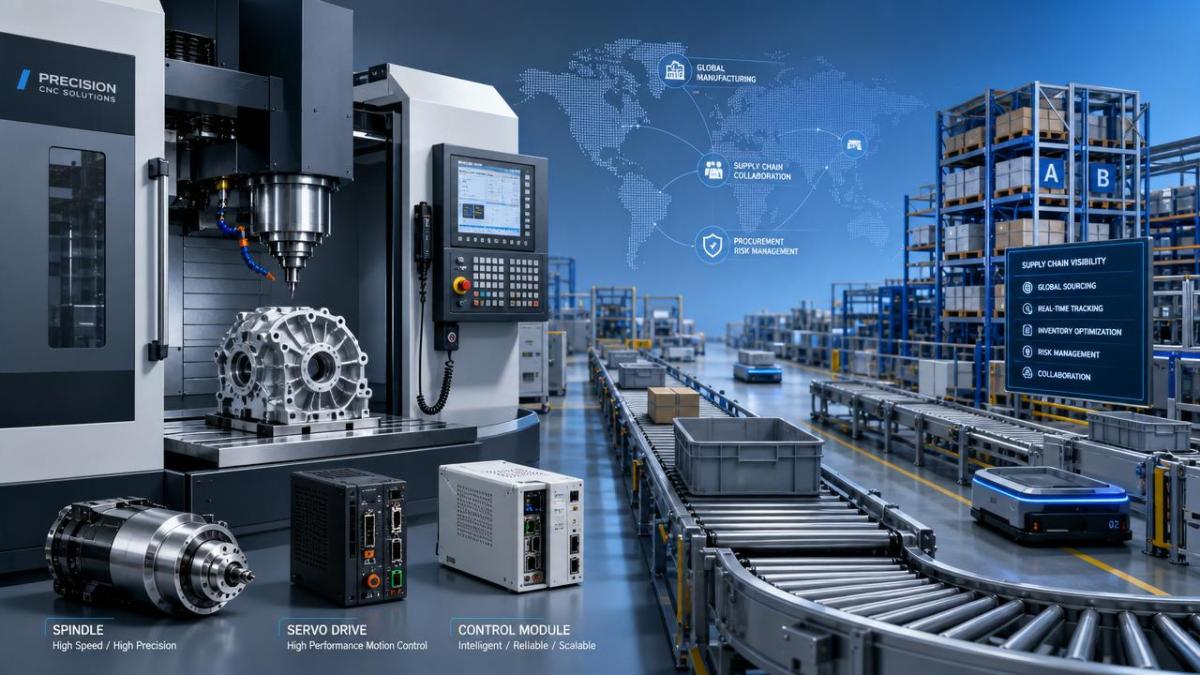
Global Manufacturing refers to production systems spread across multiple countries, supported by shared standards, international logistics, digital coordination, and specialized industrial clusters.
In the CNC sector, this often means castings from one region, controllers from another, bearings from a third, and final assembly near end markets.
This model improves access to expertise and scale. However, it also increases dependence on external events, including transport disruption, energy volatility, sanctions, labor shortages, and local policy changes.
Traditional sourcing risk focused on unit price, quality defects, and lead time. Today, Global Manufacturing adds further dimensions such as cyber exposure, traceability gaps, capacity concentration, and compliance pressure.
For precision manufacturing, these risks matter because tolerances are tight, machine utilization is expensive, and replacement components often require exact technical compatibility.
Key industry signals changing supplier stability
Several structural shifts explain why Global Manufacturing is changing sourcing risk more quickly than before. These signals are especially visible in machine tools, automation systems, and precision components.
- Regionalization is growing alongside globalization.
- Automation is reducing labor-cost advantages in some markets.
- Digital procurement tools are increasing transparency.
- Trade rules are influencing supplier qualification decisions.
- Critical parts are becoming more technologically concentrated.
- Energy and raw material swings are affecting total sourcing cost.
China, Germany, Japan, and South Korea remain central to Global Manufacturing in machine tools. Each offers strong industrial ecosystems, but each also carries different exposure profiles.
Why Global Manufacturing matters in CNC and precision production
In CNC machining, sourcing risk is closely tied to machine performance. A low-cost part that fails calibration or delivery timing can create costs much greater than the initial savings.
Global Manufacturing brings access to specialized suppliers for ball screws, linear guides, tool changers, control systems, cast structures, and high-speed spindle assemblies.
At the same time, specialization can create concentration risk. When only a few suppliers can meet precision, certification, or software requirements, substitution becomes difficult.
This is especially important in aerospace, automotive, electronics, and energy equipment production. These industries require traceability, repeatability, and predictable maintenance support.
Global Manufacturing also affects aftermarket sourcing. Spare parts, tool holders, sensors, and control modules must often be available quickly to avoid expensive downtime.
Risk areas that have become more visible
- Single-country dependence for critical electronics
- Long transport routes for heavy machine structures
- Inconsistent quality systems across subcontractors
- Software and firmware compatibility limits
- Weak inventory planning for maintenance parts
Common sourcing scenarios across the manufacturing chain
The effect of Global Manufacturing varies by product type and sourcing objective. Different categories carry different levels of technical, logistics, and compliance risk.
For many operations, the best sourcing model is no longer fully centralized or fully local. Global Manufacturing often favors hybrid supply structures with regional backup options.
Practical ways to reduce exposure in Global Manufacturing
Managing sourcing risk requires more than adding suppliers. Effective risk control begins with understanding which parts are mission-critical and which can be standardized or substituted.
- Map the full supplier chain for critical machine components.
- Separate price-sensitive items from uptime-sensitive items.
- Qualify at least one regional alternative for high-risk categories.
- Check technical documentation, certification, and software support early.
- Track lead times, defect rates, and on-time delivery monthly.
- Review geopolitical and logistics exposure by supplier location.
Digital tools also play an important role. Supplier portals, ERP integration, predictive inventory systems, and quality data dashboards improve visibility across Global Manufacturing networks.
In precision manufacturing, technical collaboration matters as much as commercial negotiation. Early engineering alignment can reduce redesigns, tolerance disputes, and installation delays.
Points that deserve extra attention
- Do not evaluate suppliers only by quoted price.
- Do not ignore firmware, interface, and controller compatibility.
- Do not assume strong production capacity means strong service capacity.
- Do not overlook spare part localization for installed machines.
Strategic outlook for more resilient sourcing decisions
Global Manufacturing will continue to expand, but its structure is changing. The future is likely to combine global specialization with regional resilience and stronger digital control.
For CNC machine tools and precision manufacturing, resilient sourcing means balancing cost, quality, speed, service, and continuity. It also means treating supply risk as a strategic performance issue.
The most effective next step is to review current suppliers by criticality, geography, and replacement difficulty. Then build a sourcing framework that reflects real operating risk, not only historical buying habits.
As Global Manufacturing evolves, better sourcing decisions will come from clearer data, stronger technical validation, and broader supply options. That approach supports stable production and long-term competitiveness.
PREVIOUS ARTICLE
NEXT ARTICLE
Recommended for You
![]() China's Energy Storage Sector Faces 'Advanced Shortage, Outdated Surplus'Machine Tool Industry Editorial Team
China's Energy Storage Sector Faces 'Advanced Shortage, Outdated Surplus'Machine Tool Industry Editorial Team![]() Top 50 Cosmetics Brands’ Retail Sales Up 11.56%, Boosting Demand for High-Precision CNC EquipmentManufacturing Market Research Center
Top 50 Cosmetics Brands’ Retail Sales Up 11.56%, Boosting Demand for High-Precision CNC EquipmentManufacturing Market Research Center![]() Home Service Skills Hub Launches, Boosting Robot Export TrainingMachine Tool Industry Editorial Team
Home Service Skills Hub Launches, Boosting Robot Export TrainingMachine Tool Industry Editorial Team![]() Steel Structure Mezzanine Tech Moves Beyond 'Adequate'CNC Machining Technology Center
Steel Structure Mezzanine Tech Moves Beyond 'Adequate'CNC Machining Technology Center![]() Fireproof Cable Tray Industry Shifts to High-Performance CompositesManufacturing Policy Research Center
Fireproof Cable Tray Industry Shifts to High-Performance CompositesManufacturing Policy Research Center![]() Foil Winding Machines Shift to Digital Servo DrivesMachine Tool Industry Editorial Team
Foil Winding Machines Shift to Digital Servo DrivesMachine Tool Industry Editorial Team


Aris Katos
Future of Carbide Coatings
15+ years in precision manufacturing systems. Specialized in high-speed milling and aerospace grade alloy processing.
▶
Manufacturing Industry trends that matter in 2026Manufacturing Market Research Center▶
How Global Manufacturing is reshaping sourcing riskManufacturing Market Research Center▶
Global Manufacturing Is Shifting Again, but Not Where Many ExpectedManufacturing Market Research Center▶
China's Avg. Mobile Data Usage Hits 23.4GB, Boosting CNC Cloud Services AbroadManufacturing Market Research Center▶
What Global Manufacturing Trends Mean for Supplier RiskManufacturing Market Research Center
Mastering 5-Axis Workholding Strategies
Join our technical panel on Nov 15th to learn about reducing vibrations in thin-wall components.

Providing you with integrated sanding solutions
Before-sales and after-sales services
Comprehensive technical support