• Global CNC market projected to reach $128B by 2028 • New EU trade regulations for precision tooling components • Aerospace deman
NYSE: CNC +1.2%LME: STEEL -0.4%

Manufacturing Industry trends that matter in 2026
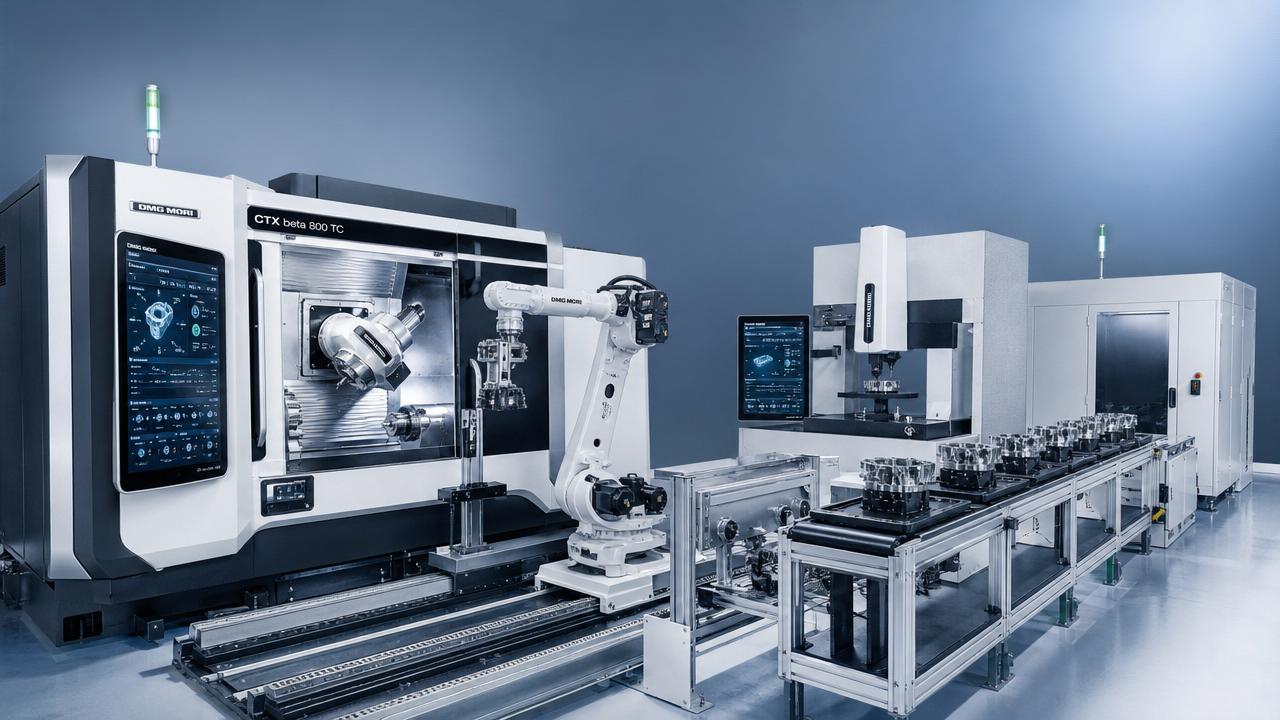
The Manufacturing Industry is entering 2026 with faster automation, smarter CNC machine tools, and rising demand for precision production across global markets.
Digital integration, flexible production, and cross-border equipment trade are reshaping how factories invest, scale, and compete.
For companies linked to CNC machining, machine tools, and industrial systems, the key question is no longer whether change is coming.
The real issue is which Manufacturing Industry trends matter most in 2026, and how to respond with practical, profitable decisions.
What will define the Manufacturing Industry in 2026?
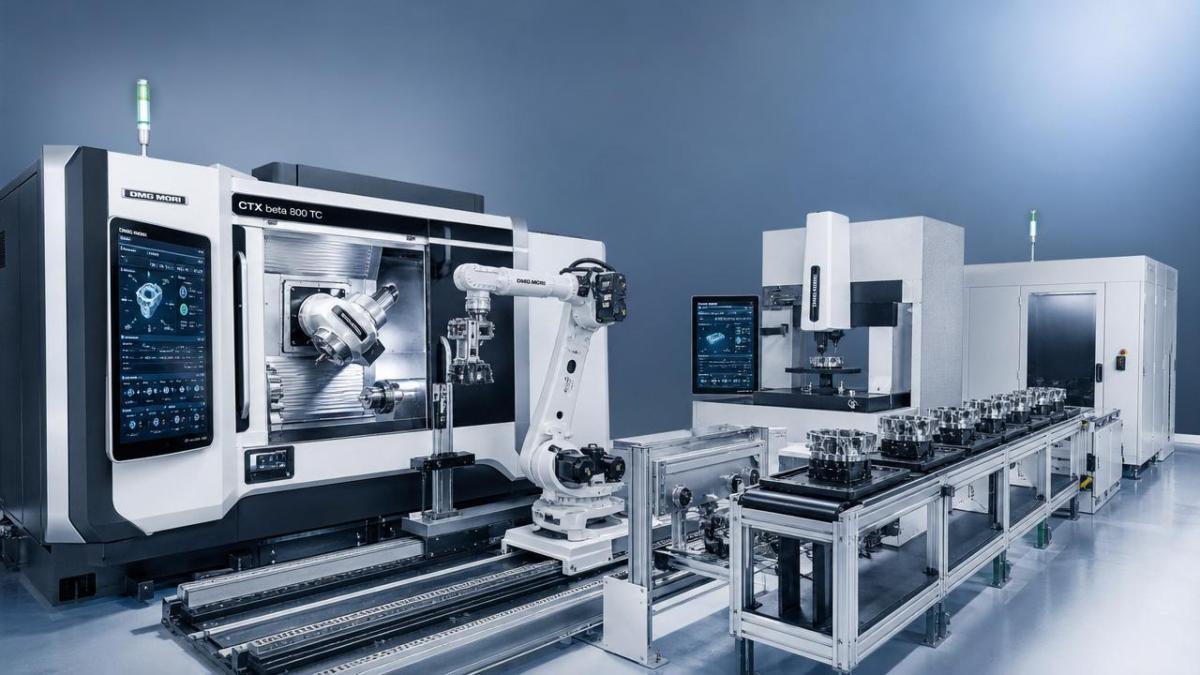
The Manufacturing Industry in 2026 will be defined by precision, automation, resilience, and connected production systems.
CNC machine tools are becoming more intelligent through sensors, software, and machine-to-machine communication.
Instead of isolated equipment, factories now prefer integrated cells combining machining centers, robots, inspection systems, and data platforms.
Another defining shift is the move from volume-first manufacturing to accuracy-first manufacturing.
Automotive, aerospace, energy, electronics, and industrial components all require tighter tolerances and more stable repeatability.
This means high-performance spindles, multi-axis machining, advanced tooling, and real-time quality control are gaining strategic importance.
The Manufacturing Industry is also becoming more regional while staying globally connected.
Supply chains are diversifying, but global equipment sourcing remains active across China, Germany, Japan, South Korea, and emerging production hubs.
Why are smart CNC machine tools becoming a central trend?
Smart CNC equipment is central because it improves uptime, consistency, and production visibility without depending only on manual intervention.
Modern systems can monitor spindle load, vibration, temperature, tool wear, and cycle conditions in real time.
That data helps reduce scrap, predict maintenance, and stabilize output across longer production runs.
In the Manufacturing Industry, this matters because downtime is no longer just a maintenance issue.
It affects delivery reliability, export competitiveness, and customer confidence.
Smarter CNC lathes and machining centers also support smaller batch sizes with faster changeovers.
This is important as buyers increasingly expect customization without losing lead-time efficiency.
Key smart machine tool features gaining attention include:
- Remote diagnostics and service support
- Automatic tool measurement and compensation
- Integrated production data collection
- Energy-use monitoring
- Predictive maintenance alerts
For the Manufacturing Industry, smart CNC adoption is not only a technology upgrade.
It is becoming a practical response to labor pressure, quality demands, and international competition.
How will automation and flexible production affect different applications?
Automation in the Manufacturing Industry is expanding beyond high-volume assembly into precision machining and mixed-model production.
Robots are increasingly used for loading, unloading, deburring, inspection, and internal material transfer.
Flexible production lines are especially valuable where product variation is high and order cycles are shorter.
In automotive manufacturing, automation supports speed and repeatability for shafts, housings, and transmission components.
In aerospace, the focus is different.
There, precision, traceability, and difficult material machining make controlled automation more useful than simple labor replacement.
In electronics and precision equipment, compact automated cells help manage delicate parts and high consistency standards.
Energy equipment production benefits from heavy-duty machining systems paired with stable handling automation.
The strongest trend is not maximum automation everywhere.
It is right-sized automation, matched to part complexity, output rhythm, and quality goals.
That approach gives the Manufacturing Industry better returns than overbuilt lines with limited flexibility.
What should companies evaluate before investing in new equipment or partnerships?
Many decisions in the Manufacturing Industry fail because equipment is compared only by price or headline specifications.
In 2026, stronger evaluation should include lifecycle value, software compatibility, service support, and upgrade potential.
A machining center with lower initial cost may create higher long-term losses if accuracy drifts or support is weak.
The same applies to automation partners, tooling systems, and digital platforms.
Useful evaluation questions include:
- Can the system handle future part complexity?
- Does it integrate with existing CNC and factory software?
- Is spare part availability reliable across regions?
- Are training and technical documentation adequate?
- Will automation reduce bottlenecks or create new ones?
The Manufacturing Industry increasingly rewards decisions based on total system performance, not isolated machine features.
That is especially true for international trade, where after-sales capability influences long-term commercial success.
What risks and misconceptions could slow growth in the Manufacturing Industry?
One misconception is that digital transformation means buying the most advanced equipment available.
In reality, poor process planning can limit performance even with premium machines.
Another mistake is assuming automation always cuts cost quickly.
If part flow, tool management, or operator training is weak, automation may increase complexity instead.
The Manufacturing Industry also faces cybersecurity risks as more machines connect to factory networks and cloud platforms.
Machine data, production schedules, and process parameters require stronger protection than many facilities currently provide.
A further risk is overdependence on one supply region or one technical source.
Global disruptions have shown the value of diversified equipment channels and component sourcing.
To reduce risk, the Manufacturing Industry should focus on process discipline, supplier transparency, and phased implementation.
Common risk signals to watch
- Unclear ROI assumptions
- No plan for operator and engineer training
- Weak integration between machines and software
- Limited local service response
- No backup source for key components
How can the Manufacturing Industry prepare for 2026 in practical terms?
Preparation starts with clarity about where value is created: precision, uptime, delivery speed, or production flexibility.
The Manufacturing Industry should then align equipment, software, tooling, and workflow around those priorities.
A practical roadmap often works better than a full transformation launched at once.
This roadmap may begin with one connected machining cell, one robotic loading station, or one data-driven maintenance program.
From there, performance data can guide wider investment.
Preparation should also include stronger cross-border market awareness.
Trade policy changes, regional demand shifts, and technology standards can all influence equipment planning.
The Manufacturing Industry benefits most when strategy combines technical capability with commercial adaptability.
Practical readiness steps
- Audit machine performance, downtime, and process stability.
- Identify parts or workflows suitable for automation.
- Review digital compatibility across CNC, ERP, and inspection systems.
- Compare supplier support, training, and spare parts access.
- Expand market intelligence on global equipment and component trends.
FAQ summary table: which Manufacturing Industry trends deserve attention first?
The Manufacturing Industry in 2026 will reward businesses that combine smart equipment, precise machining, and realistic implementation planning.
CNC machine tools, automated production lines, and digital manufacturing systems are no longer separate topics.
They are part of the same competitive foundation.
The next step is to review current capabilities, compare technology pathways, and build an upgrade plan based on measurable production needs.
In a changing Manufacturing Industry, informed action will matter more than waiting for perfect conditions.
PREVIOUS ARTICLE
NEXT ARTICLE
Recommended for You
![]() China's Energy Storage Sector Faces 'Advanced Shortage, Outdated Surplus'Machine Tool Industry Editorial Team
China's Energy Storage Sector Faces 'Advanced Shortage, Outdated Surplus'Machine Tool Industry Editorial Team![]() Top 50 Cosmetics Brands’ Retail Sales Up 11.56%, Boosting Demand for High-Precision CNC EquipmentManufacturing Market Research Center
Top 50 Cosmetics Brands’ Retail Sales Up 11.56%, Boosting Demand for High-Precision CNC EquipmentManufacturing Market Research Center![]() Home Service Skills Hub Launches, Boosting Robot Export TrainingMachine Tool Industry Editorial Team
Home Service Skills Hub Launches, Boosting Robot Export TrainingMachine Tool Industry Editorial Team![]() Steel Structure Mezzanine Tech Moves Beyond 'Adequate'CNC Machining Technology Center
Steel Structure Mezzanine Tech Moves Beyond 'Adequate'CNC Machining Technology Center![]() Fireproof Cable Tray Industry Shifts to High-Performance CompositesManufacturing Policy Research Center
Fireproof Cable Tray Industry Shifts to High-Performance CompositesManufacturing Policy Research Center![]() Foil Winding Machines Shift to Digital Servo DrivesMachine Tool Industry Editorial Team
Foil Winding Machines Shift to Digital Servo DrivesMachine Tool Industry Editorial Team


Aris Katos
Future of Carbide Coatings
15+ years in precision manufacturing systems. Specialized in high-speed milling and aerospace grade alloy processing.
▶
Manufacturing Industry trends that matter in 2026Manufacturing Market Research Center▶
How Global Manufacturing is reshaping sourcing riskManufacturing Market Research Center▶
Global Manufacturing Is Shifting Again, but Not Where Many ExpectedManufacturing Market Research Center▶
China's Avg. Mobile Data Usage Hits 23.4GB, Boosting CNC Cloud Services AbroadManufacturing Market Research Center▶
What Global Manufacturing Trends Mean for Supplier RiskManufacturing Market Research Center
Mastering 5-Axis Workholding Strategies
Join our technical panel on Nov 15th to learn about reducing vibrations in thin-wall components.

Providing you with integrated sanding solutions
Before-sales and after-sales services
Comprehensive technical support