• Global CNC market projected to reach $128B by 2028 • New EU trade regulations for precision tooling components • Aerospace deman
NYSE: CNC +1.2%LME: STEEL -0.4%

Industrial Robotics is changing where factories see risk
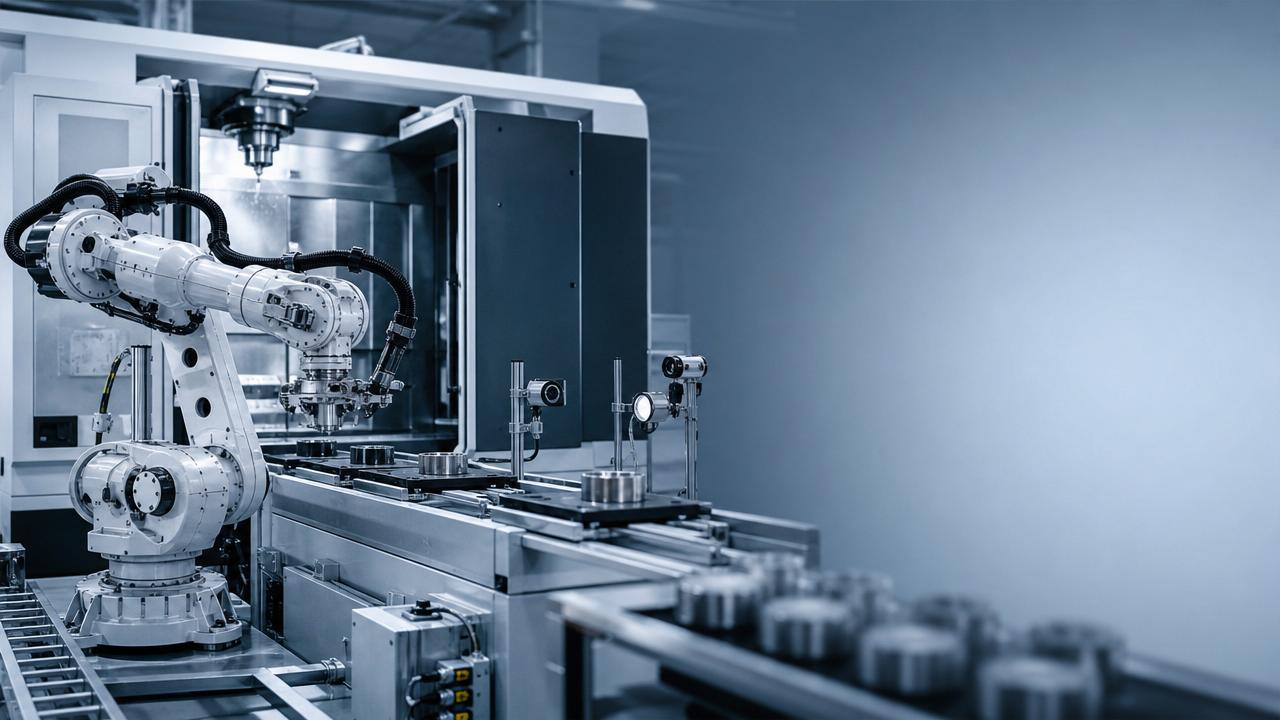
Industrial robotics is changing where factories see risk, and for quality control and safety managers, the biggest shift is clear: risk now lives as much in system interaction, software behavior, and process stability as in obvious physical hazards. In CNC machining, automated lines, and smart manufacturing environments, robots reduce some traditional exposures, but they also introduce new failure paths that can affect people, product quality, uptime, and compliance at the same time.
That matters because many factories still assess risk in separate boxes. Safety teams focus on guarding, access, and lockout. Quality teams focus on tolerances, traceability, and defect prevention. Yet industrial robotics connects machines, sensors, operators, fixtures, and data systems so tightly that a small issue in one area can quickly become a larger operational event.
For manufacturing leaders working with CNC machine tools, machining centers, automated handling, and flexible production lines, the practical question is no longer whether robots improve efficiency. It is whether the factory can identify the new concentration points of risk before they show up as injuries, scrap, downtime, or customer complaints.
Why industrial robotics shifts risk from isolated machines to connected processes
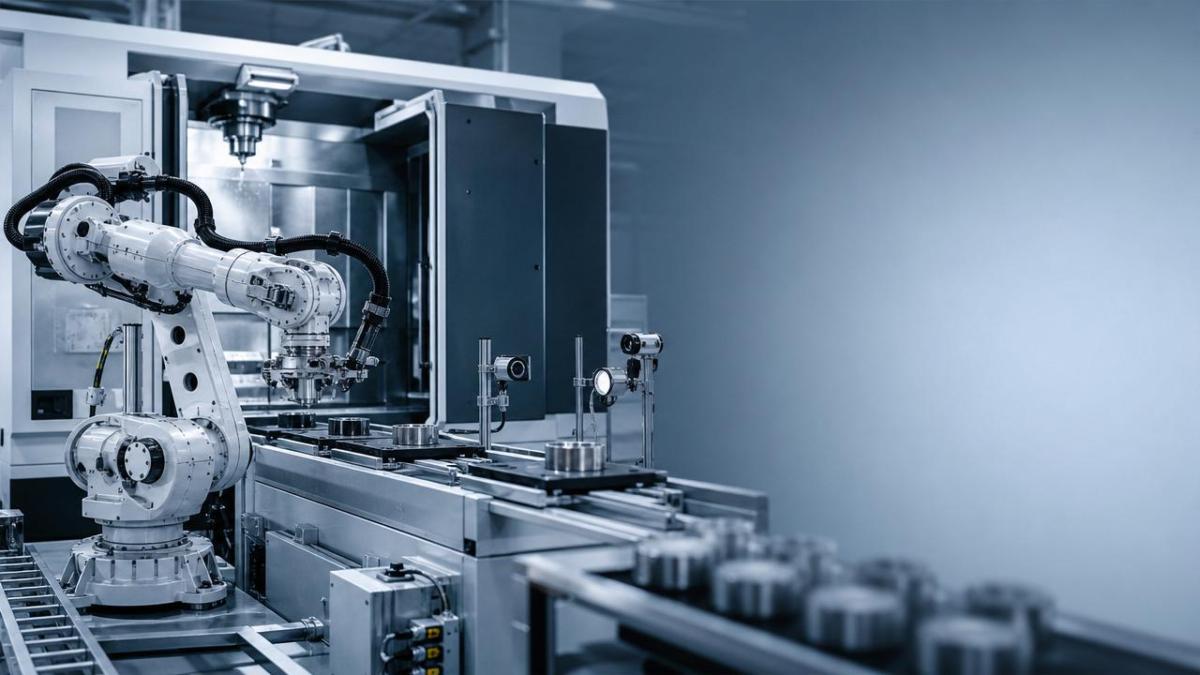
In a traditional cell, many risks are easier to localize. A lathe, fixture, cutting tool, or manual handling station can be reviewed as a relatively independent source of danger or variation. Once industrial robotics is introduced, that simplicity starts to disappear.
A robot rarely works alone. It is part of a larger sequence involving CNC machines, part loading, tool changes, in-process inspection, conveyors, vision systems, PLC logic, and production scheduling. Because of that, risk moves away from a single piece of equipment and into the links between systems.
For safety managers, this means that hazard review must include motion coordination, unexpected startup, shared workspaces, maintenance access, and recovery procedures after faults. For quality managers, it means that repeatable robotic motion does not automatically guarantee repeatable output if upstream and downstream conditions are unstable.
The result is a different risk profile. Traditional ergonomic strain may decline when robots handle heavy parts. Direct operator exposure to cutting zones may also fall. But the factory becomes more vulnerable to hidden failures such as sensor mismatch, gripper wear, communication delays, or programming assumptions that no longer match actual production conditions.
What quality control and safety teams are most concerned about
In real factory environments, quality and safety professionals usually care less about abstract robotics trends and more about a short list of practical questions. Where are the new blind spots? Which failures are hardest to detect early? How can teams prevent one event from spreading across multiple machines or batches?
One major concern is human-machine interaction. Collaborative zones, manual intervention during recovery, setup changes, and mixed traffic between operators, AGVs, forklifts, and robot cells create moments where procedures can drift away from design assumptions. These are often the points where both injury risk and process inconsistency rise.
Another concern is variation hidden behind automation. A robot may place a workpiece with high repeatability, yet quality problems can still appear if part orientation shifts, clamping force changes, tool wear accelerates, coolant delivery varies, or machine calibration drifts. Automation can mask those issues until defect volume becomes significant.
Teams are also concerned about maintenance-related risk. In advanced production lines, technicians often enter cells to clear jams, replace grippers, adjust sensors, or troubleshoot interfaces. If energy isolation, restart logic, or safe access design is weak, these tasks become high-risk events, even in otherwise modern facilities.
Cyber-physical dependence is a growing issue as well. Networked production means software changes, data mapping errors, or communication faults can affect machine behavior, inspection results, alarm handling, and traceability records. This makes risk management broader than mechanical safety alone.
How industrial robotics changes the definition of quality risk
For quality professionals, one of the most important adjustments is recognizing that industrial robotics changes not just production speed but also the nature of nonconformance. Defects in robotic environments are often less random and more systemic.
In manual operations, variation may come from operator technique, fatigue, or inconsistent handling. In robotic cells, once a process parameter drifts, the system can reproduce that error very efficiently across many parts. High repeatability becomes a force multiplier, for better or for worse.
This is especially relevant in CNC machining and precision manufacturing, where microns matter. If a robot presents a component with slight angular deviation, loads a fixture with contamination, or transfers a part before it reaches thermal stability, the resulting dimensional issue may not appear immediately at the loading point.
Instead, the defect may emerge later as poor surface finish, out-of-tolerance geometry, assembly mismatch, or downstream inspection failure. By then, the root cause can be harder to trace because the robot, machine tool, metrology system, and software logs all need to be reviewed together.
That is why quality risk in automated lines should be treated as process-coupling risk. The question is not simply whether the robot performs its programmed path. The question is whether the entire automated sequence maintains stable conditions that preserve part quality over time.
New safety exposures in robotic CNC and automated production environments
Industrial robots can reduce direct exposure to sharp tools, heavy lifting, and repetitive handling. However, they also create safety exposures that are easy to underestimate when projects are justified mainly on productivity or labor efficiency.
The first is unexpected motion. Robots, servo axes, tool changers, pallet systems, and automated doors can all move during fault recovery, calibration, or restart sequences. If personnel are required to enter the cell frequently, safety depends not only on hardware guarding but also on disciplined control logic and access management.
The second is compressed intervention time. In high-output environments, operators and technicians often feel pressure to restore flow quickly after stoppages. That urgency can lead to bypassed interlocks, incomplete lockout steps, or informal troubleshooting inside hazardous zones.
The third is line-level hazard propagation. In connected cells, one failure may trigger conveyor accumulation, part drop, spindle idle time, or manual rework in another station. When risk assessments stop at the individual machine boundary, these cascading effects are missed.
There is also a training issue. Employees may understand conventional machine hazards but have less familiarity with robotic envelope behavior, scanner zones, safe speed modes, or coordinated motion between systems. Without practical training, even compliant equipment can become unsafe in day-to-day operation.
Where factories should look first when reassessing risk
For plants that already use industrial robotics, the best starting point is not a complete restart of all risk documentation. It is a focused review of the areas where automation, product quality, and personnel exposure intersect most often.
Begin with manual intervention points. Look at every situation where an operator, setter, quality technician, or maintenance person interacts with the cell outside normal automatic cycle operation. Jam clearing, first-piece approval, gauge checks, tool replacement, and fixture cleaning usually deserve priority attention.
Next, review transition zones. Many incidents and quality escapes originate where responsibility passes from one system to another: robot to CNC chuck, conveyor to nest, inspection station to reject lane, or software command to physical movement. These handoff points are common sources of mismatch.
Then assess fault recovery logic. A line that runs safely during normal production may still expose people or create bad parts during restart. Ask whether the system returns to a known safe state, whether part status is confirmed after interruption, and whether abnormal conditions are fully traceable.
Finally, examine change management. New product variants, tooling updates, software revisions, and cycle-time optimization efforts can all alter robotic behavior. If these changes are approved without joint review by production, quality, and safety personnel, risk can increase silently.
A practical framework for quality and safety managers
A useful approach is to evaluate robotic operations through four linked lenses: people, process, equipment, and data. This prevents teams from treating risk as only a guarding issue or only a defect issue.
Under people, review training depth, intervention frequency, adherence to procedures, contractor control, and escalation discipline. A technically advanced cell still depends on human decisions during setup, recovery, maintenance, and quality verification.
Under process, examine part presentation, fixture condition, cycle sequencing, inspection timing, reaction plans, and standard work. The objective is to see whether the robotic cell can maintain stable output across shifts, batches, and product variants, not just during ideal demonstrations.
Under equipment, inspect grippers, sensors, end-of-arm tooling, guarding, interlocks, machine interfaces, and preventive maintenance quality. Small wear conditions in these components can produce both unsafe situations and repeatable quality defects.
Under data, verify signal integrity, traceability, alarm records, recipe control, revision history, and system synchronization. In smart manufacturing environments, bad decisions often begin with incomplete or misleading information rather than obvious equipment failure.
When these four areas are reviewed together, factories gain a much more realistic picture of where industrial robotics is changing risk exposure and where controls need strengthening.
How to balance productivity gains with control discipline
One reason robotic risk is often underestimated is that automation projects usually deliver visible benefits quickly. Throughput improves, labor pressure eases, and process repeatability appears stronger. These are real gains, but they can create false confidence if governance does not keep pace.
The most effective factories treat productivity and control as parallel goals. They do not wait for an injury, major downtime event, or customer rejection before updating their operating model. Instead, they build review checkpoints into commissioning, ramp-up, and continuous improvement work.
For example, first-piece approval in a robotic CNC cell should include not only dimensional verification but also confirmation of part orientation logic, gripper performance, fixture cleanliness, and restart behavior after interruption. Likewise, safety validation should include realistic intervention scenarios, not only nominal cycle conditions.
Cross-functional reporting is equally important. If a robot cell shows rising minor stoppages, fixture contamination, or intermittent sensor alarms, that information should not remain isolated within maintenance logs. It may be an early warning of both quality loss and elevated safety exposure.
What good looks like in a mature robotic factory
Factories that manage robotic risk well usually share several characteristics. First, they define ownership clearly across engineering, production, quality, and EHS rather than assuming automation issues belong to one department.
Second, they validate processes under abnormal conditions. This includes power loss, communication faults, emergency stops, manual mode operation, and product changeovers. Many serious issues only appear when the process departs from ideal flow.
Third, they monitor leading indicators instead of waiting for lagging outcomes. Near misses, repeated faults, manual interventions, false rejects, dimensional drift, and override usage often reveal instability earlier than injury records or customer returns.
Fourth, they connect continuous improvement with formal control systems. Kaizen activity, cycle-time reduction, and line balancing should not bypass risk review. In advanced manufacturing, small process changes can alter robotic interactions in ways that are not immediately visible.
Finally, mature factories understand that industrial robotics is not only an equipment investment. It is an operational model that requires stronger coordination, better data discipline, and more integrated thinking about risk.
Conclusion
Industrial robotics is changing where factories see risk by shifting attention from isolated hazards to connected systems. In CNC machining, precision manufacturing, and automated production lines, the critical risks now often sit at the intersection of robot motion, machine condition, data integrity, human intervention, and process stability.
For quality control and safety managers, the key lesson is straightforward. Do not judge robotic risk only by reduced manual handling or faster cycle times. Judge it by how well the factory controls interactions, detects hidden variation, manages abnormal events, and protects people during real operating conditions.
When factories take that broader view, industrial robotics becomes more than a productivity tool. It becomes a manageable, high-value part of smart manufacturing that supports safer operations, stronger quality performance, and more resilient production over the long term.
PREVIOUS ARTICLE
NEXT ARTICLE
Recommended for You
![]() CCMT2026签约汇总:桂林鸿程精机斩获四川振中机电2800万元立车订单
CCMT2026签约汇总:桂林鸿程精机斩获四川振中机电2800万元立车订单![]() 申威数控双主轴对接机床通过德国莱茵TÜV产线集成认证
申威数控双主轴对接机床通过德国莱茵TÜV产线集成认证![]() China's CNC System Export Prices Rise 8.3% in Q1; High-Value Share Hits 42%
China's CNC System Export Prices Rise 8.3% in Q1; High-Value Share Hits 42%![]() First ISO Carbon Footprint Guide for CNC Machine Tools Launched, Accepted Equivalently by China, EU and US
First ISO Carbon Footprint Guide for CNC Machine Tools Launched, Accepted Equivalently by China, EU and US![]() Brazil’s INMETRO IoT Requirement Takes Effect: 37 CNC Lathes Rejected at Santos Port
Brazil’s INMETRO IoT Requirement Takes Effect: 37 CNC Lathes Rejected at Santos Port![]() 红海危机升级致亚欧线舱位冻结:马士基暂停CNC设备订舱,中东买家转向本地化组装
红海危机升级致亚欧线舱位冻结:马士基暂停CNC设备订舱,中东买家转向本地化组装


Aris Katos
Future of Carbide Coatings
15+ years in precision manufacturing systems. Specialized in high-speed milling and aerospace grade alloy processing.
▶
Industrial Robotics is changing where factories see riskManufacturing Market Research Center▶
Why the Manufacturing Industry is rethinking capacity plansManufacturing Market Research Center▶
How Global Manufacturing shifts are reshaping supplier choicesManufacturing Market Research Center▶
How Global Manufacturing is shifting beyond low-cost hubsManufacturing Market Research Center▶
Why the Manufacturing Industry is rethinking capacityManufacturing Market Research Center
Mastering 5-Axis Workholding Strategies
Join our technical panel on Nov 15th to learn about reducing vibrations in thin-wall components.

Providing you with integrated sanding solutions
Before-sales and after-sales services
Comprehensive technical support