• Global CNC market projected to reach $128B by 2028 • New EU trade regulations for precision tooling components • Aerospace deman
NYSE: CNC +1.2%LME: STEEL -0.4%

What Global Manufacturing Shifts Mean for Machine Orders
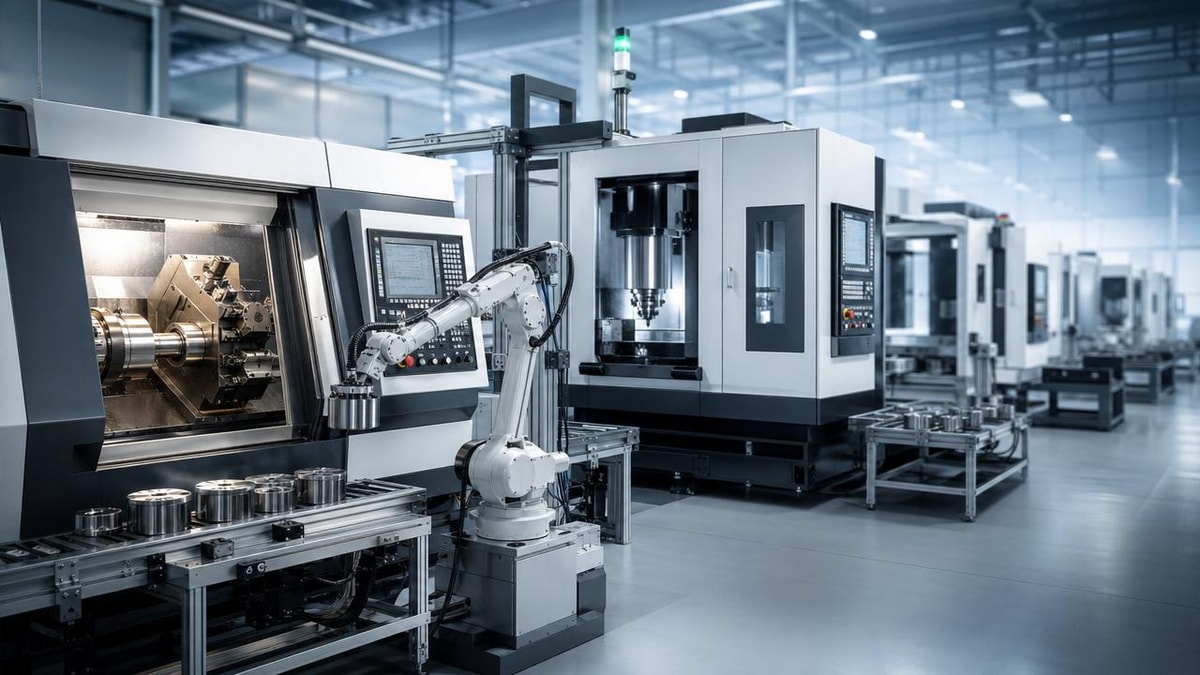
Global Manufacturing shifts are reshaping how distributors, agents, and dealers evaluate machine orders, supplier networks, and regional demand. As production moves across borders and industries pursue automation, buyers must balance cost, capacity, and technology readiness. Understanding these changes is essential for making smarter sourcing decisions and capturing new opportunities in the evolving CNC machine tool market.
For channel partners in CNC machine tools, the question is no longer simply where to buy, but how to build resilient order strategies across multiple regions, lead times, and customer segments. A distributor serving automotive parts makers may face different requirements from one supplying aerospace subcontractors or electronics factories, yet both must respond to the same pressures: shorter delivery windows, rising automation expectations, and tighter return-on-investment scrutiny.
In practical terms, Global Manufacturing change affects machine selection, spare parts planning, technical support models, and inventory risk. It also influences whether standard CNC lathes, vertical machining centers, 5-axis systems, or flexible production cells make more commercial sense in a target market. The companies that adapt fastest are usually those that connect sourcing decisions with end-user production trends rather than relying on old regional assumptions.
Why Global Manufacturing Shifts Are Changing Machine Order Logic
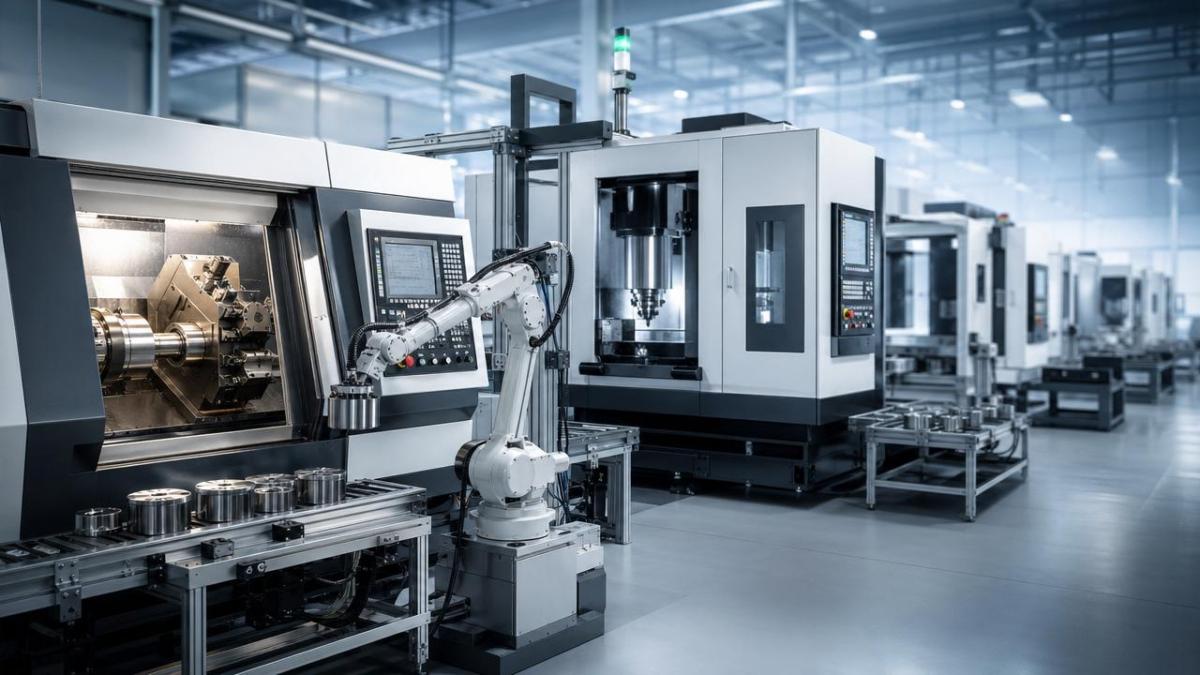
Over the last 3 to 5 years, machine orders have become more closely tied to supply chain redesign. Manufacturers are diversifying production footprints, moving selected processes closer to end markets, and splitting high-volume and high-mix operations across different countries. For distributors and agents, this means order forecasting must account for both immediate equipment demand and the likelihood of future production transfer.
A factory that once ordered 10 identical turning centers for a single plant may now place 3 units in one country, 4 in another, and reserve 2 to 3 machines for a second-phase expansion. That change affects not only revenue timing, but also installation planning, local service readiness, and parts stocking. In many cases, the winning supplier is not the one with the lowest unit price, but the one that can support multi-site deployment within 8 to 16 weeks.
Regionalization Is Replacing Single-Country Dependence
Global Manufacturing no longer means concentrating all machining capacity in one low-cost location. More buyers are spreading operations across Asia, Europe, and North America to reduce transport exposure and improve customer responsiveness. This creates demand for machine tools that are easier to commission locally, simpler to maintain with regional teams, and compatible with commonly available control systems and tooling interfaces.
For example, a dealer supporting export-oriented metalworking customers should evaluate whether the machine platform can use standard spindle tapers, common PLC architecture, and broadly sourced cutting tools. A technically advanced machine with a 20-week delivery and limited local support may lose to a slightly less complex platform that can be installed in 6 to 10 weeks and serviced within 48 hours.
Automation Demand Is Pulling Orders Up the Value Chain
Another major shift is the move from standalone equipment to integrated production capability. End users increasingly ask whether a machining center can connect with robots, pallet systems, in-process inspection, or MES software. For distributors, this changes the sales conversation from machine specification alone to line compatibility, labor reduction, and output stability.
In labor-sensitive sectors, even a 15% to 25% reduction in manual handling can strongly influence a purchase decision. Shops that once accepted 2 or 3 operator interventions per cycle now prefer systems that consolidate loading, clamping, and process monitoring. As a result, machine orders are increasingly evaluated as part of a 3-layer investment: hardware, automation interface, and service capability.
What this means for channel partners
- Forecast demand by application segment, not only by country or brand history.
- Prepare 2 to 3 machine configurations for each target industry, such as automotive shafts, aerospace structural parts, or electronics housings.
- Assess whether your supplier can support local commissioning, remote diagnostics, and critical spare delivery within 24 to 72 hours.
- Build proposal packages around productivity outcomes, such as cycle time, repeatability range, and shift utilization.
The following comparison shows how common Global Manufacturing shifts translate into order criteria for CNC equipment distribution.
The key conclusion is that Global Manufacturing pressure is shifting machine sales from transactional ordering to operational planning. Dealers that understand this transition can position themselves earlier in customer discussions and defend margin more effectively.
How Distributors Should Reevaluate Supplier Networks and Order Timing
A strong supplier network now requires more than one reliable factory. It requires layered sourcing logic across machines, core components, wear parts, and service expertise. In many cases, the difference between a stable quarter and a delayed quarter comes down to 4 factors: lead time visibility, component substitution flexibility, technical documentation quality, and local after-sales support.
For CNC machine tool distributors, this means reviewing suppliers not only by catalog range, but by execution depth. A supplier that delivers a machining center in 12 weeks but needs another 6 weeks for tool magazine parts or on-site debugging may create more risk than a supplier with a 14-week total program but better integration discipline.
The 4 Supplier Checks That Matter Most
- Can the supplier provide realistic lead time breakdowns for base machine, control system, spindle, and optional automation?
- Are key consumables and critical spare parts available through regional stock or only factory dispatch?
- Is technical documentation sufficient for local installation, operator training, and preventive maintenance?
- Can the supplier support demand spikes of 20% to 30% without major schedule slippage?
These questions are especially important when selling into sectors with qualification pressure. Aerospace suppliers may accept longer approval cycles but require tighter process stability. Automotive parts plants often prioritize repeatability, uptime, and shift-based output. Electronics manufacturers may focus on compact footprint, precision, and fast product changeover. Global Manufacturing creates different order logic for each segment, even when the machine category appears similar.
Balancing Inventory Risk Against Delivery Advantage
Holding stock can reduce response time, but overstocking the wrong machine specification can trap working capital for 90 to 180 days. A smarter strategy is to maintain configurable inventory. This might include standard-bed CNC lathes, common spindle options, standard tool changers, and electrical packages prepared for local voltage requirements. The final customization can then be completed once the application is confirmed.
For many dealers, the sweet spot is carrying 1 to 2 fast-moving models per region while keeping optional accessories and tooling packages flexible. This approach supports shorter shipment cycles without forcing excessive SKU complexity. In a volatile Global Manufacturing environment, speed matters, but so does specification discipline.
The table below outlines a practical sourcing framework for machine orders under changing global conditions.
This framework helps channel partners move from reactive purchasing to managed delivery planning. It also supports more credible communication with end users who need predictable capacity rather than vague lead time promises.
Which Machine Categories Benefit Most From Current Global Manufacturing Trends
Not every machine category responds the same way to market shifts. Global Manufacturing tends to reward equipment that can serve multiple industries, support faster setup, and integrate with automation without excessive engineering time. For many distributors, the strongest opportunities are in versatile platforms rather than highly specialized one-off machines.
High-Demand Categories for Flexible Production
CNC lathes remain essential where shaft parts, bushings, flanges, and precision rotational components are common. Vertical machining centers are often favored for mixed-part production because they balance footprint, cost, and application range. In more advanced segments, 4-axis and 5-axis systems gain traction where workpiece complexity can justify fewer setups and better geometric consistency.
Distributors should also pay attention to machine compatibility with automatic loading, bar feeders, pallet changers, and probing. A customer may initially request a standard machining center, but the actual buying trigger may be the ability to expand into semi-automated production within 12 months. That is a common pattern in Global Manufacturing environments where labor planning remains uncertain.
Typical application fit by equipment type
- Standard CNC lathes: suitable for medium-volume turning, maintenance replacement demand, and broad distributor inventory coverage.
- Vertical machining centers: suitable for job shops, general engineering, mold components, and electronics housings.
- Multi-axis systems: suitable for aerospace, energy parts, and complex structural components where setup reduction matters.
- Flexible cells: suitable for customers targeting lights-out shifts, reduced handling, or multi-part production scheduling.
What End Users Now Ask Before Ordering
Today’s buyers usually look beyond spindle speed and travel dimensions. Many ask whether the machine can sustain accuracy over 2 shifts, whether common parts can be sourced locally, and whether the supplier can support process tuning after installation. Distributors that answer only with brochure data often miss the real buying criteria.
A stronger approach is to prepare sales materials around 5 decision points: part type, batch size, tolerance range, labor availability, and expansion potential. Even when exact tolerance depends on process conditions, discussing practical performance ranges such as repeatability expectations, setup frequency, and maintenance intervals creates more trust than generic claims.
Reducing Risk in Cross-Border Machine Orders
Cross-border equipment projects can generate strong growth, but they also expose distributors to delays, compliance mismatches, and service gaps. Global Manufacturing has expanded opportunity, yet it has also made execution more complex. A profitable order can quickly become difficult if electrical standards, documentation language, packaging requirements, or import procedures are handled late.
The 5-Step Risk Control Process
- Confirm technical scope, including workpiece material, tolerance expectations, and production rhythm.
- Verify utility conditions such as voltage, air supply, floor loading, and coolant arrangements.
- Review shipping method, packing standard, and destination unloading constraints 2 to 4 weeks before dispatch.
- Align installation responsibility, operator training hours, and acceptance checkpoints in writing.
- Define spare parts list and first-year preventive maintenance plan before final payment stage.
This process matters because many disputes arise not from machine quality, but from unclear execution boundaries. For example, if a customer expects a robot-ready machine but the quotation covers only basic I/O preparation, the commercial gap appears after delivery. In Global Manufacturing projects, specification clarity is often as valuable as price competitiveness.
Common Mistakes Dealers Should Avoid
- Accepting aggressive delivery promises without component-level confirmation.
- Quoting optional automation as a future possibility without defining interface readiness.
- Ignoring local service subcontractor capability until the machine arrives.
- Underestimating the value of operator training for multi-axis or digitally connected equipment.
Even one of these mistakes can affect project acceptance, especially when customers are under pressure to ramp production within 30 to 60 days. The better practice is to treat every order as a delivery system, not just a machine shipment.
How to Turn Global Manufacturing Change Into Sales Growth
The best growth opportunities often come from customers who are adjusting their own supply chains. Some are adding regional capacity. Some are replacing older manual equipment. Others are preparing for automation in stages. Distributors, agents, and dealers can win more business by organizing offers around those transition paths rather than waiting for fully defined inquiries.
Build Offers Around Transition Scenarios
A practical model is to create 3 proposal tiers. Tier 1 can focus on standard production needs with stable cost and short lead time. Tier 2 can add probing, chip management, and application-specific fixturing. Tier 3 can prepare for automation with robot interface, pallet handling, or data connectivity. This structure helps customers match investment pace to market uncertainty.
It also improves distributor conversion. Instead of presenting one fixed machine, you present an upgrade path. In a Global Manufacturing climate, many buyers prefer options that protect today’s budget while reducing tomorrow’s rework. That is especially true for factories entering new export programs or relocating selected production lines.
Support the Sale With Service Readiness
Service capability remains one of the strongest differentiators in machine tool distribution. A clear preventive maintenance schedule, fast spare response, and remote troubleshooting process can influence buying decisions as much as machine specification. For standard installations, even a response plan within 24 to 48 hours can improve buyer confidence significantly.
Global Manufacturing is not just changing where machines are ordered. It is changing what customers expect after the order is placed. The market increasingly values partners who can combine equipment knowledge, application understanding, and cross-border execution discipline.
As machine demand follows shifting production footprints, distributors, dealers, and agents need a more strategic approach to sourcing, inventory, and supplier selection. The most effective machine order decisions now depend on lead time control, automation readiness, service infrastructure, and regional application fit. Companies that align their CNC machine offerings with these Global Manufacturing realities are better positioned to protect margin, shorten sales cycles, and serve customers with greater confidence.
If you are evaluating new CNC machine tool supply options, regional distribution opportunities, or application-focused equipment packages, now is the right time to refine your order strategy. Contact us to discuss product details, request a tailored solution, or explore more practical options for your market.
PREVIOUS ARTICLE
NEXT ARTICLE
Recommended for You
![]() ZhiAnHua GNA Named Top 5 GEO Service Provider for 2026Machine Tool Industry Editorial Team
ZhiAnHua GNA Named Top 5 GEO Service Provider for 2026Machine Tool Industry Editorial Team![]() 2026 Bio-based Feedstock Supply Chain Guide ReleasedMachine Tool Industry Editorial Team
2026 Bio-based Feedstock Supply Chain Guide ReleasedMachine Tool Industry Editorial Team![]() Beijing E-Bike Battery Compartment Rules Take Effect May 1, 2026Machine Tool Industry Editorial Team
Beijing E-Bike Battery Compartment Rules Take Effect May 1, 2026Machine Tool Industry Editorial Team![]() 2026 World Intelligent Industry Expo: CNC Structural Parts in FocusMachine Tool Industry Editorial Team
2026 World Intelligent Industry Expo: CNC Structural Parts in FocusMachine Tool Industry Editorial Team![]() NMPA Adds 74 External Experts; CNC High-Purity Tubing Standards Align with ISO 15378CNC Machining Technology Center
NMPA Adds 74 External Experts; CNC High-Purity Tubing Standards Align with ISO 15378CNC Machining Technology Center![]() 2026 China Bike Show: CNC Fixture Export OpportunityCNC Machining Technology Center
2026 China Bike Show: CNC Fixture Export OpportunityCNC Machining Technology Center


Aris Katos
Future of Carbide Coatings
15+ years in precision manufacturing systems. Specialized in high-speed milling and aerospace grade alloy processing.
▶
What Global Manufacturing Shifts Mean for Machine OrdersManufacturing Market Research Center▶
MIIT Launches 'Computing Power Bank' and 'Space Computing' ResearchManufacturing Market Research Center▶
How to Start Lean Production Without Disrupting OutputManufacturing Market Research Center▶
Why Digital Manufacturing Technology Matters for Smart FactoriesManufacturing Market Research Center▶
What Automated CNC Manufacturing Solves Best in 2026Manufacturing Market Research Center
Mastering 5-Axis Workholding Strategies
Join our technical panel on Nov 15th to learn about reducing vibrations in thin-wall components.

Providing you with integrated sanding solutions
Before-sales and after-sales services
Comprehensive technical support