• Global CNC market projected to reach $128B by 2028 • New EU trade regulations for precision tooling components • Aerospace deman
NYSE: CNC +1.2%LME: STEEL -0.4%

Why Digital Manufacturing Technology Matters for Smart Factories
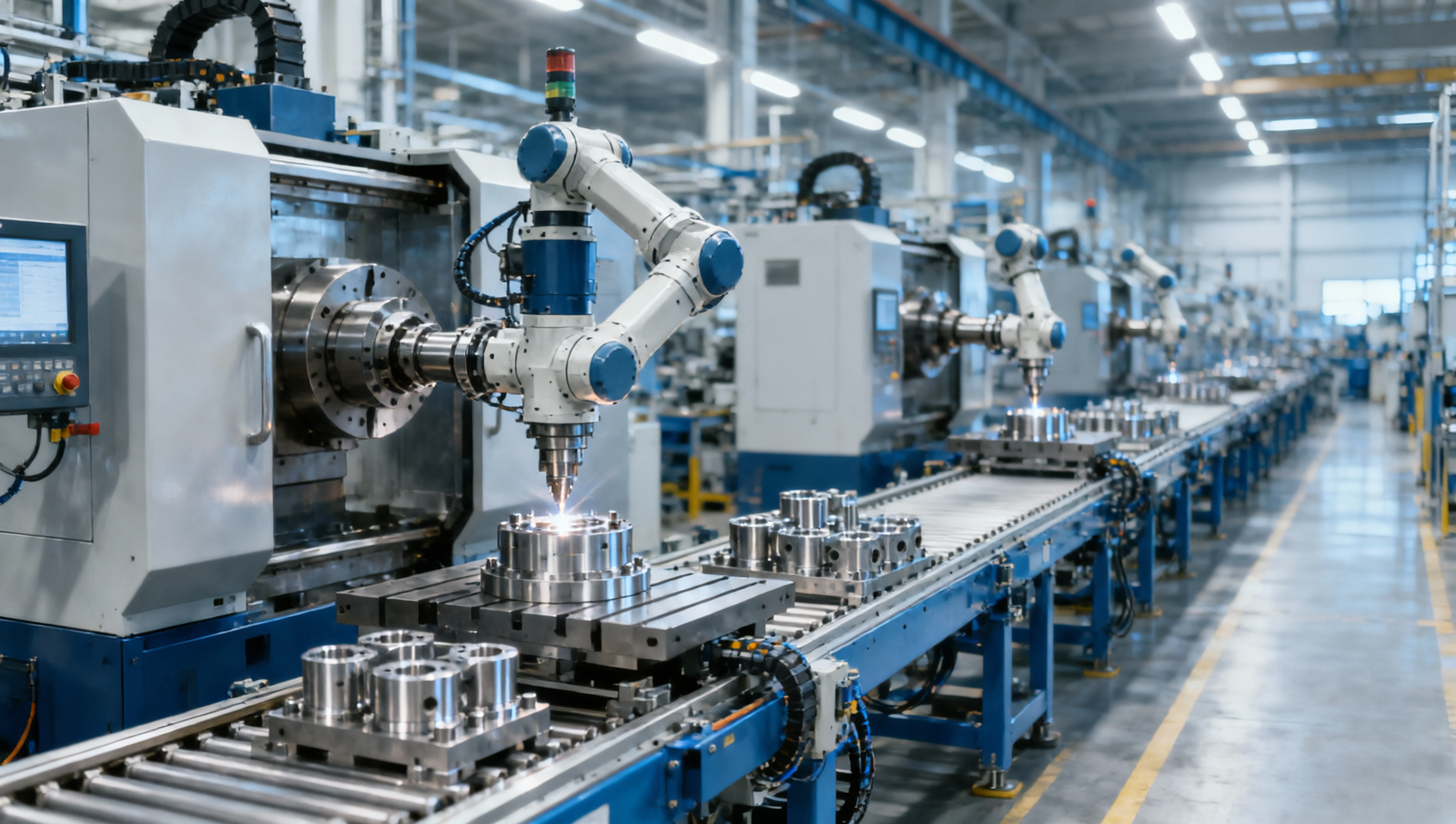
Digital Manufacturing Technology for smart factory is redefining how modern manufacturers achieve speed, accuracy, and scalability. From precision CNC manufacturing and multi-axis CNC manufacturing to automated machine tool integration, today’s smart factories rely on connected systems to improve quality, reduce downtime, and support cost-effective CNC manufacturing across automotive, aerospace, electronics, and energy equipment production.
Why does digital manufacturing technology matter in real factory operations?
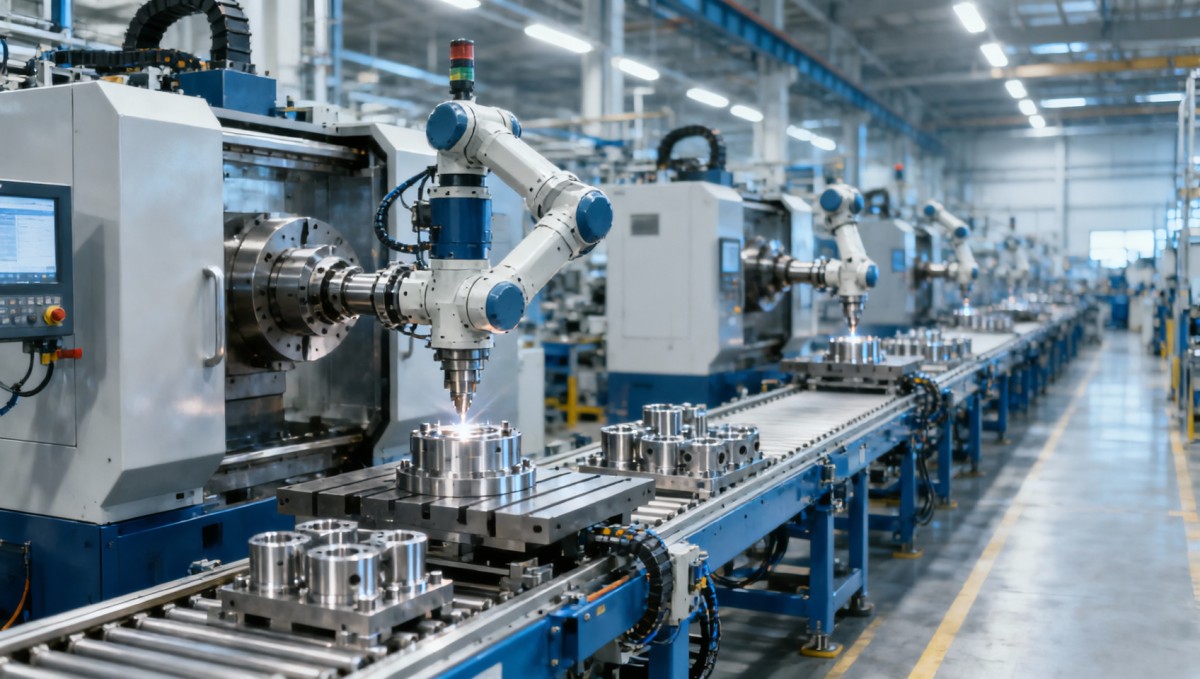
For information researchers, operators, buyers, and decision-makers, the value of digital manufacturing technology is not theoretical. It directly affects machine utilization, process stability, delivery speed, and traceability. In a smart factory, CNC machine tools, automated material handling, industrial robots, inspection systems, and production software no longer work as isolated units. They exchange data in near real time so teams can respond faster to quality shifts, tooling wear, and scheduling changes.
This matters even more in precision manufacturing, where tolerances, repeatability, and process discipline determine commercial results. A machining center or CNC lathe may have excellent mechanical capability, but without digital monitoring and integrated workflow control, production still faces hidden losses. Typical losses include setup delays of 30–90 minutes, unplanned downtime during multi-shift operation, scrap caused by parameter drift, and poor visibility across 3 to 5 connected production steps.
Smart factories use digital manufacturing technology to reduce these gaps. In practice, this includes machine data collection, tool life monitoring, work order tracking, automated quality feedback, and production planning linked to actual machine status. For high-mix and medium-volume manufacturers, this can be more important than simply buying faster equipment, because production complexity often creates more cost than spindle speed alone.
The impact is strongest in sectors such as automotive, aerospace, electronics, and energy equipment. These sectors usually require consistent batch control, documented inspection records, and stable delivery windows that may range from 2–4 weeks for repeat parts to 6–10 weeks for more customized assemblies. Digital systems help manufacturers manage these pressures with fewer manual handoffs and better production transparency.
Core capabilities that make a smart factory different
- Connected equipment visibility, so operators and supervisors can see machine status, alarm history, spindle load trends, and run time without walking across multiple cells.
- Process traceability, which links programs, tooling, fixtures, inspection data, and part lots across 4 key stages: setup, machining, verification, and release.
- Adaptive production planning, allowing planners to rebalance jobs when one line is delayed or when urgent orders must move through a flexible production system.
- Maintenance and quality coordination, helping teams schedule preventive checks every week or every month instead of reacting only after a machine stop or defect event.
Which applications benefit most from CNC digital integration?
Not every production environment has the same needs, so digital manufacturing technology should be matched to application type. A shop producing complex shaft components on CNC lathes needs different data priorities than a line machining precision plates on 3-axis or 5-axis machining centers. Likewise, an electronics enclosure supplier values rapid changeover and lot traceability, while an energy equipment manufacturer often focuses on dimensional stability, machining time, and documentation over longer production cycles.
The best candidates for smart factory upgrades are operations with one or more of the following conditions: repeated manual reporting, frequent setup changes, multi-machine coordination, strict quality documentation, or unstable delivery performance. In these settings, digital integration improves not only efficiency but also procurement confidence, because buyers can evaluate actual process maturity rather than relying only on equipment lists.
The table below shows how different manufacturing scenarios use digital manufacturing technology in practical ways. It is especially useful for procurement teams comparing automation depth, production complexity, and likely implementation focus.
What this comparison shows is simple: the smarter the production mix, the more valuable connected data becomes. A factory running 10 similar jobs per week may prioritize throughput reporting, while one switching between 20 or 30 part numbers may gain more from digital setup management and automated routing control.
Where operators and managers see the fastest gains
Operators usually notice faster fault response, clearer work instructions, and fewer manual paperwork steps. Supervisors see improved shift coordination and more reliable status reporting. Procurement teams gain a better basis for comparing suppliers, because digital maturity can be reviewed through reporting methods, integration capabilities, and process controls instead of marketing claims alone.
For companies with international sourcing or distributed production, digital manufacturing technology also supports communication across sites in China, Germany, Japan, South Korea, and other manufacturing hubs. Shared process visibility helps reduce misunderstanding during program transfer, sample approval, and repeat order execution.
A practical 4-point application checklist
- Check whether the process involves 2 or more handoffs between machining, inspection, assembly, or packaging.
- Review whether setup changes happen daily, weekly, or per shift, because higher change frequency increases the value of digital control.
- Assess whether traceability is required at lot level, part level, or job level before selecting the right data structure.
- Confirm whether quality issues are found in-process or only at final inspection; earlier detection usually produces faster ROI.
How should buyers compare smart factory solutions and machine tool integration?
Procurement often becomes difficult because vendors describe automation with broad terms while buyers need operational proof. A smart factory solution should be compared across machine compatibility, software openness, maintenance burden, training needs, and measurable workflow impact. For CNC machining and precision manufacturing, the key question is not whether a system is digital, but whether it can support the actual mix of machine tools, inspection points, and production volumes on site.
A common mistake is buying a high-level platform before defining the first 3 operational targets. These targets are usually reduced downtime, faster setup, or stronger quality traceability. Without that order of thinking, a plant may invest in dashboards but still struggle with fragmented work instructions, tool data inconsistency, or disconnected inspection records.
The following comparison table is designed for B2B evaluation. It helps buyers, plant managers, and technical teams compare different levels of digital manufacturing technology implementation without reducing the decision to software alone.
This comparison highlights an important procurement principle: integrated capability is valuable only when implementation scope is controlled. Many factories start with 1 pilot line, 2 to 4 priority machines, and 1 major KPI such as setup time or OEE visibility. That staged approach lowers risk and gives decision-makers a clearer basis for broader rollout.
Five purchasing factors that should not be overlooked
- Compatibility with existing CNC lathes, machining centers, probing systems, and automation interfaces already in production.
- Practical training requirements for operators, programmers, maintenance staff, and supervisors over the first 2–6 weeks after deployment.
- Support for quality workflows such as first article checks, in-process verification, and nonconformance tracking.
- Scalability from a pilot cell to a larger smart factory environment without rebuilding the full data structure.
- Clarity on service scope, including commissioning, interface mapping, preventive maintenance support, and post-launch troubleshooting.
What costs, risks, and implementation steps should companies plan for?
Digital manufacturing technology should be evaluated as a phased operational investment, not just a capital purchase. Costs usually appear in 3 layers: hardware and interface equipment, software and data integration, and internal process adaptation. For example, machine data collection may start with a limited hardware footprint, but the larger effort often comes from cleaning routing logic, standardizing tool libraries, and aligning inspection procedures.
The most common implementation risk is not technical incompatibility but organizational mismatch. A plant may connect machines successfully within 2–6 weeks, yet fail to improve output if alarm handling, program revision control, or setup accountability remain unclear. Another risk appears when managers expect immediate plant-wide transformation rather than a staged performance gain from a pilot area.
For many manufacturers, a practical rollout follows a 4-step path. First, map current equipment, process bottlenecks, and data gaps. Second, define 3 to 5 measurable targets such as shorter setup, reduced scrap review delay, or improved machine visibility. Third, launch a pilot in one production cell. Fourth, review results over one full production cycle before wider deployment.
A realistic implementation roadmap
- Assessment stage, usually 1–3 weeks: identify machine types, production constraints, and existing quality control methods.
- Pilot configuration stage, often 2–8 weeks: connect selected CNC assets, define dashboards, and train core users.
- Validation stage, often 4–6 weeks: compare baseline and pilot performance across downtime, setup rhythm, and traceability completeness.
- Expansion stage: extend to more machines, more shifts, or upstream and downstream processes such as assembly or final inspection.
Buyers should also compare alternatives. In some cases, a full smart factory platform is less urgent than targeted upgrades such as tool monitoring, digital work instructions, or automated inspection data capture. These narrower options can still improve cost-effective CNC manufacturing, especially for plants with constrained budgets or mixed-generation equipment.
Risk reminders before approval
- Do not assume all legacy machines can provide the same depth of data without interface review.
- Do not ignore operator workflow design; a digital system that adds extra manual input may reduce acceptance.
- Do not judge success only by installation completion; measure performance after at least one stable production cycle.
- Do not separate digital planning from compliance needs when documentation or customer audit readiness matters.
FAQ: what do manufacturers usually ask before moving to a smart factory model?
How do we know if our factory is ready for digital manufacturing technology?
A factory is usually ready when it has repeatable production flows, identifiable bottlenecks, and at least one improvement target that can be measured over 4–12 weeks. Readiness does not require perfect equipment uniformity. Many shops begin with mixed CNC machine tools and improve visibility first, then standardize deeper functions later. What matters is whether the team can define priorities such as setup reduction, traceability, or downtime control.
What should procurement teams request from suppliers during evaluation?
Request a clear scope covering machine compatibility, integration method, commissioning steps, operator training, and support boundaries. Ask how the system handles 3 practical issues: program revision control, alarm response, and quality data linkage. If your production includes multi-axis CNC manufacturing, also ask how the solution supports complex routing, longer setup verification, and tooling traceability.
Can small or medium manufacturers benefit, or is this only for large plants?
Small and medium manufacturers can benefit significantly, especially when they run high-mix production, face labor pressure, or need better schedule visibility. A focused pilot around 1 cell or 2–3 machines may deliver more practical value than a broad but shallow rollout. The right entry point is usually the area where delays, manual reporting, or repeat quality issues create the highest hidden cost.
Which standards or compliance topics should be considered?
Requirements vary by sector, but manufacturers commonly review traceability, quality documentation, calibration discipline, data retention practices, and machine safety compliance. In export-oriented or audit-sensitive industries, it is useful to confirm how digital records support customer documentation expectations. The goal is not to add paperwork, but to make process evidence easier to retrieve and more consistent across shifts and sites.
Why choose us when evaluating CNC digital integration and smart factory solutions?
We focus on the global CNC machining and precision manufacturing industry, with content and solution awareness built around real production environments rather than generic automation language. That means we understand how CNC lathes, machining centers, fixtures, cutting tools, automated assembly systems, and flexible production lines connect in practical manufacturing workflows. We also understand the difference between researching a trend and preparing a purchase decision.
If you are evaluating digital manufacturing technology for a smart factory, we can help you narrow the conversation to decision-grade topics: suitable machine integration scope, pilot line priorities, expected implementation cycle, traceability needs, and procurement comparison points. This is especially useful for teams balancing technical complexity, budget limits, and delivery pressure across automotive, aerospace, electronics, and energy equipment applications.
You can contact us to discuss parameter confirmation, product and solution selection, CNC automation matching, expected lead times, sample or pilot planning, documentation needs, and quotation communication. If your current challenge involves multi-axis CNC manufacturing, precision CNC manufacturing, automated machine tool integration, or cost-effective CNC manufacturing, we can help you organize the requirements before you commit resources.
A useful first conversation usually covers 5 items: your target parts or production cell, current machine types, volume pattern, quality control method, and required delivery rhythm. With those inputs, it becomes much easier to judge whether you need a lightweight digital upgrade, a pilot smart factory project, or a broader connected manufacturing roadmap.
PREVIOUS ARTICLE
Recommended for You
 How to Choose a Heavy-Duty Machining Center for Mold MakingMachine Tool Industry Editorial Team
 How Quick-Change Fixture Design Cuts CNC Turning Setup TimeCNC Machining Technology Center
 Why 5 Axis Machining Is Ideal for Impeller ManufacturingCNC Machining Technology Center
 How to Start Lean Production Without Disrupting OutputManufacturing Market Research Center
 When a Modular Tooling System Improves Flexible ManufacturingMachine Tool Industry Editorial Team
 How CNC Machine Control Systems Improve Automation StabilityMachine Tool Industry Editorial Team

Aris Katos
Future of Carbide Coatings
15+ years in precision manufacturing systems. Specialized in high-speed milling and aerospace grade alloy processing.
▶
How to Start Lean Production Without Disrupting OutputManufacturing Market Research Center▶
Why Digital Manufacturing Technology Matters for Smart FactoriesManufacturing Market Research Center▶
What Automated CNC Manufacturing Solves Best in 2026Manufacturing Market Research Center▶
2026 Beijing Auto Show Opens: Dual-Venue Format, 1451 Vehicles, Smart Production Lines as New Industry ImperativeManufacturing Market Research Center▶
What Global Manufacturing Means for CNC BuyersManufacturing Market Research Center
Mastering 5-Axis Workholding Strategies
Join our technical panel on Nov 15th to learn about reducing vibrations in thin-wall components.

Providing you with integrated sanding solutions
Before-sales and after-sales services
Comprehensive technical support