• Global CNC market projected to reach $128B by 2028 • New EU trade regulations for precision tooling components • Aerospace deman
NYSE: CNC +1.2%LME: STEEL -0.4%

How to Start Lean Production Without Disrupting Output
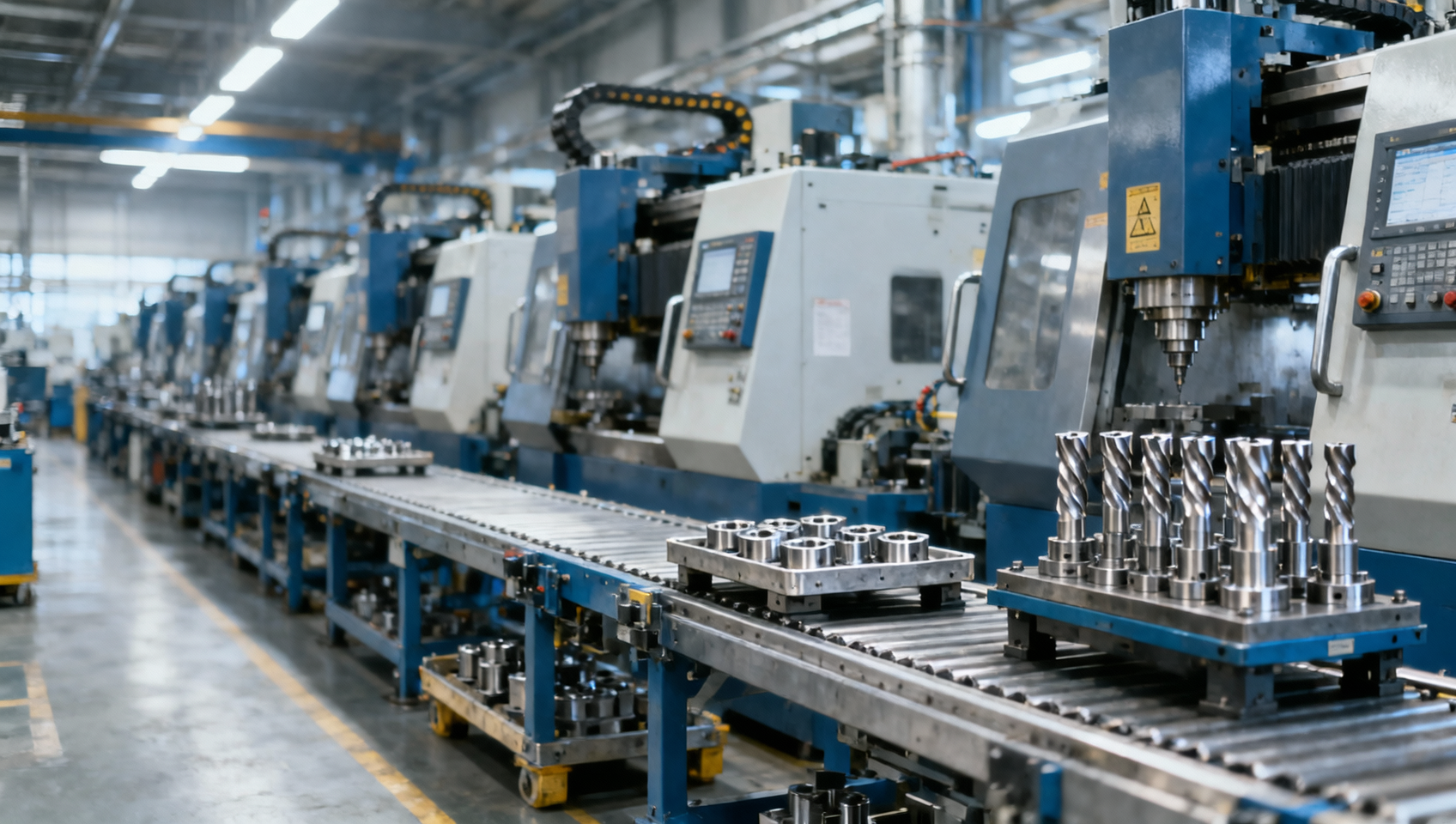
Starting a Lean Production Process implementation does not have to slow a precision CNC manufacturing operation. With quick setup CNC manufacturing, automated CNC manufacturing, and Digital Manufacturing Technology for smart factory adoption, manufacturers can reduce waste while protecting output. For CNC machine tool manufacturer teams, plant operators, buyers, and decision-makers, the key is introducing practical changes that improve flow, efficiency, and quality without disrupting daily production.
In CNC machining and precision manufacturing, output stability is not a secondary metric. A delayed spindle start, a fixture change that takes 20 minutes too long, or a material shortage at one machining center can affect delivery dates across automotive, aerospace, electronics, and energy equipment orders. That is why lean production in this industry must be practical, phased, and closely tied to shop-floor realities.
For buyers and decision-makers, lean is also a commercial issue. Better flow improves on-time delivery, lowers hidden scrap costs, and supports more predictable capacity planning. For operators and process engineers, the priority is simpler: reduce wasted motion, shorten setup time, stabilize quality, and keep machines cutting. The best lean implementation starts with a few measurable improvements, not a disruptive full-plant overhaul.
Why Lean Production in CNC Plants Often Fails at the Start
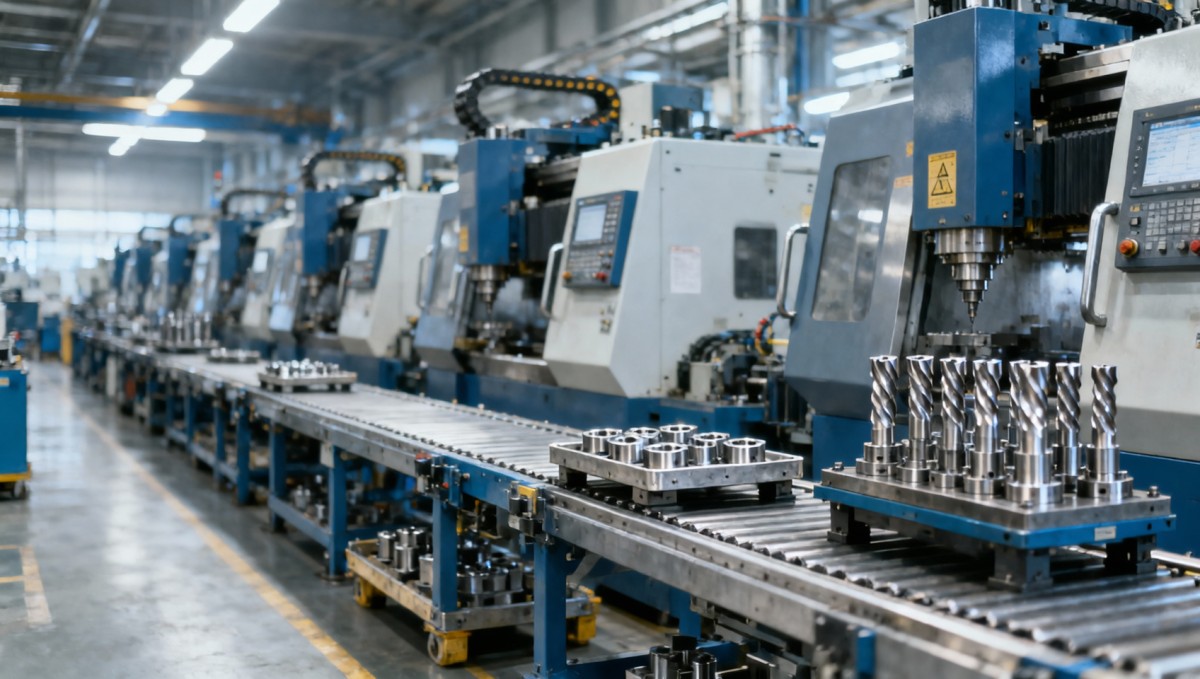
Many manufacturers associate lean production with large consulting projects, factory redesign, or aggressive headcount reduction. In CNC machine tool environments, that assumption creates resistance from operators, supervisors, and even procurement teams. A lean initiative fails early when it interrupts machine utilization before fixing the actual causes of waste.
The most common mistake is trying to change too many variables at once. A plant may introduce new scheduling rules, digital dashboards, revised tooling cabinets, and revised inspection routes within 2 to 4 weeks. On paper this looks efficient. In practice, it creates confusion, inconsistent data, and avoidable output loss on critical machining lines.
Another issue is measuring the wrong baseline. If a shop tracks only machine run time, it may ignore setup losses, waiting time between operations, first-off inspection delays, or tool replacement interruptions. In precision manufacturing, a line can show 85% spindle utilization while still losing 10% to 15% of weekly capacity through changeover waste and poor material flow.
Typical early-stage barriers
Most CNC plants face a similar group of barriers during the first lean stage. These issues are operational, not theoretical, and they should be addressed with simple controls before larger digital integration begins.
- Setup variation between shifts, where one team changes a fixture in 12 minutes and another needs 28 minutes for the same task.
- Tooling and gauge locations spread across multiple areas, increasing operator walking distance by 30 to 80 meters per setup cycle.
- Unclear priority rules for urgent jobs, leading to frequent rescheduling and WIP accumulation at bottleneck machining centers.
- Inspection capacity that cannot match output pace, especially when first-piece approval takes 15 to 40 minutes.
The table below shows where non-disruptive lean efforts should begin in a CNC production setting.
The key takeaway is that lean production should first target controllable waste around setup, movement, waiting, and quality handoff. These are often responsible for the first 5% to 12% productivity gain without changing machine models, factory layout, or order mix.
Build a Lean Foundation Without Stopping the Line
A stable lean launch in CNC manufacturing usually begins with one pilot area, one part family, or one machining cell. Instead of redesigning the entire plant, select a process with repeat orders, measurable setup frequency, and manageable complexity. A line producing shaft parts, precision discs, or structural components in batches of 50 to 300 units is often a practical starting point.
The first 30 days should focus on observation and standardization. Record actual setup time, waiting time between operations, first-pass yield, and operator travel distance. Plants are often surprised to find that a nominal 18-minute setup includes only 7 to 9 minutes of value-added work, while the rest is searching, verifying, adjusting, or waiting.
Standard work should be written for reality, not for audits. If a machining center setup requires fixture mounting, tool offset verification, coolant check, and first-piece confirmation, each step should be sequenced in the order operators already use when the process works well. The goal is to reduce variation, not add paperwork.
A phased 5-step implementation path
- Map one process family for 1 full shift or 1 complete batch cycle and identify delays longer than 5 minutes.
- Separate internal and external setup tasks so tool preparation, fixture staging, and program checks happen before machine stoppage.
- Create visual controls for tools, gauges, pallets, and material status at the point of use.
- Set 3 to 4 daily metrics such as setup time, first-pass yield, queue time, and on-time completion.
- Review results every 7 days and adjust one constraint at a time rather than adding multiple changes together.
Where quick setup CNC manufacturing delivers the fastest gains
Quick setup CNC manufacturing is often the most effective entry point because it directly protects output. In high-mix, medium-volume plants, reducing average changeover from 35 minutes to 22 minutes across 6 daily setups can recover nearly 78 minutes of productive machine time per machine per day. Across 10 machines, the capacity effect becomes commercially significant.
Typical setup improvements include pre-set tool assemblies, standardized fixture interfaces, digital setup sheets, and common zero-point systems. None of these changes require a full smart factory upgrade. They simply reduce time lost while the spindle is not cutting.
For purchasing teams, this matters because not every lean gain comes from buying a new machining center. In many cases, a modest investment in tool presetting, fixture repeatability, or setup carts yields a better 3- to 9-month return than adding machine capacity to a poorly organized process.
Use Automation and Digital Manufacturing Technology Selectively
Automated CNC manufacturing and Digital Manufacturing Technology can strengthen lean production, but only when they solve identified bottlenecks. Automation should not be added as a standalone symbol of modernization. If the real problem is poor setup discipline or unstable incoming material flow, a robot or software dashboard alone will not protect output.
A practical rule is to automate repetitive, stable tasks first. These may include pallet handling, part loading for repeat families, tool life monitoring, in-process probing, or basic production data capture. When cycle times are consistent within a 5% to 8% range, automation is easier to justify and easier to sustain.
Digital tools should also match decision speed. Operators need live machine status, setup documents, and alarm visibility. Supervisors need queue status, downtime reasons, and output by shift. Executives need trend data over 4 to 12 weeks, not another screen full of unread machine codes. The technology layer must support each user group differently.
Comparing lean-supporting technology options
The table below compares common technology additions that support lean production in CNC machining environments.
The main conclusion is that technology should be sequenced. In many plants, machine monitoring and tool presetting come before robotic loading. That order typically produces cleaner data and better setup stability, which then improves the payback potential of later automation investments.
What buyers should ask before approving automation
- Is the targeted process stable across at least 20 to 30 recent production runs?
- Can the expected gain be measured in setup reduction, labor redeployment, scrap reduction, or overnight runtime?
- Will the new system integrate with existing CNC controls, quality routines, and maintenance capability?
- Does the supplier provide commissioning, training, and support within a realistic 2- to 8-week startup window?
These questions help prevent expensive technology from being installed on top of an unstable process. Lean production works best when digital integration follows process discipline, not the other way around.
Set the Right Metrics for Operators, Buyers, and Management
A lean initiative without clear metrics quickly becomes subjective. In CNC machining, the most useful indicators are the ones that show whether output is protected while waste is reduced. That means balancing efficiency metrics with delivery and quality metrics, rather than chasing utilization alone.
Operators should be able to see metrics they can influence during a shift. Good examples include setup time per changeover, first-pass approval rate, tool-related stoppages, and waiting time for material or inspection. These measures can be reviewed at the machine or cell level every 8 to 12 hours.
Purchasing and management teams need a broader view. They should track lead time by part family, schedule adherence, WIP days, and the cost effect of scrap or rework. In a precision manufacturing environment, a 2% scrap issue on a complex machined component may be more damaging than a minor drop in nominal machine utilization.
Suggested KPI structure for a non-disruptive lean rollout
The following KPI structure keeps reporting focused and practical during the first lean phase.
This layered approach prevents one group from drowning in irrelevant data. It also makes lean reviews faster. A 15-minute daily review with 4 indicators is usually more effective than a 60-minute meeting based on 20 disconnected charts.
Avoid these measurement mistakes
- Do not compare different part families without adjusting for cycle time, tolerance class, and setup complexity.
- Do not reward speed if it increases scrap, rework, or customer complaint risk.
- Do not review KPIs monthly only; the first 6 to 8 weeks require weekly adjustment.
- Do not hide manual downtime coding inside broad categories such as “other,” because that masks real bottlenecks.
Good metrics make lean production credible. They show operators that the goal is not pressure for its own sake, but a cleaner process with fewer disruptions and more predictable output.
Common Risks, Procurement Considerations, and Practical FAQs
Even when the lean roadmap is sensible, implementation can drift if supplier choices, training, and maintenance support are underestimated. For CNC machine tool manufacturers and component plants, the best results come from aligning process improvement with tooling strategy, fixture repeatability, software usability, and service responsiveness.
Procurement teams should avoid evaluating lean-supporting equipment by purchase price alone. A lower-cost fixture system that adds 8 minutes to every changeover may be more expensive over 6 months than a better repeatability solution. The same applies to software: if operators cannot use the interface after 2 days of training, the system will not deliver sustainable value.
Service support also matters. Whether a plant is adding monitoring sensors, presetting equipment, or basic automation, buyers should confirm spare part availability, response windows, remote diagnostics options, and startup assistance. In many manufacturing operations, a 24- to 72-hour support gap during commissioning can delay a whole improvement schedule.
FAQ: How can a plant start lean without hurting delivery performance?
Start with one pilot cell, one repeat product family, and one target such as setup reduction or queue-time reduction. Keep the first phase to 30 to 45 days, measure daily, and avoid layout changes until process waste is clearly identified. This protects delivery while still generating visible gains.
FAQ: Which CNC operations are usually the best candidates for early lean improvement?
Operations with frequent setups, repeated tooling changes, or unstable handoffs to inspection are strong candidates. Machining centers handling mixed batches, CNC lathes producing multiple shaft variants, and cells with recurring fixture swaps often show the fastest return from standardization and quick setup practices.
FAQ: When should a company invest in automation instead of manual process improvement?
Automation makes the most sense after the process is stable. If cycle variation is under about 5% to 8%, part presentation is repeatable, and downtime causes are understood, then robotic loading, pallet systems, or digital monitoring can amplify lean gains. If the process is unstable, manual improvement usually comes first.
FAQ: What should buyers look for in lean-supporting suppliers?
Focus on 4 areas: implementation speed, compatibility with existing CNC systems, operator training quality, and after-sales support. Buyers should ask for realistic commissioning timelines, standard training hours, maintenance needs, and how the supplier handles spare parts and troubleshooting during the first 90 days.
Lean production in precision CNC manufacturing works best when it is treated as an output protection strategy, not a disruptive restructuring exercise. By starting with measurable waste, standardizing setup routines, applying automation selectively, and tracking the right KPIs, manufacturers can improve flow, quality, and delivery performance with lower risk.
For CNC machine tool manufacturers, operators, sourcing teams, and business leaders, the practical path is clear: begin with one stable pilot area, prioritize quick setup CNC manufacturing, and introduce Digital Manufacturing Technology only where it supports a proven process need. If you are planning a lean upgrade, now is the right time to evaluate your current bottlenecks, request a tailored improvement roadmap, and explore solutions that fit your production goals. Contact us to discuss your application, compare options, and get a customized plan for efficient, low-disruption implementation.
PREVIOUS ARTICLE
NEXT ARTICLE
Recommended for You
 How to Choose a Heavy-Duty Machining Center for Mold MakingMachine Tool Industry Editorial Team
 How Quick-Change Fixture Design Cuts CNC Turning Setup TimeCNC Machining Technology Center
 Why 5 Axis Machining Is Ideal for Impeller ManufacturingCNC Machining Technology Center
 How to Start Lean Production Without Disrupting OutputManufacturing Market Research Center
 When a Modular Tooling System Improves Flexible ManufacturingMachine Tool Industry Editorial Team
 How CNC Machine Control Systems Improve Automation StabilityMachine Tool Industry Editorial Team

Aris Katos
Future of Carbide Coatings
15+ years in precision manufacturing systems. Specialized in high-speed milling and aerospace grade alloy processing.
▶
How to Start Lean Production Without Disrupting OutputManufacturing Market Research Center▶
Why Digital Manufacturing Technology Matters for Smart FactoriesManufacturing Market Research Center▶
What Automated CNC Manufacturing Solves Best in 2026Manufacturing Market Research Center▶
2026 Beijing Auto Show Opens: Dual-Venue Format, 1451 Vehicles, Smart Production Lines as New Industry ImperativeManufacturing Market Research Center▶
What Global Manufacturing Means for CNC BuyersManufacturing Market Research Center
Mastering 5-Axis Workholding Strategies
Join our technical panel on Nov 15th to learn about reducing vibrations in thin-wall components.

Providing you with integrated sanding solutions
Before-sales and after-sales services
Comprehensive technical support