• Global CNC market projected to reach $128B by 2028 • New EU trade regulations for precision tooling components • Aerospace deman
NYSE: CNC +1.2%LME: STEEL -0.4%

Where the Manufacturing Industry is adding automation fastest
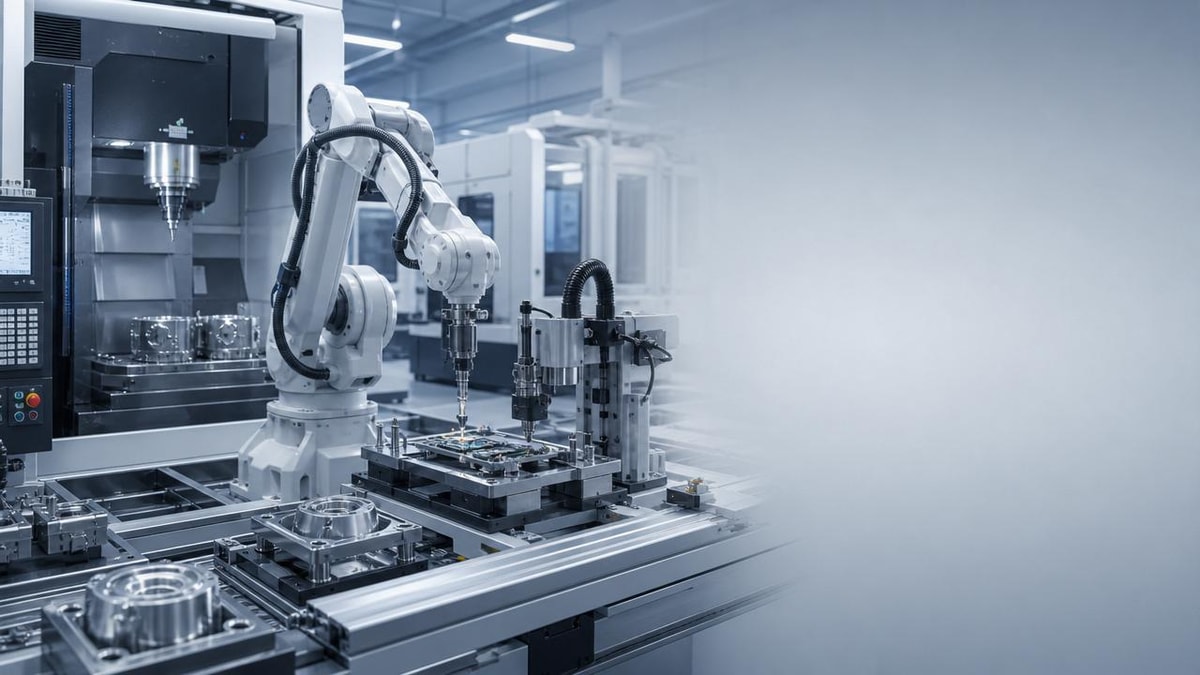
The Manufacturing Industry is accelerating automation at an unprecedented pace, reshaping how factories improve precision, efficiency, and scalability. From CNC machine tools and industrial robots to smart production lines, sectors such as automotive, aerospace, electronics, and energy equipment are leading this shift. Understanding where automation is growing fastest helps researchers and industry professionals identify key market trends, investment opportunities, and the technologies defining the next stage of global manufacturing.
Why a checklist approach matters when tracking automation in the Manufacturing Industry
For information researchers, the main challenge is not finding examples of automation. The challenge is separating broad headlines from the sectors, processes, and regions where automation is scaling fastest and creating measurable competitive advantage. A checklist-based method makes that easier. Instead of asking whether the Manufacturing Industry is adopting automation, it helps you ask where investment is concentrated, which production steps are being automated first, what technical barriers are slowing adoption, and how demand differs across industries.
This approach is especially useful in the CNC machine tool and precision manufacturing ecosystem. Automation growth is rarely uniform. High-volume assembly may adopt robots quickly, while precision machining cells advance through tool monitoring, pallet systems, digital inspection, and flexible workholding. Looking at clear criteria gives a more reliable picture than relying on a single trend report.
First checklist: what to verify before deciding where automation is growing fastest
Before comparing sectors, use the following core checks. These points help determine whether automation in the Manufacturing Industry is deep, repeatable, and economically significant rather than experimental.
- Check process repeatability: industries with stable, repeatable workflows usually automate faster because robots, CNC systems, and inline inspection perform best when tolerances and cycle steps are predictable.
- Check labor intensity and skill shortages: automation often expands fastest where labor is hard to recruit, training time is long, or error costs are high.
- Check quality requirements: sectors with strict accuracy, traceability, and consistency standards tend to automate earlier to reduce variation.
- Check production volume and product mix: both high-volume industries and flexible low-volume, high-mix sectors can automate rapidly, but they use different technologies and investment logic.
- Check digital readiness: factories with MES, ERP integration, sensor infrastructure, and machine connectivity can scale automation faster than sites still relying on manual data flow.
- Check return on investment timeline: rapid adoption often appears where downtime reduction, labor savings, scrap control, and throughput gains justify capital spending within a practical payback period.
Where the Manufacturing Industry is adding automation fastest: sector-by-sector guide
1. Automotive manufacturing remains one of the fastest-moving segments
Automotive manufacturing continues to lead because it combines large production volumes, strict quality control, and constant pressure on cost and throughput. Body welding, painting, material handling, drivetrain machining, and final assembly have long used robots, but the current wave goes further. Manufacturers are adding machine vision, autonomous logistics, flexible robotic cells, digital twins, and AI-assisted inspection.
For researchers, the key signal is not simply robot density. It is the expansion of integrated automation across machining centers, CNC lathes, battery component processing, and automated assembly for electric vehicle platforms. EV production in particular is pushing new automation demand in battery housings, motor shafts, lightweight structures, and thermal management components.
2. Electronics production is scaling automation very quickly
Electronics production is one of the most dynamic areas in the Manufacturing Industry because miniaturization, precision, and short product cycles all favor automation. Surface-mount technology, precision dispensing, laser processing, micro-assembly, and automated optical inspection are expanding rapidly. Electronics factories also rely heavily on data-driven control, which makes them natural candidates for smart production lines.
This sector stands out because automation is not limited to heavy robotics. It includes motion control systems, collaborative robots, high-speed pick-and-place equipment, traceability software, and precision machine tools for molds, connectors, and metal enclosures. Researchers should watch suppliers of compact CNC systems, metrology tools, and automation modules serving semiconductor and electronics ecosystems.
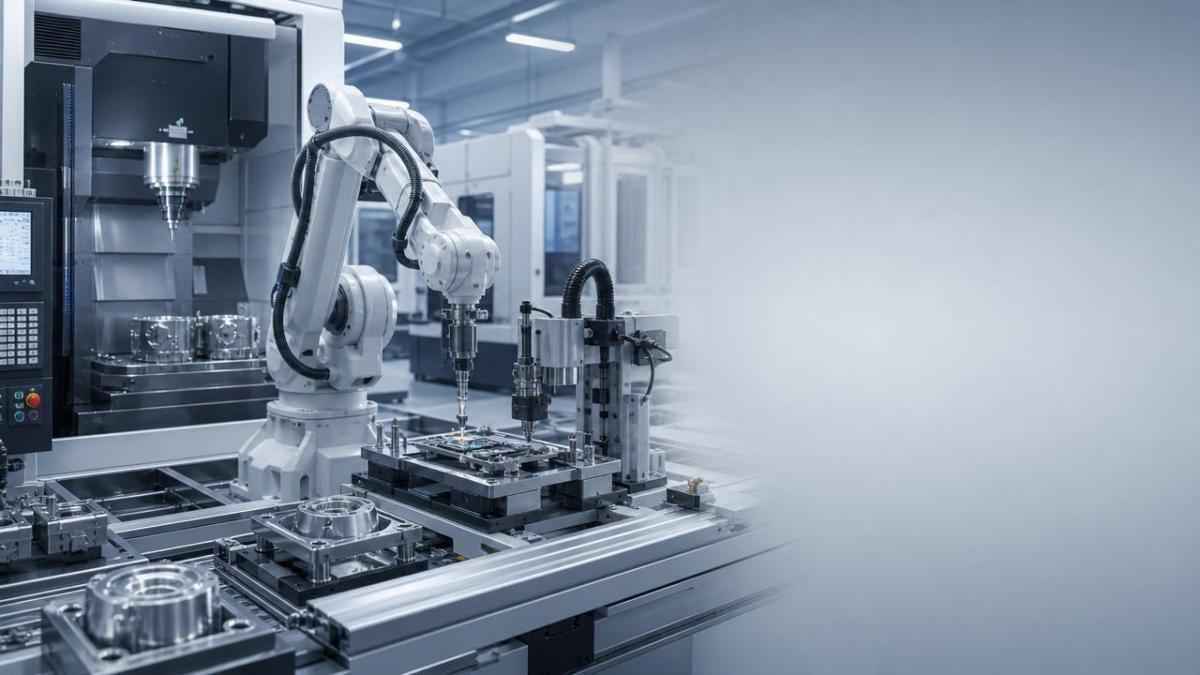
3. Aerospace is adding automation selectively but strategically
Aerospace does not always automate at the same visible speed as automotive, yet it is one of the most important areas for advanced automation growth. The reason is precision, documentation, and material complexity. Multi-axis CNC machining, automated drilling, robotic composite handling, in-process measurement, and digital quality traceability are becoming more common across structural parts and engine components.
The important distinction is that aerospace automation is often driven by risk reduction and process control rather than only labor savings. When tolerances are tight and materials are expensive, automated verification and repeatable machining can deliver major value even in lower-volume production.
4. Energy equipment is becoming a strong automation growth area
Energy equipment manufacturing, including wind, power generation, oil and gas systems, and emerging energy infrastructure, is increasingly automating machining, welding, material transport, and inspection. Large components, heavy-duty tolerances, and demand for reliability make this segment attractive for CNC automation, robotic welding, and digital production planning.
Automation growth is particularly notable where producers need consistent output for shafts, flanges, turbine parts, valve bodies, and structural frames. In this part of the Manufacturing Industry, the trend often appears as gradual modernization of existing workshops through automated loading, machine connectivity, and condition monitoring rather than full smart factory replacement all at once.
5. Precision machining suppliers are accelerating through flexible automation
Job shops and precision machining suppliers are an essential part of the automation story. Many are adding pallet pools, robotic tending, tool life management, in-machine probing, automated part measurement, and software-driven scheduling. This matters because a large share of the Manufacturing Industry depends on outsourced machining capacity rather than only OEM-owned plants.
The fastest adopters are usually suppliers serving automotive, medical, aerospace, and electronics clients with tight deadlines and consistent quality targets. Flexible automation helps them run unattended shifts, reduce setup waste, and respond to mixed part families more efficiently.
How to judge automation momentum by application, not only by industry label
Sometimes the better question is not which industry is automating fastest, but which factory functions are seeing the fastest upgrades across the Manufacturing Industry. Several application areas stand out:
- Material handling and intralogistics, where robots and autonomous mobile systems quickly reduce non-value-added labor.
- Machine tending for CNC lathes, machining centers, and grinding systems, especially in lights-out or multi-shift operations.
- Inspection and traceability, where automated measurement and data capture support compliance and lower defect rates.
- Assembly automation for products with repeatable sequences, small parts, or tight takt time requirements.
- Process monitoring and predictive maintenance, where sensors and analytics improve uptime without changing the core machine immediately.
For many companies, these application-level upgrades happen earlier than full end-to-end smart factory deployment. That is why researchers should track both machine purchases and software-enabled automation layers.
Regional signals: where to look for the strongest automation clusters
Regional concentration matters because automation in the Manufacturing Industry often grows around supplier ecosystems. China remains a major center due to scale, industrial policy support, and rapid expansion in EVs, electronics, and machine tool production. Germany remains highly influential in precision engineering, industrial software, and advanced production systems. Japan and South Korea continue to lead in robotics integration, component quality, and automation-intensive electronics and automotive manufacturing.
When evaluating regional momentum, prioritize clusters with machine tool builders, robot integrators, control system suppliers, cutting tool makers, and end-user industries in close proximity. These locations tend to adopt faster because service, technical support, and process innovation circulate more efficiently.
Common blind spots that can distort your view of automation growth
- Confusing robot installation with full automation maturity. A robot alone does not mean a factory has integrated planning, inspection, traceability, or adaptive control.
- Ignoring CNC-centered automation. In many sectors, the real change comes from automated machining cells, digital tool management, and connected quality systems rather than dramatic assembly robots.
- Overlooking retrofit projects. Many manufacturers improve productivity through machine upgrades, sensors, and software before buying entirely new lines.
- Assuming high volume is the only driver. High-mix, high-precision sectors can also automate rapidly when setup reduction and consistency are critical.
- Missing supply-chain pressure. OEM requirements often force suppliers to adopt traceability, quality automation, and digital reporting faster than expected.
Practical research checklist for the next step
If your goal is to map where the Manufacturing Industry is adding automation fastest, prioritize these research actions:
- Review capital spending trends in automotive, electronics, aerospace, and energy equipment manufacturing.
- Track demand for CNC machining centers, multi-axis systems, robot integration, vision inspection, and flexible production lines.
- Compare greenfield smart factories with brownfield modernization projects to understand where budget is actually flowing.
- Look for evidence of software adoption such as MES connectivity, predictive maintenance, and digital quality management.
- Assess whether automation is driven by labor shortages, quality pressure, product complexity, export demand, or energy efficiency requirements.
Conclusion: how to use these signals effectively
The Manufacturing Industry is adding automation fastest where precision, volume pressure, labor constraints, and digital readiness come together. Automotive and electronics remain the most visible leaders, while aerospace, energy equipment, and precision machining suppliers are becoming increasingly important through advanced CNC automation, smart inspection, and flexible production systems.
For information researchers, the best method is to follow a structured checklist rather than broad market claims. Confirm which process is being automated, what return it delivers, how deeply software is integrated, and which supplier clusters support long-term scaling. If you need to go further, the most useful next questions are about machine configuration, part type, production volume, integration level, budget range, implementation cycle, and whether the target factory is upgrading an existing line or planning a new automated cell.
PREVIOUS ARTICLE
NEXT ARTICLE
Recommended for You
![]() Beijing’s New E-Bike Lock Regulation Spurs CNC Housing DemandGlobal Machine Tool Trade Research Center
Beijing’s New E-Bike Lock Regulation Spurs CNC Housing DemandGlobal Machine Tool Trade Research Center![]() New Drone Standard GB/T 44723–2026 Takes Effect May 2026Manufacturing Policy Research Center
New Drone Standard GB/T 44723–2026 Takes Effect May 2026Manufacturing Policy Research Center![]() New Maritime Code Takes Effect May 1, 2026: CNC Equipment Shipping Rules UpdatedManufacturing Market Research Center
New Maritime Code Takes Effect May 1, 2026: CNC Equipment Shipping Rules UpdatedManufacturing Market Research Center![]() 2026 China Cycle Shanghai: CNC E-Bike Frame Capacity Draws ODM FocusManufacturing Market Research Center
2026 China Cycle Shanghai: CNC E-Bike Frame Capacity Draws ODM FocusManufacturing Market Research Center![]() 2026 Foshan Tanzhou Auto Expo: EV Parts Sourcing FocusGlobal Machine Tool Trade Research Center
2026 Foshan Tanzhou Auto Expo: EV Parts Sourcing FocusGlobal Machine Tool Trade Research Center![]() New Hazardous Chemicals Safety Law Takes Effect May 2026Manufacturing Policy Research Center
New Hazardous Chemicals Safety Law Takes Effect May 2026Manufacturing Policy Research Center


Aris Katos
Future of Carbide Coatings
15+ years in precision manufacturing systems. Specialized in high-speed milling and aerospace grade alloy processing.
▶
Where the Manufacturing Industry is adding automation fastestManufacturing Market Research Center▶
Global Manufacturing shifts that are changing machine demandManufacturing Market Research Center▶
Global Manufacturing shifts changing machine tool demandManufacturing Market Research Center▶
AI Compute Boom Strains Power Grids, Impacts CNC-Data Center ManufacturingManufacturing Market Research Center▶
What Global Manufacturing Shifts Mean for Machine OrdersManufacturing Market Research Center
Mastering 5-Axis Workholding Strategies
Join our technical panel on Nov 15th to learn about reducing vibrations in thin-wall components.

Providing you with integrated sanding solutions
Before-sales and after-sales services
Comprehensive technical support