• Global CNC market projected to reach $128B by 2028 • New EU trade regulations for precision tooling components • Aerospace deman
NYSE: CNC +1.2%LME: STEEL -0.4%

Automated lathe setup mistakes that slow down daily production
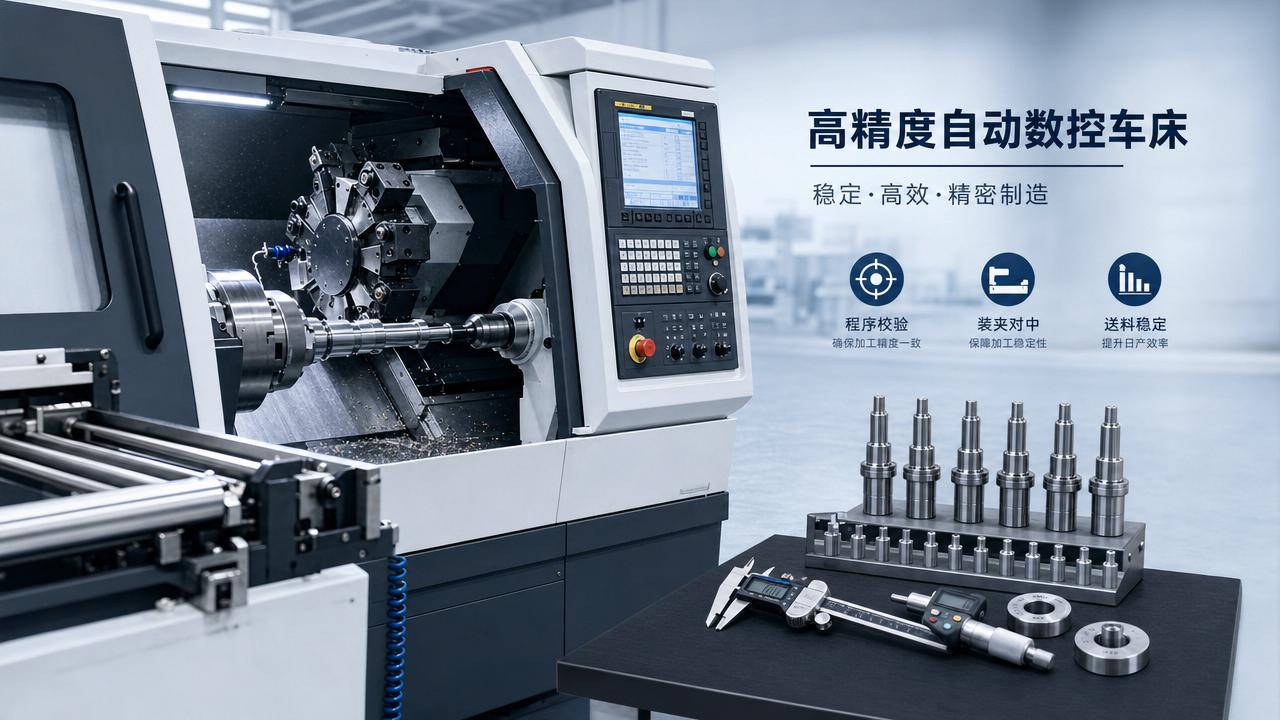
Even a high-performance automated lathe can lose valuable output when setup errors go unnoticed. From tool offsets and chuck alignment to program verification and material loading, small mistakes can quickly slow daily production, reduce part consistency, and increase downtime. This article highlights the most common setup problems operators face and shows how to prevent them for smoother, faster, and more reliable machining.
Why setup mistakes matter more in different production scenarios
In real workshops, an automated lathe does not operate under one universal condition. A short-run job shop, a medium-volume subcontractor, and a high-volume production cell may use similar machine platforms, but the impact of setup mistakes is very different in each case. In a prototype environment, one bad setup may waste engineering time and delay approval. In a batch production line, the same mistake can quietly produce hundreds of nonconforming parts before anyone notices. For operators, that means setup discipline is not only a technical issue but also a production scenario issue.
The most common problem is assuming that all setup risks are equal. They are not. Some errors mainly affect cycle time, while others affect surface finish, concentricity, tool life, or machine stability. Understanding where the automated lathe is being used helps operators focus on the right checks first. That is especially important in modern CNC environments where production targets, labor availability, material cost, and delivery pressure all influence setup decisions.
Typical shop-floor scenarios where automated lathe setup errors slow output
Operators often face different setup demands depending on the type of production. The table below shows how common automated lathe mistakes appear across major daily machining scenarios.
This scenario-based view matters because the best prevention method depends on the production context. A general warning to “double-check setup” is not enough. Operators need to know what to check first, what can wait, and what mistakes are most likely to slow output on their specific automated lathe line.
Scenario 1: Frequent job changeovers and the hidden cost of rushed setup
In shops that switch part numbers several times a day, setup speed is important, but rushed setup is often the biggest cause of lost production. On an automated lathe, small mistakes such as loading the wrong tool geometry, selecting an outdated program revision, or forgetting to update work offsets can create repeated interruptions. Operators may spend more time recovering from preventable errors than they save during a hurried setup.
A common issue in this scenario is incomplete first-part verification. When a machine is expected to move quickly from one shaft, bushing, or threaded component to another, teams sometimes rely too heavily on memory. That is risky. Even when the turret layout looks familiar, the insert grade, nose radius, or offset value may have changed. The result is often oversize diameters, poor finish, or tool interference alarms.
For this kind of environment, operators should prioritize standardized setup sheets, visible tooling identification, and locked program revision control. A fast setup is only valuable when the automated lathe reaches stable production without rework, manual corrections, or repeated trial cuts.
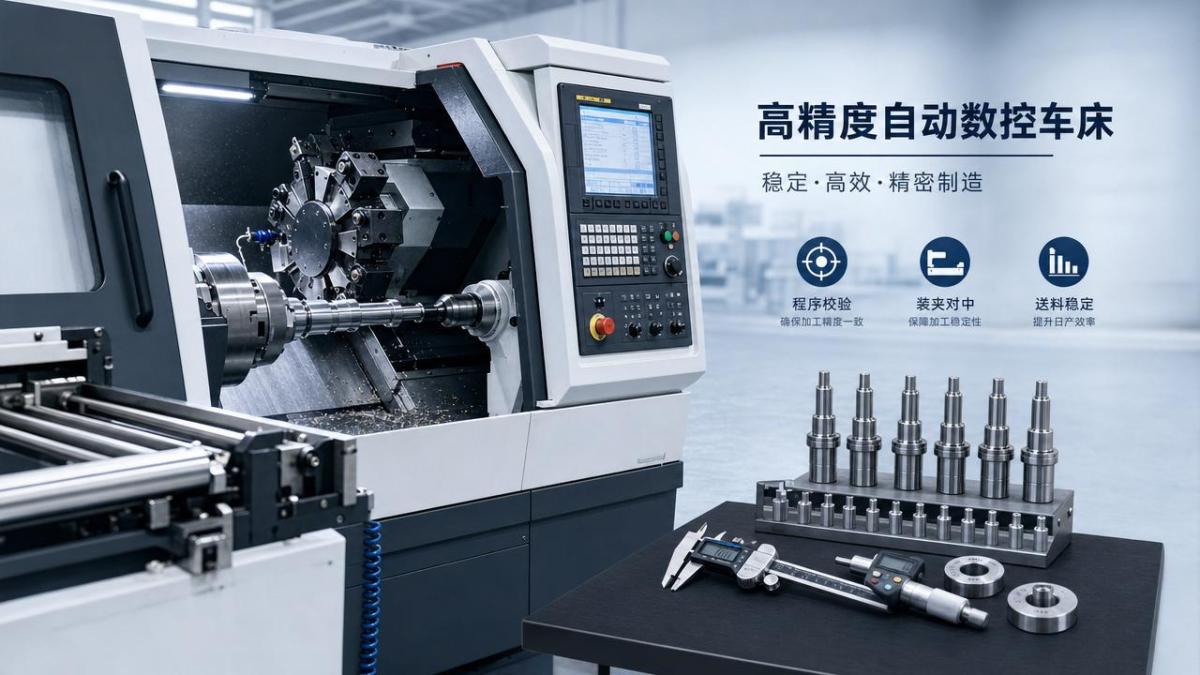
Scenario 2: Medium-batch production where cycle time slowly gets worse
In medium-batch manufacturing, the biggest danger is not always an immediate crash or obvious scrap. Often, the automated lathe keeps running, but efficiency drops across the shift. This happens when setup parameters are technically acceptable at the start but not robust enough for sustained production. Tool offsets may be entered correctly, yet insert stick-out is excessive. The cutting tool may be sharp enough for the first ten parts, but not stable enough for the next hundred.
Operators in this scenario should pay close attention to how setup choices affect repeatability. Poor toolholder rigidity, weak coolant direction, and incorrect spindle speed overrides can increase cycle time without being immediately recognized as setup mistakes. The machine appears busy, but chip control deteriorates, manual intervention rises, and tool changes happen earlier than planned.
A practical way to prevent this is to review setup performance after the first production block, not only after the first part. If the automated lathe runs twenty acceptable parts but shows growing burrs, unstable chip formation, or dimensional drift, the setup still needs correction. Stable production should be measured over time, not at a single starting point.
Scenario 3: High-volume automated lathe cells and compounding small errors
In high-output environments, automation can hide setup problems until they become expensive. A slightly misaligned bar feeder, incorrect chuck pressure, or inconsistent part stop positioning may not stop the machine immediately. Instead, the automated lathe keeps cycling while variation spreads across a large batch. By the time an operator notices excessive runout or a loading issue, many parts may already require sorting.
This is why loading systems and clamping devices deserve as much setup attention as cutting tools. Operators often focus on offsets and programs but underestimate how material presentation affects total output. If raw stock does not feed smoothly, the machine may pause for alarm recovery, spindle indexing, or manual repositioning. Each event looks minor, yet together they can cut daily capacity significantly.
For high-volume cells, the best practice is to verify the complete feeding sequence before full production: stock straightness, feeder support alignment, chuck gripping force, part ejection reliability, and sensor response. In this scenario, preventing one recurring loading issue may save more time than optimizing cutting data by a few seconds.
Scenario 4: Precision machining where setup quality matters more than setup speed
When machining precision shafts, bearing seats, hydraulic components, or tight-tolerance parts, setup errors on an automated lathe can damage both productivity and quality at the same time. The machine may produce parts that look acceptable visually but fail on concentricity, roundness, shoulder position, or fine finish. In these applications, setup speed should never come before spindle warm-up, chuck cleanliness, and alignment confirmation.
A frequent mistake is ignoring thermal behavior. Operators may complete setup immediately after startup and begin measuring without allowing the machine to stabilize. Another issue is contamination on chuck jaws or locating surfaces. Even a small chip trapped during setup can shift part seating enough to create inconsistent dimensions later. The automated lathe may be accurate, but the setup foundation is unstable.
In precision scenarios, operators should build a setup routine that includes machine warm-up, reference cut confirmation, runout check, and documented inspection points for the first several parts. These extra steps reduce downstream correction and support reliable production over the full shift.
The setup mistakes operators most often overlook
Across nearly all production scenarios, several setup mistakes repeatedly slow automated lathe performance:
- Incorrect tool offset entry or failure to confirm offset updates after insert replacement.
- Chuck jaws not cleaned or aligned before clamping the next material batch.
- Program simulation skipped, especially after minor edits that seem harmless.
- Bar stock length, straightness, or diameter variation not checked before loading.
- Coolant nozzles aimed poorly, causing heat buildup and unstable chip evacuation.
- Tool overhang left too long, reducing rigidity and increasing chatter risk.
- Machine alarms reset without identifying the setup root cause.
These are not dramatic failures in every case, which is why they are dangerous. They slowly reduce the effective performance of an automated lathe by adding delay, inspection burden, and uncertainty to the operator’s shift.
How setup priorities change by operator role and shop condition
Not every operator faces the same setup pressure. A newer operator may need strong visual guidance and locked procedures, while an experienced machinist may need better production feedback to catch slow-developing setup drift. Likewise, a shop with older equipment may focus on repeatable manual checks, while a newer smart manufacturing line may depend more on digital setup validation and alarm data.
Practical setup adaptation tips for smoother daily production
To improve output on an automated lathe, operators should match setup behavior to the production scenario rather than applying the same routine to every job. For frequent changeovers, shorten recovery time by controlling setup documents and reducing tool identification errors. For batch production, monitor setup stability over a sustained run instead of trusting the first part alone. For high-volume automated cells, validate feeding and clamping systems as carefully as cutting data. For precision parts, protect accuracy with thermal stabilization and clean contact surfaces.
It is also useful to track recurring setup losses. If the same turret station, feeder position, or offset family causes repeated delays, the problem is usually systemic, not personal. Recording setup-related downtime helps teams improve fixtures, revise procedures, and train operators more effectively.
Common misjudgments when evaluating automated lathe performance
One major misjudgment is blaming the machine for issues caused by setup inconsistency. Another is thinking that if the machine did not alarm, the setup was acceptable. In reality, many production losses come from “soft failures” such as unstable chip control, extra measurement time, or frequent operator intervention. These may not look like setup problems at first, but they directly reduce the value of an automated lathe.
Another mistake is copying a successful setup from one material or part family to another without adjustment. Similar dimensions do not guarantee similar machining behavior. Material hardness, stock condition, and feature depth can change how a setup performs. Operators should treat each production scenario as a judgment task, not just a repeat action.
FAQ: setup questions operators often ask
How often should an automated lathe setup be rechecked during a shift?
That depends on volume, tolerance, material variation, and tool life. In stable batch production, check after the first production block and again at planned intervals. In precision or unattended scenarios, increase verification frequency.
What setup issue causes the most hidden downtime?
Material feeding and clamping problems are among the most underestimated causes. They often create repeated small stops that reduce output more than operators expect.
Is first-part approval enough to confirm setup quality?
No. A good first part only proves the setup worked once. A productive automated lathe setup must also remain stable across the run.
Final takeaway for operators and production teams
The fastest way to improve automated lathe productivity is not always buying new equipment or pushing harder cycle times. In many shops, the biggest gains come from preventing setup mistakes that quietly slow daily production. The right response starts with recognizing the scenario: frequent changeovers, medium batches, high-volume automation, or precision machining all demand different setup priorities.
If you want more reliable output, review your current setup routine against your actual production environment. Identify where delays begin, which setup errors repeat, and which checks are missing. When operators align setup decisions with real machining scenarios, an automated lathe becomes more consistent, more efficient, and far more valuable across every shift.
PREVIOUS ARTICLE
Recommended for You
![]() Five Ministries Launch Joint Enforcement on EV Battery RecyclingManufacturing Policy Research Center
Five Ministries Launch Joint Enforcement on EV Battery RecyclingManufacturing Policy Research Center![]() Top 10 Future Industries Roadmap 2026 ReleasedManufacturing Market Research Center
Top 10 Future Industries Roadmap 2026 ReleasedManufacturing Market Research Center![]() Global Methanol-Electric Ecosystem Alliance LaunchedManufacturing Market Research Center
Global Methanol-Electric Ecosystem Alliance LaunchedManufacturing Market Research Center![]() ISO 23218-3:2026 Enters Force: CNC Digital Twin Interoperability Standard Goes GlobalCNC Machining Technology Center
ISO 23218-3:2026 Enters Force: CNC Digital Twin Interoperability Standard Goes GlobalCNC Machining Technology Center![]() ANVISA New Rule: Portuguese Biocompatibility Labels for Medical CNC EquipmentManufacturing Policy Research Center
ANVISA New Rule: Portuguese Biocompatibility Labels for Medical CNC EquipmentManufacturing Policy Research Center![]() KATS Updates KC Certification: CNC Cybersecurity Modules Must Comply with IEC 62443-4-2Manufacturing Policy Research Center
KATS Updates KC Certification: CNC Cybersecurity Modules Must Comply with IEC 62443-4-2Manufacturing Policy Research Center


Aris Katos
Future of Carbide Coatings
15+ years in precision manufacturing systems. Specialized in high-speed milling and aerospace grade alloy processing.
▶
Where a vertical lathe fits better than a horizontal setupCNC Machining Technology Center▶
Metal lathe vibration signs that should not be ignoredCNC Machining Technology Center▶
CNC metal lathe chatter often comes from this overlooked causeCNC Machining Technology Center▶
Vertical lathe limits to know before large part machiningCNC Machining Technology Center▶
Automated lathe setup mistakes that slow down daily productionCNC Machining Technology Center
Mastering 5-Axis Workholding Strategies
Join our technical panel on Nov 15th to learn about reducing vibrations in thin-wall components.

Providing you with integrated sanding solutions
Before-sales and after-sales services
Comprehensive technical support