• Global CNC market projected to reach $128B by 2028 • New EU trade regulations for precision tooling components • Aerospace deman
NYSE: CNC +1.2%LME: STEEL -0.4%

Where a vertical lathe fits better than a horizontal setup
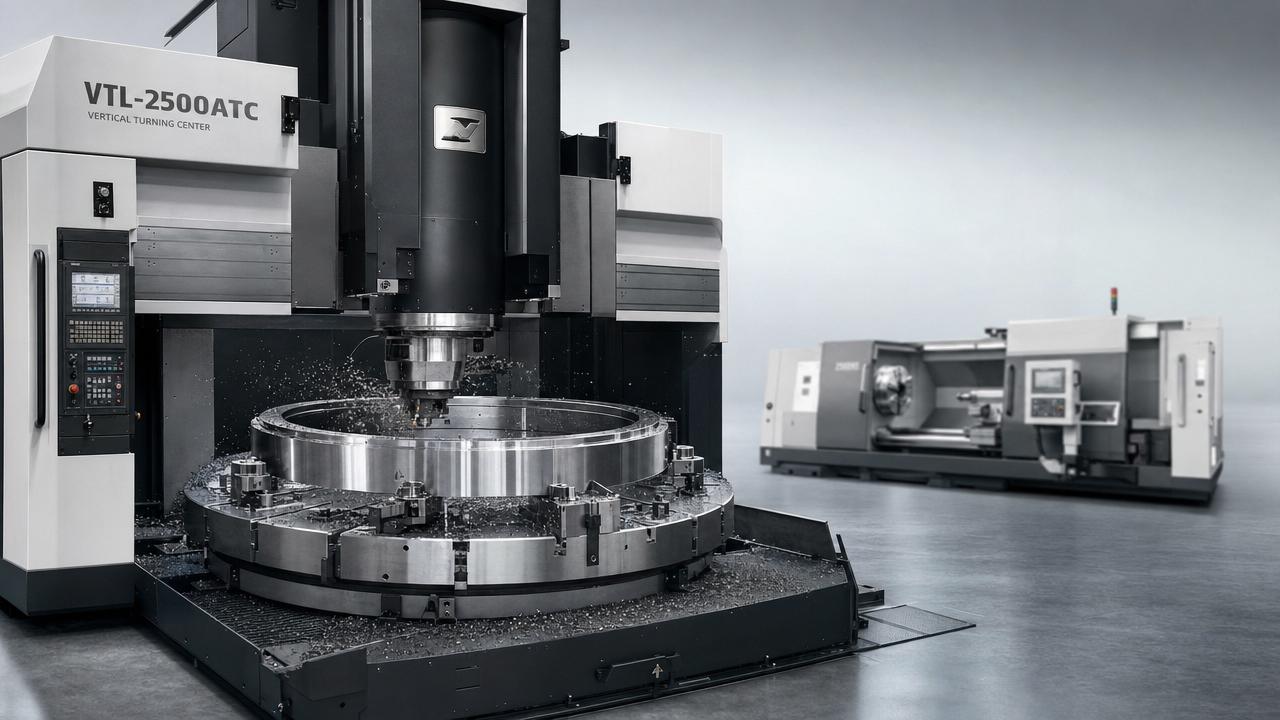
When large, heavy, or unbalanced workpieces challenge stability and accuracy, a vertical lathe often outperforms a horizontal setup. For operations comparing machine layouts, the question is not simply which machine is stronger, but where each format creates a better balance of rigidity, safety, floor use, accuracy, and handling efficiency. In many sectors tied to modern CNC production—from energy equipment and aerospace parts to bearing rings, valves, flanges, hubs, and large discs—the vertical lathe becomes the more practical choice because gravity works with the setup rather than against it. Understanding when that advantage matters most helps narrow machine investment decisions and reduces process risk before production starts.
What makes a vertical lathe different from a horizontal setup?
A vertical lathe holds the workpiece on a horizontally oriented table or chuck, while the spindle axis is vertical. In a horizontal lathe, the spindle axis runs parallel to the floor and the part extends sideways from the chuck. That change in orientation may sound simple, but it strongly affects loading, balance, chip flow, and structural behavior during cutting.
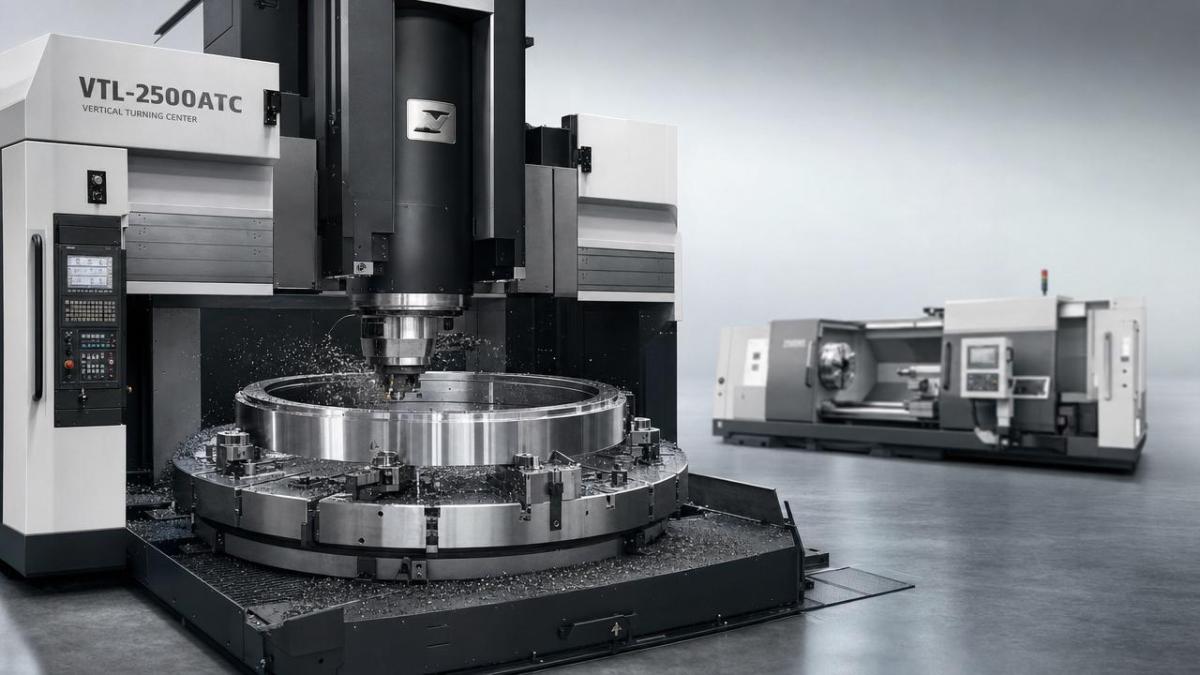
For smaller shafts and bar-fed turning, a horizontal machine remains highly efficient. But for larger diameters, heavier blanks, and parts that are difficult to support evenly, the vertical lathe often provides a more natural and stable platform. Gravity pushes the component down onto the table instead of pulling it away from the spindle centerline. This reduces deflection risk and can improve consistency when machining wide faces, large bores, and ring-shaped parts.
Another key difference is accessibility. A vertical arrangement often simplifies crane loading for heavy components, because the part can be lowered directly onto the table. On a horizontal machine, aligning and securing a heavy disc or oversized casting may require more careful manipulation, especially if the part is awkwardly shaped or poorly balanced.
Where does a vertical lathe fit better than a horizontal machine in real production?
The vertical lathe fits best where part geometry favors diameter over length. Typical examples include bearing races, turbine casings, flywheels, brake discs, large gears, pipe flanges, wheel hubs, valve bodies, and energy-industry rings. These parts are often heavy, broad, and difficult to clamp safely on a horizontal spindle without added support.
It is also a strong option for castings and forgings that arrive with uneven mass distribution. If a part is unbalanced, a horizontal setup may amplify vibration or create more complicated support demands. A vertical lathe can reduce that problem because the workpiece sits on the table, allowing the fixture to carry weight more directly. This is especially useful in rough machining, where interrupted cuts and high stock removal create extra stress.
In industries with frequent oversized components, the machine’s loading logic matters as much as cutting performance. Large repair shops, heavy equipment machining cells, and flexible job environments often prefer a vertical lathe because setup becomes safer and more repeatable. For one-off or low-volume parts, easier loading can save meaningful time even when cycle time differences are modest.
- Large-diameter, short-height parts
- Heavy components requiring crane loading
- Unbalanced castings or forgings
- Face turning, boring, and internal diameter work
- Applications where part stability is more critical than bar throughput
Why can a vertical lathe deliver better stability and accuracy on heavy parts?
The main reason is load direction. On a vertical lathe, the workpiece weight acts downward into the machine table and bearing structure. This reduces bending forces that can appear in a horizontal setup when a heavy part hangs off the spindle axis. The result is often better support for large diameters and improved dimensional control across wide surfaces.
That advantage becomes more visible when tolerances are tight and the component is too heavy for simple tailstock support. A horizontal machine can absolutely process large parts, but as weight rises, support engineering becomes more complex. Steady rests, special fixtures, balancing steps, and handling controls may all be required. A vertical lathe often reduces that complexity at the start.
Chip management can also improve in certain operations. During facing and boring on large workpieces, chips tend to fall away from the cutting area more naturally in a vertical orientation. Better chip evacuation helps reduce recutting, protects surface finish, and lowers thermal disturbance. However, machine enclosure design and coolant delivery still matter, especially when machining tough alloys or producing long stringy chips.
How do you decide whether a vertical lathe is the right choice for a part family?
A good decision starts with part proportions, weight, and handling method. If the workpiece is short and wide rather than long and slender, a vertical lathe should be evaluated early. If the part must be lifted by crane and placed with high confidence, the vertical format may improve setup safety and reduce alignment time.
The next factor is operation type. If the machining process centers on facing, OD turning, ID boring, groove cutting, or contouring of large circular forms, a vertical lathe can be highly efficient. If the workload mainly involves shafts, long journals, or bar-fed repetition, horizontal equipment usually remains the better fit.
Capacity planning should include floor layout, ceiling clearance for loading, available automation, and the part mix expected over time. A vertical lathe is not only a machine choice; it is a process choice. If most future work matches the same geometry and handling pattern, the long-term gain can extend beyond one project.
What are the common misconceptions and risks when choosing a vertical lathe?
One common misconception is that a vertical lathe is automatically better for every large part. Size alone is not the deciding factor. Long rotors, shafts, and components with high length-to-diameter ratios generally remain better suited to horizontal turning because the process depends on axial support and turning along extended lengths.
Another mistake is focusing only on machine swing or table diameter while ignoring tooling access, ram travel, live tooling needs, and process integration. Some parts need milling, drilling, probing, or off-center features completed in one setup. In these cases, a vertical turning center with added functionality may be required rather than a basic vertical lathe.
There is also a cost misconception. A vertical lathe may lower fixture difficulty and improve safety, but total implementation still depends on foundation requirements, crane compatibility, power supply, software, tooling packages, and operator training. For low-utilization installations, the business case can weaken unless the machine solves a recurring bottleneck or opens access to higher-value work.
- Do not choose by diameter alone; review length, balance, and tolerance behavior.
- Check whether roughing and finishing both fit the same machine concept.
- Confirm fixture, crane, and safety procedures before installation.
- Assess whether multi-tasking features are necessary for the actual part route.
How does a vertical lathe compare on cost, throughput, and implementation time?
The answer depends on the production model. For high-volume shaft work, horizontal turning often wins on throughput, especially with bar feeders, sub-spindles, and compact automation. For large-diameter components, however, a vertical lathe can reduce setup time, lower re-clamping risk, and cut scrap exposure. Those savings may outweigh a higher initial machine cost.
Implementation time is shaped by infrastructure. A vertical lathe installation may require planning for lifting access, machine foundation, chip evacuation, and coolant management suited to heavy-duty cutting. Yet once deployed in the right environment, it often simplifies daily operations because loading is more direct and support devices are fewer.
For mixed production, the strongest economic case appears when the machine absorbs difficult work that horizontal equipment handles inefficiently. That includes large rings waiting for special support, castings with recurring vibration issues, and heavy face-turning jobs that create inconsistent quality in side-mounted setups. In these situations, the vertical lathe improves process reliability, not just machine utilization.
Which questions should be answered before moving forward?
Before choosing a vertical lathe, review a short but practical checklist: What are the heaviest and widest parts expected over the next three to five years? How often are unstable setups slowing current production? Does one-setup machining matter for bore, face, and OD accuracy? Is crane loading already part of the workflow? Are floor space and height compatible with the machine envelope?
It is also useful to compare sample parts side by side. If several jobs share a short, large-diameter format and repeatedly challenge horizontal machines, the case for a vertical lathe becomes stronger. If the workload remains dominated by shafts and long turned parts, staying horizontal is usually the more efficient path.
In short, a vertical lathe fits better than a horizontal setup when gravity-assisted support, safer top loading, and stable machining of large circular parts create measurable process advantages. The best next step is to map actual part families, loading conditions, tolerance demands, and support costs, then compare them against machine capability rather than relying on size assumptions alone. A careful evaluation at this stage leads to a more durable equipment decision and a more predictable machining process.
PREVIOUS ARTICLE
NEXT ARTICLE
Recommended for You
![]() Five Ministries Launch Joint Enforcement on EV Battery RecyclingManufacturing Policy Research Center
Five Ministries Launch Joint Enforcement on EV Battery RecyclingManufacturing Policy Research Center![]() Top 10 Future Industries Roadmap 2026 ReleasedManufacturing Market Research Center
Top 10 Future Industries Roadmap 2026 ReleasedManufacturing Market Research Center![]() Global Methanol-Electric Ecosystem Alliance LaunchedManufacturing Market Research Center
Global Methanol-Electric Ecosystem Alliance LaunchedManufacturing Market Research Center![]() ISO 23218-3:2026 Enters Force: CNC Digital Twin Interoperability Standard Goes GlobalCNC Machining Technology Center
ISO 23218-3:2026 Enters Force: CNC Digital Twin Interoperability Standard Goes GlobalCNC Machining Technology Center![]() ANVISA New Rule: Portuguese Biocompatibility Labels for Medical CNC EquipmentManufacturing Policy Research Center
ANVISA New Rule: Portuguese Biocompatibility Labels for Medical CNC EquipmentManufacturing Policy Research Center![]() KATS Updates KC Certification: CNC Cybersecurity Modules Must Comply with IEC 62443-4-2Manufacturing Policy Research Center
KATS Updates KC Certification: CNC Cybersecurity Modules Must Comply with IEC 62443-4-2Manufacturing Policy Research Center


Aris Katos
Future of Carbide Coatings
15+ years in precision manufacturing systems. Specialized in high-speed milling and aerospace grade alloy processing.
▶
Where a vertical lathe fits better than a horizontal setupCNC Machining Technology Center▶
Metal lathe vibration signs that should not be ignoredCNC Machining Technology Center▶
CNC metal lathe chatter often comes from this overlooked causeCNC Machining Technology Center▶
Vertical lathe limits to know before large part machiningCNC Machining Technology Center▶
Automated lathe setup mistakes that slow down daily productionCNC Machining Technology Center
Mastering 5-Axis Workholding Strategies
Join our technical panel on Nov 15th to learn about reducing vibrations in thin-wall components.

Providing you with integrated sanding solutions
Before-sales and after-sales services
Comprehensive technical support