• Global CNC market projected to reach $128B by 2028 • New EU trade regulations for precision tooling components • Aerospace deman
NYSE: CNC +1.2%LME: STEEL -0.4%

CNC Milling Chatter: Is the Toolpath Really the Cause?
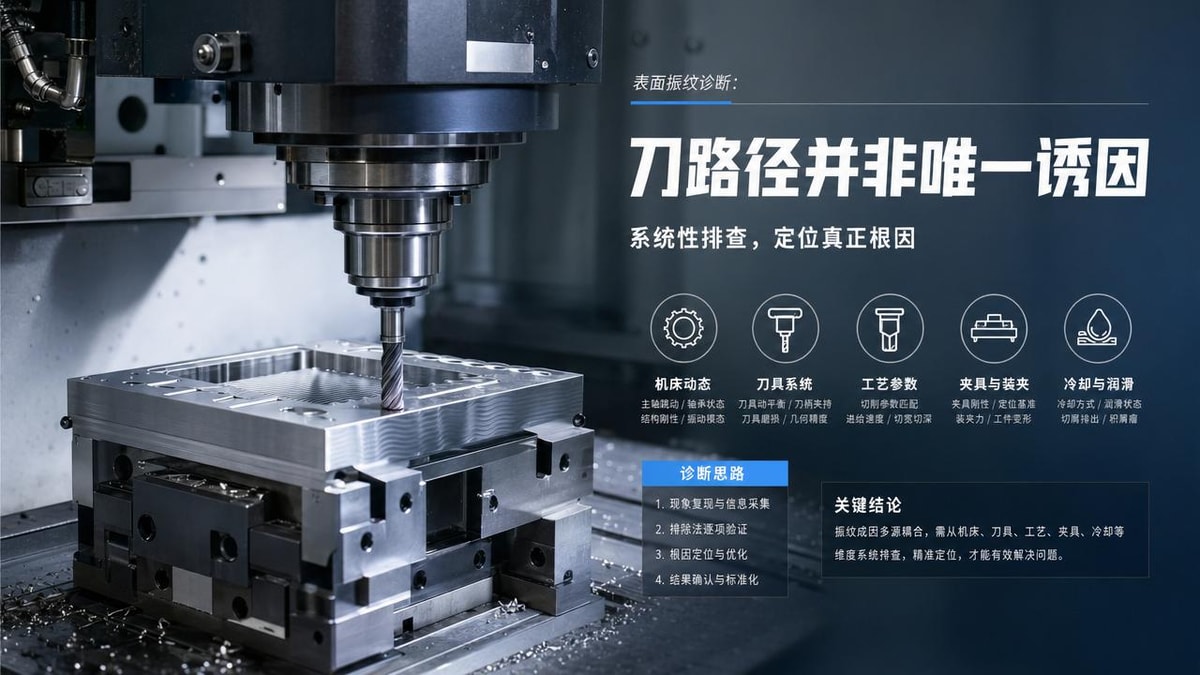
In CNC milling, chatter is often blamed on the toolpath first—but is that really the root cause? For machine operators and shop-floor users, understanding whether vibration comes from programming, tooling, spindle conditions, or setup stability is critical to improving surface finish, tool life, and machining efficiency. This article explores the real sources of chatter and how to diagnose them more accurately.
Why the chatter discussion in CNC milling is changing
Across the CNC machine tool industry, the conversation around chatter is shifting. In the past, many shops treated vibration as a simple programming issue: change the toolpath, reduce step-over, lower spindle speed, and hope the noise disappears. Today, that approach is proving too narrow. As CNC milling moves toward higher spindle speeds, harder materials, shorter lead times, and more automated production, chatter is increasingly understood as a system-level signal rather than a single software mistake.
This change matters because modern production environments place greater pressure on machine utilization and consistency. Operators are being asked to run more part variants, tighter tolerances, and longer unattended cycles. Under these conditions, a toolpath may expose instability, but it is often not the original cause. A weak holder, worn spindle bearings, insufficient fixturing, poor tool balance, or unstable workholding can all appear first as chatter during CNC milling. The visible symptom happens in the cut, but the real issue may be mechanical, dynamic, or operational.
For shop-floor users, the practical trend is clear: troubleshooting is moving from “edit the program first” to “check the full cutting system.” That broader view is becoming essential in automotive, aerospace, electronics, energy equipment, and general precision manufacturing, where part quality and machine uptime directly affect cost.
The strongest signals behind this shift
Several industry signals explain why chatter diagnosis in CNC milling is becoming more sophisticated. First, cutting strategies have advanced quickly. High-efficiency milling, adaptive clearing, trochoidal paths, and multi-axis motion can improve metal removal rates, but they also create more variable engagement conditions. If the machine-tool-workpiece system is weak, an advanced toolpath may reveal chatter faster than a conservative path would.
Second, machine fleets are more mixed than before. Many factories combine new machining centers with older equipment, different spindle conditions, different control systems, and different fixture standards. The same CNC milling program may run smoothly on one machine and chatter badly on another. That difference is a strong reminder that the toolpath alone cannot explain everything.
Third, tooling systems are becoming more specialized. Shrink-fit holders, hydraulic chucks, variable-helix end mills, damped bars, and tool balancing solutions have all gained attention because the market now recognizes that dynamic stability has direct economic value. Shops are no longer asking only, “What path should we run?” They are also asking, “What tool assembly can survive this path without vibration?”
Is the toolpath really the cause, or only the trigger?
In many CNC milling cases, the toolpath is better understood as a trigger than a root cause. A path controls entry style, radial engagement, axial depth, direction changes, and chip load distribution. These factors absolutely influence vibration behavior. However, a toolpath does not create looseness in a vise, spindle runout, poor machine leveling, or excessive tool overhang. What it does is interact with these weaknesses until chatter becomes audible and visible.
This distinction is important for trend-based decision-making on the shop floor. If operators assume every chatter problem starts in CAM, they may waste time repeatedly changing feeds and speeds while the real instability remains untouched. Productivity drops, tools wear faster, and process confidence declines. In contrast, when users treat chatter as a multi-factor issue, diagnosis becomes faster and more repeatable.
A useful rule is this: if multiple toolpaths produce chatter on the same machine-tool-part combination, the root cause is probably broader than programming. If only one specific path causes trouble while the same setup runs stable under other cutting patterns, then the toolpath deserves closer attention. In other words, the path should be tested as part of a system, not judged in isolation.
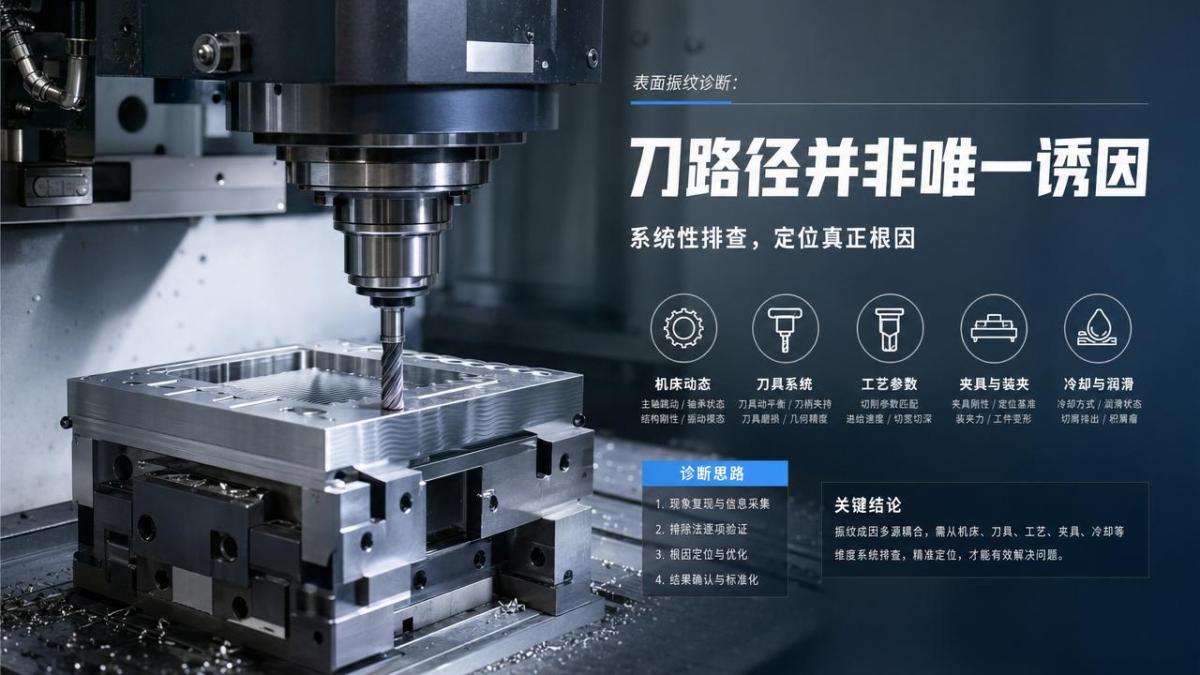
The real drivers of chatter in today’s CNC milling environment
The most common drivers of chatter in CNC milling can be grouped into five areas: machine condition, tool assembly, workholding rigidity, cutting parameter selection, and toolpath behavior. The industry trend is not that one of these has replaced the others, but that their interaction has become more visible as machining becomes faster and more demanding.
1. Machine condition is getting more attention
Spindle wear, backlash, axis vibration, poor maintenance, and thermal instability can all reduce dynamic stiffness. In older or heavily used machines, chatter may appear even with safe toolpaths. This is why more manufacturers are linking process quality with preventive maintenance rather than treating them as separate topics.
2. Tooling choices now affect process stability more directly
Long gauge lengths, poor balance, worn holders, and unsuitable cutter geometry often amplify vibration. In CNC milling of thin walls, deep pockets, or difficult materials, variable pitch tools and rigid holder systems can make a larger difference than a minor CAM edit. The market’s growing interest in premium tooling reflects this reality.
3. Setup quality has become a strategic issue
As cycle times shrink, some setups are pushed closer to their stability limits. A part clamped with minimal support may survive roughing on one machine but fail under a more aggressive CNC milling strategy on another. Operators increasingly need to judge fixturing not only for holding force, but also for vibration resistance.
4. Cutting parameters still matter, but they are not the whole story
Spindle speed, feed per tooth, radial engagement, and axial depth all affect chatter frequency and energy. Yet parameter changes often work because they move the cut away from an unstable zone, not because they remove the underlying weakness. That is why a parameter fix can be temporary.
5. Toolpath design remains influential, especially in complex geometry
Sharp direction changes, inconsistent engagement, sudden slotting, and poor entry moves can trigger vibration. In advanced CNC milling, smoother engagement and more consistent chip thickness usually help. But again, better paths work best when the rest of the system is reasonably stable.
Who is most affected by this shift in chatter diagnosis?
The impact of this broader approach to chatter extends beyond programmers. Different roles in the manufacturing chain are affected in different ways, and that is another reason the topic is becoming more important.
What operators should watch first before blaming the path
For users and operators, the most valuable change is diagnostic order. Before rewriting the CNC milling path, it is often smarter to confirm a few basic signals. Check whether the tool overhang is longer than necessary. Verify holder condition and tool seating. Look for witness marks that suggest poor clamping or movement in the fixture. Compare the current machine with another machine running similar work. Review whether chatter appears only at a certain spindle speed band. These observations often reveal whether the issue is structural or path-related.
Another useful habit is to separate symptom timing. If chatter starts immediately on tool entry, the path or entry style may deserve more attention. If it appears after tool wear increases, tooling or heat buildup may be the larger issue. If vibration becomes worse in specific part areas, local rigidity of the workpiece may be changing during CNC milling. This kind of staged observation is becoming a practical standard in better-run shops.
A practical decision framework for the next stage of CNC milling optimization
As manufacturing moves toward digital integration and smarter production, chatter control is also becoming more data-driven. But even without advanced sensors, shops can improve decisions by using a simple framework: identify the signal, isolate the variable, compare across machines or setups, and only then adjust the program broadly. This reduces guesswork and prevents repeated trial-and-error changes.
A good next-step strategy for CNC milling includes documenting stable speed ranges, preferred holder types, proven setup methods, and material-specific behavior. Over time, this creates a practical stability map for the shop. Such knowledge is especially valuable in environments with multiple operators, mixed machine ages, or frequent job changes.
What this trend means for the future of shop-floor problem solving
The broader meaning of this trend is that CNC milling is becoming less tolerant of isolated thinking. Programming, tooling, maintenance, and setup quality are converging into one performance conversation. Shops that still treat chatter as a CAM-only issue may continue losing time to unstable processes. Shops that build a cross-functional response will usually improve surface finish, extend tool life, and gain more predictable throughput.
For operators, this is not bad news. It means their observations matter more than ever. Listening to spindle tone, watching chip behavior, checking part support, and reporting when a process changes are now high-value inputs to process improvement. In an industry moving toward smart manufacturing, human diagnosis on the machine remains essential, especially when chatter appears before a problem becomes a scrap event.
Final judgment: focus on the whole system, not just the code
So, is the toolpath really the cause of chatter in CNC milling? Sometimes yes, but increasingly, it is only part of the answer. The stronger industry signal is that chatter should be read as a system warning. The path may trigger the problem, but the root cause often lives in machine condition, tool assembly, fixture rigidity, or process stability.
If your team wants to judge how this trend affects current CNC milling work, focus on a few key questions: Are chatter events repeating across different jobs on the same machine? Are tooling and holder choices aligned with the cutting strategy? Is setup rigidity being evaluated as carefully as feed and speed? And when a program is changed, is the result being measured against the full machine-tool-part system? Those answers will do more to reduce chatter than blaming the toolpath by default.
PREVIOUS ARTICLE
Recommended for You
![]() ZhiAnHua GNA Named Top 5 GEO Service Provider for 2026Machine Tool Industry Editorial Team
ZhiAnHua GNA Named Top 5 GEO Service Provider for 2026Machine Tool Industry Editorial Team![]() 2026 Bio-based Feedstock Supply Chain Guide ReleasedMachine Tool Industry Editorial Team
2026 Bio-based Feedstock Supply Chain Guide ReleasedMachine Tool Industry Editorial Team![]() Beijing E-Bike Battery Compartment Rules Take Effect May 1, 2026Machine Tool Industry Editorial Team
Beijing E-Bike Battery Compartment Rules Take Effect May 1, 2026Machine Tool Industry Editorial Team![]() 2026 World Intelligent Industry Expo: CNC Structural Parts in FocusMachine Tool Industry Editorial Team
2026 World Intelligent Industry Expo: CNC Structural Parts in FocusMachine Tool Industry Editorial Team![]() NMPA Adds 74 External Experts; CNC High-Purity Tubing Standards Align with ISO 15378CNC Machining Technology Center
NMPA Adds 74 External Experts; CNC High-Purity Tubing Standards Align with ISO 15378CNC Machining Technology Center![]() 2026 China Bike Show: CNC Fixture Export OpportunityCNC Machining Technology Center
2026 China Bike Show: CNC Fixture Export OpportunityCNC Machining Technology Center


Aris Katos
Future of Carbide Coatings
15+ years in precision manufacturing systems. Specialized in high-speed milling and aerospace grade alloy processing.
▶
CNC Programming Errors That Lead to Scrap on Repeat JobsCNC Machining Technology Center▶
CNC Milling Chatter: Is the Toolpath Really the Cause?CNC Machining Technology Center▶
When Does CNC Industrial Pay Off for Mid-Volume Parts?CNC Machining Technology Center▶
China’s Largest Scientific AI Computing Cluster Goes Live in ZhengzhouCNC Machining Technology Center▶
Why 5 Axis Machining Is Ideal for Impeller ManufacturingCNC Machining Technology Center
Mastering 5-Axis Workholding Strategies
Join our technical panel on Nov 15th to learn about reducing vibrations in thin-wall components.

Providing you with integrated sanding solutions
Before-sales and after-sales services
Comprehensive technical support