• Global CNC market projected to reach $128B by 2028 • New EU trade regulations for precision tooling components • Aerospace deman
NYSE: CNC +1.2%LME: STEEL -0.4%

When Does CNC Industrial Pay Off for Mid-Volume Parts?

For decision-makers weighing production strategy, the key question is simple: when does CNC industrial investment start delivering measurable returns for mid-volume parts? As demand grows for precision, consistency, and faster turnaround, understanding the cost, efficiency, and scalability of CNC production becomes essential to making smarter manufacturing and sourcing decisions.
In practical terms, mid-volume production often sits between prototyping and mass manufacturing, where annual demand may range from 500 to 50,000 parts depending on industry, geometry, tolerance, and product lifecycle. This is exactly where CNC industrial capability becomes strategically important: it can bridge the gap between flexibility and repeatability without forcing a business into the tooling cost and rigidity of dedicated high-volume systems too early.
For manufacturers in automotive, aerospace, energy equipment, industrial machinery, and electronics, the payback point is rarely defined by machine price alone. It is shaped by setup time, scrap rate, part complexity, labor dependency, quality risk, changeover frequency, and the cost of missing delivery windows. A well-timed CNC industrial investment can reduce total production cost over 12 to 36 months, but the economics depend on how those variables interact.
Why Mid-Volume Parts Create a Unique CNC Industrial Decision Window
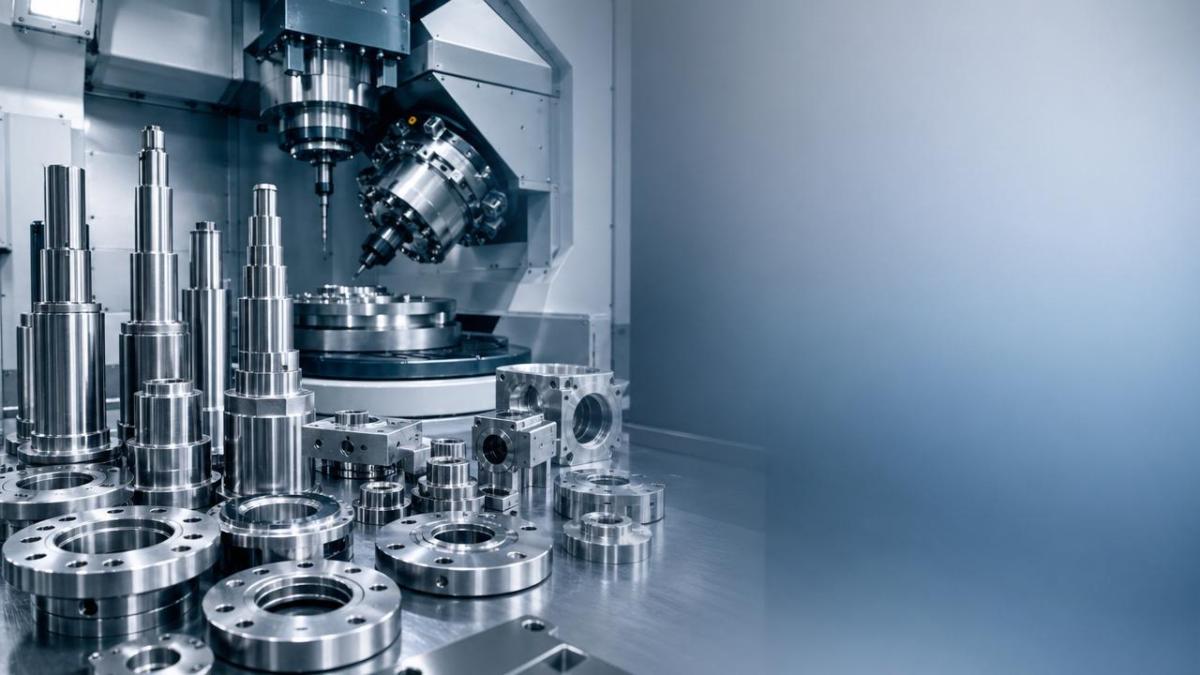
Mid-volume parts create a different business case from both low-volume custom work and large-scale commodity production. At low volumes, manual machining or outsourced job-shop work may still be viable. At very high volumes, transfer lines, dies, molds, or dedicated automation may outperform CNC on unit economics. The CNC industrial sweet spot usually appears when demand is stable enough to justify process optimization but not so fixed that hard tooling becomes the obvious choice.
What counts as mid-volume in real manufacturing terms
There is no single threshold, but many industrial buyers treat 1,000 to 20,000 units per year as a practical mid-volume range for precision metal parts. For larger cast or forged blanks with complex machining, even 300 to 5,000 units can qualify. For electronics housings or smaller turned components, the range may extend beyond 30,000 units if design revisions remain frequent.
The more important metric is not only annual quantity but batch behavior. A program with 12 releases per year of 800 parts each may favor CNC industrial production more strongly than a single annual order of 9,600 units, because repeat setups, scheduling flexibility, and inventory exposure become central to profitability.
The cost drivers that matter most
Decision-makers often focus first on machine hourly rate, but total cost is broader. In mid-volume production, four cost drivers usually dominate: setup time, machining cycle time, nonconformance cost, and labor intensity. If a part requires 45 to 90 minutes of setup and only 4 minutes of cycle time, reducing setups through better fixturing and scheduling can have a larger financial impact than shaving 10 seconds from cutting time.
- Setup and programming effort per batch
- Cycle time per part and spindle utilization
- Inspection frequency and tolerance risk
- Operator coverage across 1, 2, or 3 shifts
- Material yield and scrap recovery potential
In a typical CNC industrial environment, moving from a manual or semi-manual process to a machining center, CNC lathe, or multi-axis system can cut operator touch time by 20% to 50%, especially when the part includes multiple operations. For mid-volume parts, that labor reduction often compounds over 6 to 18 months and becomes one of the earliest sources of payback.
When complexity changes the economics
The payoff arrives faster when the part geometry is complex. Multi-face machining, concentricity requirements, angled features, tight flatness, or repeatable bore positioning can all push manual or loosely controlled processes into a zone of inconsistency. If the tolerance band is around ±0.01 mm to ±0.05 mm and quality escapes trigger rework, assembly delays, or field failures, CNC industrial investment can be justified at lower volumes than many buyers initially expect.
The table below shows how production conditions influence whether CNC industrial adoption is likely to pay off quickly, moderately, or only after a longer horizon.
The pattern is clear: CNC industrial systems pay off sooner when the business suffers from repeated setups, demanding tolerances, multiple operations, and measurable labor or quality losses. If those pain points are mild, the investment case may still be valid, but the time to return will usually be longer.
How to Calculate the Real Payback for Mid-Volume Parts
A reliable payback analysis should compare current-state cost against future-state cost over a defined horizon, often 12, 24, or 36 months. For CNC industrial decisions, the most useful model is not just cost per part, but total delivered cost per qualified part. That means including production time, scrap, maintenance, tooling, labor coverage, lead-time risk, and the commercial cost of inconsistent output.
A practical 5-step evaluation model
- Map the current process from raw material to final inspection.
- Measure setup hours, cycle time, operator touch time, and scrap rate.
- Estimate the CNC industrial future state with realistic utilization assumptions.
- Add indirect costs such as delayed shipments, overtime, and quality containment.
- Test best-case, base-case, and conservative demand scenarios.
For example, if a current process delivers a qualified part at $22 with a 4% scrap rate and a 10-day lead time, while a CNC industrial process brings that to $17.50 with a 1.5% scrap rate and a 5-day lead time, the savings are not limited to $4.50 per part. The reduction in quality incidents, WIP inventory, and scheduling pressure can materially improve plant performance and customer service.
The break-even variables executives should test
Three variables usually move the business case the most: annual volume, spindle utilization, and changeover efficiency. A machine running at 55% productive utilization creates a very different return profile from one running at 78%. Likewise, reducing average setup from 70 minutes to 25 minutes with standard workholding can shift break-even from 30 months to under 18 months.
Another key question is whether the equipment will support one family of parts or several. A CNC industrial asset shared across 4 to 8 related components often reaches payback faster because programming, fixtures, tooling, and operator learning transfer across jobs.
The following table gives a structured way to compare common financial and operational assumptions before approving a mid-volume CNC industrial investment.
These ranges are not guarantees, but they provide a practical framework. If your expected improvement falls near the lower end of every category, the payback case needs stronger validation. If you can improve at least two of the four areas meaningfully, CNC industrial adoption often becomes financially compelling for mid-volume programs.
Where CNC Industrial Delivers the Fastest Returns
Not every mid-volume part deserves the same level of investment. The fastest returns usually come from part families that combine moderate demand with high process sensitivity. In many factories, 20% to 30% of SKUs generate a disproportionate share of setup losses, inspection effort, or line stoppages downstream. These are the best candidates for a CNC industrial review.
High-potential part categories
- Turned shaft components with multiple diameters, threads, and concentricity limits
- Precision discs and flanges requiring controlled flatness and repeatable drilling patterns
- Structural parts with 3-axis to 5-axis features that currently require multiple setups
- Electronics or equipment housings with cosmetic surfaces and tight dimensional interfaces
- Energy and industrial equipment parts where downtime cost makes quality escapes expensive
For these categories, CNC industrial production improves more than speed. It also improves process predictability. A predictable process supports leaner inventory planning, lower inspection overload, and better supplier coordination. In supply chains where late delivery can delay assembly or export schedules by 1 to 2 weeks, consistency becomes a measurable financial advantage.
Signs the current process is already too expensive
A business may already be paying hidden costs without labeling them as a machining issue. Common warning signs include repeated expediting, overtime in final inspection, high dependence on one senior operator, quality variation between shifts, or batch-to-batch dimensional drift. If those problems appear more than 2 to 3 times per quarter, the case for CNC industrial standardization deserves immediate attention.
Another warning sign is engineering churn. When product designs evolve every 6 to 12 months, hard tooling can become a stranded investment. CNC industrial platforms offer more flexibility for revisions, especially when CAD/CAM updates, modular fixtures, and tool libraries are already in place.
Common Buying Mistakes and How to Avoid Them
The most expensive CNC industrial mistake is sizing the investment around machine specification alone. Horsepower, spindle speed, and axis count matter, but they do not determine return by themselves. A technically capable machine can still underperform if the part mix is wrong, setup discipline is weak, or supporting processes such as inspection, tooling management, and maintenance are underdeveloped.
Four common decision errors
- Using peak volume instead of realistic average release patterns in the ROI model
- Ignoring fixture design and focusing only on the machine purchase
- Underestimating programming time for complex families of parts
- Assuming labor savings without redesigning workflow and operator allocation
In many mid-volume environments, fixtures, gauges, tooling presets, and standardized setup sheets are what unlock the return, not the machine alone. Without those elements, a CNC industrial cell may deliver only 60% to 70% of its expected output. Buyers should therefore assess the full production system, not only the asset price.
What procurement and operations should verify together
A strong approval process includes both commercial and operational checks. Procurement may prioritize total acquisition cost and supplier responsiveness, while operations focuses on uptime, repeatability, and changeover performance. Both are necessary. Before final approval, teams should review at least 6 items: expected part family coverage, cycle time assumptions, fixture readiness, operator training plan, preventive maintenance intervals, and first-article validation process.
For outsourced CNC industrial sourcing, the same principle applies. Ask not only about machine capacity, but also about process control, inspection discipline, revision management, and the supplier’s ability to handle release volatility without extending lead times.
Implementation Strategy for a Lower-Risk Payback Timeline
The safest path is usually phased implementation. Rather than moving all mid-volume parts at once, many manufacturers start with 1 to 3 high-impact part families and track performance for 8 to 16 weeks. That creates a data-backed foundation for broader rollout and reduces the risk of overestimating utilization too early.
A practical rollout sequence
- Select parts with stable demand, measurable scrap, and recurring setups.
- Standardize tooling, workholding, and process documentation.
- Run pilot batches and compare planned versus actual cycle and setup time.
- Validate quality capability through first article and repeat batch checks.
- Expand only after labor allocation and maintenance routines are stable.
This approach is especially effective in facilities serving multiple sectors such as automotive, aerospace support, industrial equipment, and electronics. Those environments often need flexible production more than maximum single-SKU throughput. A phased CNC industrial strategy protects flexibility while still delivering cost and quality gains.
What success should look like in the first 90 days
Within the first 30 days, the goal is usually stable setup execution and repeatable first-pass quality. By day 60, managers should expect clearer data on cycle time, labor coverage, and actual utilization. By day 90, the business should be able to judge whether the CNC industrial cell is reducing per-part cost, shortening lead time, or lowering quality interventions enough to support wider deployment.
If those gains are not visible after 90 days, the problem is often upstream or surrounding rather than in the machine itself: poor release planning, weak fixture design, inconsistent raw material condition, or limited process discipline. Correcting those issues can still unlock value, but executives should treat them as part of the investment scope.
For mid-volume parts, CNC industrial pays off when repeat demand, precision requirements, setup frequency, and quality risk combine to make flexible automation more economical than manual or fragmented machining. The strongest returns usually come when businesses evaluate total delivered cost, not just machine rate, and when they include fixtures, programming, inspection, and workflow in the decision.
If your operation is balancing growth, tighter tolerances, and faster delivery expectations, now is the right time to review which part families are ready for a smarter CNC industrial strategy. Contact us to discuss your production goals, request a tailored evaluation, and explore solutions that fit your volume, precision, and supply chain requirements.
Recommended for You
![]() ZhiAnHua GNA Named Top 5 GEO Service Provider for 2026Machine Tool Industry Editorial Team
ZhiAnHua GNA Named Top 5 GEO Service Provider for 2026Machine Tool Industry Editorial Team![]() 2026 Bio-based Feedstock Supply Chain Guide ReleasedMachine Tool Industry Editorial Team
2026 Bio-based Feedstock Supply Chain Guide ReleasedMachine Tool Industry Editorial Team![]() Beijing E-Bike Battery Compartment Rules Take Effect May 1, 2026Machine Tool Industry Editorial Team
Beijing E-Bike Battery Compartment Rules Take Effect May 1, 2026Machine Tool Industry Editorial Team![]() 2026 World Intelligent Industry Expo: CNC Structural Parts in FocusMachine Tool Industry Editorial Team
2026 World Intelligent Industry Expo: CNC Structural Parts in FocusMachine Tool Industry Editorial Team![]() NMPA Adds 74 External Experts; CNC High-Purity Tubing Standards Align with ISO 15378CNC Machining Technology Center
NMPA Adds 74 External Experts; CNC High-Purity Tubing Standards Align with ISO 15378CNC Machining Technology Center![]() 2026 China Bike Show: CNC Fixture Export OpportunityCNC Machining Technology Center
2026 China Bike Show: CNC Fixture Export OpportunityCNC Machining Technology Center


Aris Katos
Future of Carbide Coatings
15+ years in precision manufacturing systems. Specialized in high-speed milling and aerospace grade alloy processing.
▶
CNC Programming Errors That Lead to Scrap on Repeat JobsCNC Machining Technology Center▶
CNC Milling Chatter: Is the Toolpath Really the Cause?CNC Machining Technology Center▶
When Does CNC Industrial Pay Off for Mid-Volume Parts?CNC Machining Technology Center▶
China’s Largest Scientific AI Computing Cluster Goes Live in ZhengzhouCNC Machining Technology Center▶
Why 5 Axis Machining Is Ideal for Impeller ManufacturingCNC Machining Technology Center
Mastering 5-Axis Workholding Strategies
Join our technical panel on Nov 15th to learn about reducing vibrations in thin-wall components.

Providing you with integrated sanding solutions
Before-sales and after-sales services
Comprehensive technical support