• Global CNC market projected to reach $128B by 2028 • New EU trade regulations for precision tooling components • Aerospace deman
NYSE: CNC +1.2%LME: STEEL -0.4%

Composite Material Machining Gets Harder on Multi-axis Systems
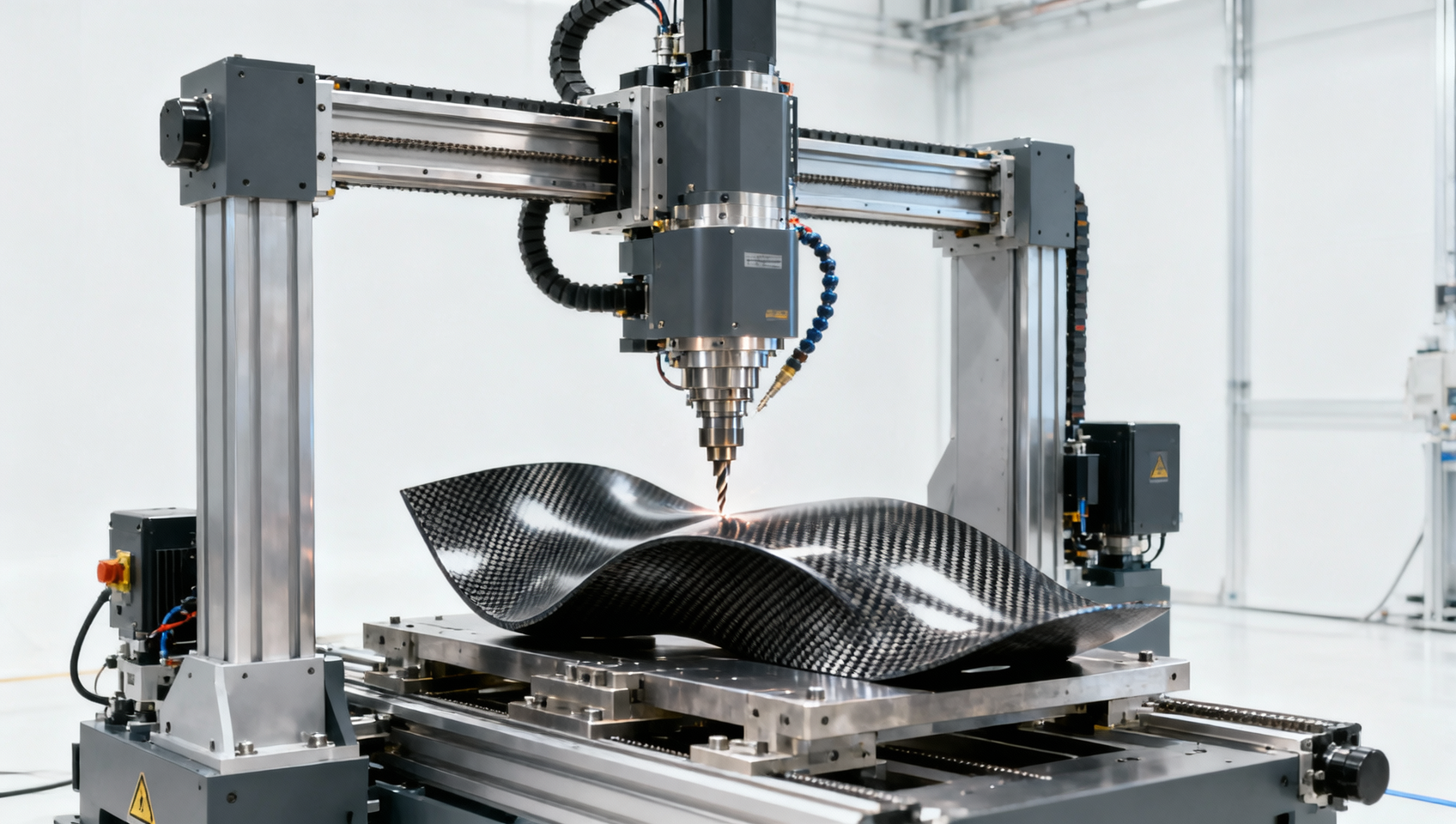
As demand rises for lightweight, high-performance parts, the Multi-axis Machining System for Composite Materials is becoming more complex to operate and optimize. From tool wear and vibration control to Industrial Automation integration for production line efficiency, manufacturers must refine every step. This article explores how advanced machining strategies, smarter setup planning, and practical process improvements can reduce risk, improve quality, and support more stable multi-axis production.
Composite material machining becomes harder on multi-axis systems because the challenge is no longer just cutting a part to shape. Manufacturers must control fiber pull-out, heat buildup, delamination, unstable cutting forces, tool life, and part consistency at the same time. For operators, engineers, buyers, and decision-makers, the key question is not whether multi-axis machining can process composites, but how to do it reliably, economically, and at production scale.
Why composite material machining becomes more difficult on multi-axis systems
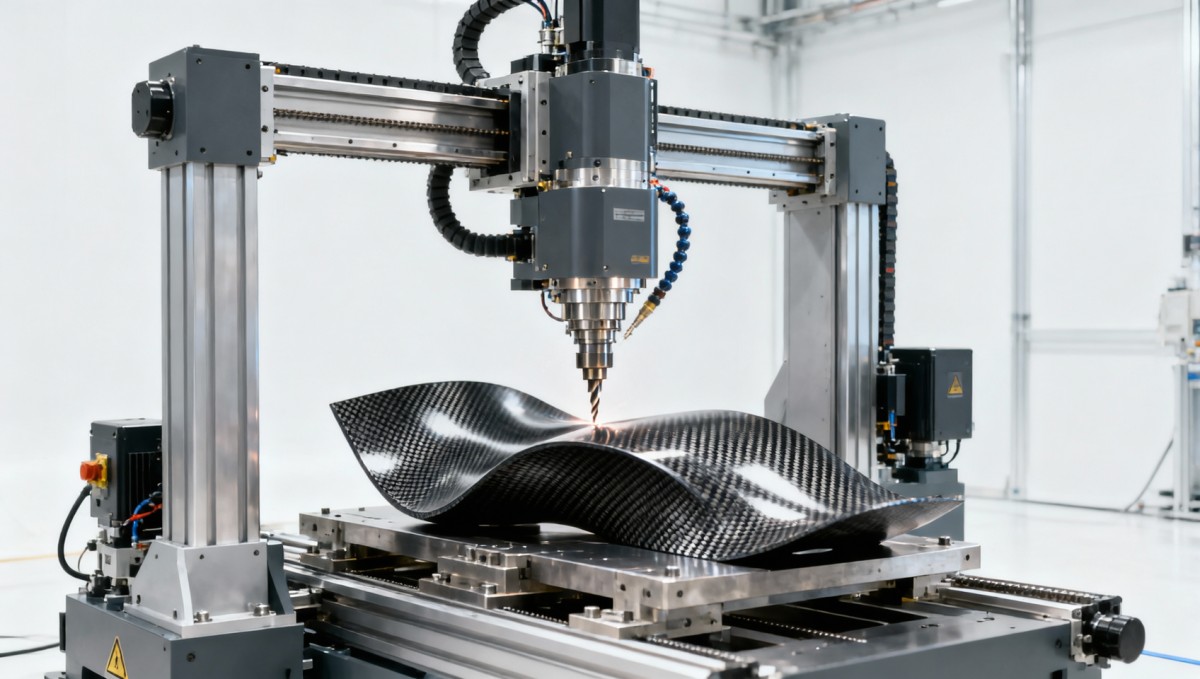
Multi-axis machining systems offer clear advantages for complex composite parts. They can reach difficult geometries, reduce multiple setups, improve surface continuity, and support more efficient machining of aerospace, automotive, and energy components. However, these same advantages also make process control more demanding.
Unlike many metals, composites do not cut in a uniform way. Fiber direction, resin content, stacking sequence, and laminate structure all influence machining behavior. On a multi-axis path, the tool engagement angle changes constantly, which means cutting forces can shift rapidly. This raises the risk of:
- Delamination at entry or exit points
- Fiber tear-out and edge fraying
- Resin smearing or thermal damage
- Rapid tool wear
- Vibration and poor surface finish
- Dimensional inconsistency across batches
In practical terms, multi-axis machining of composites is harder because more variables interact at once. A toolpath that looks efficient in CAM software may produce unstable cutting conditions in real production. This is why successful composite machining depends on process stability, not only machine capability.
What operators and process engineers need to control first
For users and operators, the most important issue is usually process predictability. If the machining result changes with tool age, fiber orientation, or clamping condition, scrap rates and troubleshooting time rise quickly.
The first priority should be controlling the fundamentals that affect cut quality most directly:
1. Tool selection
Composite materials often require specialized cutting tools rather than general-purpose end mills. Compression tools, diamond-coated tools, PCD tooling, and burr-style cutters may be chosen depending on the material system and edge quality requirement. Tool geometry must match the laminate behavior, not just the nominal part shape.
2. Cutting parameter stability
Feed rate, spindle speed, step-over, and depth of cut must be balanced to avoid both aggressive damage and low-efficiency rubbing. Excessively conservative settings can still create heat and accelerate wear. In multi-axis machining, parameter consistency across changing tool orientations is critical.
3. Workholding and support
Composite parts can deform, vibrate, or chip if not properly supported. Fixtures need to minimize movement without introducing stress. Backing materials, vacuum fixtures, and custom supports are often necessary, especially for thin-wall structures or trimmed edges.
4. Dust and chip extraction
Composite machining generates abrasive dust that affects machine components, operator safety, and surface quality. A stable extraction system is not optional. It is part of process control, machine protection, and environmental compliance.
When these basics are not controlled, advanced multi-axis programming cannot compensate for the instability.
How to reduce tool wear, vibration, and quality loss in production
Many production problems in composite material machining come from trying to improve one result while ignoring another. For example, increasing speed may improve throughput but worsen heat generation. Extending tool life may reduce cutting aggressiveness but increase fiber damage. The best approach is to optimize the process as a system.
Several practical methods usually deliver the biggest gains:
- Use application-specific tooling: Matching tool material and geometry to CFRP, GFRP, honeycomb, or hybrid stacks can significantly improve quality and tool life.
- Monitor wear proactively: Composite cutting tools often degrade gradually before obvious failure. Scheduled inspection and tool life tracking reduce unexpected quality drift.
- Adjust toolpath strategy: Entry angle, exit path, climb versus conventional direction, and path smoothing can reduce sudden force changes.
- Minimize chatter sources: Check spindle condition, holder balance, fixture rigidity, and unsupported overhang. Vibration in composite machining often damages the edge before it becomes visible in machine behavior.
- Control heat: Dry machining is common for composites, but heat still must be managed through sharp tools, proper feeds, and effective dust extraction.
For many shops, the fastest improvement comes from combining better tool management with more stable setup planning. These two changes often reduce scrap more effectively than simply changing spindle speed or feed values alone.
Where industrial automation adds value in composite multi-axis machining
Industrial Automation is increasingly important because composite machining is difficult to scale consistently by manual intervention alone. As production volumes increase, manufacturers need better repeatability, less setup variation, and more traceable process control.
Automation can add value in several areas:
- Automated workpiece loading and unloading for repeatable cycle flow
- Tool life monitoring and compensation logic
- In-process inspection and offset correction
- Digital job setup instructions for operators
- Integrated dust management and machine condition monitoring
- Data collection for quality analysis and process improvement
For decision-makers, the key point is that automation should not be seen only as a labor-saving investment. In composite machining, it is often a quality and risk-reduction investment. If a production line suffers from frequent rework, manual setup variation, or unpredictable tool replacement, automation may improve profitability by stabilizing output rather than simply increasing machine utilization.
What buyers and managers should evaluate before investing in a multi-axis machining system for composites
Procurement teams and business leaders usually need a clearer answer to a different question: what actually matters when selecting equipment or planning expansion?
Machine specifications alone do not tell the whole story. A suitable multi-axis machining system for composite materials should be evaluated across the full production context:
Machine-side factors
- Spindle stability at required speed range
- Axis accuracy and interpolation performance for complex contours
- Structural rigidity for vibration control
- Dust protection for guides, seals, and sensitive components
- Compatibility with extraction systems and enclosure requirements
Process-side factors
- Material types to be machined now and later
- Expected tolerance and edge quality requirements
- Typical batch size and product changeover frequency
- Tooling cost and supply availability
- Programming complexity and operator skill requirements
Business-side factors
- Scrap and rework cost reduction potential
- Throughput improvement versus current method
- Maintenance exposure in abrasive machining environments
- Training burden for operators and programmers
- Scalability for future automated production lines
A good purchasing decision balances machine capability with process maturity. In many cases, companies underperform not because the machine is too weak, but because implementation planning is incomplete. Tooling strategy, fixture design, dust extraction, training, and inspection planning should be considered part of the investment from the start.
How to build a more stable composite machining workflow
For companies that want better results quickly, a phased improvement approach is usually more effective than trying to overhaul everything at once.
- Standardize a benchmark part: Use one representative component to compare tools, strategies, and machine behavior.
- Document failure modes: Separate delamination, burrs, dimensional issues, and tool wear into clear categories.
- Stabilize setup conditions: Keep fixturing, extraction, and support methods consistent before changing cutting data.
- Optimize toolpath and tooling together: Do not evaluate one without the other.
- Introduce monitoring: Track tool life, defect rates, and cycle variation.
- Scale with automation where repeatability matters most: Focus first on steps that create the most variation or downtime.
This method helps both technical teams and management make better decisions. It creates measurable evidence for process improvement and reduces the risk of costly assumptions.
Conclusion
Composite material machining gets harder on multi-axis systems because the process combines complex geometry with highly sensitive material behavior. The challenge is not simply machining capability, but maintaining edge quality, dimensional accuracy, tool life, and repeatability under changing cutting conditions.
For operators and engineers, the biggest wins come from better tool selection, setup stability, vibration control, and wear management. For buyers and decision-makers, the real value lies in selecting a multi-axis machining system that fits the full production environment, including dust control, automation readiness, and long-term process consistency.
As composite applications continue to grow, companies that treat machining as a complete system rather than an isolated machine function will be better positioned to improve quality, reduce risk, and scale production with confidence.
Recommended for You
![]() Iranian LNG Vessels Breach U.S. Strait Blockade; Shanghai Crude Surges 4%Manufacturing Market Research Center
Iranian LNG Vessels Breach U.S. Strait Blockade; Shanghai Crude Surges 4%Manufacturing Market Research Center![]() Pakistan Launches CNC Localization Tender for CPEC II Smart Manufacturing ParkGlobal Machine Tool Trade Research Center
Pakistan Launches CNC Localization Tender for CPEC II Smart Manufacturing ParkGlobal Machine Tool Trade Research Center![]() NVIDIA Joins $1T Club; AI-Driven CNC Digital Twin Gains Global TractionCNC Machining Technology Center
NVIDIA Joins $1T Club; AI-Driven CNC Digital Twin Gains Global TractionCNC Machining Technology Center![]() World's First 5-Axis Middle-Grade Wire EDM Machine Enters Mass ProductionMachine Tool Industry Editorial Team
World's First 5-Axis Middle-Grade Wire EDM Machine Enters Mass ProductionMachine Tool Industry Editorial Team![]() China’s CNC Machine Tool Export Prices Up 11.3% in Q1 2026Global Machine Tool Trade Research Center
China’s CNC Machine Tool Export Prices Up 11.3% in Q1 2026Global Machine Tool Trade Research Center![]() Saudi Energy Security Boosts CNC Import Efficiency in Middle EastGlobal Machine Tool Trade Research Center
Saudi Energy Security Boosts CNC Import Efficiency in Middle EastGlobal Machine Tool Trade Research Center


Aris Katos
Future of Carbide Coatings
15+ years in precision manufacturing systems. Specialized in high-speed milling and aerospace grade alloy processing.
▶
NVIDIA Joins $1T Club; AI-Driven CNC Digital Twin Gains Global TractionCNC Machining Technology Center▶
Nvidia's Huang Criticizes US Chip Controls, CNC Digital Twin Solutions Expand OverseasCNC Machining Technology Center▶
Composite Material Machining Gets Harder on Multi-axis SystemsCNC Machining Technology Center▶
Where Multi-axis Machining Pays Off for Complex ComponentsCNC Machining Technology Center▶
Stainless Steel Machining Process Gaps That Raise Scrap RatesCNC Machining Technology Center
Mastering 5-Axis Workholding Strategies
Join our technical panel on Nov 15th to learn about reducing vibrations in thin-wall components.

Providing you with integrated sanding solutions
Before-sales and after-sales services
Comprehensive technical support