• Global CNC market projected to reach $128B by 2028 • New EU trade regulations for precision tooling components • Aerospace deman
NYSE: CNC +1.2%LME: STEEL -0.4%

Where Multi-axis Machining Pays Off for Complex Components
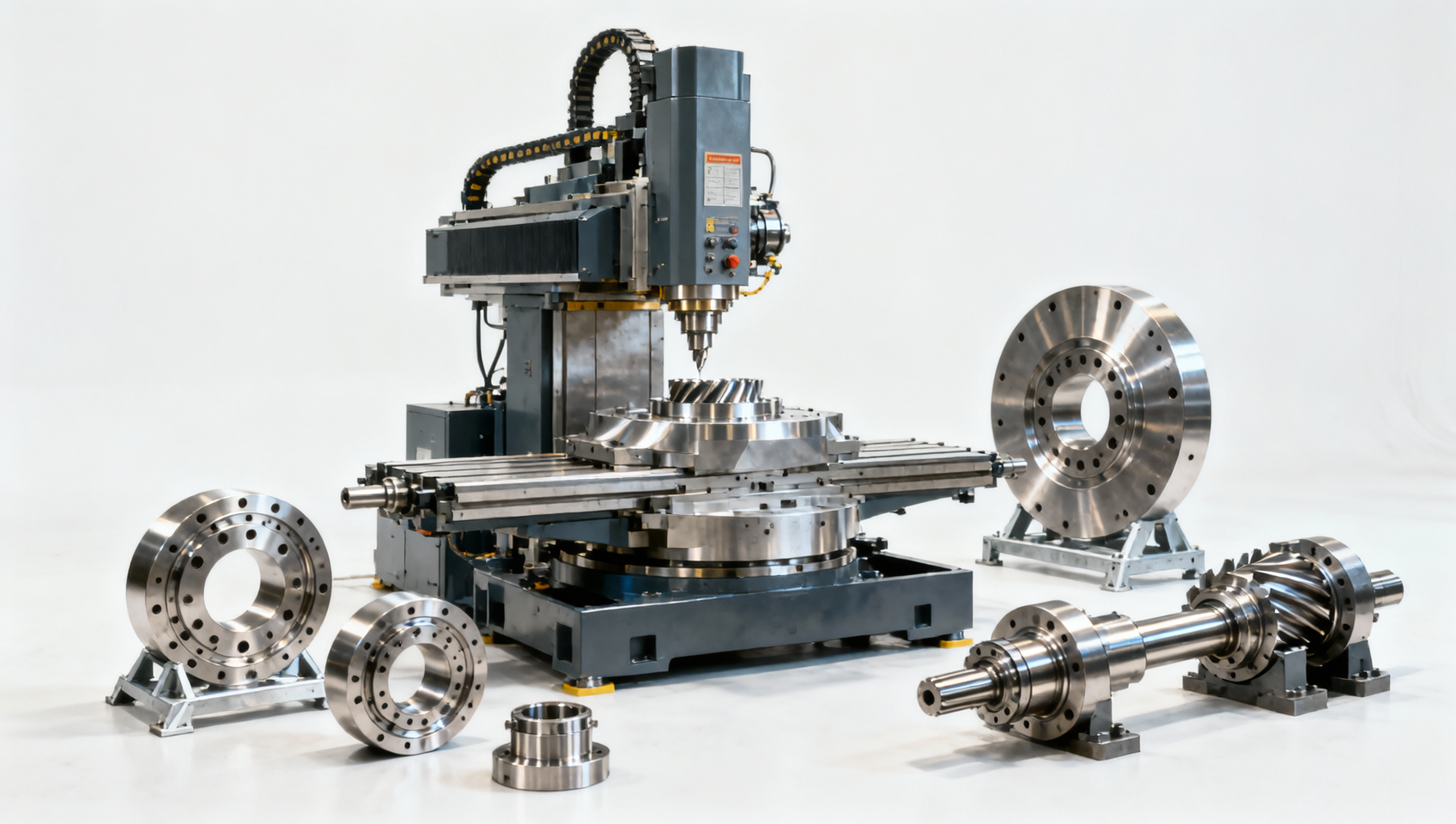
For manufacturers producing intricate geometries, the Multi-axis Machining Process for complex components often delivers clear gains in accuracy, cycle time, and setup reduction. From aerospace structures to Precision Disc Parts for hydraulic systems, understanding where multi-axis capability creates real value helps engineers, buyers, and production leaders choose smarter, more competitive machining strategies.
When does multi-axis machining create the most value?
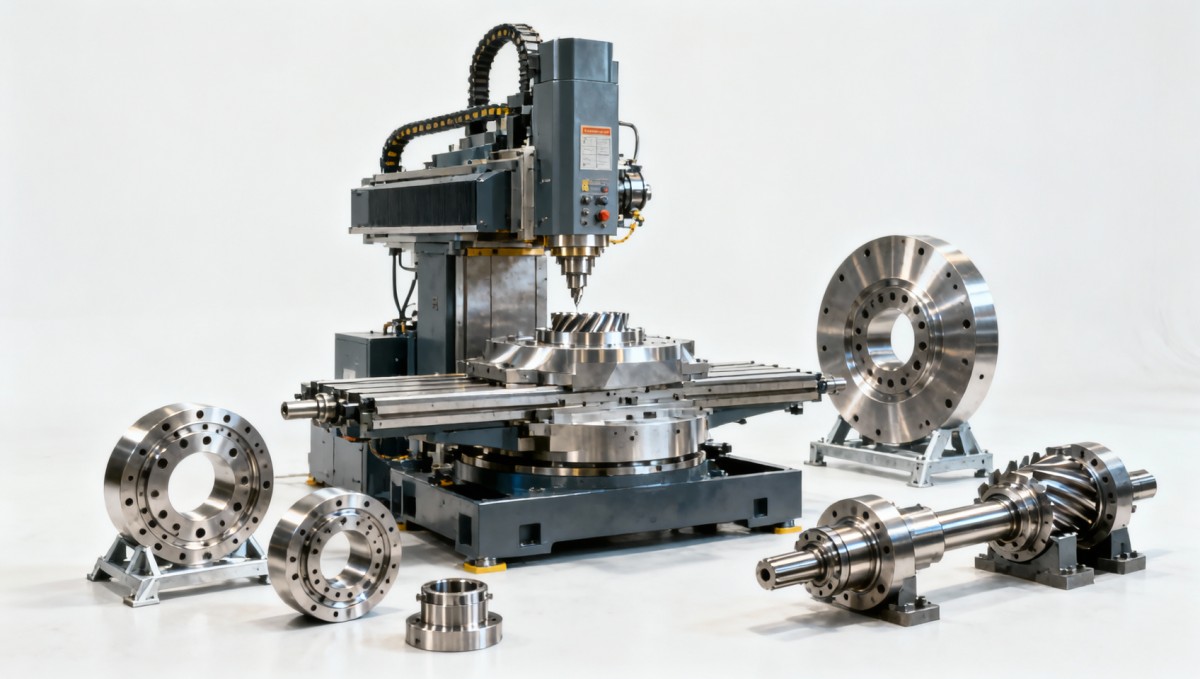
Multi-axis machining pays off when a component has complex geometry, tight positional tolerances, and multiple features distributed across several faces. In practical production, the biggest advantage appears when 3-axis machining would require 3–6 setups, custom fixtures, and repeated re-clamping that increases variation between operations. A 4-axis or 5-axis machining strategy can often consolidate those operations into 1–2 setups, which directly reduces stack-up error and handling time.
This matters across the CNC machine tool industry because manufacturers in aerospace, automotive, energy equipment, medical hardware, and electronics all face the same pressure: shorter delivery windows, higher traceability, and more demanding part geometry. For information researchers, the key question is not whether multi-axis technology is advanced, but where it changes total manufacturing economics. For operators, buyers, and decision-makers, the answer depends on feature complexity, batch size, tolerance requirements, and changeover frequency.
A useful rule is to evaluate three factors together: geometry complexity, tolerance density, and setup sensitivity. If a part includes compound angles, deep cavities, undercuts, intersecting holes, sculpted surfaces, or critical datums on multiple planes, the Multi-axis Machining Process often becomes a production tool rather than a luxury option. If the part is mostly planar with open access and moderate tolerance, 3-axis or turning-plus-secondary operations may still be more economical.
In many workshops, the tipping point appears when setup time begins to account for 20%–40% of total production time. At that point, the value of fewer fixtures, fewer manual interventions, and reduced in-process transfers becomes measurable. The gain is not only speed. It also improves repeatability for complex shaft components, precision discs, impellers, housings, brackets, and structural parts that must hold alignment across several machined faces.
Why setup reduction matters more than headline spindle time
Many purchasing discussions focus first on spindle power, rapid traverse, or maximum tool count. Those parameters matter, but setup reduction often produces the stronger business case. Every extra setup introduces a new chance for datum shift, fixture variation, collision risk, and operator dependency. On complex components, reducing from 4 setups to 1 or 2 can stabilize quality far more effectively than simply increasing cutting speed by 10%–15%.
For procurement teams, this means the machine should be evaluated as part of a broader process chain. A higher initial machine investment can be justified if it lowers scrap exposure, shortens lead time by 2–5 days on repeat jobs, or removes multiple dedicated fixtures from the workflow. In industries moving toward smart manufacturing and flexible production lines, that process-level view is increasingly important.
Typical signs a part is a strong candidate
- The drawing contains angled holes, side features, or curved surfaces that are difficult to access with standard vertical machining.
- The tolerance chain depends on relationships between features located on 3 or more faces.
- The part requires frequent re-clamping, special fixtures, or manual alignment during conventional machining.
- Batch sizes range from prototype to medium-volume production, where flexibility matters more than dedicated transfer tooling.
Which components benefit most in real manufacturing scenarios?
Not every part needs a 5-axis machine, but several categories benefit consistently. Aerospace structural parts often combine pockets, thin walls, angled features, and stringent tolerance control. Energy equipment components may require deep machining access and stable concentricity across multiple operations. Automotive and industrial automation suppliers frequently machine housings, knuckles, manifolds, and high-accuracy structural parts where cycle consistency matters as much as speed.
Precision Disc Parts are another strong example. In hydraulic, transmission, pump, and valve applications, disc-shaped components can require precise flatness, concentricity, bolt-circle location, and face-to-face consistency. If the part includes side ports, angled drilling, reliefs, or back-face features, a multi-axis platform can reduce handling and maintain better geometric relationship across the entire part.
Complex shaft components also benefit when multiple journals, eccentric features, helical forms, or milled flats must remain synchronized. In these cases, integrating turning and milling capability or using a multi-axis machining center can reduce transfer time between machines. For operators, this often means fewer manual checkpoints. For managers, it means better control of takt time and less work-in-process inventory.
The application decision should also consider production mix. High-mix, low-to-medium volume operations gain more from flexible machining than from fixed dedicated tooling. If a factory changes over 2–8 part families per week, multi-axis capability helps protect capacity utilization. In contrast, a very stable, ultra-high-volume part with simple geometry may still favor a more specialized line.
Application scenarios by component type
The following comparison helps clarify where multi-axis machining usually pays back faster than conventional process routing. It focuses on feature accessibility, tolerance demand, and setup complexity rather than generic machine claims.
The table shows a practical pattern: the more a part depends on positional relationships across several planes, the more likely the Multi-axis Machining Process will outperform conventional routing. This is especially relevant for suppliers serving global machine tool clusters in China, Germany, Japan, and South Korea, where lead-time pressure and export-quality expectations are both high.
What operators and engineers should watch during implementation
Successful multi-axis production is not only about machine purchase. Toolpath strategy, workholding design, post-processing quality, and operator training all influence results. A 5-axis machine used with poor fixture access or unstable CAM programming will not deliver its full value. In most plants, a 2–4 week process validation period is realistic when a new complex part family is introduced.
For users and operators, the daily focus should include collision checking, tool reach, tool deflection on long overhangs, and thermal stability during long cycles. A machine may be capable on paper, but if practical tool access is limited, the process can lose the expected cycle-time advantage. That is why application review before procurement is critical.
How does multi-axis compare with 3-axis, turning, or secondary setups?
The right comparison is not “advanced versus basic.” It is “best-fit process route for part geometry and production objectives.” A conventional 3-axis machine remains highly effective for open-surface prismatic parts, simple plates, and many fixtures or tooling components. Turning centers are still the natural first choice for rotational parts dominated by cylindrical geometry. Multi-axis machining becomes attractive when conventional routing forces too many handoffs or compromises feature access.
From a procurement view, compare total process cost, not only machine hourly rate. A lower hourly rate can be offset by 2 extra setups, 1 dedicated fixture, and higher inspection load. Conversely, a multi-axis solution can be excessive for a part with low complexity and long stable demand. The decision should balance machine utilization, programming effort, fixture cost, quality risk, and future product mix.
For many manufacturers, the practical alternatives fall into four groups: 3-axis machining with multiple setups, 4-axis indexed machining, full 5-axis simultaneous machining, and turn-mill integration. Each option has a different sweet spot. The best result often comes from matching the machine architecture to the dominant feature pattern of the part family rather than chasing the most advanced specification.
The comparison below can help buyers and production leaders structure that decision. It focuses on setup count, programming difficulty, and suitable component families, which are usually more useful than generic marketing claims.
Process route comparison for complex components
The main takeaway is that multi-axis pays off fastest when it removes process complexity that would otherwise be absorbed by fixtures, secondary machines, and inspection. If the part family does not need that reduction, a simpler route can remain the smarter investment. That is why process review should come before equipment selection, not after.
Three decision questions before choosing
- How many setups does the current route require, and which of them create the most geometric risk?
- Is the part family stable enough to justify dedicated tooling, or variable enough to benefit from flexible multi-axis capacity?
- Will the chosen machine support future demand for tighter tolerances, automation, and digital production tracking over the next 3–5 years?
What should buyers evaluate before investing in multi-axis capacity?
Buyers should start with part portfolio analysis rather than brochure comparison. Review at least 12 months of parts by geometry type, material, batch size, tolerance, setup count, and current bottlenecks. This helps separate true multi-axis candidates from parts that only appear complex. It also reveals whether the business needs one flexible machine, a turn-mill cell, or a broader automated production line integrated with probing, pallet systems, or robot loading.
A sound procurement review usually covers 5 key dimensions: machine kinematics, spindle and torque range, control and CAM compatibility, workholding strategy, and local service capability. It should also include realistic questions about operator readiness. A machine can be installed within 1–3 days, but stable process deployment often depends on training, postprocessor verification, and first-article validation over several production cycles.
For enterprise decision-makers, return on investment is rarely driven by a single variable. The strongest cases usually combine three benefits: setup consolidation, quality stability, and reduced lead time. If a supplier serves export markets or regulated sectors, traceability and repeatable process control add further value. This is especially true when customers request tighter documentation, in-process inspection records, or rapid engineering change response.
In a global CNC machining market shaped by automation and digital integration, buyers should also assess future compatibility. Can the machine connect with shop-floor monitoring, tooling management, and scheduling systems? Can it support unattended or lightly attended shifts of 4–8 hours for stable part families? These questions often influence the long-term payoff more than entry price alone.
Practical procurement checklist
- Confirm the target parts by material, size envelope, and tolerance class before discussing machine options.
- Request a process proposal showing estimated setup count, tooling approach, and expected inspection points.
- Review fixture access, tool length requirements, and collision-risk areas for at least 3 representative parts.
- Check service response expectations, spare parts planning, and training scope for operators and programmers.
Evaluation table for selection and budgeting
This selection table can be used during RFQ review, internal capex approval, or supplier comparison. It helps convert technical claims into operational decision criteria.
Used correctly, this framework helps buyers avoid the common mistake of selecting on axis count alone. Multi-axis capability only pays off consistently when the machine, process, tooling, and support model fit the actual part mix and production objectives.
Common misconceptions, implementation risks, and FAQ
One common misconception is that more axes always mean lower cost per part. In reality, cost depends on how often the extra motion eliminates setups, improves access, or raises quality consistency. Another misconception is that only aerospace requires multi-axis machining. In fact, Precision Disc Parts, valve bodies, automation hardware, molds, energy equipment, and electronics fixtures can all benefit when geometry and tolerance relationships justify it.
Implementation risk often comes from underestimating programming and fixturing. A shop may invest in a 5-axis machine but continue using a 3-axis mindset, creating awkward toolpaths and poor access. Another risk is pushing every part onto the new platform, even when simpler machines remain more efficient. Good process segmentation is essential. In many plants, the best result is a hybrid capacity model rather than full replacement of existing equipment.
It is also important to manage inspection strategy. When setup count falls from 4 to 1, the process can gain accuracy, but measurement planning must still confirm critical relationships. Typical checks include datums, positional tolerances, runout, flatness, and surface condition at defined stages such as first article, in-process verification, and final inspection. The exact frequency may be every part for prototypes, every batch for stable repeats, or according to customer control plans.
Below are common search-driven questions from engineers, buyers, and production managers evaluating the Multi-axis Machining Process for complex components.
How do I know if a 4-axis machine is enough?
A 4-axis machine is often enough when the part mainly needs indexed access around its perimeter or across several side faces. If the surfaces are mostly prismatic and the tool does not need continuous angle change during cutting, 4-axis indexed machining can deliver strong value with lower programming complexity. If the part includes freeform surfaces, blade-like forms, or compound tool orientations that must move simultaneously, 5-axis is usually the better fit.
What batch sizes justify multi-axis investment?
There is no single threshold. Multi-axis machining often makes sense for prototypes and small batches because it reduces fixture design and changeover effort. It can also work very well in medium-volume production when the same part family repeats weekly or monthly. The key issue is not only volume, but whether setup savings, accuracy improvement, and process flexibility offset programming and machine cost over the expected production horizon.
What should procurement ask a supplier before placing an order?
Ask for a part-based review, not only a machine specification sheet. Request comments on suitable machine configuration, likely setup count, tooling assumptions, fixture concept, sample lead time, operator training scope, and after-sales support. If you are sourcing machined parts rather than equipment, ask how the supplier manages first-article approval, in-process control, and delivery planning over 2–6 week production windows.
How long does implementation usually take?
For a new component family, implementation may involve 3 stages: process review, programming and trial cutting, then first-article and repeatability validation. Depending on complexity, this can take from several days for simpler indexed parts to 2–4 weeks for demanding 5-axis applications. The timeline depends on drawing clarity, CAM readiness, tooling availability, inspection planning, and how much fixture development is required.
Why choose us for multi-axis machining insight and sourcing support?
We focus on the global CNC machining and precision manufacturing industry, with attention to machine tools, complex component production, automation trends, and international supply chain realities. That means we can support not only general technical understanding, but also practical sourcing and process discussions tied to real manufacturing constraints. For information researchers, we help clarify where multi-axis machining truly adds value. For operators and engineers, we help translate design complexity into process choices. For buyers and decision-makers, we help frame procurement around risk, delivery, and lifecycle fit.
If you are comparing multi-axis solutions for Precision Disc Parts, complex shaft components, structural parts, or mixed-family industrial production, we can help you review the right decision points before you commit. Typical consultation topics include parameter confirmation, part suitability for 4-axis versus 5-axis, batch-size matching, fixture considerations, common delivery windows, sample support options, and drawing-based quotation communication.
We can also help you organize supplier evaluation around practical checkpoints such as setup reduction potential, machining route comparison, inspection requirements, and compatibility with smart manufacturing goals. If your project involves export supply, customized machining, or transition from conventional setups to automated production, an early technical discussion can shorten decision cycles and reduce costly trial-and-error later.
Contact us to discuss your part drawings, target tolerances, material range, expected order quantity, delivery schedule, and certification or documentation expectations. With that information, we can help you identify whether the Multi-axis Machining Process is the right choice, what configuration to prioritize, and how to align sourcing, production, and cost decisions with your actual manufacturing goals.
NEXT ARTICLE
Recommended for You
 What Slows Down an Automation Line in Textile Production?Machine Tool Industry Editorial Team
 High Temperature Alloy Cutting Tools Wear Out for Hidden ReasonsCNC Machining Technology Center
 Automated Production Lines in Auto Manufacturing: Key BottlenecksMachine Tool Industry Editorial Team
 What Makes a 5 Axis Machining Center Fit Aerospace Parts?Machine Tool Industry Editorial Team
 Medical Equipment Machining Centers Need Accuracy Beyond SpecsMachine Tool Industry Editorial Team
 How to Compare CNC Tooling System Suppliers in GermanyGlobal Machine Tool Trade Research Center

Aris Katos
Future of Carbide Coatings
15+ years in precision manufacturing systems. Specialized in high-speed milling and aerospace grade alloy processing.
▶
Where Multi-axis Machining Pays Off for Complex ComponentsCNC Machining Technology Center▶
5 Axis Machining for impeller manufacturing: Why toolpath smoothing affects surface fatigue lifeCNC Machining Technology Center▶
Efficient Machining Process for aluminum alloys: Why chip evacuation defines success more than feed rateCNC Machining Technology Center▶
Multi-axis machine tool: When kinematic error mapping exposes hidden geometry driftCNC Machining Technology Center▶
CNC manufacturing for automotive industry: Why batch size flexibility now outweighs top speedCNC Machining Technology Center
Mastering 5-Axis Workholding Strategies
Join our technical panel on Nov 15th to learn about reducing vibrations in thin-wall components.

Providing you with integrated sanding solutions
Before-sales and after-sales services
Comprehensive technical support