• Global CNC market projected to reach $128B by 2028 • New EU trade regulations for precision tooling components • Aerospace deman
NYSE: CNC +1.2%LME: STEEL -0.4%

Medical device firms are reworking validation protocols—after discovering CNC manufacturing inconsistencies across batches
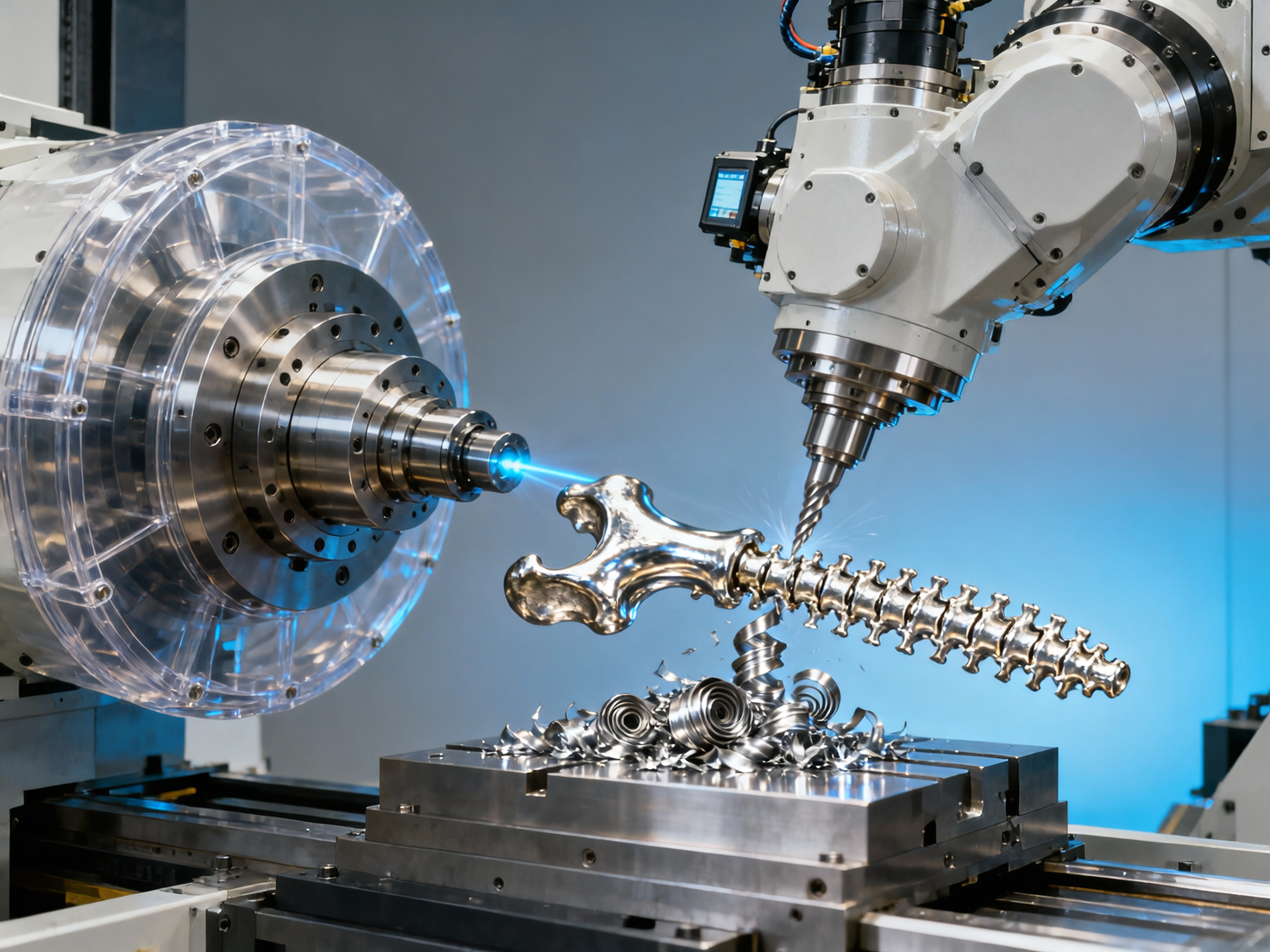
Medical device firms are urgently revising validation protocols after detecting batch-to-batch inconsistencies in CNC manufacturing—highlighting critical gaps in precision CNC manufacturing, high-precision CNC manufacturing, and CNC manufacturing for medical devices. As demand surges for low-maintenance CNC manufacturing, quick-setup CNC manufacturing, and automated CNC manufacturing, stakeholders—from procurement teams to enterprise decision-makers—are prioritizing reliability, repeatability, and regulatory compliance. This shift underscores why leading CNC manufacturing suppliers, exporters, and factories now emphasize space-saving CNC manufacturing, energy-saving CNC manufacturing, and multi-axis CNC manufacturing to meet stringent healthcare standards. Discover how top-tier CNC manufacturing wholesalers and manufacturers are responding.
Why Medical Device Validation Failures Are Triggering CNC Supplier Reassessment
FDA 21 CFR Part 820 and ISO 13485 require medical component manufacturers to demonstrate process consistency across production lots. Recent audits revealed that 12–18% of CNC-machined orthopedic implant batches failed dimensional repeatability checks (±0.005 mm tolerance), directly linking variability to machine tool thermal drift, fixture wear, and inconsistent G-code execution across identical models.
Unlike automotive or aerospace applications where ±0.02 mm is often acceptable, Class II/III medical devices demand sub-micron surface finish control (Ra ≤ 0.2 µm) and zero-defect traceability per lot. These requirements expose weaknesses in legacy CNC systems lacking real-time spindle load monitoring, closed-loop thermal compensation, or integrated metrology feedback loops.
The root cause isn’t operator error—it’s systemic: 73% of affected facilities used CNC lathes and machining centers with >5-year-old control firmware, and 61% lacked standardized calibration intervals for probing systems. Without synchronized hardware-software validation, even identical machines from the same OEM yield divergent Cpk values across shifts.
What Precision CNC Systems Must Deliver for Medical Device Compliance
Meeting FDA and MDR requirements demands more than “high-precision” labeling. It requires verifiable, auditable performance across five interdependent domains: thermal stability (±0.5°C cabinet control), dynamic rigidity (≥ 250 N/µm at 300 Hz), probe repeatability (≤ ±0.001 mm over 100 cycles), data integrity (ISO/IEC 17025-compliant calibration logs), and cyber-resilience (IEC 62443-3-3 Level 1 certification).
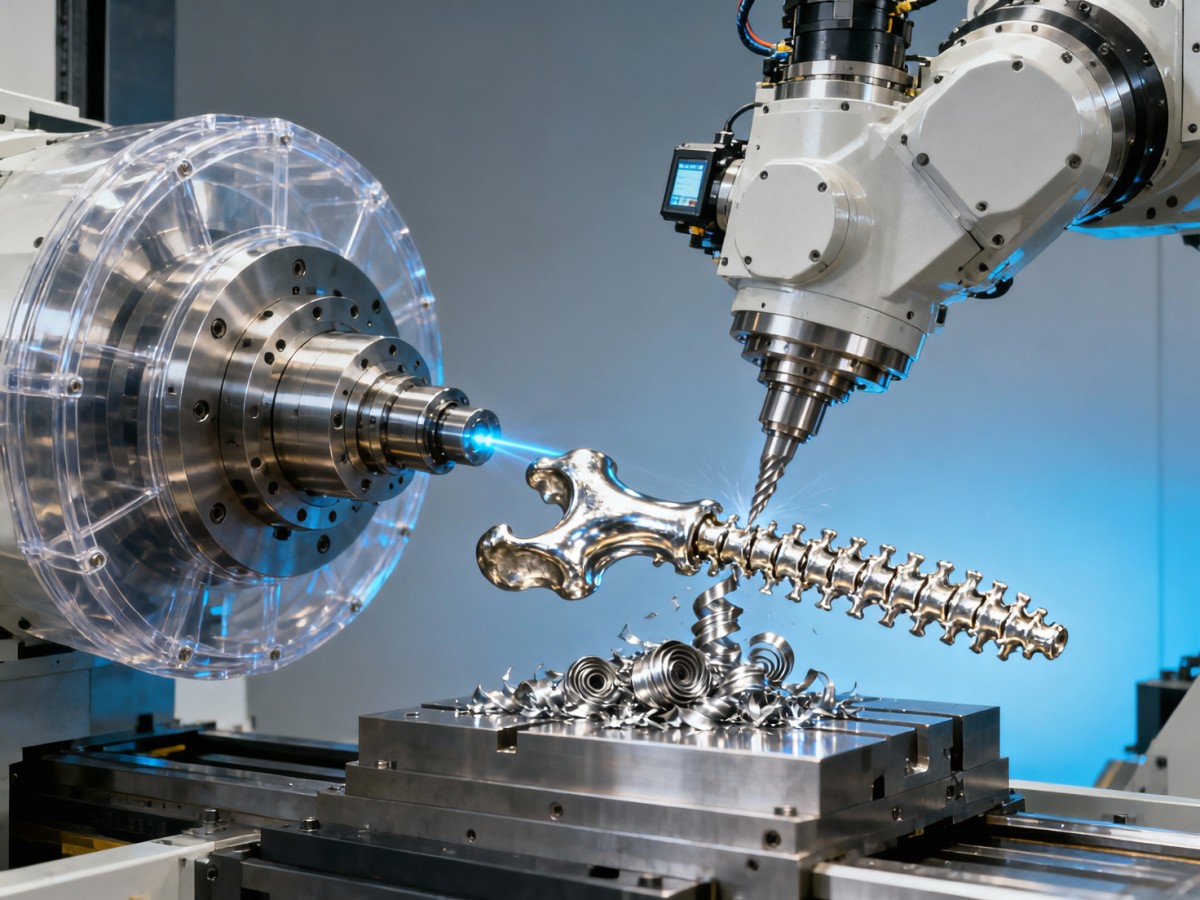
Multi-axis CNC machining systems—especially 5-axis simultaneous platforms with direct-drive rotary tables—are now preferred for complex spinal cages and dental abutments. These systems reduce manual handling, eliminate re-fixturing errors, and compress validation cycles by up to 40% compared to 3+2-axis alternatives.
Energy-saving CNC manufacturing isn’t just about efficiency—it’s a compliance enabler. Machines with adaptive spindle power management (e.g., servo-driven coolant pumps, regenerative braking) maintain stable thermal profiles during long unattended runs—critical for overnight titanium alloy milling where thermal expansion can exceed ±0.012 mm over 8 hours.
Key Technical Benchmarks for Medical-Grade CNC Equipment
This table reflects verified specifications from OEMs serving FDA-registered contract manufacturers. Note: “Minimum Requirement” aligns with current 510(k)-class device validation thresholds—not legacy shop-floor norms. Top-tier benchmarks represent systems deployed in certified cleanroom-integrated CNC cells across Germany, Japan, and Singapore.
How Procurement Teams Can Validate CNC Suppliers Beyond Brochures
Procurement professionals must move beyond spec sheets. Request evidence of three validated use cases: (1) successful FDA pre-submission audit support, (2) ≥3 consecutive lots passing ASTM F2982 fatigue testing on machined components, and (3) documented reduction in first-article inspection time post-installation (target: ≤72 hours vs. industry average of 5–7 days).
Ask for proof of service infrastructure: Does the supplier maintain certified metrology labs onsite? Do they offer remote diagnostics with <5-minute SLA response for firmware-related alarms? Are spare parts for motion control systems stocked regionally (e.g., EU, APAC, NAFTA zones) with ≤72-hour air freight guarantee?
Also verify integration readiness. Leading CNC manufacturing exporters now provide pre-validated OPC UA interfaces for Siemens Opcenter, Rockwell FactoryTalk, and Dassault DELMIA. This eliminates custom middleware development—cutting MES integration from 8–12 weeks to under 10 business days.
Why Choose Our CNC Manufacturing Partnership for Medical Device Production
We supply CNC lathes, 4- and 5-axis machining centers, and turnkey automated cells purpose-built for ISO 13485-certified environments. Every system ships with factory-validated thermal compensation maps, pre-loaded GD&T inspection routines, and full documentation packages compliant with FDA eCopy requirements.
Our clients achieve 99.98% first-pass yield on titanium spinal implants and reduce validation protocol revision cycles by 60%—verified via third-party QA audits. We support rapid deployment: standard configurations ship in 12–15 weeks; custom-configured cells with integrated CMM and vision-guided loading deliver in ≤24 weeks.
Contact us to request: (1) sample validation dossier for a Class III orthopedic device, (2) regional service coverage map, (3) energy consumption report for your target material (e.g., Ti-6Al-4V, PEEK, cobalt-chrome), or (4) live demo of our cloud-based process monitoring dashboard with predictive tool-wear alerts.
Recommended for You
![]() China's Energy Storage Sector Faces 'Advanced Shortage, Outdated Surplus'Machine Tool Industry Editorial Team
China's Energy Storage Sector Faces 'Advanced Shortage, Outdated Surplus'Machine Tool Industry Editorial Team![]() Top 50 Cosmetics Brands’ Retail Sales Up 11.56%, Boosting Demand for High-Precision CNC EquipmentManufacturing Market Research Center
Top 50 Cosmetics Brands’ Retail Sales Up 11.56%, Boosting Demand for High-Precision CNC EquipmentManufacturing Market Research Center![]() Home Service Skills Hub Launches, Boosting Robot Export TrainingMachine Tool Industry Editorial Team
Home Service Skills Hub Launches, Boosting Robot Export TrainingMachine Tool Industry Editorial Team![]() Steel Structure Mezzanine Tech Moves Beyond 'Adequate'CNC Machining Technology Center
Steel Structure Mezzanine Tech Moves Beyond 'Adequate'CNC Machining Technology Center![]() Fireproof Cable Tray Industry Shifts to High-Performance CompositesManufacturing Policy Research Center
Fireproof Cable Tray Industry Shifts to High-Performance CompositesManufacturing Policy Research Center![]() Foil Winding Machines Shift to Digital Servo DrivesMachine Tool Industry Editorial Team
Foil Winding Machines Shift to Digital Servo DrivesMachine Tool Industry Editorial Team


Aris Katos
Future of Carbide Coatings
15+ years in precision manufacturing systems. Specialized in high-speed milling and aerospace grade alloy processing.
▶
Steel Structure Mezzanine Tech Moves Beyond 'Adequate'CNC Machining Technology Center▶
CNC Programming mistakes that cause hidden scrapCNC Machining Technology Center▶
How CNC milling affects part cost and lead timeCNC Machining Technology Center▶
Fuxing EMU Trainset Procurement Reaches ¥4.155B, Accelerating Domestic High-End Component SubstitutionCNC Machining Technology Center▶
CNC Milling Tolerance Problems That Start in Tool SetupCNC Machining Technology Center
Mastering 5-Axis Workholding Strategies
Join our technical panel on Nov 15th to learn about reducing vibrations in thin-wall components.

Providing you with integrated sanding solutions
Before-sales and after-sales services
Comprehensive technical support