• Global CNC market projected to reach $128B by 2028 • New EU trade regulations for precision tooling components • Aerospace deman
NYSE: CNC +1.2%LME: STEEL -0.4%

Production Process Gaps That Lead to Unstable Product Quality
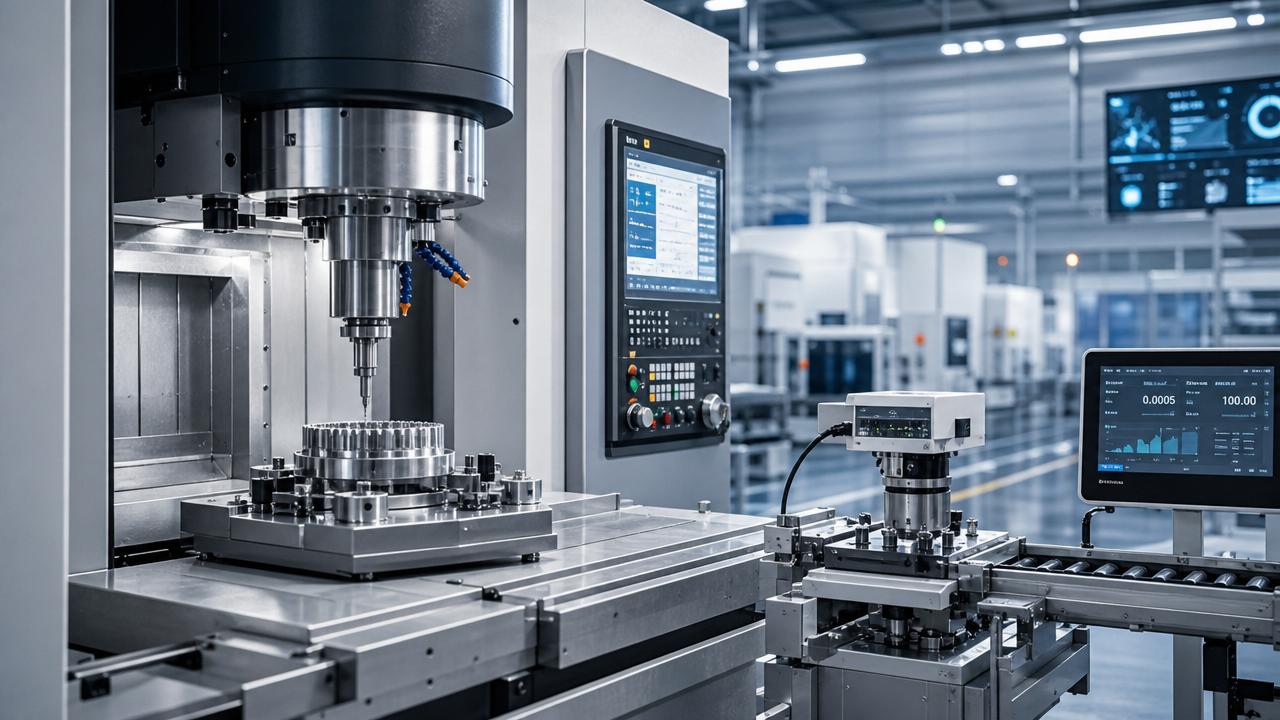
Even with advanced CNC systems and automated lines, small Production Process gaps can trigger unstable product quality, hidden safety risks, and expensive rework.
In precision manufacturing, those gaps often appear between programming, setup, machining, inspection, and maintenance.
A stable Production Process is not created by one machine alone. It depends on consistent methods, verified data, trained operators, and reliable control points.
For global CNC machining, automated production, and smart factory environments, early gap detection protects precision, delivery, compliance, and long-term profitability.
Why Production Process Gaps Vary Across Manufacturing Scenarios
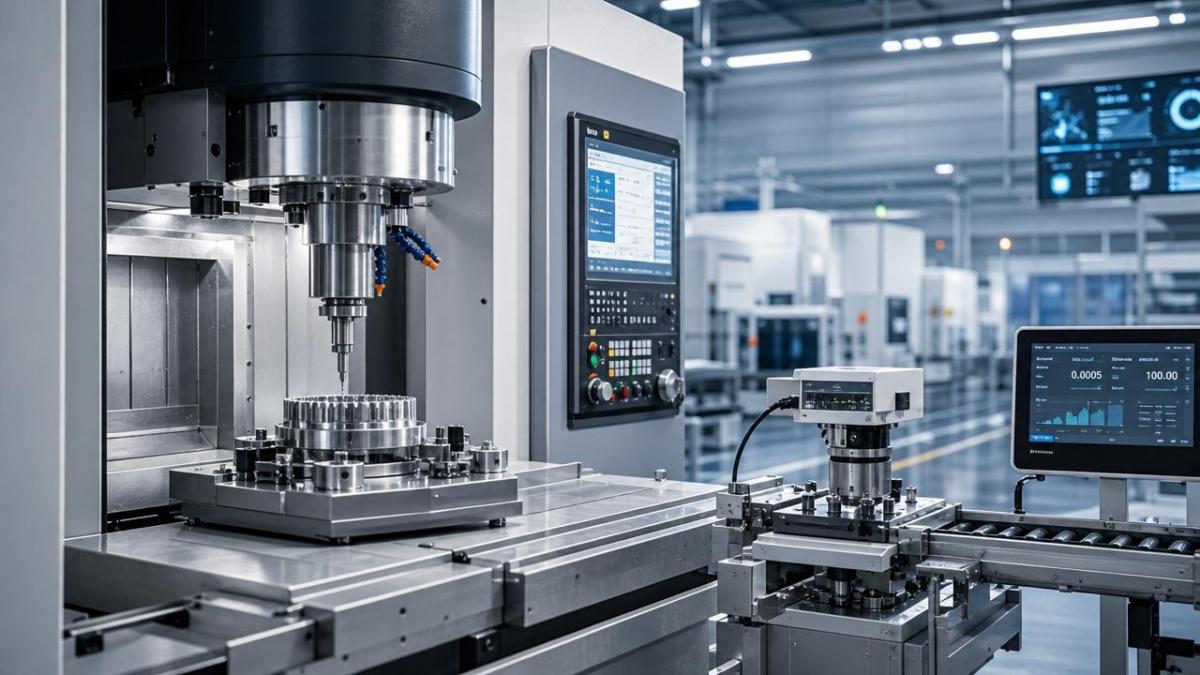
Not every Production Process weakness creates the same risk. The impact changes by product geometry, tolerance range, batch size, material behavior, and automation level.
A short-run aerospace part faces different control challenges than a high-volume automotive shaft or an electronics housing made on an automated line.
That is why quality planning should begin with scenario judgment. The correct controls depend on where variation is most likely to enter the Production Process.
Scenario 1: Tight-Tolerance CNC Machining Where Small Drift Causes Big Defects
In precision CNC machining, unstable quality often starts with setup variation, thermal drift, tool wear, or incorrect offset updates.
The Production Process may appear stable during first-piece approval, then slowly move out of tolerance during continuous cutting.
Key judgment points in this scenario
- Are machine warm-up routines standardized before critical machining begins?
- Is tool life managed by data, not by operator guesswork?
- Are fixture repeatability and clamping force verified regularly?
- Is in-process measurement linked to offset correction rules?
When these controls are weak, the Production Process becomes sensitive to tiny changes, especially on shafts, discs, and structural components.
Scenario 2: Automated Production Lines Where Handover Gaps Multiply Variation
Automation improves speed, but it can hide errors. A poor Production Process on an automated line spreads defects faster than manual production.
Variation often enters during robot loading, part orientation, barcode mismatch, sensor failure, or delayed alarm response.
Core warning signs
- Frequent micro-stoppages without root cause closure
- Manual overrides that bypass standard interlocks
- Different data versions used by separate stations
- Final inspection catching issues missed upstream
In this scenario, Production Process stability depends on station-to-station consistency more than single-machine capability.
Scenario 3: Multi-Product Workshops Where Changeovers Create Hidden Quality Loss
Flexible manufacturing supports mixed orders, but every changeover is a risk point. The Production Process can fail between one approved job and the next.
Program selection errors, wrong tools, incorrect fixtures, and outdated work instructions are common triggers.
What should be checked first
Review digital document control, first-off approval timing, tooling confirmation, and restart verification after job switching.
If those steps are informal, the Production Process becomes dependent on memory rather than system control.
Scenario 4: Safety-Critical Parts Where Minor Production Process Deviations Cannot Be Tolerated
For aerospace, energy equipment, and high-load industrial components, quality instability creates more than scrap. It can create safety and compliance exposure.
Here, the Production Process must control traceability, material identity, operator authorization, inspection records, and deviation approval.
Critical control focus
- Lot traceability from raw material to finished part
- Calibration status of all measuring devices
- Controlled handling of nonconforming products
- Documented reaction plans for abnormal conditions
In these environments, a stable Production Process must be auditable, not just productive.
How Different Scenarios Change Production Process Requirements
This comparison shows why one universal checklist rarely fixes every Production Process issue.
Practical Production Process Adaptation Suggestions
The most effective improvement plans are scenario-based. They target the highest-risk gap instead of applying broad controls everywhere.
- Map every Production Process step from incoming material to final release.
- Identify where variation enters, spreads, or remains undetected.
- Assign measurable control points for setup, machining, transfer, and inspection.
- Connect machine data, quality data, and maintenance records.
- Build reaction rules for drift, alarms, and repeated nonconformities.
For CNC machining, process capability studies, tool monitoring, and fixture validation deliver fast results.
For smart factories, digital work instructions, MES integration, and traceable approvals strengthen the Production Process across connected operations.
Common Misjudgments That Keep Production Process Problems Hidden
Many unstable quality issues remain unresolved because the wrong signals are trusted.
- Assuming a capable machine guarantees a capable Production Process
- Relying only on final inspection instead of upstream controls
- Treating operator experience as a substitute for standardization
- Ignoring small recurring defects because scrap rates still look acceptable
- Separating maintenance, quality, and production data into isolated systems
These mistakes allow Production Process variation to survive inside daily routines until cost, delivery, or safety pressure exposes it.
Next Actions to Strengthen Production Process Stability
Start with one product family, one line, or one critical workstation. Measure where instability begins, not where defects are finally discovered.
Use a cross-functional review of machining parameters, inspection timing, tool replacement, data flow, and abnormal handling.
Then standardize the strongest controls and expand them step by step across similar Production Process scenarios.
In global CNC and precision manufacturing, stable quality comes from disciplined execution, connected information, and scenario-based process decisions.
A stronger Production Process reduces variation, protects compliance, and supports the shift toward higher-precision, automated, and digitally integrated manufacturing.
PREVIOUS ARTICLE
NEXT ARTICLE
Recommended for You
![]() Changsha Housing Fund Policy Boosts Smart Manufacturing Real Estate DemandManufacturing Market Research Center
Changsha Housing Fund Policy Boosts Smart Manufacturing Real Estate DemandManufacturing Market Research Center![]() SGX April Trading Volume Up 6%; Equipment Financing Gains TractionGlobal Machine Tool Trade Research Center
SGX April Trading Volume Up 6%; Equipment Financing Gains TractionGlobal Machine Tool Trade Research Center![]() China's Avg. Mobile Data Usage Hits 23.4GB, Boosting CNC Cloud Services AbroadManufacturing Market Research Center
China's Avg. Mobile Data Usage Hits 23.4GB, Boosting CNC Cloud Services AbroadManufacturing Market Research Center![]() Germany's DAX Surges 3% on Resurgent Machine Tool DemandGlobal Machine Tool Trade Research Center
Germany's DAX Surges 3% on Resurgent Machine Tool DemandGlobal Machine Tool Trade Research Center![]() Canada Signs Ukraine ICC Treaty, Sanctions Extend to Industrial Equipment ExportsManufacturing Policy Research Center
Canada Signs Ukraine ICC Treaty, Sanctions Extend to Industrial Equipment ExportsManufacturing Policy Research Center![]() MIIT Launches 'AI+Software' Initiative to Boost Smart ProgrammingCNC Machining Technology Center
MIIT Launches 'AI+Software' Initiative to Boost Smart ProgrammingCNC Machining Technology Center


Aris Katos
Future of Carbide Coatings
15+ years in precision manufacturing systems. Specialized in high-speed milling and aerospace grade alloy processing.
▶
Production Process Gaps That Lead to Unstable Product QualityCNC Machining Technology Center▶
Where the Production Process Hides More Scrap Than ExpectedCNC Machining Technology Center▶
Production Process bottlenecks that do not show up in basic KPIsCNC Machining Technology Center▶
Production Process gaps that create hidden delivery riskCNC Machining Technology Center▶
Production Process bottlenecks that software alone cannot fixCNC Machining Technology Center
Mastering 5-Axis Workholding Strategies
Join our technical panel on Nov 15th to learn about reducing vibrations in thin-wall components.

Providing you with integrated sanding solutions
Before-sales and after-sales services
Comprehensive technical support