• Global CNC market projected to reach $128B by 2028 • New EU trade regulations for precision tooling components • Aerospace deman
NYSE: CNC +1.2%LME: STEEL -0.4%

Production Process bottlenecks that software alone cannot fix
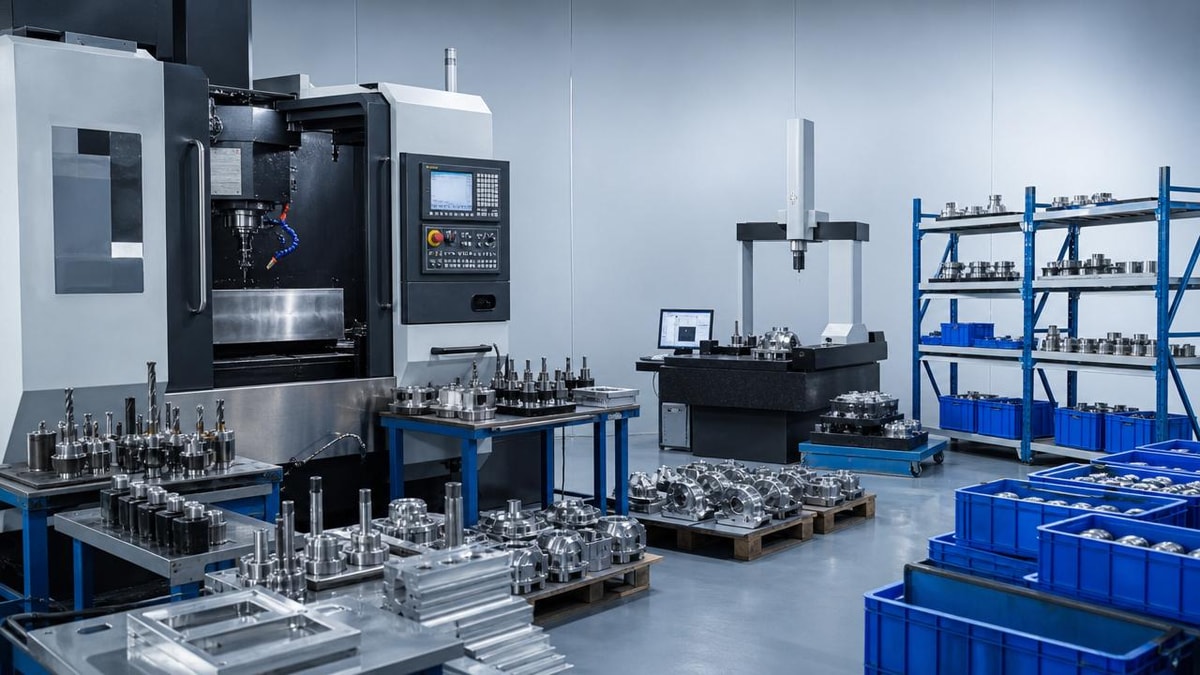
In modern manufacturing, many Production Process delays are blamed on outdated software, yet the real bottlenecks often lie in machine capacity, tooling limits, workflow design, and cross-team coordination. For project managers and engineering leaders, understanding what software cannot solve is essential to improving delivery speed, quality, and production stability in CNC-driven operations.
Why a checklist-based review is the fastest way to diagnose a Production Process bottleneck
When lead times slip, the first reaction is often to request a new ERP module, a better MES dashboard, or more automation logic. Those tools can improve visibility, but they do not add spindle hours, stabilize an inconsistent fixture, or correct poor routing decisions. In CNC machining and precision manufacturing, a Production Process usually fails at the interface between physical capacity, process discipline, and decision speed.
That is why project managers need a structured checklist instead of assumptions. A checklist helps separate data problems from equipment constraints, software workflow issues from shop-floor reality, and planning delays from engineering change confusion. It also creates a common language across production, quality, engineering, procurement, and maintenance teams.
Before approving new software spending, leaders should first confirm whether the bottleneck is caused by machine utilization, setup time, inspection delays, operator capability, material flow, or unstable upstream inputs. In many factories, software reveals the bottleneck; it does not remove it.
First-pass checklist: what to verify before blaming software
- Check whether the constrained resource is a machine, a process step, or a decision point. A machining center at 95% load is very different from a delayed approval cycle in engineering.
- Review actual cycle time versus quoted cycle time. If the Production Process plan uses ideal assumptions, no software layer will recover lost hours.
- Measure setup and changeover time separately from run time. Many CNC operations appear efficient on paper while losing capacity during fixture swaps, tool offset checks, and first-piece validation.
- Confirm tool life stability. If inserts, drills, or end mills vary unpredictably, scheduling software cannot protect quality or output consistency.
- Identify whether inspection capacity matches machining output. A Production Process can stall because CMM queues are longer than machining queues.
- Review operator coverage by shift. A highly automated production line still fails if skilled setup technicians are unavailable during nights or weekends.
- Audit material and fixture readiness. Missing raw stock, special jaws, gauges, or coolant management often causes more delay than poor software integration.
This first-pass review gives managers a practical screen. If several of these items are unstable, the software conversation should move from “What system should we buy?” to “What operating condition must be fixed first?”
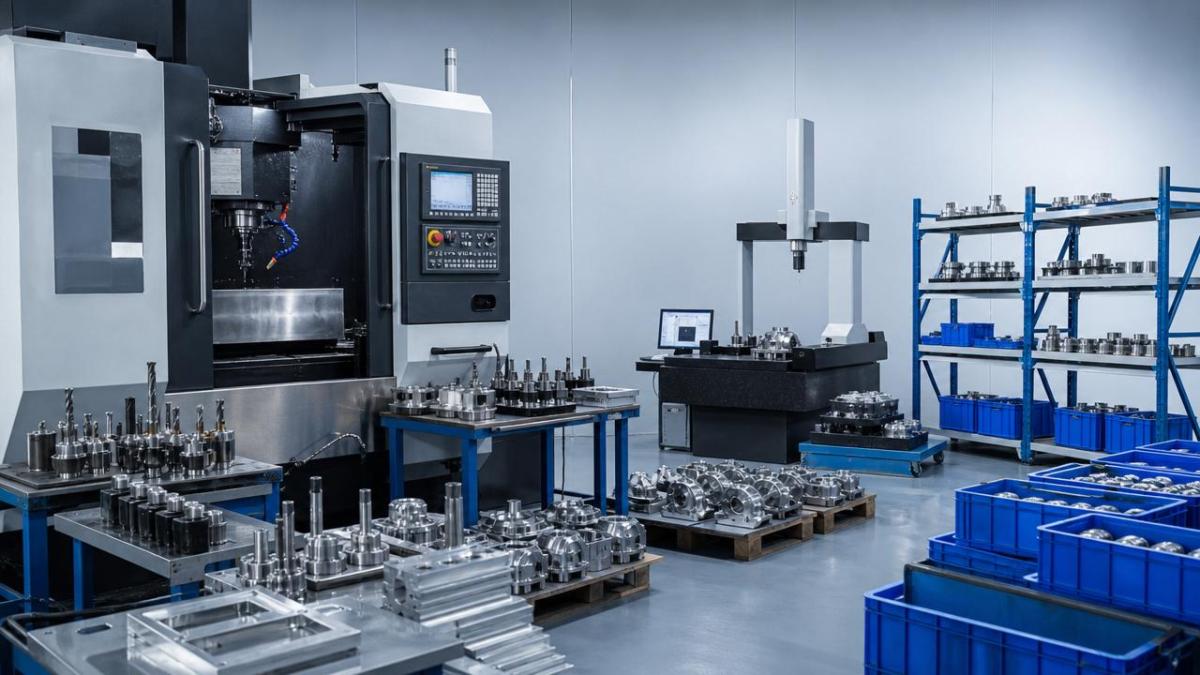
Core bottlenecks in the Production Process that software alone cannot fix
1. Hard machine capacity limits
If demand exceeds available spindle time, the Production Process is physically constrained. Better dashboards may improve prioritization, but they do not create extra machine hours. This is common in aerospace parts, automotive precision components, and energy equipment where high-mix orders compete for the same critical machine tool. The management task is to compare required capacity, real uptime, preventive maintenance windows, and scrap-related rework load.
2. Tooling and fixture limitations
A Production Process often slows because fixtures are not modular enough, clamping causes repositioning errors, or tooling access limits feed optimization. In multi-axis machining, poor fixture strategy can cancel the benefit of expensive equipment. Software can document these issues, but only process redesign, tooling upgrades, or standardization can remove them.
3. Engineering change instability
Frequent drawing revisions, unclear tolerances, and late BOM updates create a hidden Production Process bottleneck. Teams may think the issue is document control software, but the real cause is governance. If engineering, production, and quality do not share a disciplined release sequence, even the best digital workflow will circulate confusion faster.
4. Inadequate process planning
Poor routing logic, unrealistic batching rules, and weak setup planning damage throughput. For example, combining urgent low-volume prototypes with long-run production on the same machine may look efficient in a system, but it creates interruptions that reduce total output. A sustainable Production Process needs planning rules aligned with actual manufacturing behavior.
5. Skills gaps on the shop floor
CAM programs and machine data platforms cannot replace the judgment of experienced machinists, setup technicians, and maintenance personnel. If operators cannot diagnose chatter, thermal drift, tool wear patterns, or fixture alignment issues, the Production Process remains fragile. Training, work standards, and technical mentoring are often more valuable than another analytics layer.
6. Maintenance and reliability issues
Unplanned downtime is one of the most misdiagnosed causes of Production Process delay. Teams often report planning failure when the deeper issue is spindle alarm frequency, hydraulic instability, lubrication inconsistency, or aging control hardware. Predictive tools help only if the maintenance response process is mature enough to act on the alerts.
A practical decision table for project managers
Use the following decision guide to determine whether your Production Process problem is software-led, process-led, or capacity-led.
What to check by scenario: high-mix, tight-tolerance, and urgent delivery environments
High-mix CNC production
In high-mix environments, the Production Process usually suffers from setup frequency rather than pure cycle time. Managers should prioritize fixture standardization, tool presetting, offline programming, and part family grouping. If every order is treated as unique, software scheduling will remain unstable because the physical system never reaches rhythm.
Tight-tolerance precision manufacturing
For close-tolerance work, quality gates can become the real bottleneck. Thermal behavior, gauge repeatability, environmental control, and first-article approval speed matter as much as machine capability. A Production Process in this scenario must be judged by process capability and release discipline, not only by machine utilization.
Urgent delivery or recovery mode
When a plant is recovering from backlog, overloading the schedule often makes the Production Process worse. Priority orders interrupt tool plans, maintenance gets deferred, and operators lose sequence discipline. In recovery mode, fewer active jobs, clearer queue rules, and visible bottleneck protection usually outperform broad rescheduling efforts.
Commonly overlooked risks that distort Production Process decisions
- Using average cycle time instead of actual cycle time by part family, material, and tolerance class.
- Ignoring queue time between machining, deburring, washing, inspection, and assembly.
- Treating engineering changes as administrative events rather than throughput disruptions.
- Assuming that automation removes the need for skilled troubleshooting and setup knowledge.
- Failing to distinguish a data visibility gap from a true Production Process constraint.
- Optimizing local KPIs such as machine utilization while customer due-date performance declines.
Execution plan: how to improve the Production Process without defaulting to a software purchase
- Map the constrained resource. Identify the one step that governs throughput, whether it is a specific CNC machine, inspection cell, setup team, or approval process.
- Collect one week of real operating data. Include setup time, micro-stops, tool changes, quality holds, rework, and waiting time between operations.
- Separate software symptoms from physical causes. Ask whether the issue would still exist if every screen updated perfectly in real time.
- Standardize what repeats. Focus on fixture interfaces, tool libraries, setup sheets, inspection plans, and engineering release rules.
- Protect the bottleneck. Avoid inserting noncritical jobs, unplanned experiments, or late engineering changes into the constrained Production Process step.
- Upgrade software only after process rules are stable. Digital tools generate the strongest return when the underlying workflow is already disciplined.
Final guidance for managers preparing the next improvement step
For project leaders in CNC machining, machine tools, and automated production lines, the key lesson is simple: a Production Process bottleneck is often operational before it is digital. Software is valuable for coordination, traceability, and visibility, but it cannot by itself solve machine overload, fixture weakness, tool instability, poor planning logic, or skill shortages.
If your team is preparing for improvement, prioritize a clear fact base. Confirm current capacity, actual setup losses, bottleneck equipment, quality gate delays, engineering change frequency, and staffing coverage by shift. Then compare those findings against delivery targets, budget limits, and expansion plans. That sequence leads to better decisions than starting with a system replacement discussion.
If you need to assess process fit, investment timing, delivery risk, or production scalability, the most useful first conversation should cover part types, tolerances, machine loading, tooling strategy, inspection flow, expected output, and cross-team responsibilities. Those inputs will reveal whether the next step should be process redesign, equipment balancing, targeted automation, or software support built on a stable manufacturing foundation.
PREVIOUS ARTICLE
NEXT ARTICLE
Recommended for You
![]() ANVISA New Rule: Portuguese Biocompatibility Labels for Medical CNC Machines in BrazilManufacturing Policy Research Center
ANVISA New Rule: Portuguese Biocompatibility Labels for Medical CNC Machines in BrazilManufacturing Policy Research Center![]() EMO Hannover 2027 Booth Booking Opens: China AI-Machining Pavilion LaunchesGlobal Machine Tool Trade Research Center
EMO Hannover 2027 Booth Booking Opens: China AI-Machining Pavilion LaunchesGlobal Machine Tool Trade Research Center![]() KATS Updates KC Rules: CNC Cybersecurity Modules Must Meet IEC 62443-4-2Manufacturing Policy Research Center
KATS Updates KC Rules: CNC Cybersecurity Modules Must Meet IEC 62443-4-2Manufacturing Policy Research Center![]() Shanghai Port Launches Green Clearance Channel for CNC EquipmentManufacturing Market Research Center
Shanghai Port Launches Green Clearance Channel for CNC EquipmentManufacturing Market Research Center![]() ISO 23218-3:2026 Published: CNC Digital Twin Interoperability StandardCNC Machining Technology Center
ISO 23218-3:2026 Published: CNC Digital Twin Interoperability StandardCNC Machining Technology Center![]() Vietnam Cuts CNC Equipment Import Tariff to 3.8% from June 2026Global Machine Tool Trade Research Center
Vietnam Cuts CNC Equipment Import Tariff to 3.8% from June 2026Global Machine Tool Trade Research Center


Aris Katos
Future of Carbide Coatings
15+ years in precision manufacturing systems. Specialized in high-speed milling and aerospace grade alloy processing.
▶
Production Process bottlenecks that software alone cannot fixCNC Machining Technology Center▶
Metal machining costs that are easy to miss during quotingCNC Machining Technology Center▶
Production Process Delays Usually Start Before Machining BeginsCNC Machining Technology Center▶
High Precision Lathe Claims That Need Closer VerificationCNC Machining Technology Center▶
CNC Programming errors that keep repeating on similar partsCNC Machining Technology Center
Mastering 5-Axis Workholding Strategies
Join our technical panel on Nov 15th to learn about reducing vibrations in thin-wall components.

Providing you with integrated sanding solutions
Before-sales and after-sales services
Comprehensive technical support