• Global CNC market projected to reach $128B by 2028 • New EU trade regulations for precision tooling components • Aerospace deman
NYSE: CNC +1.2%LME: STEEL -0.4%

Common Shaft Parts defects and how to avoid them
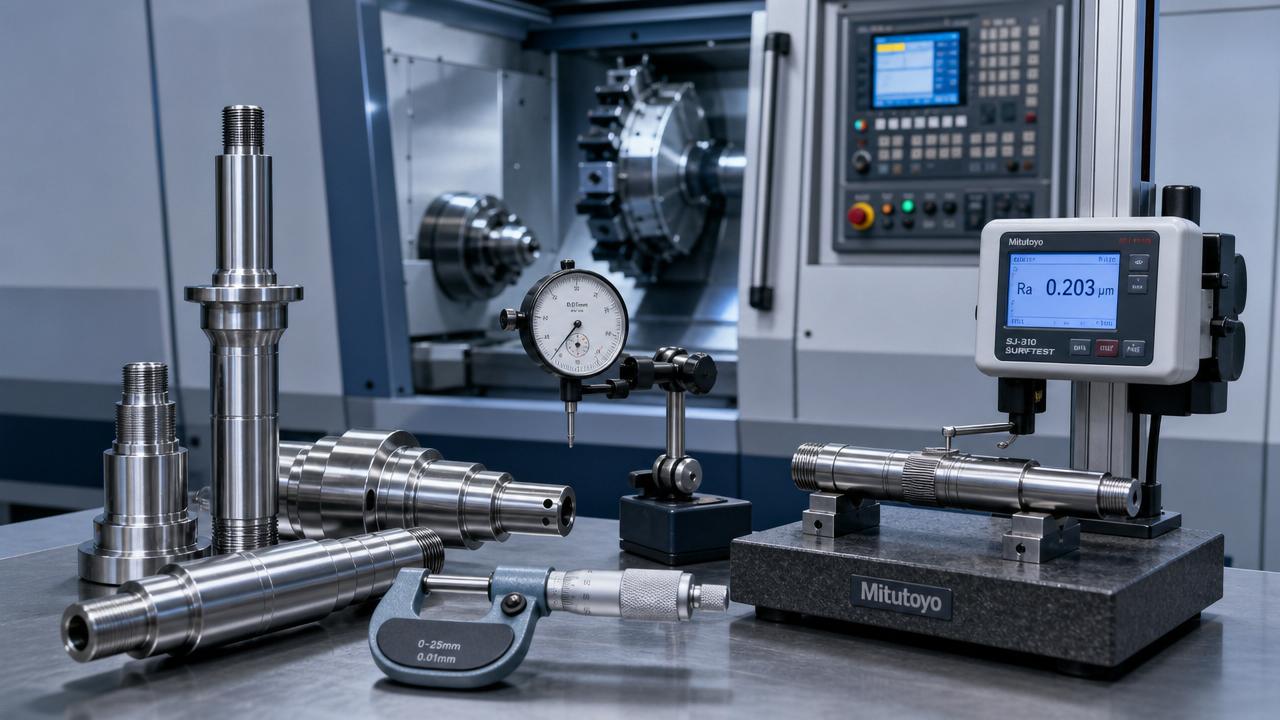
Shaft Parts defects can lead to dimensional errors, premature wear, vibration, and even serious safety risks in automated production. For quality control and safety management teams, understanding the most common defect types and their root causes is essential to maintaining stable machining performance and reducing costly failures. This article outlines key issues and practical prevention methods to support safer, more reliable manufacturing.
In CNC turning, multi-axis machining, and automated assembly environments, shaft components often work under tight tolerances such as ±0.01 mm to ±0.05 mm. Even small deviations can affect bearing fit, transmission stability, sealing performance, and operator safety.
For quality control personnel and safety managers, the challenge is not only detecting nonconforming Shaft Parts after machining, but also building a prevention system that covers material inspection, process control, measurement, storage, and traceability across every production stage.
Why Shaft Parts Defects Matter in Precision Manufacturing
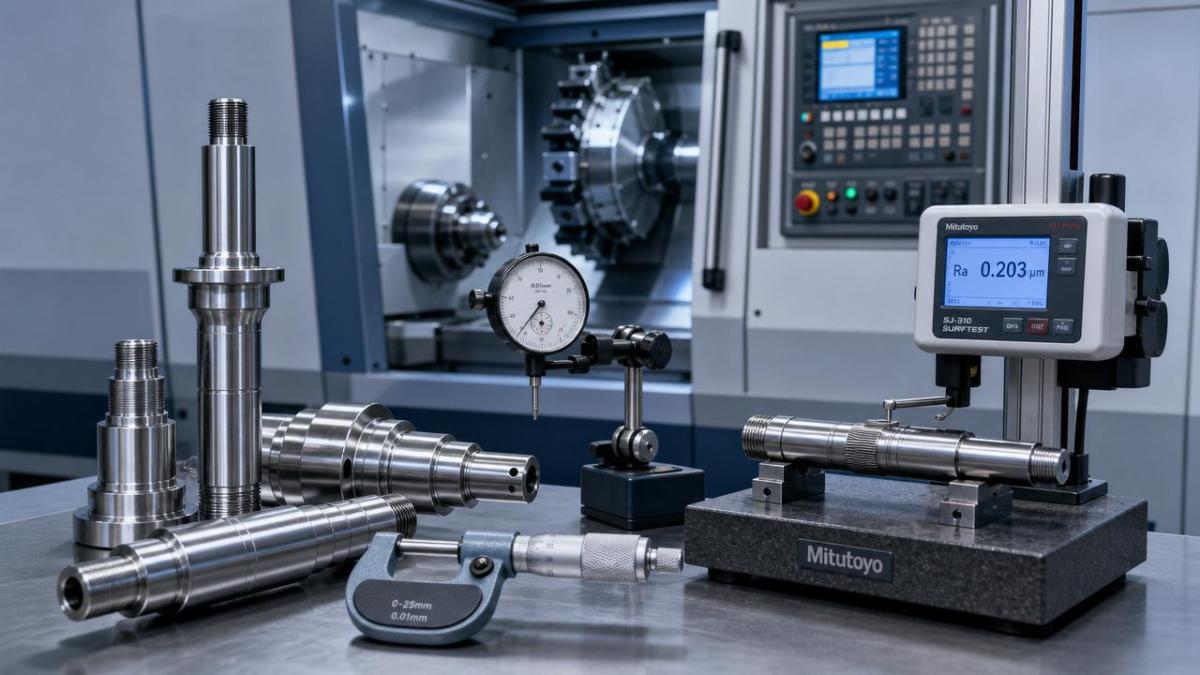
Shaft Parts are widely used in motors, pumps, gearboxes, spindles, robotic joints, conveyors, and energy equipment. In many applications, one defective shaft can stop a complete line, delay delivery by 24–72 hours, or trigger unplanned maintenance across several linked machines.
In automated production, rotating parts usually operate at speeds from a few hundred to several thousand rpm. At those conditions, straightness error, imbalance, poor surface finish, or heat-treatment distortion can quickly develop into noise, vibration, elevated temperature, and accelerated fatigue.
Typical quality and safety consequences
- Dimensional mismatch causing loose fit or excessive interference
- Bearing seat wear caused by roughness outside Ra 0.8–1.6 μm targets
- Runout issues leading to vibration and unstable rotation
- Crack initiation at keyways, shoulders, fillets, or threaded zones
- Unexpected downtime that affects OEE, delivery schedules, and safety risk exposure
Why defects are increasing in modern production
As manufacturers shift toward higher automation, shorter lead times, and mixed-batch production, Shaft Parts are often processed with more complex geometries and fewer buffers for inspection. A line running 2 or 3 shifts per day has less tolerance for late defect discovery.
At the same time, global sourcing of raw materials, subcontracted heat treatment, and cross-border supply chains create more variation. Without a disciplined control plan, defects can pass from one process to the next and become expensive field failures rather than manageable in-process corrections.
The Most Common Shaft Parts Defects and Their Root Causes
The defect pattern in Shaft Parts usually falls into a manageable set of categories. The key is linking each visible problem to upstream causes such as material inconsistency, fixture instability, incorrect cutting parameters, thermal stress, or poor handling after machining.
1. Dimensional out-of-tolerance
Diameter oversize, undersize, incorrect shoulder length, and tolerance stack-up are among the most frequent issues. In shaft manufacturing, a deviation of only 0.02 mm may already affect bearing assembly, coupling alignment, or oil seal performance.
Common causes
- Tool wear not monitored at fixed intervals, such as every 50–100 pieces
- Thermal growth of machine spindle or workpiece during long cycles
- Inadequate chucking force or fixture repeatability
- Incorrect offset compensation after tool change
2. Runout, straightness, and concentricity errors
Runout defects often appear in long or slender Shaft Parts where the length-to-diameter ratio exceeds 8:1 or 10:1. Such parts are more vulnerable to deflection during turning, grinding, or heat treatment.
Common causes
- Insufficient support from centers, steady rests, or tailstock
- Poor blank straightness before machining
- Residual stress release after rough machining
- Improper balancing of multi-operation setups
3. Surface roughness and machining marks
Surface defects reduce fatigue life and create friction-related wear. For mating surfaces, roughness outside target ranges such as Ra 0.4 μm, 0.8 μm, or 1.6 μm can directly influence lubrication film stability and contact stress.
Common causes
- Incorrect cutting speed, feed, or nose radius selection
- Built-up edge due to poor coolant delivery
- Tool vibration or spindle instability
- Secondary damage during transport, stacking, or deburring
The table below summarizes high-frequency Shaft Parts defects, how they are usually detected, and what quality and safety teams should review first when deviations appear.
For most factories, the highest-risk defects are not always the most visible ones. A shaft may look acceptable after final turning, yet hidden stress, slight runout, or localized burning can still shorten service life by a significant margin once the part enters high-speed rotation.
4. Cracks, burns, and heat-treatment distortion
When Shaft Parts require hardness levels such as HRC 28–32, HRC 40–45, or higher depending on application, distortion risk increases. Problems may emerge after quenching, tempering, induction hardening, or grinding of hardened surfaces.
Common causes
- Uneven heating or cooling across shaft sections
- Sharp corner transitions with stress concentration
- Excessive grinding heat causing temper burn
- Material cleanliness issues or prior microcracks in the blank
5. Burrs, edge damage, and contamination
These may appear minor, but in automated assembly, burrs can block insertion, cut seals, contaminate bearings, or create handling hazards. Fine chips trapped in oil holes or keyways are especially critical in hydraulic, motor, and precision transmission systems.
How to Prevent Shaft Parts Defects Before They Reach Final Inspection
Prevention is more effective than sorting. The best-performing CNC shops usually control Shaft Parts quality through a layered method: incoming material approval, first-article validation, in-process monitoring, final inspection, and feedback from assembly or field service.
Build control from raw material to shipment
- Verify material grade, hardness condition, and blank straightness before release.
- Check chucking datum, center holes, and fixture repeatability at setup stage.
- Define tool change intervals based on actual wear trends, not operator judgment alone.
- Use in-process inspection every 10, 20, or 50 parts depending on risk level.
- Protect finished surfaces with trays, sleeves, separators, and rust prevention measures.
Parameter and process recommendations
Control plans should be tailored to shaft geometry, material, and end use. Long, thin, hardened, or multi-step Shaft Parts require stricter monitoring than short and simple parts. Safety-sensitive sectors such as automotive, aerospace support equipment, and energy machinery should use tighter escalation rules.
The following table gives a practical framework for preventing typical defects through process control, inspection frequency, and shop-floor handling discipline.
This type of matrix helps QC and safety teams move from reactive sorting to planned prevention. It is also useful during supplier audits because it connects each control stage to a specific production risk rather than relying on broad quality claims.
Inspection tools and response timing
Not all defects require the same inspection method. Critical shaft diameters may need 100% gauging, while roughness, hardness, and concentricity can be checked by sampling if the process capability is stable. A practical reaction window is to stop and review the process within 15–30 minutes after an abnormal trend is detected.
For high-risk Shaft Parts, many manufacturers use a 3-level response system: operator adjustment for early drift, quality engineer review for repeated deviation, and production hold for confirmed special-cause variation. This prevents small problems from scaling into large lot rejections.
What Quality and Safety Teams Should Review in Supplier or Internal Audits
Whether Shaft Parts are produced in-house or sourced from external machine shops, audit discipline is essential. A capable supplier should demonstrate not only machining capacity, but also process consistency, inspection reliability, and documented control of nonconforming material.
Key audit checkpoints
- Are critical dimensions, runout limits, and roughness targets clearly defined on drawings and control plans?
- Is there a stable calibration system for micrometers, indicators, CMMs, and roughness instruments?
- Are heat-treatment and grinding operations traceable by batch, date, and operator?
- Is nonconforming Shaft Parts segregation physical, visible, and documented within 1 shift?
- Are packaging methods suitable for long shafts, fine-finished journals, and corrosion-sensitive surfaces?
Common audit red flags
Typical warning signs include mixed accepted and rejected parts in one container, no wear-based tool replacement standard, unverified fixture repeatability, and no record of first-article approval after setup changes. Each of these issues can directly affect Shaft Parts consistency and downstream safety.
Another red flag is relying only on final inspection. If defects are discovered after all operations are complete, the cost of rework, scrap, and delayed shipment can multiply by 3 to 5 times compared with detection during roughing or semi-finishing stages.
Practical FAQ for Reducing Shaft Parts Quality Risk
Many recurring questions from production teams, buyers, and safety coordinators revolve around where to focus limited inspection resources. The answer depends on part function, batch size, process stability, and the cost of field failure.
Which defects should be treated as critical?
Critical defects usually include cracks, severe runout, wrong bearing-seat size, incorrect hardness, and contamination in functional holes or grooves. These issues can affect rotating stability, assembly integrity, or personnel safety and should trigger immediate containment.
How often should Shaft Parts be inspected during production?
There is no single frequency for all cases. A common approach is first-piece approval, last-piece confirmation, and in-process checks every 10–50 parts depending on Cp/Cpk, machine stability, and defect history. High-speed or safety-related applications often require tighter sampling.
What is the biggest mistake factories make?
The biggest mistake is treating Shaft Parts as simple turned items rather than functional rotating components. When teams focus only on nominal size and ignore straightness, residual stress, roughness, edge condition, and storage protection, hidden failures remain in the process.
Reliable Shaft Parts quality depends on disciplined process control, fast detection, and cross-functional coordination between machining, inspection, maintenance, and safety management. For manufacturers serving automotive, aerospace support, electronics, or energy equipment markets, defect prevention is not only a quality target but also a business continuity requirement.
If you need help evaluating shaft manufacturing risks, improving supplier control points, or selecting a more stable CNC machining solution for precision Shaft Parts, contact us today to discuss your application, request a tailored review, or learn more about practical quality-focused manufacturing solutions.
NEXT ARTICLE
Recommended for You
![]() China's Energy Storage Sector Faces 'Advanced Shortage, Outdated Surplus'Machine Tool Industry Editorial Team
China's Energy Storage Sector Faces 'Advanced Shortage, Outdated Surplus'Machine Tool Industry Editorial Team![]() Top 50 Cosmetics Brands’ Retail Sales Up 11.56%, Boosting Demand for High-Precision CNC EquipmentManufacturing Market Research Center
Top 50 Cosmetics Brands’ Retail Sales Up 11.56%, Boosting Demand for High-Precision CNC EquipmentManufacturing Market Research Center![]() Home Service Skills Hub Launches, Boosting Robot Export TrainingMachine Tool Industry Editorial Team
Home Service Skills Hub Launches, Boosting Robot Export TrainingMachine Tool Industry Editorial Team![]() Steel Structure Mezzanine Tech Moves Beyond 'Adequate'CNC Machining Technology Center
Steel Structure Mezzanine Tech Moves Beyond 'Adequate'CNC Machining Technology Center![]() Fireproof Cable Tray Industry Shifts to High-Performance CompositesManufacturing Policy Research Center
Fireproof Cable Tray Industry Shifts to High-Performance CompositesManufacturing Policy Research Center![]() Foil Winding Machines Shift to Digital Servo DrivesMachine Tool Industry Editorial Team
Foil Winding Machines Shift to Digital Servo DrivesMachine Tool Industry Editorial Team


Aris Katos
Future of Carbide Coatings
15+ years in precision manufacturing systems. Specialized in high-speed milling and aerospace grade alloy processing.
▶
Common Shaft Parts defects and how to avoid themCNC Machining Technology Center▶
Global Power Demand Growth Hits 3%; Data Center Expansion Drives Precision Machining NeedsCNC Machining Technology Center▶
When CNC Milling Beats Other Methods for Thin-Wall PartsCNC Machining Technology Center▶
Shaft Parts Quality Issues Often Linked to Hidden Runout ErrorsCNC Machining Technology Center▶
Are Shaft Parts Failing Due to Material Choice or MachiningCNC Machining Technology Center
Mastering 5-Axis Workholding Strategies
Join our technical panel on Nov 15th to learn about reducing vibrations in thin-wall components.

Providing you with integrated sanding solutions
Before-sales and after-sales services
Comprehensive technical support