• Global CNC market projected to reach $128B by 2028 • New EU trade regulations for precision tooling components • Aerospace deman
NYSE: CNC +1.2%LME: STEEL -0.4%

Industrial turning accuracy drops for reasons beyond tool wear
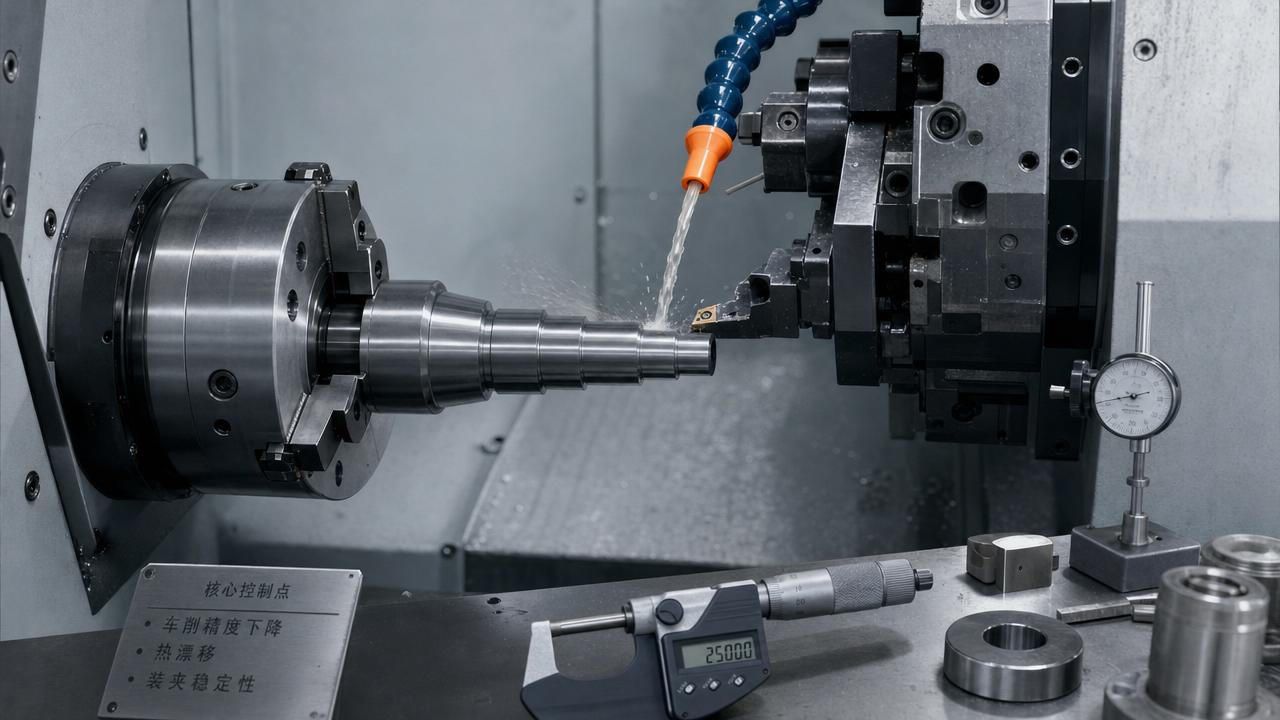
When industrial turning accuracy begins to decline, tool wear is often the first suspect—but it is rarely the only one. For technical evaluators, hidden factors such as spindle thermal drift, workholding instability, machine geometry errors, coolant inconsistency, and process parameter mismatch can all undermine dimensional control. Understanding these broader causes is essential for improving part quality, reducing scrap, and making more reliable machining assessments.
In modern CNC machining, especially across automotive, aerospace, energy equipment, and electronics production, even a deviation of 0.01 mm to 0.03 mm can shift a process from stable output to repeated correction. For teams responsible for machine assessment, process validation, or supplier qualification, the key question is not whether turning accuracy is falling, but why it is happening and how quickly the root cause can be isolated.
Industrial turning performance depends on the interaction of the machine tool, spindle system, chucking method, toolpath strategy, material behavior, and shop-floor environment. A technically sound evaluation therefore requires more than checking insert condition. It requires a structured view of machine capability, thermal behavior, fixture repeatability, coolant delivery, and parameter consistency over a full production cycle.
Why industrial turning accuracy falls even when tools still look usable
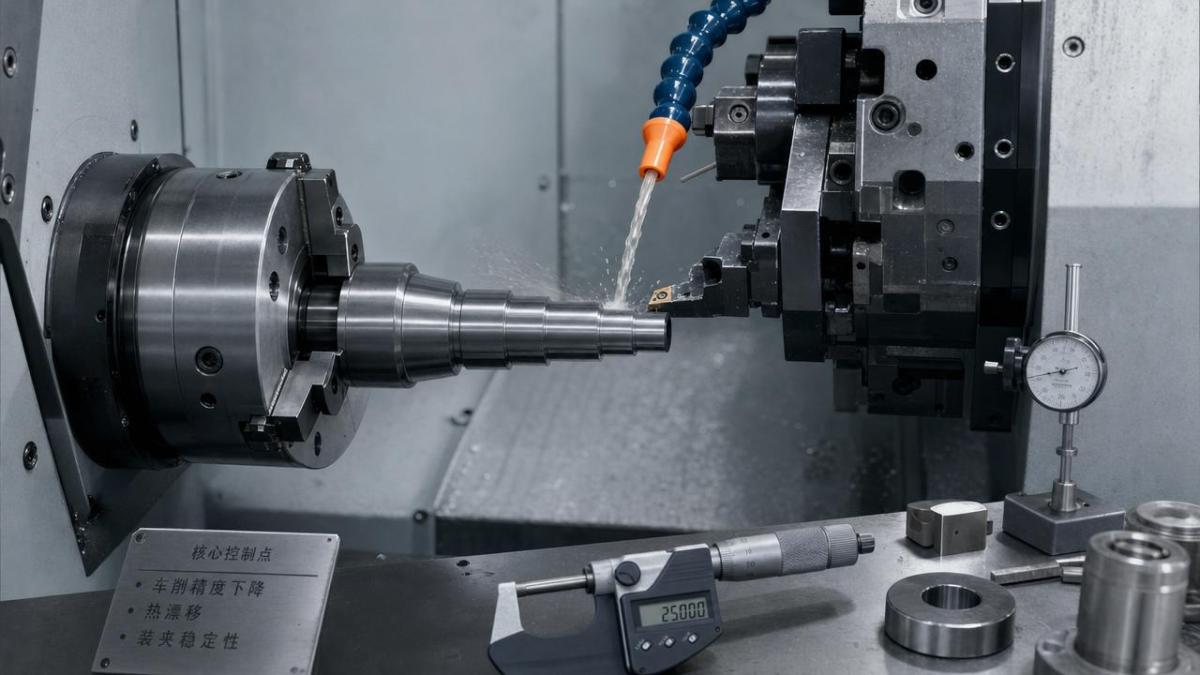
In many production cells, industrial turning errors first appear as drifting diameters, unstable surface finish, taper variation, or inconsistent roundness after 20 to 50 parts. If insert wear is within expected limits, the evaluator should examine whether the process is being affected by thermal, mechanical, or setup-related change rather than cutting edge degradation alone.
Spindle thermal drift and machine warm-up behavior
A spindle does not reach stable operating condition immediately after startup. Depending on spindle speed, bearing design, and ambient temperature, thermal growth may continue for 30 to 90 minutes. In precision industrial turning, this can create axial or radial movement large enough to affect shoulder location, concentricity, and diameter control.
Thermal drift becomes more visible when production shifts between low-load and high-load cycles, or when the first batch is run before thermal equilibrium is established. Evaluators should compare dimensions from part 1, part 10, and part 40 under identical conditions. A repeating pattern often points to heat-related movement rather than insert failure.
Workholding instability and clamping variation
Chuck pressure, jaw condition, clamping length, and workpiece stiffness directly influence turning results. A shaft with 3×D unsupported length behaves differently from one supported by a tailstock or steady rest. If the clamping force is too low, micro-slip can occur; if too high, thin-wall parts may distort before or during cutting.
This issue is common in mixed production where one machine handles several diameters and materials in the same shift. Changing from carbon steel to stainless steel, or from solid bar to near-net forgings, can alter clamping response enough to introduce repeatability loss of 0.02 mm or more without any obvious sign at the tool tip.
Geometry, backlash, and axis condition
Machine geometry errors often build gradually. Ball screw wear, slideway friction changes, turret indexing deviation, and spindle nose runout may all contribute to declining accuracy. A machine can still complete production and hold loose tolerance bands while failing to maintain higher-precision industrial turning requirements in the ±0.01 mm to ±0.015 mm range.
Technical evaluators should review whether the inaccuracy is random or directional. Taper, repeated offset drift, and diameter deviation at one end of the part often indicate geometry-related causes. Surface chatter combined with size instability may also suggest bearing wear or dynamic rigidity loss rather than simple tool wear.
The table below helps separate common non-tool-wear causes by symptom pattern, which is useful during machine audits, first-article troubleshooting, or supplier capability assessment.
A useful pattern emerges from this comparison: when the symptom changes over time, temperature and clamping are strong suspects; when the symptom repeats in the same geometric direction, alignment and axis condition deserve priority. This distinction can reduce troubleshooting time from several shifts to a few targeted inspection steps.
Process variables that quietly erode industrial turning stability
Even a mechanically healthy machine can lose accuracy if process settings are not matched to material, toolholder stiffness, and production tempo. In industrial turning, a setup that performs well in 10 sample parts may become unstable in a batch of 300 if chip evacuation, coolant concentration, or offset control is inconsistent.
Coolant delivery, concentration, and thermal control
Coolant affects both heat removal and chip behavior. If concentration falls outside a typical operating band such as 6% to 10%, lubricity and thermal control can become uneven. Low pressure may fail to clear chips from the cutting zone, while poor nozzle alignment can create localized heating at the insert and work surface.
For precision industrial turning, evaluators should not only verify coolant type but also delivery consistency across the full cycle. Pressure fluctuation, tank contamination, and delayed maintenance often create part-to-part dimensional variation before anyone notices a visible problem in the machine enclosure.
Feeds, speeds, depth of cut, and toolpath mismatch
A parameter set copied from a previous job may not suit a different material lot, bar condition, or overhang length. Excessive cutting speed can accelerate heat input without immediate edge breakdown. Feed rates that are too low may promote rubbing, while overly aggressive depth of cut can increase deflection in slender parts or less rigid workholding arrangements.
A practical review should compare four variables together: spindle speed, feed per revolution, radial engagement, and unsupported part length. Looking at only one parameter often misses the interaction causing the loss of accuracy. This is especially important in multi-axis or sub-spindle operations where transfer alignment adds another source of variation.
Common evaluation checkpoints
- Confirm whether warm-up time is standardized at 20, 40, or 60 minutes before first-off inspection.
- Check chuck pressure settings and whether they change by material family or part wall thickness.
- Measure spindle runout and turret repeatability at scheduled intervals, such as every 3 or 6 months.
- Review coolant concentration, filtration condition, and nozzle targeting at least once per shift for critical parts.
- Compare actual cycle parameters with approved process sheets rather than operator memory.
The next table outlines process factors that often appear minor during setup but become major drivers of variation in serial production. This is particularly useful for technical evaluators comparing machine suppliers, contract manufacturers, or internal production lines.
These controls are not rigid rules for every machine, but they provide a realistic framework for evaluating industrial turning capability. When accuracy loss is investigated without process interval data, the diagnosis tends to remain subjective. Measured checkpoints create a more defensible technical conclusion.
A practical assessment method for technical evaluators
For technical assessment teams, the most effective approach is to use a layered review rather than jumping directly to corrective action. In industrial turning, a structured method helps separate machine limitations from setup errors and supplier discipline from isolated operator behavior.
Step-by-step diagnostic sequence
- Verify the measurement system first, including gauge calibration, probing method, and sampling position.
- Map the error pattern across at least 10 to 30 consecutive parts instead of reviewing only first-off and last-off data.
- Separate time-based drift from part-specific variation by recording cycle count, machine runtime, and ambient conditions.
- Inspect workholding condition, jaw wear, chuck pressure, and support method before replacing tooling.
- Review spindle condition, axis repeatability, backlash indicators, and machine geometry history.
- Confirm coolant concentration, pressure, and nozzle direction under actual cutting conditions.
- Only then adjust feeds, speeds, offsets, or insert strategy with traceable documentation.
What to ask when evaluating a supplier or production cell
When assessing external manufacturers or internal workshops, technical evaluators should look beyond nominal machine specifications. A turning center rated for high precision may still produce inconsistent results if maintenance intervals are unclear, chucking systems are poorly matched, or thermal stabilization routines are not standardized.
Useful questions include how often spindle accuracy is checked, whether process capability is reviewed by batch size, how fixture repeatability is validated, and what response time exists when diameter drift exceeds the control limit. In many B2B sourcing scenarios, these operational details are more revealing than a brochure-level machine list.
Red flags during technical review
- No documented warm-up procedure for precision parts with tolerances tighter than ±0.02 mm.
- Chuck jaws reused across multiple part families without contact verification or maintenance records.
- Offsets adjusted frequently by experience alone, with no trend chart or part history.
- Coolant managed reactively rather than by shift-based inspection and concentration control.
- Machine capability discussed only in terms of spindle power, not repeatability or stability over batch production.
In practical terms, industrial turning capability should be judged over a production window, not a single setup moment. A machine that holds tolerance for 5 samples but drifts after 80 minutes is not equivalent to one that remains stable over 300 pieces. This distinction matters for sourcing decisions, line balancing, and overall quality cost.
How to improve turning accuracy without overcorrecting the process
Once the main source of variation is identified, the best corrective plan is usually moderate and systematic. Overcompensation through aggressive offset changes, excessive clamping force, or repeated parameter edits often creates a second problem. Stable industrial turning comes from controlling the process window, not chasing every single measurement point.
Priority actions with the highest practical return
First, standardize warm-up and first-piece validation. Second, stabilize workholding through jaw maintenance, force verification, and part-specific contact review. Third, establish a measurement frequency matched to tolerance risk, such as every 20 parts for critical diameters and every 50 parts for non-critical features. Fourth, document approved parameter windows instead of relying on informal shop adjustments.
For lines producing shafts, sleeves, discs, or precision structural parts, these controls often deliver more improvement than changing insert grade alone. They also produce more reliable data for machine tool procurement, preventive maintenance planning, and supplier comparison across regions such as China, Germany, Japan, or South Korea, where equipment quality may be high but process discipline can still vary by facility.
Where digital monitoring adds value
Digital process monitoring can help when industrial turning cells run high mix or long unattended cycles. Tracking spindle load, temperature trend, cycle time deviation, and in-process gauging events provides earlier warning than final inspection alone. The most useful systems do not replace engineering judgment; they shorten the time needed to identify whether the issue is thermal, mechanical, or procedural.
For technical evaluators, the advantage is clearer evidence. Instead of debating whether accuracy loss came from operator practice or machine condition, trend data can show whether deviation began after a coolant drop, a setup change, or a prolonged high-speed cycle. That supports better maintenance decisions and more credible supplier qualification.
Industrial turning accuracy rarely declines for one reason alone. Tool wear matters, but it sits inside a larger system that includes spindle behavior, workholding integrity, machine geometry, coolant control, and parameter discipline. A disciplined assessment method helps technical teams reduce scrap, improve repeatability, and make more confident decisions about machines, processes, and suppliers.
If you are reviewing CNC lathes, machining centers, automated turning cells, or precision manufacturing partners, a structured accuracy evaluation can reveal risks before they become delivery or quality problems. To discuss process assessment priorities, compare machine capability factors, or obtain a tailored solution for industrial turning applications, contact us today and learn more about available manufacturing solutions.
PREVIOUS ARTICLE
Recommended for You
![]() Five Ministries Launch Joint Enforcement on EV Battery RecyclingManufacturing Policy Research Center
Five Ministries Launch Joint Enforcement on EV Battery RecyclingManufacturing Policy Research Center![]() Top 10 Future Industries Roadmap 2026 ReleasedManufacturing Market Research Center
Top 10 Future Industries Roadmap 2026 ReleasedManufacturing Market Research Center![]() Global Methanol-Electric Ecosystem Alliance LaunchedManufacturing Market Research Center
Global Methanol-Electric Ecosystem Alliance LaunchedManufacturing Market Research Center![]() ISO 23218-3:2026 Enters Force: CNC Digital Twin Interoperability Standard Goes GlobalCNC Machining Technology Center
ISO 23218-3:2026 Enters Force: CNC Digital Twin Interoperability Standard Goes GlobalCNC Machining Technology Center![]() ANVISA New Rule: Portuguese Biocompatibility Labels for Medical CNC EquipmentManufacturing Policy Research Center
ANVISA New Rule: Portuguese Biocompatibility Labels for Medical CNC EquipmentManufacturing Policy Research Center![]() KATS Updates KC Certification: CNC Cybersecurity Modules Must Comply with IEC 62443-4-2Manufacturing Policy Research Center
KATS Updates KC Certification: CNC Cybersecurity Modules Must Comply with IEC 62443-4-2Manufacturing Policy Research Center


Aris Katos
Future of Carbide Coatings
15+ years in precision manufacturing systems. Specialized in high-speed milling and aerospace grade alloy processing.
▶
Shaft Parts machining issues that affect fit long after deliveryCNC Machining Technology Center▶
Industrial turning accuracy drops for reasons beyond tool wearCNC Machining Technology Center▶
Metal machining costs that are easy to miss before quotingCNC Machining Technology Center▶
Shaft Parts machining defects that repeat across batchesCNC Machining Technology Center▶
Industrial turning accuracy issues that appear after long runsCNC Machining Technology Center
Mastering 5-Axis Workholding Strategies
Join our technical panel on Nov 15th to learn about reducing vibrations in thin-wall components.

Providing you with integrated sanding solutions
Before-sales and after-sales services
Comprehensive technical support