• Global CNC market projected to reach $128B by 2028 • New EU trade regulations for precision tooling components • Aerospace deman
NYSE: CNC +1.2%LME: STEEL -0.4%

Metal machining costs that are easy to miss before quoting

Before a quote moves forward, the visible price per part often gets more attention than the full cost structure behind it. In metal machining, that gap can become expensive. Setup hours, tool replacement frequency, material utilization, inspection effort, rework exposure, and post-processing needs are easy to underestimate during early evaluation. For CNC machining and precision manufacturing, where margins are shaped by both accuracy and throughput, a better understanding of these hidden cost drivers helps create more reliable quotes, fairer supplier comparisons, and stronger decisions across diverse production scenarios.
When quote complexity changes by scenario in metal machining
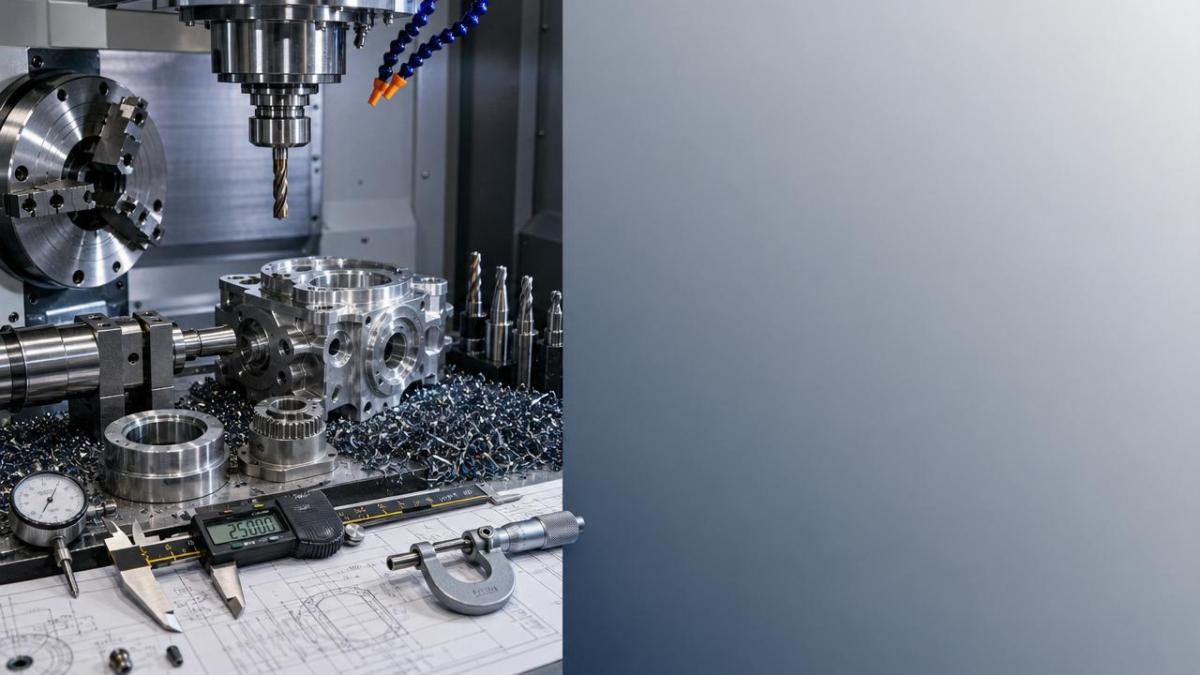
Not every metal machining quote should be judged by the same logic. A simple turned part for repeat production behaves very differently from a low-volume aerospace bracket, a tight-tolerance electronics housing, or a large structural energy component. The hidden costs in metal machining are often scenario-dependent: one project may be dominated by setup and programming time, while another is driven by scrap risk, tool wear, or inspection intensity.
This matters because modern CNC machine tools operate within a broader manufacturing ecosystem. Multi-axis machining centers, CNC lathes, automated fixtures, digital inspection systems, and secondary finishing lines all influence final cost. In global sourcing and international trade, the apparent difference between two metal machining quotes may reflect very different assumptions about process stability, machine capability, labor content, and quality control. Looking only at unit price can hide major downstream cost exposure.
Scenario 1: Prototype and low-volume metal machining often hide setup-heavy costs
In prototype and low-volume work, the largest hidden cost in metal machining is often not material or cycle time, but preparation. CAM programming, fixture design, first-article proving, machine changeover, and operator verification may represent a significant share of the total quote. If the part geometry requires multiple orientations or special soft jaws, the setup burden rises quickly even when the total order quantity is small.
Another common oversight is revision volatility. Early-stage parts are frequently updated after the first quote. Even minor drawing changes can affect tool paths, clamping strategy, stock size, and inspection requirements. In this scenario, accurate metal machining costing should include setup amortization logic, revision risk allowance, and clear assumptions around first-piece approval. A low initial quote without these protections may look competitive but become unstable after engineering changes.
Key judgment points
- How many setups are required for the full geometry?
- Does the quote include programming and proving time?
- Will drawing revisions trigger re-quotation?
- Is first-article inspection included or separate?
Scenario 2: Repeat production metal machining is sensitive to tooling, yield, and takt assumptions
For medium- to high-volume production, unit price becomes more meaningful, but hidden costs still remain. In this metal machining scenario, evaluators often miss the effect of tool life assumptions. If the quote is based on ideal cutting conditions but the actual material hardness varies, insert consumption may increase sharply. The same issue appears when features such as deep pockets, interrupted cuts, thin walls, or high surface finish requirements accelerate wear and reduce feed rates.
Material yield is another missed factor. The difference between buying bar, plate, forging, or near-net preform can significantly change machining time and scrap value. A quote may appear low because it assumes favorable raw stock nesting or minimal excess stock removal. Once production begins, excess chip generation, poor nesting efficiency, or unstable incoming stock can add hidden cost across thousands of parts. In repeat metal machining, small errors in cycle time or yield assumptions compound quickly.
Core checks for production quoting
- Expected tool life by material batch and geometry
- Raw material form and utilization rate
- Realistic machine uptime and operator attendance
- Planned scrap rate during ramp-up and steady production
Scenario 3: Tight-tolerance metal machining can shift cost from cutting to control
Some parts are not expensive because they take long to cut, but because they are difficult to hold within tolerance. In precision metal machining, dimensional stability, thermal control, machine calibration, in-process probing, and final inspection can outweigh pure spindle time. Quotes that focus only on machining minutes often miss the cost of process capability.
This is especially true for parts used in aerospace, electronics, automation systems, and high-performance assemblies. Geometric tolerances, coaxiality, flatness, burr control, and surface integrity may require slower finishing passes, specialized tooling, controlled measurement environments, and more documentation. The hidden cost of metal machining in this scenario lies in prevention: avoiding nonconformance is cheaper than sorting or remaking parts, but it must be built into the quote from the start.
Scenario 4: Large or complex parts add handling and secondary-operation risk
When the part is large, heavy, or geometrically complex, the quote should account for much more than machine capacity. Lifting, repositioning, custom fixturing, part distortion, and machine availability can all increase metal machining costs. A component that needs multiple machines, subcontract heat treatment, stress relief, or welding before final machining carries schedule risk and additional quality checkpoints.
Secondary operations are frequently underquoted. Deburring, coating, anodizing, plating, grinding, marking, cleaning, packaging, and logistics coordination can turn a seemingly simple metal machining project into a multi-step manufacturing route. If these steps are outsourced, hidden costs may include transport, supplier management, lead time buffers, and extra inspection after each handoff.
How hidden cost drivers differ across metal machining scenarios
Practical ways to improve scenario-fit quoting in metal machining
A stronger quote begins with scenario-fit assumptions instead of generic costing templates. In metal machining, the most effective approach is to separate recurring and non-recurring cost elements, identify quality-sensitive features, and define process boundaries before comparing suppliers or approving budgets.
- Request a cost breakdown that distinguishes setup, machining, tooling, inspection, finishing, and packaging.
- Confirm whether the quote assumes standard material stock or a special preform.
- Ask which tolerances or features drive slower cycle time in the metal machining process.
- Verify whether scrap, first-article approval, and revision changes are included.
- Check if secondary operations are in-house or subcontracted, and whether transport is priced.
- Match the quote to production stage: prototype, pilot run, ramp-up, or mature volume.
Common misjudgments that distort metal machining quotes
Several errors appear repeatedly in metal machining evaluations. One is treating all tolerances as equal, even though a few critical features may determine most of the process cost. Another is assuming that material price explains most quote variance, when in many CNC machining cases fixture design, tool access, and inspection burden have a larger effect.
A further mistake is comparing quotes that use different process routes. One supplier may machine from solid billet, while another expects a casting, forging, or pre-cut blank. The lower quote is not always directly comparable. Lead time assumptions also matter. Faster delivery in metal machining may require overtime, machine priority, or smaller batch sizes, each of which affects cost even if not clearly stated on the quotation sheet.
Documentation is another hidden area. PPAP-style records, material certifications, traceability, dimensional reports, and export packaging can carry real cost, especially in cross-border trade. If these requirements surface late, the original metal machining quote may no longer reflect the true delivery scope.
Next-step actions for more accurate metal machining decisions
Better metal machining decisions come from asking scenario-based questions before approving the number on the page. Review the part by production stage, tolerance sensitivity, material form, routing complexity, and secondary-process exposure. Then compare suppliers on assumption quality, not just final unit price.
A practical next step is to create a simple quote review checklist covering setup time, tool life, material yield, inspection scope, and outsourced operations. For CNC machining and precision manufacturing projects, this makes hidden costs visible earlier and improves consistency across global sourcing, technical evaluation, and project planning. In metal machining, the most useful quote is not the cheapest line item, but the one that best reflects the real process needed to deliver stable quality and reliable total cost.
PREVIOUS ARTICLE
Recommended for You
![]() Five Ministries Launch Joint Enforcement on EV Battery RecyclingManufacturing Policy Research Center
Five Ministries Launch Joint Enforcement on EV Battery RecyclingManufacturing Policy Research Center![]() Top 10 Future Industries Roadmap 2026 ReleasedManufacturing Market Research Center
Top 10 Future Industries Roadmap 2026 ReleasedManufacturing Market Research Center![]() Global Methanol-Electric Ecosystem Alliance LaunchedManufacturing Market Research Center
Global Methanol-Electric Ecosystem Alliance LaunchedManufacturing Market Research Center![]() ISO 23218-3:2026 Enters Force: CNC Digital Twin Interoperability Standard Goes GlobalCNC Machining Technology Center
ISO 23218-3:2026 Enters Force: CNC Digital Twin Interoperability Standard Goes GlobalCNC Machining Technology Center![]() ANVISA New Rule: Portuguese Biocompatibility Labels for Medical CNC EquipmentManufacturing Policy Research Center
ANVISA New Rule: Portuguese Biocompatibility Labels for Medical CNC EquipmentManufacturing Policy Research Center![]() KATS Updates KC Certification: CNC Cybersecurity Modules Must Comply with IEC 62443-4-2Manufacturing Policy Research Center
KATS Updates KC Certification: CNC Cybersecurity Modules Must Comply with IEC 62443-4-2Manufacturing Policy Research Center


Aris Katos
Future of Carbide Coatings
15+ years in precision manufacturing systems. Specialized in high-speed milling and aerospace grade alloy processing.
▶
Shaft Parts machining issues that affect fit long after deliveryCNC Machining Technology Center▶
Industrial turning accuracy drops for reasons beyond tool wearCNC Machining Technology Center▶
Metal machining costs that are easy to miss before quotingCNC Machining Technology Center▶
Shaft Parts machining defects that repeat across batchesCNC Machining Technology Center▶
Industrial turning accuracy issues that appear after long runsCNC Machining Technology Center
Mastering 5-Axis Workholding Strategies
Join our technical panel on Nov 15th to learn about reducing vibrations in thin-wall components.

Providing you with integrated sanding solutions
Before-sales and after-sales services
Comprehensive technical support