• Global CNC market projected to reach $128B by 2028 • New EU trade regulations for precision tooling components • Aerospace deman
NYSE: CNC +1.2%LME: STEEL -0.4%

CIMES 2026 Closes in Beijing: 1,300+ Exhibitors Showcase AI-Driven CNC Systems and Green Production Lines

The 16th China International Machine Tool Exhibition (CIMES) concluded on May 29, 2026, in Beijing’s Shunyi Exhibition Center—marking a pivotal industry event where evolving technical standards, energy efficiency requirements, and global procurement practices converged to reshape supply chain expectations for machine tool manufacturers and integrators.
Event Summary: Scale, Participants, and Key Launches
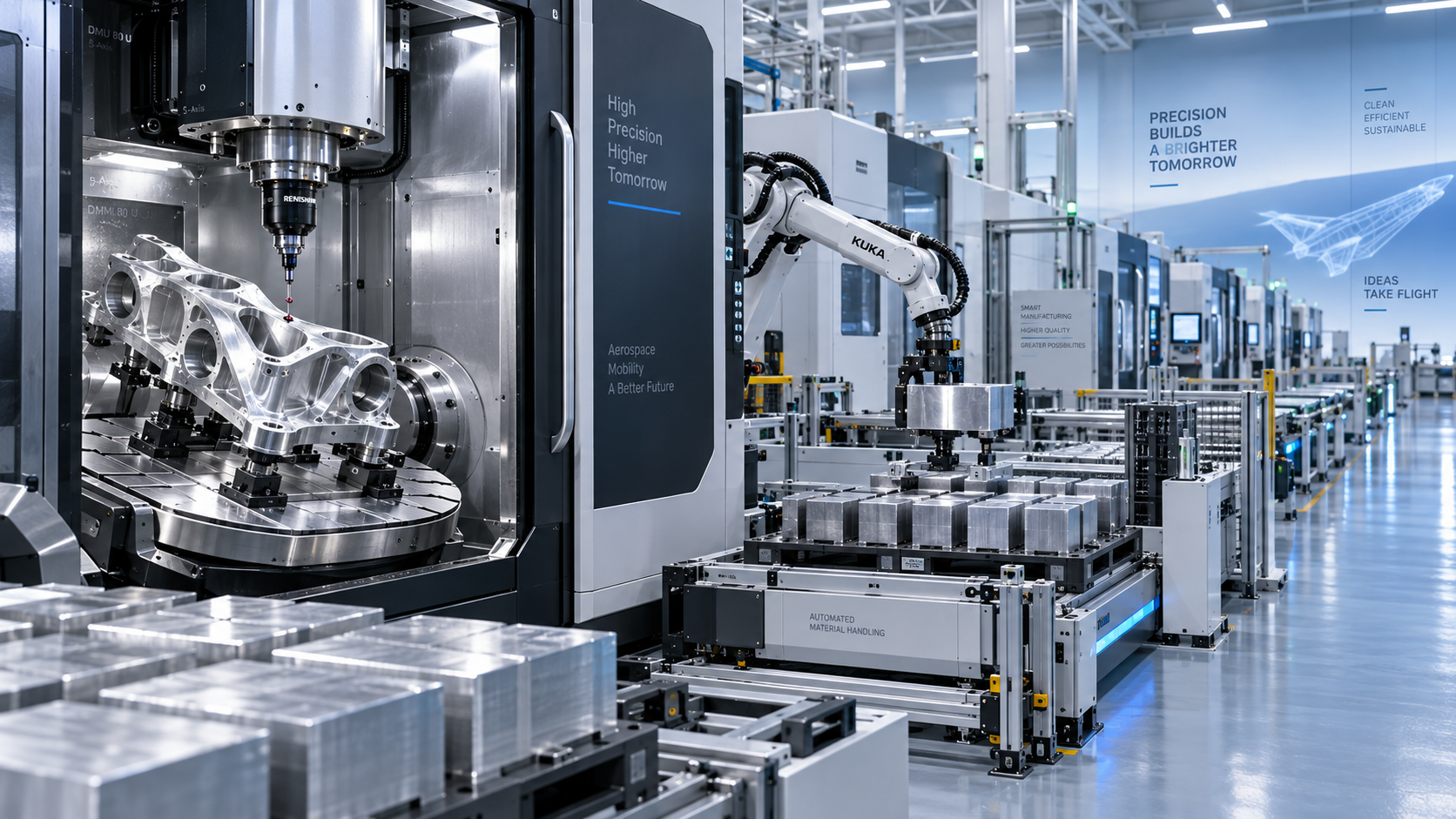
Held from May 25–29, 2026, CIMES occupied 120,000 square meters of exhibition space and hosted over 1,300 exhibitors. Global leaders—including DMG MORI (Germany), Mazak (Japan), and Shenyang Machine Tool—unveiled next-generation solutions: AI-integrated CNC control systems, five-axis laser hybrid machining centers, and energy-efficient precision grinding machines. More than 20 overseas buyer delegations attended the ‘Supply-Demand Matching Forum’, with particular focus from Middle Eastern and Southeast Asian purchasers on localized deployment of flexible production lines.
Impact Across Supply Chain Roles
Direct Trading Enterprises
These firms face intensified scrutiny on technical documentation alignment and delivery timelines, as international buyers increasingly require compatibility with local infrastructure, regulatory frameworks, and after-sales service protocols—especially for AI-enabled systems whose software updates and cybersecurity compliance may fall under new national digital industrial regulations.
Raw Material and Component Procurement Firms
With growing demand for high-efficiency motors, low-loss power electronics, and certified green materials in energy-saving machine tools, procurement enterprises must verify supplier conformity to updated environmental standards—such as revised RoHS or regional energy labeling mandates—and anticipate tighter traceability requirements for critical subsystems.
Contract Manufacturing and OEM Facilities
Manufacturers integrating AI-CNC platforms or laser-composite systems need to reassess validation procedures for functional safety (e.g., ISO 13849), real-time data handling, and interoperability with Industry 4.0 ecosystems—potentially triggering requalification of production lines under emerging smart factory certification schemes.
Supply Chain Service Providers
Logistics, calibration, and technical support providers must adapt to new service-level expectations—including remote diagnostics readiness, firmware update management, and cross-border spare parts traceability—driven by buyers’ emphasis on operational continuity and local maintenance capability in flexible line deployments.
Strategic Priorities for Enterprise Preparedness
Alignment with Evolving Technical Specifications
AI-CNC systems now require explicit documentation of algorithm training datasets, inference latency benchmarks, and fail-safe behavior under degraded network conditions—elements increasingly referenced in tender documents for public-sector and export-oriented projects.
Energy Efficiency Certification Readiness
New EU Ecodesign amendments and ASEAN energy labeling proposals are accelerating demand for third-party verified energy performance reports (e.g., ISO 50001-aligned testing) for precision grinding and machining equipment—making pre-certification a competitive prerequisite.
Localization Support Capability Assessment
Buyers from the Middle East and Southeast Asia prioritize modular, scalable line architectures with locally maintainable interfaces and multilingual HMI compliance—requiring suppliers to formalize localization roadmaps covering documentation, training, and service partner accreditation.
Export Documentation and Cybersecurity Compliance
As AI-integrated controllers involve data processing and cloud connectivity, exporters must prepare for expanded export control classifications (e.g., Wassenaar Arrangement Annex updates) and ensure adherence to destination-country cybersecurity standards for industrial control systems.
Industry Observation: Beyond the Show Floor
Analysis shows that CIMES 2026 signals a structural shift—not merely toward smarter machinery, but toward *compliance-by-design*. What deserves closer attention is how rapidly procurement criteria are incorporating sustainability verification, AI transparency, and local service sovereignty as non-negotiable elements—not just differentiators. Observably, the convergence of green manufacturing mandates, digital industrial policy, and regional trade facilitation initiatives is compressing the window between product launch and market-ready compliance. It is more appropriate to understand this as a systemic recalibration of qualification requirements across the entire value chain, rather than isolated updates to individual standards.
Conclusion: A Benchmark for Integrated Readiness
CIMES 2026 underscores that competitiveness in the global machine tool sector now hinges less on standalone performance metrics and more on holistic readiness: technical, environmental, regulatory, and service-oriented. Success will increasingly depend on proactive alignment—not reactive adaptation—to intersecting frameworks governing AI functionality, energy use, data governance, and local deployment viability.
Source Attribution
This article was generated exclusively from the provided title, event date (May 25, 2026), and summary description. Specific official source links were not provided in the input and should be verified continuously. Ongoing monitoring is recommended for final implementation guidelines related to AI system certification, regional green manufacturing incentives, tender specification revisions, and industry feedback on flexible line integration protocols.
Recommended for You
 How to Select a CNC Metal Lathe for Tight-Tolerance Shaft and Sleeve PartsCNC Machining Technology Center
 How to Select an Industrial Lathe for High-Volume Shaft ProductionMachine Tool Industry Editorial Team
 Selecting Machine Tools for Automotive Parts: Accuracy, Throughput, and AutomationMachine Tool Industry Editorial Team
 Industrial Machining: Selecting Processes for Tight-Tolerance Metal PartsCNC Machining Technology Center
 Manufacturing Technology Trends That Improve Throughput and Quality ControlManufacturing Market Research Center
 How to Design Cost-Effective Fixtures That Maintain Cycle Time in Mass ProductionCNC Machining Technology Center

Aris Katos
Future of Carbide Coatings
15+ years in precision manufacturing systems. Specialized in high-speed milling and aerospace grade alloy processing.
▶
How to Select a CNC Metal Lathe for Tight-Tolerance Shaft and Sleeve PartsCNC Machining Technology Center▶
How to Select an Industrial Lathe for High-Volume Shaft ProductionMachine Tool Industry Editorial Team▶
Selecting Machine Tools for Automotive Parts: Accuracy, Throughput, and AutomationMachine Tool Industry Editorial Team▶
Industrial Machining: Selecting Processes for Tight-Tolerance Metal PartsCNC Machining Technology Center▶
Manufacturing Technology Trends That Improve Throughput and Quality ControlManufacturing Market Research Center
Mastering 5-Axis Workholding Strategies
Join our technical panel on Nov 15th to learn about reducing vibrations in thin-wall components.

Providing you with integrated sanding solutions
Before-sales and after-sales services
Comprehensive technical support