• Global CNC market projected to reach $128B by 2028 • New EU trade regulations for precision tooling components • Aerospace deman
NYSE: CNC +1.2%LME: STEEL -0.4%

How to Evaluate a Shaft Parts Manufacturer in Japan for Quality, Lead Time, and Export Support
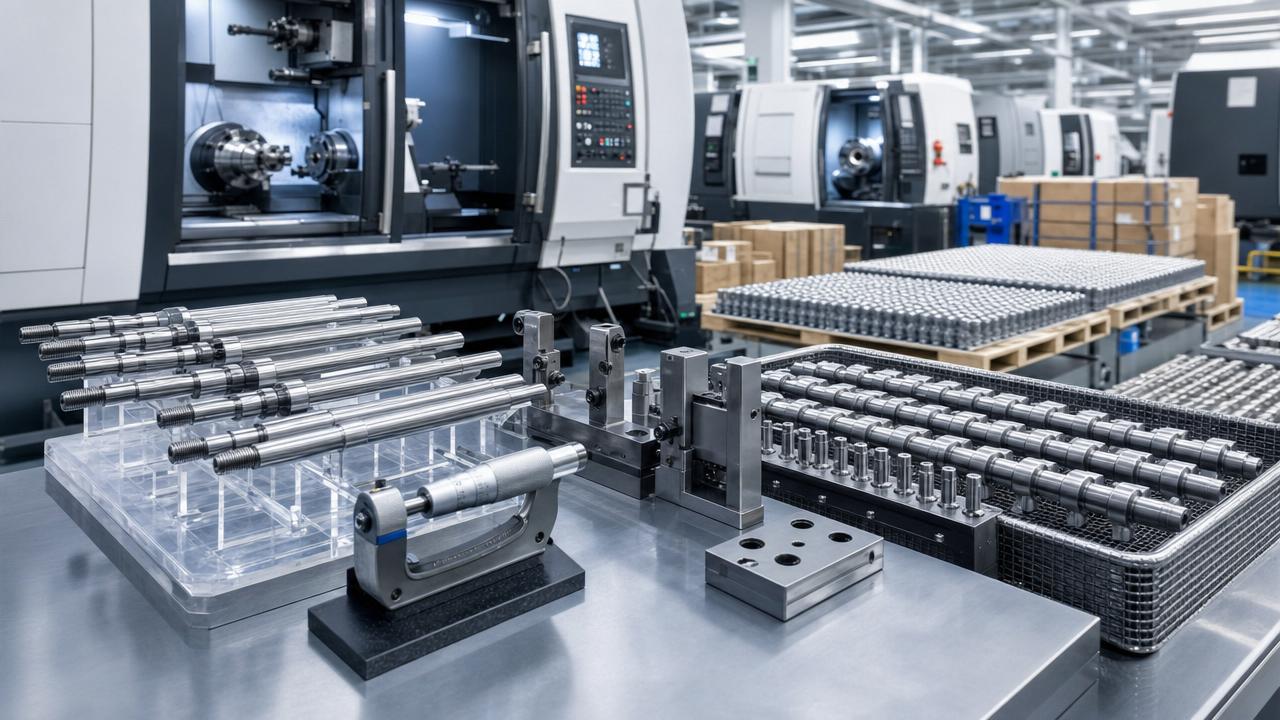
What should you look at first when choosing a Shaft Parts Manufacturer in Japan?
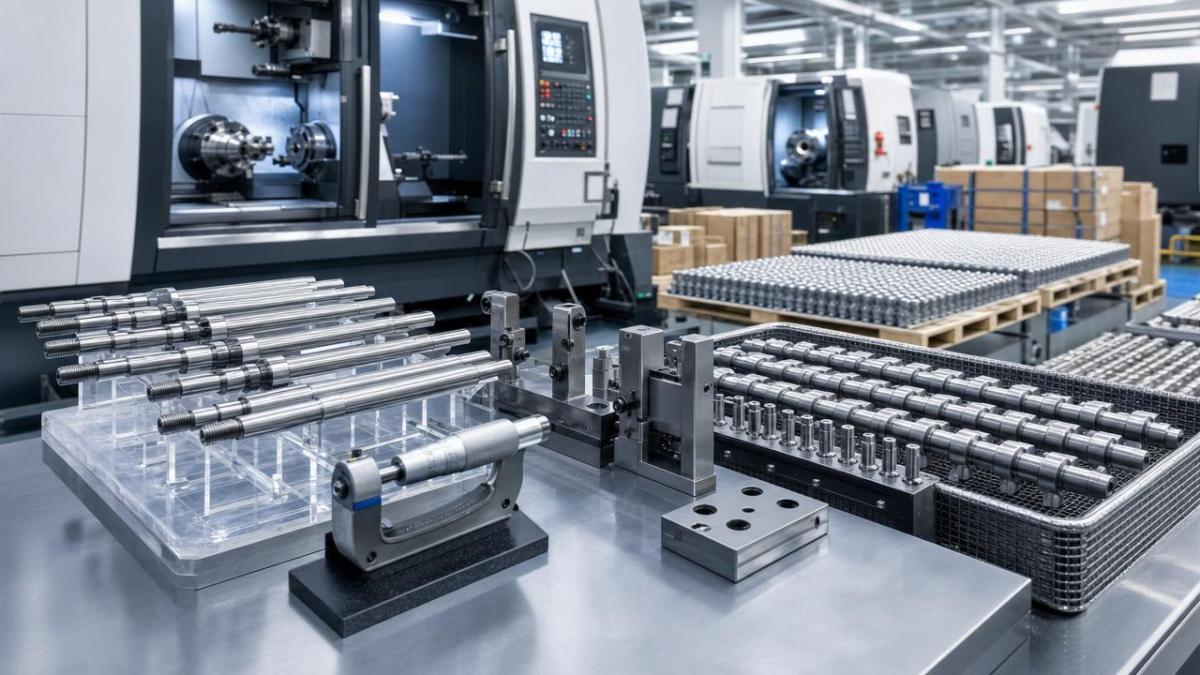
A good starting point is not price. It is process fit.
A Shaft Parts Manufacturer in Japan may have strong reputation, but that alone does not confirm suitability for your drawings, tolerances, batch size, or delivery model.
In precision manufacturing, shaft parts often serve critical roles in rotation, power transmission, alignment, and motion control.
That is why sourcing decisions affect more than one purchase order. They can influence assembly yield, field performance, and maintenance cost.
Japan remains an important reference point in the CNC machine tool industry.
Its industrial base is closely linked with high-precision lathes, machining centers, multi-axis systems, tooling, automation, and disciplined production management.
For that reason, many buyers explore a Shaft Parts Manufacturer in Japan when consistent accuracy and export reliability matter.
The practical question is simpler: can the supplier repeatedly make your shaft parts, ship them on time, and support cross-border business without friction?
That question should guide every later discussion on quality, lead time, and cost.
How do you tell whether machining quality is really dependable?
Dependable quality is usually visible in systems, not sales claims.
A capable Shaft Parts Manufacturer in Japan should explain how raw material is verified, how dimensions are controlled, and how process variation is handled.
Look beyond a generic statement like “strict inspection.” Ask what happens between first-piece approval and final shipment.
In real production, the most useful signs include process capability, gauge management, traceability, and reaction plans for nonconforming parts.
It also helps to confirm whether the supplier regularly machines stepped shafts, splined shafts, hollow shafts, or hardened precision shafts similar to your application.
A shop that supports automotive, robotics, energy equipment, or industrial automation often understands tighter control expectations.
- Request sample inspection reports with actual measured values, not only pass or fail marks.
- Check whether roundness, concentricity, surface roughness, and runout are measured in-house.
- Confirm heat treatment and plating control if the shaft part needs wear resistance or corrosion protection.
- Ask how engineering changes are recorded and communicated across production lots.
A reliable answer is usually specific, calm, and data-based.
If a Shaft Parts Manufacturer in Japan can discuss tooling wear, machine capability, and tolerance stack-up clearly, that is often a stronger quality signal than polished brochures.
What lead time questions matter more than the quoted number?
Quoted lead time is only the visible layer.
The more important issue is whether the lead time is stable when demand changes, material supply tightens, or revisions appear after sampling.
A Shaft Parts Manufacturer in Japan with solid delivery performance should explain capacity planning, shift structure, subcontracting scope, and bottleneck operations.
For shaft components, delays often come from material procurement, heat treatment queues, grinding schedules, or secondary finishing.
That means a short quote is less meaningful if outside processes are poorly coordinated.
One practical way to compare suppliers is to review their delivery logic side by side.
More often than not, delivery confidence comes from transparency.
When a Shaft Parts Manufacturer in Japan can separate machining time from waiting time, planning becomes more realistic and less reactive.
Does export support really change the total sourcing cost?
Yes, often more than buyers expect.
A technically capable supplier can still create hidden cost if export coordination is weak.
For international orders, documents, packaging, labeling, and communication speed directly affect customs clearance, warehouse receiving, and production continuity.
A Shaft Parts Manufacturer in Japan with export experience should be comfortable with packing lists, certificates, origin statements, inspection files, and shipment milestones.
It is also worth checking whether they understand anti-rust protection, shock-resistant packaging, and mixed shipment management for machined parts.
This matters because precision shafts can pass inspection but still fail at receipt due to transit corrosion or poor handling.
- Clarify Incoterms early and match them with your internal logistics process.
- Ask who prepares export documents and who answers customs or freight questions.
- Confirm response time across time zones, especially during shipment week.
- Review packaging photos for rust prevention, tray design, and part identification.
In practice, export support is not an extra service. It is part of supply reliability.
That is especially true in industries using CNC lathes, machining centers, automated lines, and high-precision assemblies where one missing shaft can stop an entire build schedule.
How can you compare suppliers without overfocusing on unit price?
Unit price matters, but isolated price comparison can be misleading.
A lower quote from one Shaft Parts Manufacturer in Japan may exclude inspection records, surface treatment control, export packaging, or engineering support.
A slightly higher quote may reduce rejection cost, emergency freight, and line stoppage risk.
A more useful approach is to compare total sourcing value across five areas.
- Part quality consistency across samples, pilot lots, and repeat production.
- Lead time stability during demand fluctuations or drawing changes.
- Communication clarity on technical issues, deviations, and schedule updates.
- Export execution, including packaging, documents, and shipment follow-up.
- Corrective action quality when problems appear.
This is where Japanese manufacturing strengths may become visible.
Many suppliers operate within mature machine tool ecosystems shaped by precision equipment, disciplined maintenance, and continuous improvement culture.
Still, not every Shaft Parts Manufacturer in Japan offers the same level of flexibility or international support.
The right decision usually comes from matching supplier strengths with your part family, forecast pattern, and service expectations.
What mistakes cause trouble after the first order is approved?
Early approval can create false confidence.
Sample parts are often produced under closer attention than repeat lots.
The bigger risk appears when production scales, revisions accumulate, and logistics become routine.
One common mistake is approving a Shaft Parts Manufacturer in Japan based only on sample quality without checking repeatability.
Another is failing to define acceptance standards for appearance, burr condition, marking, packaging orientation, or rust prevention.
Communication gaps also create avoidable cost.
If drawing revisions, tolerance notes, or special process requirements are scattered across emails, mistakes become more likely during future releases.
Need-to-know points should be controlled in one clear sourcing package.
- Freeze the latest drawing, revision, material grade, and finish requirement.
- Define inspection frequency for critical dimensions and special characteristics.
- Set expected response time for quality issues and shipment exceptions.
- Review production capacity before annual volume or monthly demand increases.
These details are not administrative extras.
They are the practical controls that keep a Shaft Parts Manufacturer in Japan aligned with long-term supply needs.
So, what is the smartest next step before shortlisting a supplier?
Start with a compact evaluation sheet built around your real part requirements.
Include tolerance difficulty, material type, annual volume, finishing needs, inspection records, target lead time, export destination, and packaging expectations.
Then use the same questions for each Shaft Parts Manufacturer in Japan under review.
That makes comparison more objective and reduces the chance of being swayed by incomplete quotations.
In a global market shaped by automation, smart manufacturing, and tighter precision demands, supplier selection is becoming more technical and more operational at the same time.
The best sourcing outcomes usually come from balancing three things: proven machining quality, realistic lead time control, and export support that works without repeated intervention.
If those three areas are checked carefully, a Shaft Parts Manufacturer in Japan can become a stable source for precision components rather than a recurring supply risk.
The next move is straightforward.
Organize your specifications, compare supplier evidence, and confirm where quality, lead time, and total landed cost truly meet.
PREVIOUS ARTICLE
Recommended for You
![]() FANUC Invests $18 Million in Largest U.S. Corporate Automation Training CenterMachine Tool Industry Editorial Team
FANUC Invests $18 Million in Largest U.S. Corporate Automation Training CenterMachine Tool Industry Editorial Team Southeast Asia Machine Tool Market: Comparing Automotive Demand by CountryManufacturing Market Research Center
![]() Zhongshan Xiaolan Machinery Exhibition Opens With Global Product DebutsMachine Tool Industry Editorial Team
Zhongshan Xiaolan Machinery Exhibition Opens With Global Product DebutsMachine Tool Industry Editorial Team Automated Production Machining: Which Parts and Batch Sizes Are a Good Fit?Machine Tool Industry Editorial Team
![]() FANUC Links FIELD System Data with Copilot to Advance Shop-Floor Data UseCNC Machining Technology Center
FANUC Links FIELD System Data with Copilot to Advance Shop-Floor Data UseCNC Machining Technology Center Smart Manufacturing for Aerospace: Building Traceability Across CNC OperationsCNC Machining Technology Center


Aris Katos
Future of Carbide Coatings
15+ years in precision manufacturing systems. Specialized in high-speed milling and aerospace grade alloy processing.
▶
日本高端机床出口管制生效,五轴CNC审批趋严Global Machine Tool Trade Research Center▶
Japan Tightens Controls on High-End Machine Tool ExportsGlobal Machine Tool Trade Research Center▶
US Proposes 25% Tariff on China CNC Servo DrivesGlobal Machine Tool Trade Research Center▶
US Adds 37 Chinese Machine Tool Firms to Export ListGlobal Machine Tool Trade Research Center▶
US Tightens CNC Export Curbs, Adds 52 China EntitiesGlobal Machine Tool Trade Research Center
▶
Mastering 5-Axis Workholding Strategies
Join our technical panel on Nov 15th to learn about reducing vibrations in thin-wall components.

Providing you with integrated sanding solutions
Before-sales and after-sales services
Comprehensive technical support