• Global CNC market projected to reach $128B by 2028 • New EU trade regulations for precision tooling components • Aerospace deman
NYSE: CNC +1.2%LME: STEEL -0.4%

Automated CNC manufacturing lines run unattended—but only if part inspection happens upstream, not inline
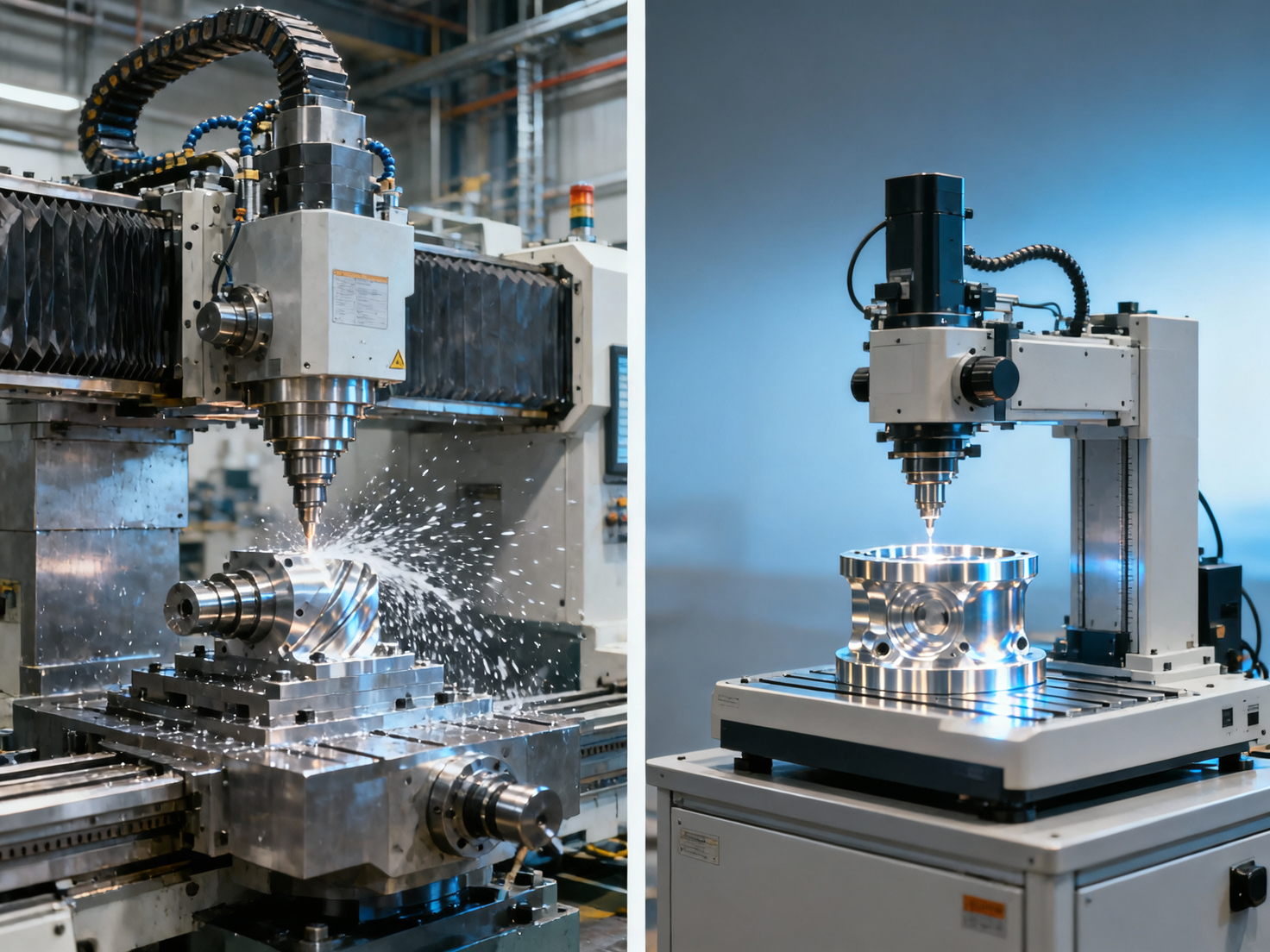
Automated CNC manufacturing lines promise true lights-out operation—but only when precision CNC manufacturing includes rigorous upstream inspection, not just inline checks. As demand surges for high-precision CNC manufacturing in aerospace, automotive, and energy equipment sectors, manufacturers prioritize low-maintenance CNC manufacturing, space-saving CNC manufacturing layouts, and cost-effective CNC manufacturing solutions. Whether you’re a procurement professional sourcing from a trusted CNC manufacturing wholesaler, an engineer evaluating multi-axis CNC manufacturing for medical devices, or a decision-maker selecting a CNC manufacturing exporter, understanding this inspection-critical workflow is key to maximizing uptime, yield, and ROI.
Why “Unattended” Doesn’t Mean “Unverified”
True unattended CNC operation—running overnight or over weekends without human intervention—relies on deterministic process control. But deterministic control requires certainty: that every part entering the automated line meets dimensional, material, and surface integrity specifications *before* machining begins. Inline inspection (e.g., post-process gauging or vision systems mid-line) detects defects too late: scrap has already been generated, tool wear accelerated, and cycle time wasted.
Upstream inspection—conducted at incoming material verification, pre-machining setup, or after roughing—acts as a hard gate. It ensures only qualified billets, blanks, or semi-finished parts proceed into high-value finishing operations. This prevents cascading errors across multi-axis CNC machining centers, especially critical for structural aerospace components where tolerance stacks must remain within ±0.015 mm across 5+ features.
In practice, leading OEMs in Germany and Japan enforce upstream inspection windows of ≤30 minutes per batch—using coordinate measuring machines (CMM), laser scanners, or AI-powered optical sorters—to clear parts for automated transfer to palletized machining cells. Skipping this step increases unplanned downtime by 22–37% in high-mix, low-volume CNC manufacturing environments.
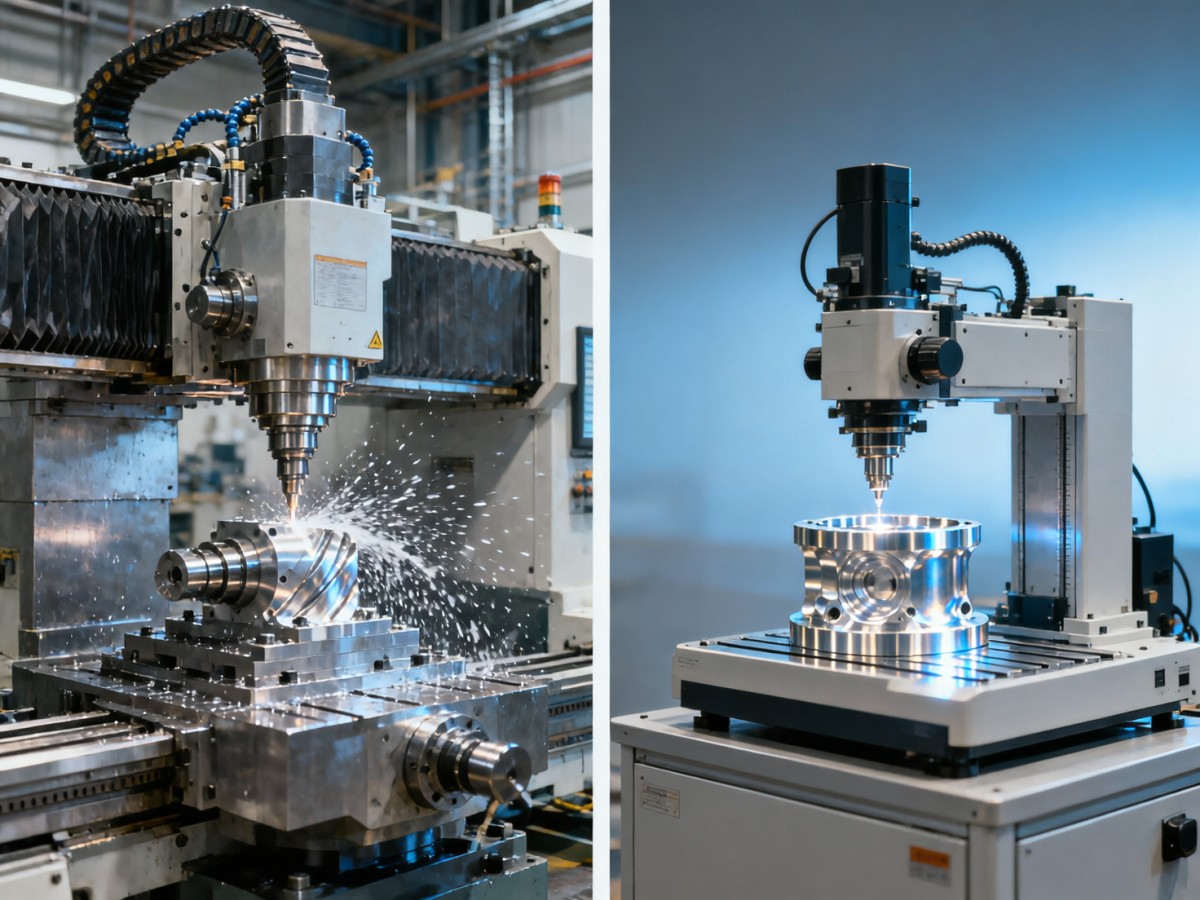
How Upstream Inspection Impacts Key Operational Metrics
The location and rigor of inspection directly shape OEE (Overall Equipment Effectiveness), first-pass yield, and total cost of ownership. Below is how upstream vs. inline approaches compare across four measurable dimensions:
The data reflects field benchmarks from Tier-1 suppliers operating automated CNC lines for turbine blade machining (ISO 2768-mK tolerances) and EV motor housing production (GD&T position callouts ≤0.05 mm). Upstream inspection reduces root-cause ambiguity—enabling predictive maintenance triggers based on incoming stock variability rather than reactive tool breakage alerts.
Procurement Checklist: What to Verify Before Approving an Automated CNC Line
For procurement professionals and plant engineers evaluating turnkey CNC automation, upstream inspection capability isn’t optional—it’s a non-negotiable system requirement. Use this 5-point checklist during vendor evaluation:
- Does the solution include integrated CMM or optical metrology stations *before* the first machining cell—not just post-process sensors?
- Is inspection data traceable to individual part IDs and synchronized with MES/SCADA systems via OPC UA or MTConnect?
- Can the inspection station handle ≥3 material types (e.g., Inconel 718, AlSi10Mg, Ti-6Al-4V) with auto-calibrated lighting and focus profiles?
- What is the certified measurement uncertainty? (Acceptable range: ≤±0.008 mm at 95% confidence for Class 0 CMMs)
- Is upstream rejection logic programmable—e.g., flag parts with surface roughness >Ra 3.2 µm before milling—or does it require manual override?
Vendors omitting upstream metrology often cite cost savings—but those savings vanish after 3.2 average rework cycles per defective batch in aerospace structural component production. Always request validation reports from comparable applications: e.g., “Show us your last 3 audits for ISO 9001:2015 Clause 8.6 compliance on incoming inspection protocols.”
Common Misconceptions That Undermine Lights-Out Reliability
“Modern CNC controls self-compensate for part variation.”
While adaptive control exists for thermal drift or tool wear, it cannot correct for gross geometric deviations in raw stock—such as eccentricity >0.15 mm in shaft blanks or flatness error >0.2 mm in cast aluminum housings. These require physical verification *before* clamping.
“Inline vision systems catch everything in real time.”
Most inline cameras detect macro-defects (scratches, dents) but lack sub-micron resolution for critical GD&T features like true position or profile of a surface. They also struggle with reflective or curved surfaces common in turbine discs and medical implants.
“We’ll add inspection later—it’s modular.”
Retrofitting upstream metrology into an existing automated line typically costs 35–48% more than integrating it upfront—and disrupts production for 12–18 working days due to cell re-layout, safety interlock recertification, and MES interface revalidation.
Why Partner With a Global CNC Manufacturing Exporter That Builds Inspection In—Not On
Our engineered CNC manufacturing lines—deployed across 17 countries since 2019—embed upstream inspection as a foundational subsystem, not an add-on. Every automated line includes:
- Pre-machining metrology cell with dual-arm CMM + structured-light scanner (measurement uncertainty ≤±0.006 mm)
- Real-time SPC dashboards showing Cp/Cpk trends per feature group, accessible via web portal
- Automated quarantine logic tied to ERP stock status—rejecting parts before they enter the CNC buffer zone
- Documentation packages compliant with AS9100 Rev D and IATF 16949:2016 for audit-ready traceability
Whether you’re procuring a compact 3-axis CNC lathe line for medical device bushings or a full-flex 5-axis machining cell for satellite structural frames, we align inspection architecture to your specific GD&T requirements, material flow constraints, and certification scope. Request a free upstream inspection feasibility review—including recommended measurement points, cycle time impact analysis, and integration timeline—for your next project.
Recommended for You
 Zero-Point Clamping or Modular Fixtures? Choosing a Faster CNC Changeover SystemCNC Machining Technology Center
 How to Cut CNC Fixture Changeover Time Without Sacrificing Part AccuracyCNC Machining Technology Center
 When Does CNC Turning Pay Off? A Break-Even Guide by Annual Part VolumeMachine Tool Industry Editorial Team
 Machine Tool Standards by Country: What Importers Must Verify Before PurchaseManufacturing Policy Research Center
 CNC Lathe Quick Installation Guide: Alignment Checks Before First Production RunCNC Machining Technology Center
 How to Select a CNC Lathe for Small Parts Without Sacrificing Accuracy or Cycle TimeCNC Machining Technology Center


Aris Katos
Future of Carbide Coatings
15+ years in precision manufacturing systems. Specialized in high-speed milling and aerospace grade alloy processing.
▶
Smart Manufacturing for Small Businesses: Where Automation Delivers the Fastest ROIMachine Tool Industry Editorial Team▶
How Smart Manufacturing Technology Improves OEE Across Industry 4.0 Production LinesMachine Tool Industry Editorial Team▶
How to Evaluate an Automation Line for Electronics Production Before InvestmentMachine Tool Industry Editorial Team▶
How to Evaluate an Automated Production Line for Output, Flexibility, and ROIMachine Tool Industry Editorial Team▶
How Smart Manufacturing Improves Traceability and Quality Control in Aerospace?Machine Tool Industry Editorial Team
Mastering 5-Axis Workholding Strategies
Join our technical panel on Nov 15th to learn about reducing vibrations in thin-wall components.

Providing you with integrated sanding solutions
Before-sales and after-sales services
Comprehensive technical support