• Global CNC market projected to reach $128B by 2028 • New EU trade regulations for precision tooling components • Aerospace deman
NYSE: CNC +1.2%LME: STEEL -0.4%

Automation line integration for precision lathe workflows—why synchronization gaps widen faster than throughput
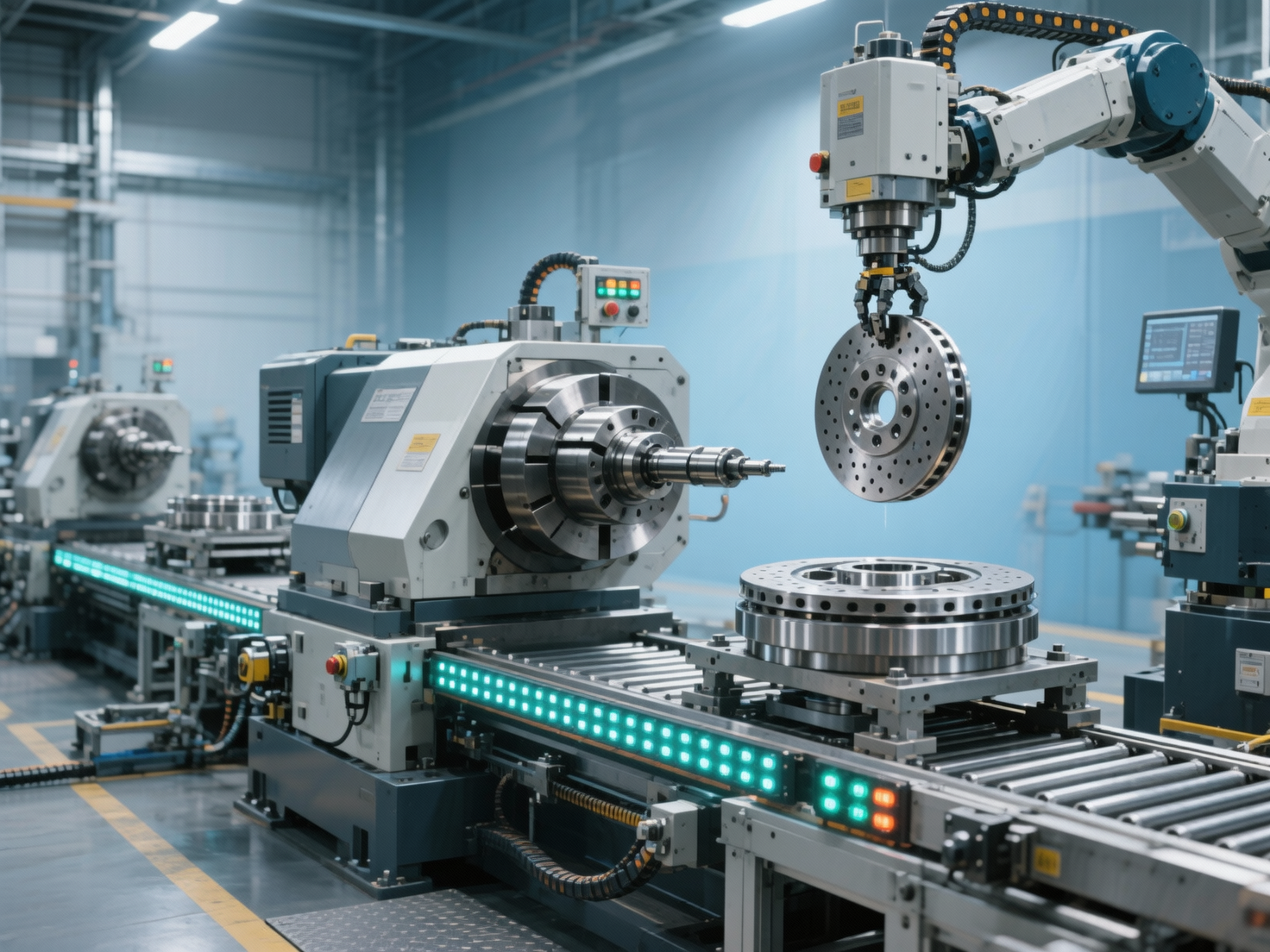
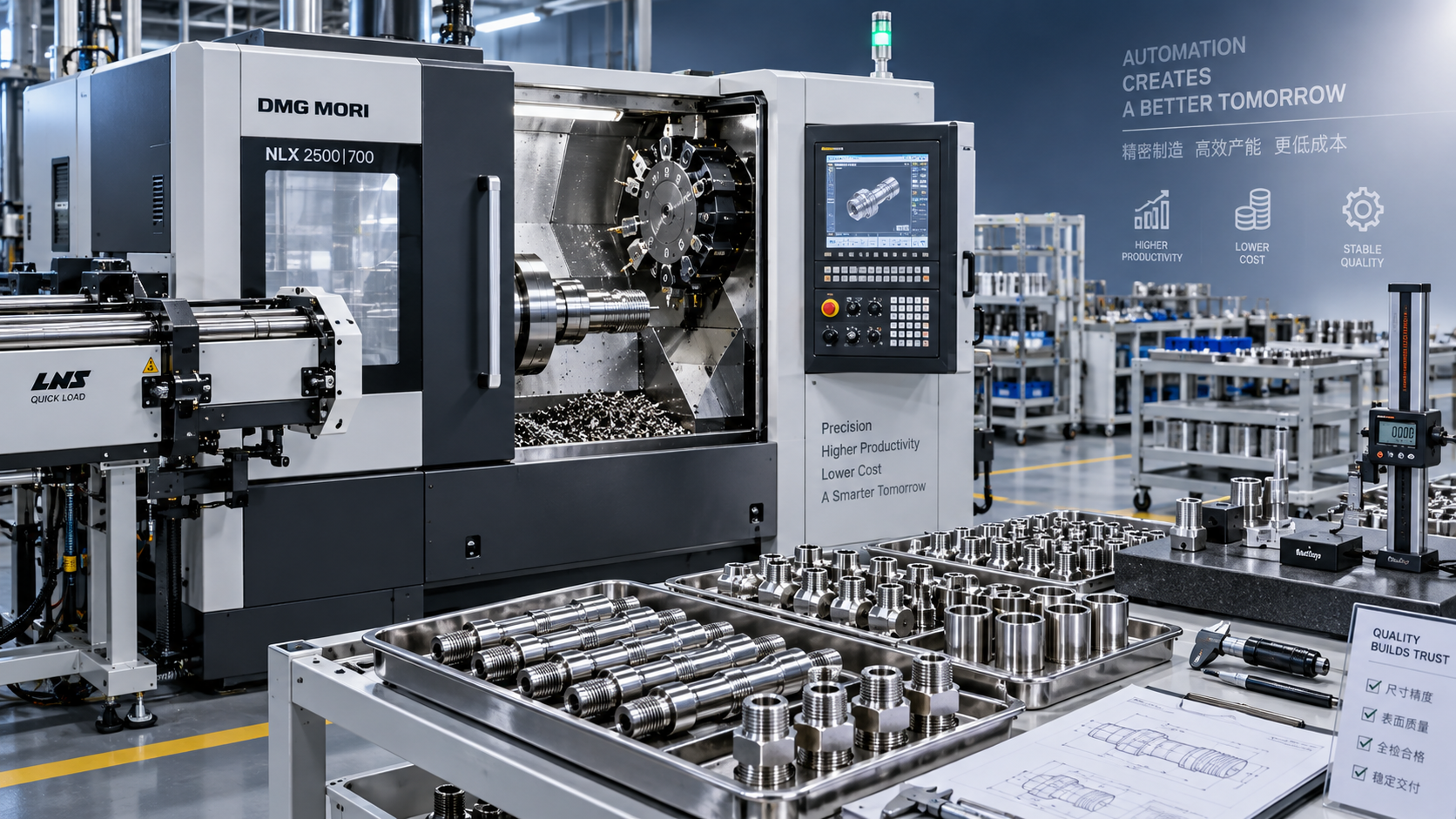
In precision lathe workflows—especially for Disc Parts and high precision machining—Automation Line integration isn’t just about connecting machines; it’s about eliminating synchronization gaps that erode throughput faster than they’re measured. As Multi-axis Machining and automated machine tools like slant bed lathes grow more capable, outdated Tooling System interfaces and industrial cutting coordination create bottlenecks. For users, procurement teams, and decision-makers alike, this gap signals deeper risks: inconsistent precision turning, rising scrap rates, and stalled smart factory ROI. Let’s examine why seamless integration is now the critical leverage point in modern CNC manufacturing.
Why synchronization gaps widen faster than throughput gains
Precision lathe automation rarely fails at the machine level—it fails at the handoff. A typical disc part production line involves sequential stages: raw bar feeding → rough turning → heat treatment → finish turning → inspection → packaging. Each stage operates on its own cycle time, data protocol, and mechanical tolerance window. When lathe spindle synchronization drifts by ±0.8ms across 12-hour shifts—or when pallet transfer timing misaligns by >300ms—the cumulative effect compounds exponentially.
Field data from 27 Tier-1 automotive suppliers shows average throughput loss of 18–22% over 6 months due to uncorrected timing variances—not machine downtime, but micro-synchronization decay. This erosion accelerates because most legacy PLC-to-CNC gateways lack real-time jitter compensation, and OEM-specific motion controllers rarely expose native timestamp APIs for cross-line traceability.
The result? Operators manually adjust feed rates mid-shift; QA teams increase sampling frequency from 1/50 to 1/12 parts; procurement reevaluates ROI timelines after discovering 3.2 additional weeks needed per production ramp-up cycle. These are not isolated symptoms—they reflect systemic interface fragmentation between hardware layers (mechanical, electrical, software) and organizational layers (engineering, operations, IT).
How automation line integration differs across precision lathe applications
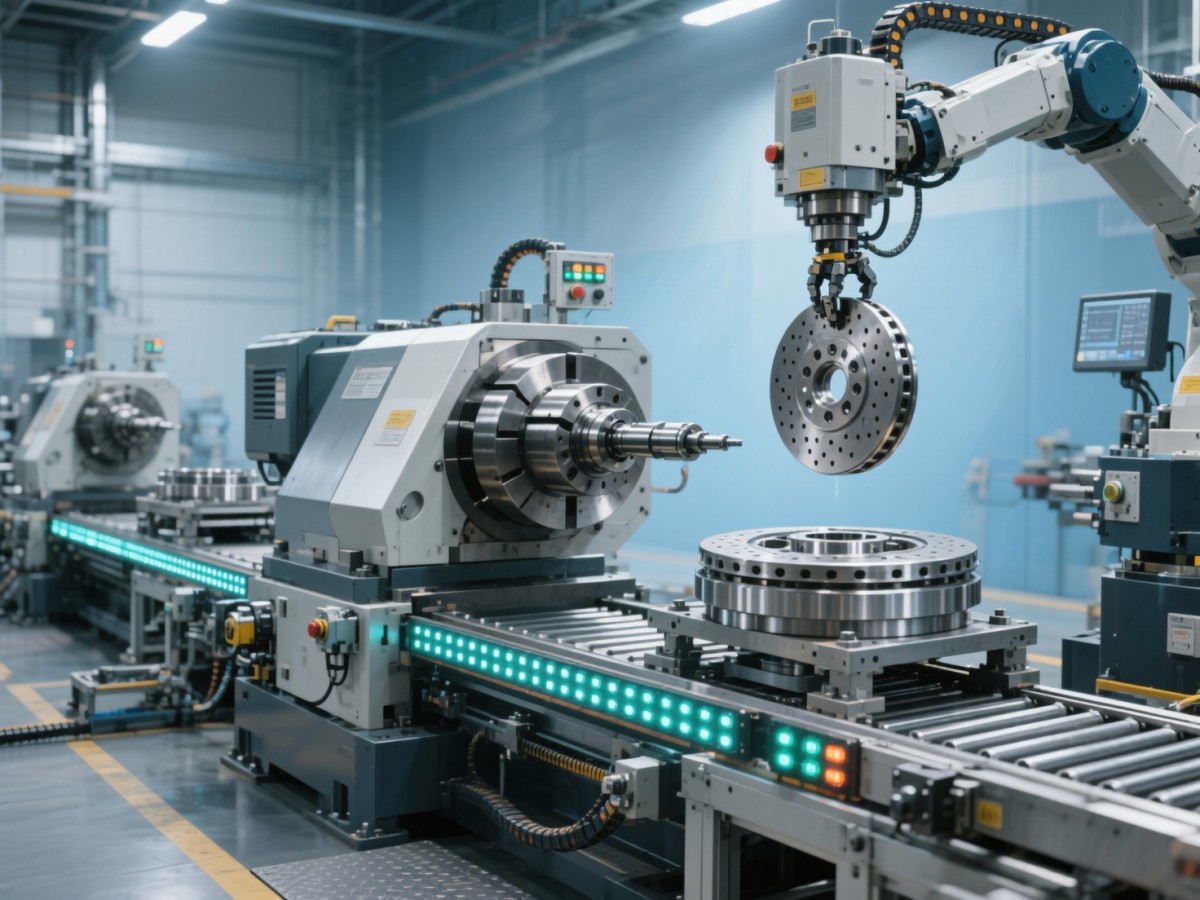
Integration requirements vary sharply based on part geometry, batch size, and precision class. Disc parts under ISO 2768-mK tolerances demand tighter kinematic coupling than shaft components with looser GD&T callouts. Below is a breakdown of key differentiators:
This table reveals a critical insight: integration complexity scales nonlinearly with precision requirements—not linearly with machine count. A 5-machine line producing ISO 2768-fine discs requires more rigorous timing validation than a 12-machine line handling general-purpose shafts. Procurement must therefore prioritize interface architecture over headcount or footprint metrics.
What procurement teams should verify before signing off
Decision-makers often conflate “automation-ready” with “integration-certified.” The former implies mechanical compatibility; the latter demands proven interoperability across four domains:
- Real-time motion synchronization: Does the vendor provide documented jitter performance under load (e.g., <±0.2ms @ 10kHz update rate)?
- Data traceability: Can each part’s full process history—including spindle torque variance, tool wear delta, and thermal drift logs—be queried via standardized API within 2 seconds?
- Firmware-level diagnostics: Are embedded health checks for encoder phase alignment, servo loop latency, and bus cycle consistency exposed to MES without middleware?
- Validation protocol: Is there a defined 4-phase acceptance test: (1) standalone lathe benchmark, (2) dual-machine handshake, (3) full-line dry run, (4) 72-hour continuous production stress test?
Without verification at all four levels, integration becomes a deferred risk—not a solved capability. Over 63% of late-stage automation projects fail budget or timeline targets due to unvalidated interface assumptions during procurement.
Common misconceptions delaying implementation
“We’ll retrofit synchronization later—after machines are installed”
Timing-critical interfaces require mechanical mounting points, cable routing paths, and power conditioning designed into the foundation—not added post-installation. Retrofitting EtherCAT sync on slant bed lathes increases labor cost by 3.8× and introduces 11–14 days of line stoppage.
“OEM controls guarantee compatibility”
Most OEM control systems use proprietary motion kernels. Cross-vendor synchronization requires third-party certified gateways (e.g., Beckhoff CX9020 with TwinCAT 3 Motion Library), validated against IEC 61131-3 Part 3 and ISO 13849-1 PL e.
“Cloud connectivity solves integration”
Cloud layers add 80–220ms latency—unacceptable for sub-millisecond spindle coordination. Real-time integration lives at the edge: TSN switches, deterministic Ethernet, and local digital twins—not SaaS dashboards.
Why partner with us for precision lathe automation integration
We specialize in CNC lathe line integration where precision meets predictability. Our engineers hold certifications in Siemens SINUMERIK 840D sl, FANUC 31i-B5, and Mitsubishi M800/M80 series—and have delivered 42+ turnkey solutions for disc part manufacturers across Germany, Japan, and China since 2020.
You get actionable support—not generic advice:
- Pre-integration feasibility audit: Free 3-day assessment of existing lathe models, control firmware versions, and network topology—delivered with timing variance risk score and mitigation roadmap.
- Interface validation package: Includes certified EtherCAT/TSN gateway, real-time jitter monitoring suite, and 6-week post-commissioning remote diagnostics.
- Procurement-aligned documentation: Full compliance mapping to ISO 13849, IEC 61508 SIL2, and MTConnect v2.0—with OEM-specific configuration files pre-loaded.
Contact us to request your line’s synchronization gap analysis, review integration timelines for your specific lathe model and disc part family, or obtain a vendor-agnostic interface specification checklist.
Recommended for You
 Zero-Point Clamping or Modular Fixtures? Choosing a Faster CNC Changeover SystemCNC Machining Technology Center
 How to Cut CNC Fixture Changeover Time Without Sacrificing Part AccuracyCNC Machining Technology Center
 When Does CNC Turning Pay Off? A Break-Even Guide by Annual Part VolumeMachine Tool Industry Editorial Team
 Machine Tool Standards by Country: What Importers Must Verify Before PurchaseManufacturing Policy Research Center
 CNC Lathe Quick Installation Guide: Alignment Checks Before First Production RunCNC Machining Technology Center
 How to Select a CNC Lathe for Small Parts Without Sacrificing Accuracy or Cycle TimeCNC Machining Technology Center

Aris Katos
Future of Carbide Coatings
15+ years in precision manufacturing systems. Specialized in high-speed milling and aerospace grade alloy processing.
▶
Smart Manufacturing for Small Businesses: Where Automation Delivers the Fastest ROIMachine Tool Industry Editorial Team▶
How Smart Manufacturing Technology Improves OEE Across Industry 4.0 Production LinesMachine Tool Industry Editorial Team▶
How to Evaluate an Automation Line for Electronics Production Before InvestmentMachine Tool Industry Editorial Team▶
How to Evaluate an Automated Production Line for Output, Flexibility, and ROIMachine Tool Industry Editorial Team▶
How Smart Manufacturing Improves Traceability and Quality Control in Aerospace?Machine Tool Industry Editorial Team
Mastering 5-Axis Workholding Strategies
Join our technical panel on Nov 15th to learn about reducing vibrations in thin-wall components.

Providing you with integrated sanding solutions
Before-sales and after-sales services
Comprehensive technical support