• Global CNC market projected to reach $128B by 2028 • New EU trade regulations for precision tooling components • Aerospace deman
NYSE: CNC +1.2%LME: STEEL -0.4%

How to Evaluate an Automation Line for Electronics Production Before Investment
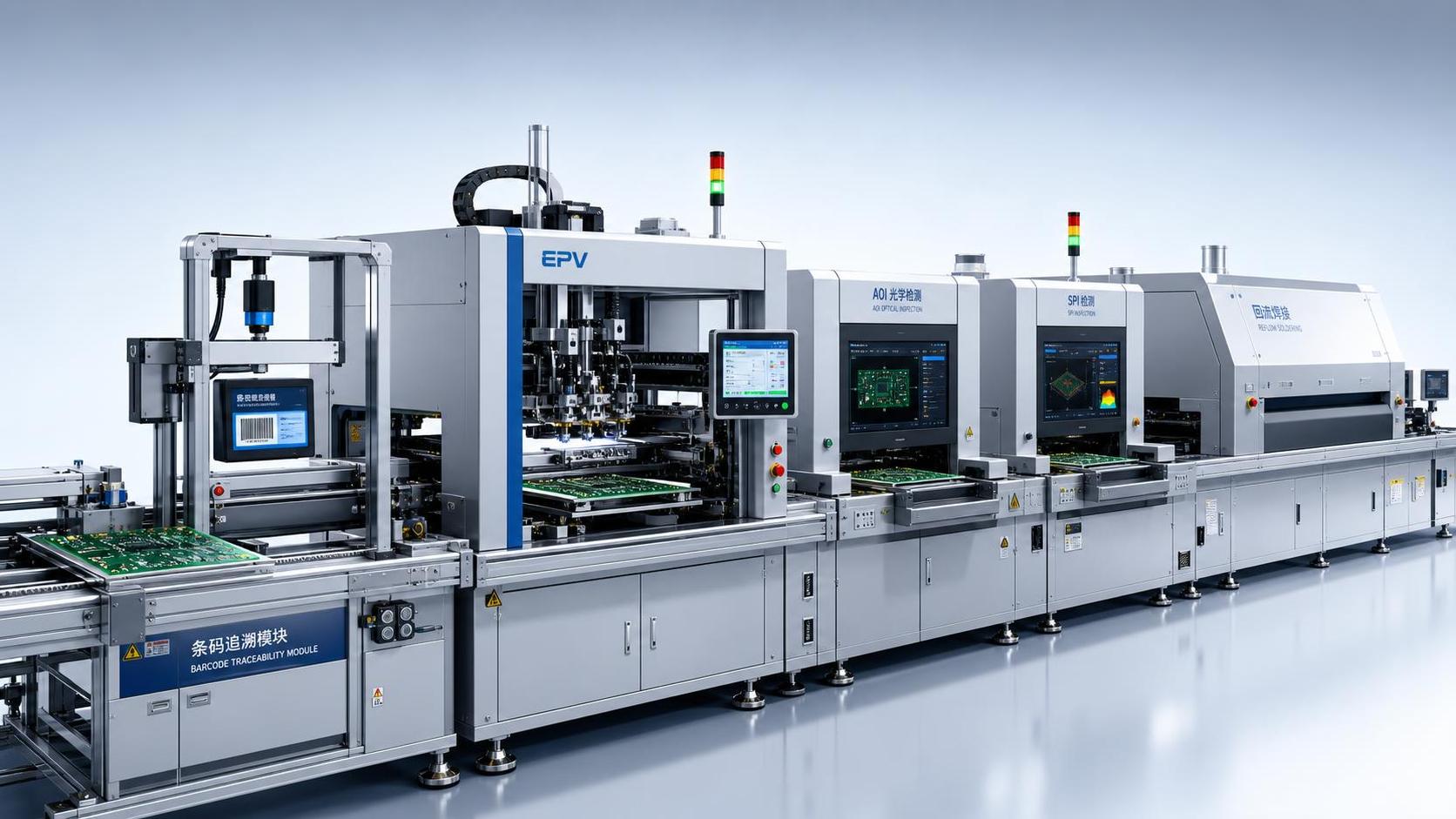
It usually starts with a reasonable idea: output is under pressure, labor is harder to plan, quality escapes are expensive, and someone suggests an Automation Line for Electronics Production as the next logical step. On paper, the upgrade seems obvious. In practice, many teams reach the investment stage before they have answered the harder question: will this line actually fit the way the factory builds products day after day?
This is where costly mistakes tend to begin. A line may look advanced in a supplier presentation yet struggle with mixed product runs, small board revisions, feeder changeovers, upstream machining variation, or downstream testing bottlenecks. If you are deciding whether to commit capital, the real task is not just judging the machine itself. It is judging the fit between the line, the product mix, the production rhythm, and the level of process discipline your operation can realistically maintain.
Many investment discussions focus too early on speed. Speed matters, but in electronics production, line performance is often limited by setup time, traceability requirements, inspection logic, material handling reliability, and how quickly abnormal conditions are identified. A fast line that is difficult to stabilize can create a different kind of delay: stoppages, rework queues, planning confusion, and pressure on operators and engineers.
Where decision-making often goes off track
A common mistake is evaluating automation as a standalone asset instead of part of a production system. Electronics plants rarely run in isolation. Boards, housings, connectors, fixtures, machined parts, and test stations all depend on each other. If your business also touches precision manufacturing, the issue becomes even more practical. A highly automated assembly section may still underperform if CNC-produced components arrive with variation that forces manual adjustment, or if fixture design was not considered during the automation review.
Another problem is assuming that a line designed for one product family will naturally adapt to another. Electronics production changes more often than many early business plans expect. New revisions, packaging changes, component substitutions, and test requirements can turn a “future-proof” layout into a rigid one. Before investment, it helps to step back and define whether the real need is high-volume dedicated automation, modular automation for several product families, or a semi-automated approach with stronger process controls.
Start with the product mix, not the brochure
Before comparing equipment proposals, map the products you expect the line to handle. Do not stop at annual volume. Look at the full pattern: batch size, changeover frequency, board or assembly size range, component diversity, tolerance sensitivity, and how often engineering changes occur. These details determine whether a line should be optimized for pure throughput or for frequent adjustment with minimal downtime.
For example, if your production includes multiple SKUs with uneven demand, then feeder setup strategy, recipe management, and quick verification steps matter as much as raw placement or assembly speed. If your assemblies involve precision structural parts produced on CNC machines or machining centers, then dimensional consistency between upstream manufacturing and downstream automation should be reviewed early. It is difficult to justify a fully automated sequence if the incoming parts still require unpredictable fitting or alignment.
At this stage, the most useful discussions are usually internal. Ask process engineers, quality staff, maintenance personnel, and production planners where current losses really occur. Sometimes the constraint is manual loading. Sometimes it is inspection capacity. Sometimes the issue is not assembly at all, but unstable part supply, tool wear upstream, or excessive fixture change time. The right investment target may be a full line, a modular cell, or a smaller automation step linked to better process control.
Look at the whole flow, including the parts nobody likes to discuss
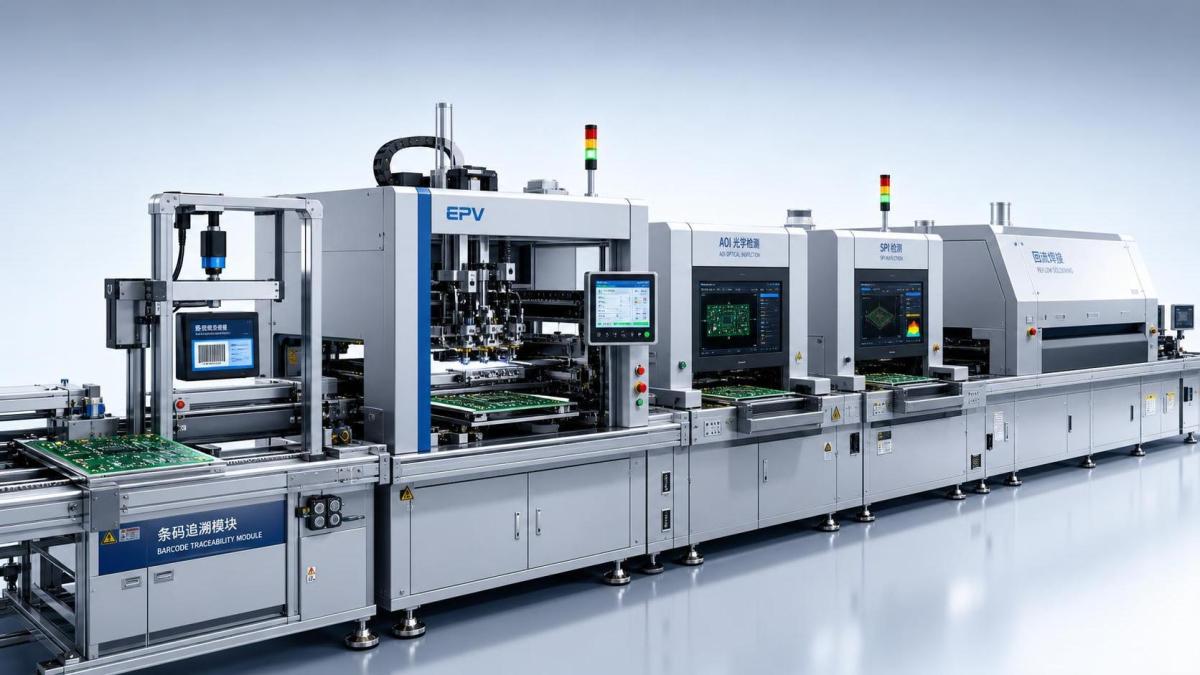
When people imagine automation, they often picture the core production station. Yet many line problems come from transfer points, queues, rejection handling, and restart procedures after a stop. For electronics production, this means you should review not only assembly equipment but also loading, buffering, labeling, inspection, rework routing, unloading, and data capture.
If one station stops, what happens to the units before and after it? Can work-in-progress be buffered without losing traceability? If a board or module fails inspection, does the line isolate it cleanly or does it disrupt the whole sequence? How are recipe changes verified? Can the line resume after intervention without creating uncertainty about which unit passed which step?
These questions are not administrative details. They shape actual productivity. A line that looks smooth in a controlled demo can become difficult to run if everyday exceptions were not designed into the workflow. Electronics production contains exceptions constantly: barcode read failures, component shortages, fixture wear, test retries, dimensional drift in metal parts, and occasional engineering changes that arrive mid-schedule.
Equipment compatibility is more than mechanical fit
Compatibility should be reviewed on several levels. Mechanical compatibility is the obvious one: dimensions, conveyors, interfaces, fixtures, part orientation, and safety layout. But software and process compatibility usually deserve equal attention. Can machine data connect to your existing production systems? Are alarms understandable to the people who will actually respond to them? Can process parameters be locked, versioned, and traced in a way that supports quality investigations later?
In mixed manufacturing environments, it is also worth checking how the automation line interacts with upstream precision machining resources. CNC lathes, machining centers, and multi-axis systems can deliver excellent repeatability, but only if tooling, fixture strategy, and inspection discipline are aligned. If the automation concept relies on precise location features, you need evidence that those features remain stable over actual production runs, not only first-sample approval.
This is one reason cross-functional review matters. Automation suppliers may understand their station deeply, while your internal team understands the variation hidden in daily production. Bringing those views together before purchase helps expose mismatches early, when they are still inexpensive to fix.
Quality control should be built into the line, not added after it
A strong Automation Line for Electronics Production is not simply a sequence of fast operations. It is a sequence that can detect, contain, and explain process deviation. Before investment, review where quality checks will happen and what they are expected to catch. Visual inspection, dimensional confirmation, electrical testing, torque verification, barcode traceability, and reject handling should have a clear place in the line concept.
It is also important to distinguish between final inspection and process control. If the line depends too heavily on end-of-line detection, defects may accumulate before anyone notices. In electronics production, problems often become expensive when the fault is discovered several stations later. Better evaluation comes from asking whether the line can identify the source of an error close to the point where it occurs.
This applies to fixtures and tools as well. Cutting tools, clamping systems, and assembly fixtures continue to evolve, but they must be chosen with maintainability in mind. If your line uses precision mechanical parts, fixture wear or poor repeatability can quietly erode performance. A technically impressive setup is less attractive if it requires frequent expert intervention just to maintain consistency.
Do not separate ROI from operational reality
Return on investment should not be reduced to labor savings versus purchase cost. A more grounded evaluation considers setup losses, engineering support needs, maintenance skill requirements, spare parts strategy, training burden, floor space impact, and the risk of underutilization if product demand shifts.
Many teams find it useful to test ROI under several operating conditions rather than a single ideal scenario. Consider at least these questions: What if product mix becomes more fragmented? What if one major product slows? What if upstream parts from machining or suppliers require more verification than expected? What if your current team needs time before they can handle troubleshooting confidently?
None of this means automation is a poor choice. It means the best investment decisions usually come from realistic assumptions instead of optimistic averages. A line that performs reliably across imperfect conditions often delivers better value than one that only looks superior in ideal production models.
Signs a line is probably a good fit
In practical terms, a line becomes easier to approve when several things are clear. The products and expected changeover pattern have been defined with enough detail to guide layout decisions. Incoming part variation, including machined components and purchased items, has been reviewed. Inspection and traceability are integrated into the process instead of treated as afterthoughts. Maintenance access, training needs, and alarm response are understandable to the existing organization. And the automation level matches the business model rather than chasing the highest possible specification.
It also helps if the proposed system is modular enough to support phased adoption. In some facilities, a full line is justified. In others, a staged approach works better: automate loading and transfer first, stabilize quality controls, then extend automation once the process is repeatable. That path can be especially sensible when production spans electronics assembly and precision mechanical parts, because upstream and downstream stability often improves gradually rather than all at once.
Questions worth resolving before signing anything
Try to leave the evaluation stage with answers to a few uncomfortable but necessary questions. Which products truly belong on this line, and which do not? Where will human intervention still be required? What happens during model changeover, component substitution, or abnormal stop recovery? Which process variables are critical enough to trace? Which spare parts and wear items are likely to affect uptime first? And if product design changes six months after installation, how painful will adaptation be?
These are not reasons to delay every decision. They are filters that keep a purchase grounded in real production behavior. In electronics manufacturing, the gap between a technically capable line and a useful line can be wider than expected. The useful line is the one that handles variation, supports quality, and fits the surrounding process ecosystem.
If you are comparing options now, the safest approach is usually to evaluate the automation line as part of a chain that includes part manufacturing, tooling, fixtures, inspection, operators, engineers, and future product changes. Once those links are reviewed together, the investment discussion becomes clearer. You are no longer asking whether automation sounds beneficial. You are asking whether this specific line can run your products, under your constraints, with a level of stability your team can support over time.
Recommended for You
 Selecting Machine Tools for Automotive Parts: Accuracy, Throughput, and AutomationMachine Tool Industry Editorial Team
 Industrial Machining: Selecting Processes for Tight-Tolerance Metal PartsCNC Machining Technology Center
 Manufacturing Technology Trends That Improve Throughput and Quality ControlManufacturing Market Research Center
 How to Design Cost-Effective Fixtures That Maintain Cycle Time in Mass ProductionCNC Machining Technology Center
 Is Learning CNC Programming Worth It for Shop Owners Seeking Higher Margins?CNC Machining Technology Center
 CNC Machine Arrival Inspection: Check Shipping Damage, Accuracy, Safety, and DocumentsCNC Machining Technology Center

Aris Katos
Future of Carbide Coatings
15+ years in precision manufacturing systems. Specialized in high-speed milling and aerospace grade alloy processing.
▶
Selecting Machine Tools for Automotive Parts: Accuracy, Throughput, and AutomationMachine Tool Industry Editorial Team▶
Smart Manufacturing for Small Businesses: Where Automation Delivers the Fastest ROIMachine Tool Industry Editorial Team▶
How Smart Manufacturing Technology Improves OEE Across Industry 4.0 Production LinesMachine Tool Industry Editorial Team▶
How to Evaluate an Automation Line for Electronics Production Before InvestmentMachine Tool Industry Editorial Team▶
How to Evaluate an Automated Production Line for Output, Flexibility, and ROIMachine Tool Industry Editorial Team
Mastering 5-Axis Workholding Strategies
Join our technical panel on Nov 15th to learn about reducing vibrations in thin-wall components.

Providing you with integrated sanding solutions
Before-sales and after-sales services
Comprehensive technical support