• Global CNC market projected to reach $128B by 2028 • New EU trade regulations for precision tooling components • Aerospace deman
NYSE: CNC +1.2%LME: STEEL -0.4%

Smart Manufacturing for Small Businesses: Where Automation Delivers the Fastest ROI
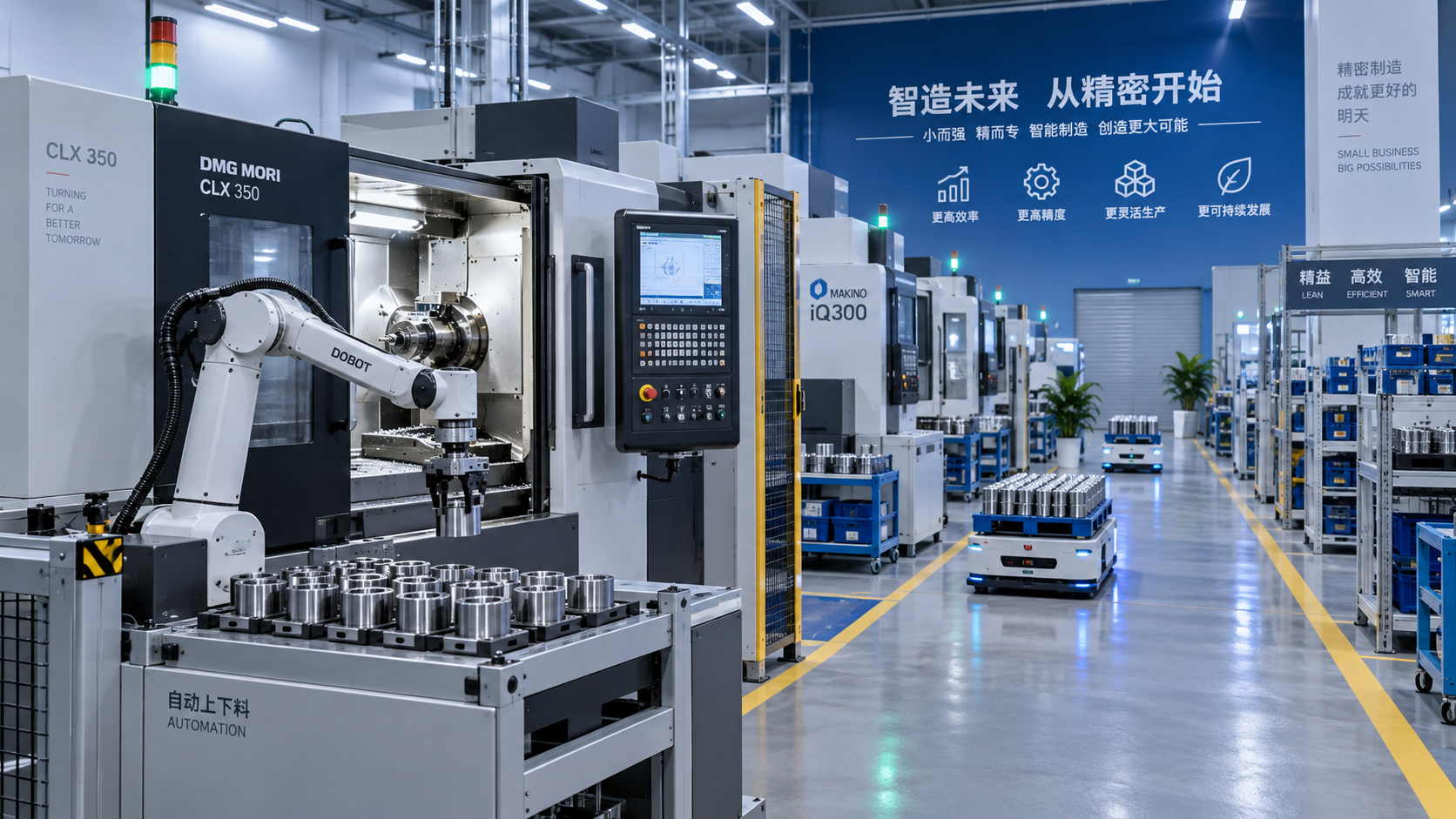
A small machining shop can lose margin long before it runs out of orders. A CNC turning center may sit idle while an operator loads blanks, checks a completed part, enters offsets, and moves material to the next operation. A second machine may be waiting for an inspection result. By the end of the shift, the production schedule looks full, but spindle utilization, delivery confidence, and labor availability tell a different story.
The fastest return from Smart Manufacturing for Small Businesses usually does not come from attempting a complete factory overhaul. It comes from removing one expensive constraint at a time: unattended machine waiting, repeated manual data entry, avoidable setup variation, poor production visibility, or internal material delays. For most small CNC and precision manufacturing operations, the best first investments are machine monitoring, simple automated loading, digital job tracking, and targeted in-process measurement. The right choice depends on where productive time is currently being lost.
Start with the bottleneck that consumes paid capacity
Automation delivers a strong return only when it acts on a real operating constraint. A machine with low utilization caused by weak order flow will not become profitable simply because it has an automatic loader. On the other hand, a machine that has stable work but frequently waits for an operator is a much stronger candidate for automation.
Before requesting proposals, review several weeks of normal production records. The goal is not to create a complex digital transformation study. It is to separate time spent cutting parts from time spent waiting, handling, checking, correcting, or searching for information.
- How often does a machine stop because no operator is available to load the next part?
- Are short runs delayed by lengthy setup, program verification, or fixture changes?
- Do operators walk between machines to record counts, inspect parts, or ask about priorities?
- Are finished parts held up because quality status is unclear?
- Does production management learn about a machine fault only after a delivery date is at risk?
- Is material moved manually through several workstations without a reliable digital record of its status?
These questions reveal where automation can create usable capacity. A solution that saves a few seconds on a task performed occasionally may have little impact. A solution that prevents a CNC machine from waiting repeatedly through every shift can change output, lead time, and labor planning at the same time.
Machine monitoring is often the lowest-risk first purchase
Many small manufacturers assume smart manufacturing begins with robots. In practice, basic machine connectivity can be a more sensible first step because it exposes the losses that automation should address. A monitoring system can show whether equipment is cutting, idle, stopped, in alarm, or waiting for intervention. It can also provide job counts, cycle duration patterns, and selected alarm information, depending on the machine control and connection method.
This visibility matters when a supervisor manages several CNC lathes, machining centers, or mixed manual and automated workstations. Without reliable status information, decisions are made from verbal updates, assumptions, and end-of-shift reports. A job may appear on schedule because the machine is running, while the actual cycle is longer than planned due to tool wear, reduced feed rates, repeated operator interruptions, or rework.
Monitoring does not automatically improve output. Its value comes from acting on the information. For example, repeated short idle periods may justify redesigning the material presentation method. A recurring alarm may point to a maintenance issue, a tool-life setting, or an unstable fixture. A consistent gap between planned and actual cycle time may require a quoting review rather than a new machine purchase.
When evaluating monitoring options, confirm that the system can connect to the existing control architecture without creating unnecessary complexity. Ask what data can actually be collected, who owns it, whether it can be viewed by production personnel without specialist support, and how alarms or notifications will be handled. A dashboard that nobody checks is not an ROI project.
Automated loading pays back fastest on repeatable parts
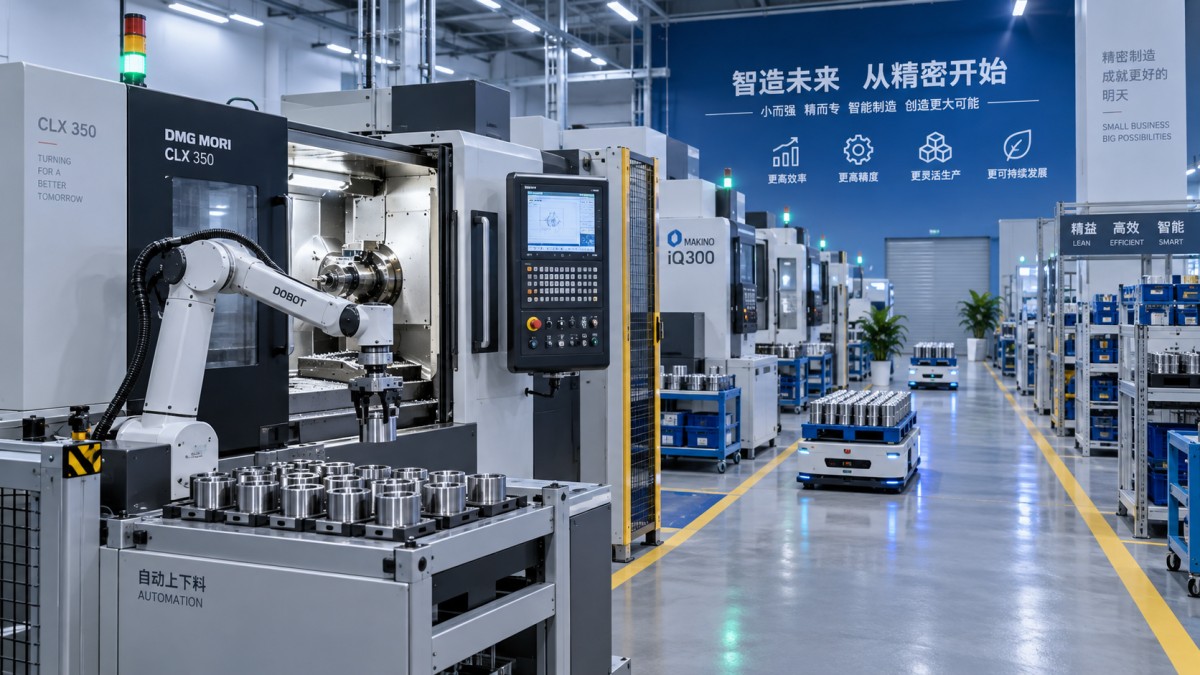
Automatic loading is usually the next logical investment when a machine produces a steady mix of repeat work and the operator’s main task is loading and unloading. Bar feeders for turning operations, pallet changers, compact robotic cells, gantry systems, and simple part-handling devices can all reduce non-cutting time. They are not interchangeable purchases; the economics depend heavily on part shape, batch size, loading method, and process stability.
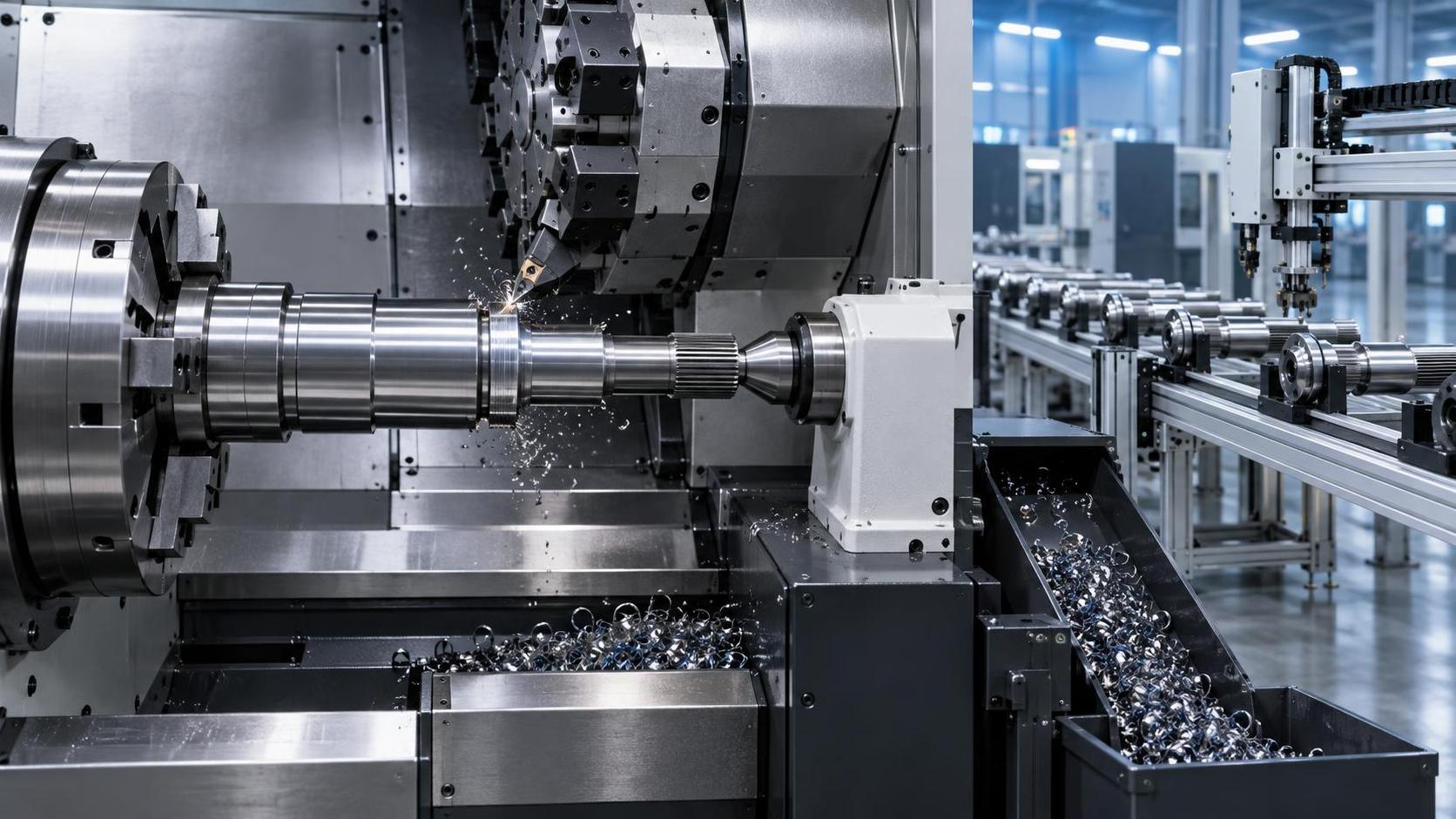
A bar feeder can be a practical fit for shaft-like turned components produced from bar stock. It keeps the lathe supplied without requiring the operator to manually load individual blanks each cycle. The process still needs dependable chip control, tool-life management, material quality, and safe part collection. If parts frequently require manual deburring, measuring, or orientation correction after each cycle, loading automation alone may only move the bottleneck downstream.
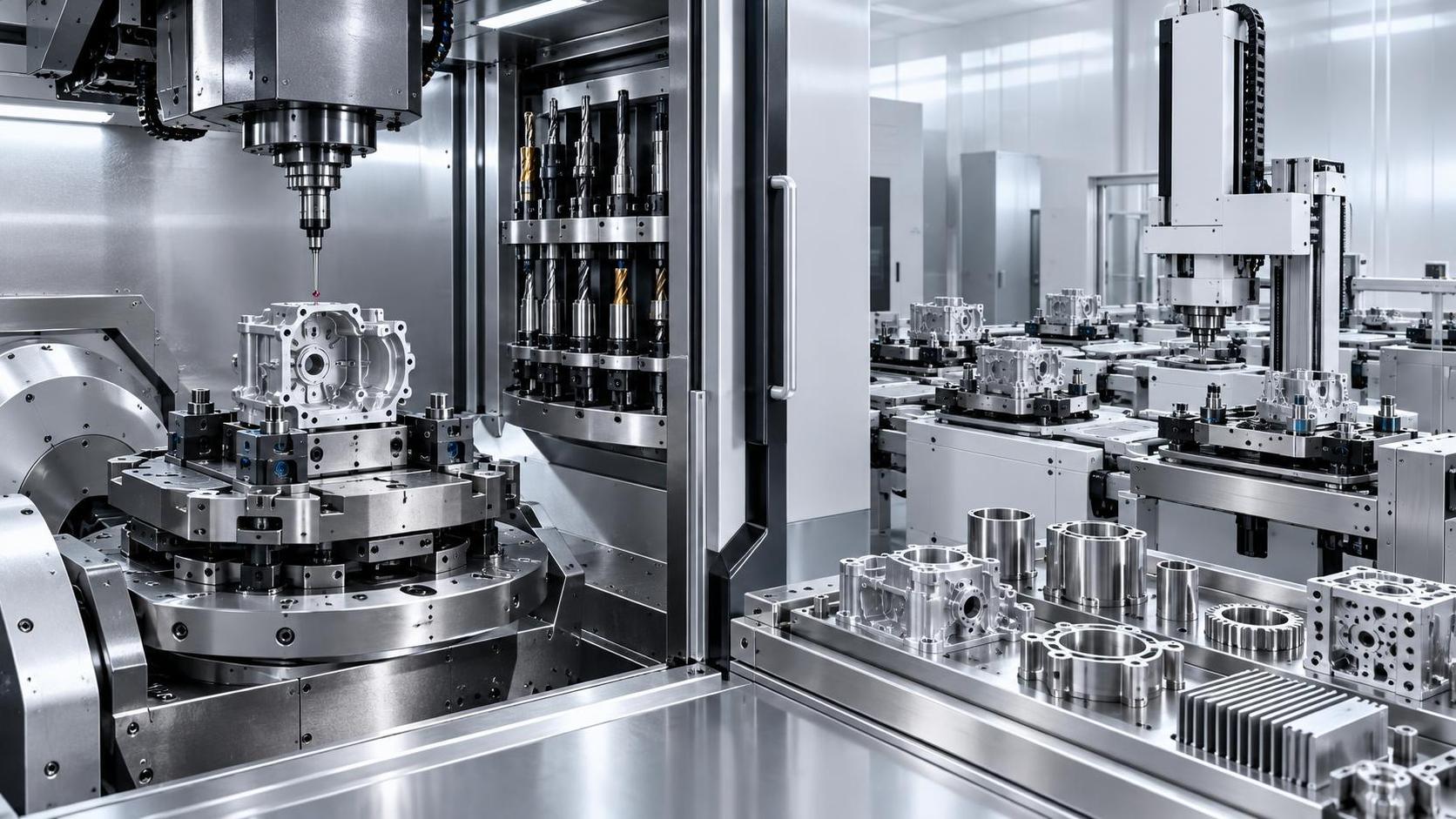
For machining centers, a pallet system can be effective where fixtures are repeatable and jobs involve enough machining time to justify offline loading. While one fixture is machined, another can be prepared outside the enclosure. This can reduce spindle waiting during changeovers without requiring a fully autonomous cell. It is particularly useful when operators spend significant time opening the door, cleaning the table, locating parts, and proving the next setup.
Robotic loading becomes more attractive when part geometry is consistent, batches recur, and the machine already has a stable cycle. A robot cannot compensate for unreliable clamping, inconsistent incoming blanks, tangled chips, or a process that requires frequent human judgment. Early feasibility work should examine the entire cycle: how parts arrive, how they are oriented, how they are gripped, whether they need blow-off or washing, where good parts go, and what happens to rejected parts.
Do not automate an unstable process
A frequent purchasing mistake is treating automation as a way to fix poor process control. It usually magnifies existing weaknesses. When a part varies because the fixture is inconsistent, a robotic cell may produce bad parts more efficiently. When tool life is unpredictable, unattended running can create scrap before anyone sees the issue. When programs are changed informally at the control, digital production records quickly become unreliable.
Before adding unattended or lightly attended operation, define the minimum process conditions that must be stable. These normally include fixture repeatability, verified work offsets, tool management, chip removal, coolant performance, part handling, and a clear reaction plan for alarms. Operators should be able to explain which events require a machine stop and which can be safely addressed at the next planned check.
Quality control deserves special attention. A small shop does not need to inspect every dimension with a complex automated system to benefit from smarter production. Often, the useful improvement is connecting first-piece approval, in-process checks, gauge records, and job status so that the next operation can see whether a batch is released. For critical dimensions, probing or measurement integration may be justified, but only after confirming that the measurement method is suitable for the tolerance, surface condition, temperature effects, and production pace.
Digital job tracking can remove hidden administrative waste
Production information is often scattered across paper travelers, spreadsheets, whiteboards, email messages, and conversations at the machine. This arrangement can work in a very small operation until order mix, outside processing, or revision control becomes more demanding. Then time is lost answering basic questions: Which revision is running? Has the first article been approved? Is material available? Which operation is complete? Why is the job waiting?
Digital job tracking should begin with the decisions the shop needs to make each day, not with a large software feature list. A useful system may only need to show the current operation, quantity completed, quantity rejected or held, setup status, inspection status, and next required action. More advanced scheduling, maintenance, inventory, and enterprise integration can be added later if the underlying data is accurate.
When comparing systems, test them against a real routing rather than a generic demonstration. Include a part that moves from turning to milling, inspection, deburring, outside processing, and final packing. Check how the system handles a program revision, split lot, rework loop, machine breakdown, and material shortage. These everyday exceptions determine whether people will trust the system when production is under pressure.
Choose between flexible and dedicated automation carefully
Small businesses often need flexibility more than maximum theoretical throughput. A dedicated solution may be efficient for one part family but difficult to redeploy when demand changes. Flexible automation, such as a robot with changeable grippers, configurable trays, or reusable fixture concepts, can serve a broader mix of work but may require more engineering and longer changeovers.
The decision should be based on the expected production pattern, not a hope that every job will eventually run unattended. Dedicated automation is usually easier to justify when one component family has predictable volume, stable design, and long-term demand. Flexible cells suit shops that repeatedly machine related parts with manageable differences in size, orientation, and handling requirements. Very high-mix, low-volume environments may receive a better return from improved setups, offline presetting, palletized fixturing, and accurate job information than from a robot.
Ask suppliers to define the boundary of the proposed solution. Which part dimensions can it handle? What materials or surface conditions affect gripping? How are changeovers completed? Which operations remain manual? What happens during a misload, a part-detection failure, or a machine alarm? Procurement decisions improve when these questions are answered before the purchase order, rather than during commissioning.
Build the ROI model around capacity, not just labor savings
Labor reduction is easy to understand, but it is not the only source of return. An automated cell may allow one operator to supervise several stable machines, reduce waiting between cycles, increase the consistency of loading, or extend production into periods when the shop would otherwise be unattended. It may also reduce delivery risk by making output more predictable. These benefits matter only if the released capacity can be used for profitable production, shorter lead times, or avoidance of another constraint.
A practical evaluation should include the full operating cost: equipment, installation, guarding, integration, fixtures, grippers, programming, training, maintenance, floor space, utilities, and expected changeover effort. It should also include the internal time required to stabilize the process. A low purchase price can become expensive if the equipment needs frequent manual intervention or cannot be adapted to normal job variation.
Use several production scenarios rather than one optimistic estimate. Consider a normal demand period, a lower-volume period, and a period with frequent changeovers. Estimate how many unattended cycles are realistically achievable after accounting for tool changes, material replenishment, inspection, chip management, and alarm recovery. This approach produces a more defensible investment decision than assuming that the machine will run continuously because an automation device is attached.
A sensible order of implementation
For many precision manufacturers, the most controlled path is to make machine time visible, stabilize the process that causes the largest delay, and automate the handling around that stable process. This sequence reduces the chance of buying equipment to solve the wrong problem. It also gives operators time to refine work instructions, alarm responses, tool-life practices, and quality checks before unattended production expands.
The strongest early projects are usually narrow: one constrained machine, one recurring part family, one measurable source of waiting, and one owner responsible for reviewing the outcome. Once the operation can explain why that project improved productive capacity or reduced disruption, the next automation decision becomes far less speculative.
NEXT ARTICLE
Recommended for You
 Smart Manufacturing for Small Businesses: Where Automation Delivers the Fastest ROIMachine Tool Industry Editorial Team
 How to Specify a CNC Lathe for High-Volume Automotive Shaft ProductionCNC Machining Technology Center
 How Automated Precision Machining Maintains Tolerance in High-Mix ProductionCNC Machining Technology Center
 How to Evaluate a Machine Tool Factory Before Sourcing CNC EquipmentGlobal Machine Tool Trade Research Center
 CNC Programming Explained: From CAD Models to Reliable Shop-Floor ToolpathsCNC Machining Technology Center
 How Multi-Axis Machining Produces Complex Components With Fewer SetupsCNC Machining Technology Center



Aris Katos
Future of Carbide Coatings
15+ years in precision manufacturing systems. Specialized in high-speed milling and aerospace grade alloy processing.
▶
Smart Manufacturing for Small Businesses: Where Automation Delivers the Fastest ROIMachine Tool Industry Editorial Team▶
How Smart Manufacturing Technology Improves OEE Across Industry 4.0 Production LinesMachine Tool Industry Editorial Team▶
How to Evaluate an Automation Line for Electronics Production Before InvestmentMachine Tool Industry Editorial Team▶
How to Evaluate an Automated Production Line for Output, Flexibility, and ROIMachine Tool Industry Editorial Team▶
How Smart Manufacturing Improves Traceability and Quality Control in Aerospace?Machine Tool Industry Editorial Team
Mastering 5-Axis Workholding Strategies
Join our technical panel on Nov 15th to learn about reducing vibrations in thin-wall components.

Providing you with integrated sanding solutions
Before-sales and after-sales services
Comprehensive technical support