• Global CNC market projected to reach $128B by 2028 • New EU trade regulations for precision tooling components • Aerospace deman
NYSE: CNC +1.2%LME: STEEL -0.4%

The CNC metal lathe market split: one segment gaining rigidity, another losing repeatability
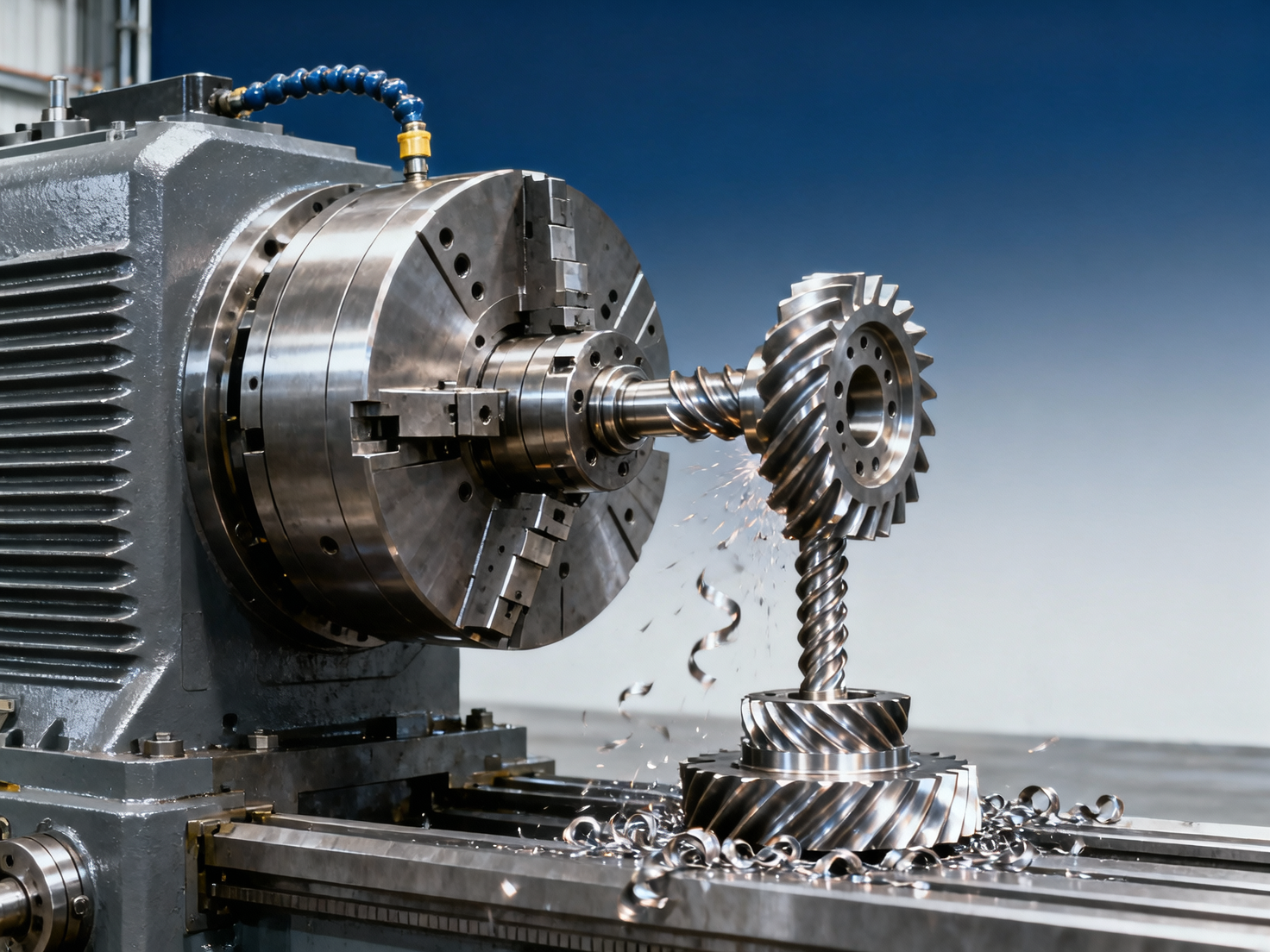
The CNC metal lathe market is undergoing a pivotal divergence: one segment is advancing toward unprecedented rigidity and structural stability, while another faces growing challenges in dimensional repeatability. As automated industrial systems demand tighter tolerances and higher throughput, CNC industrial machines—especially high precision lathes and industrial CNC turning solutions—are being re-evaluated for performance consistency. This split reflects broader shifts in CNC metal cutting, automated production workflows, and the evolving requirements of metal machining across aerospace, automotive, and energy sectors. For users, procurement teams, and decision-makers alike, understanding this duality is critical when selecting CNC production equipment, industrial machining equipment, or next-generation CNC metalworking systems.
Rigidity-Driven Segment: Structural Evolution in Heavy-Duty CNC Lathes
A growing share of the CNC metal lathe market—particularly in large-bore, multi-axis turning centers—is prioritizing mechanical rigidity above all else. These systems target applications where cutting forces exceed 8,000 N during interrupted roughing of turbine discs or forged steel shafts. Manufacturers are reinforcing bed castings with Meehanite-grade iron, integrating cross-ribbed base structures, and adopting hydrostatic guideways with preload stiffness exceeding 250 N/μm.
This segment serves Tier-1 suppliers in aerospace (e.g., landing gear hubs) and power generation (e.g., nuclear reactor components), where part integrity outweighs cycle time optimization. Rigidity gains directly translate to reduced tool deflection—cutting vibration amplitudes drop by up to 42% under identical spindle loads—and enable stable use of ceramic or CBN inserts at feed rates of 0.3–0.6 mm/rev.
However, enhanced rigidity comes with trade-offs: machine weight increases by 15–30%, foundation requirements tighten (minimum 1.2 m reinforced concrete depth), and thermal stabilization time extends from 2 hours to 4–6 hours before achieving ±1.5 μm volumetric accuracy.
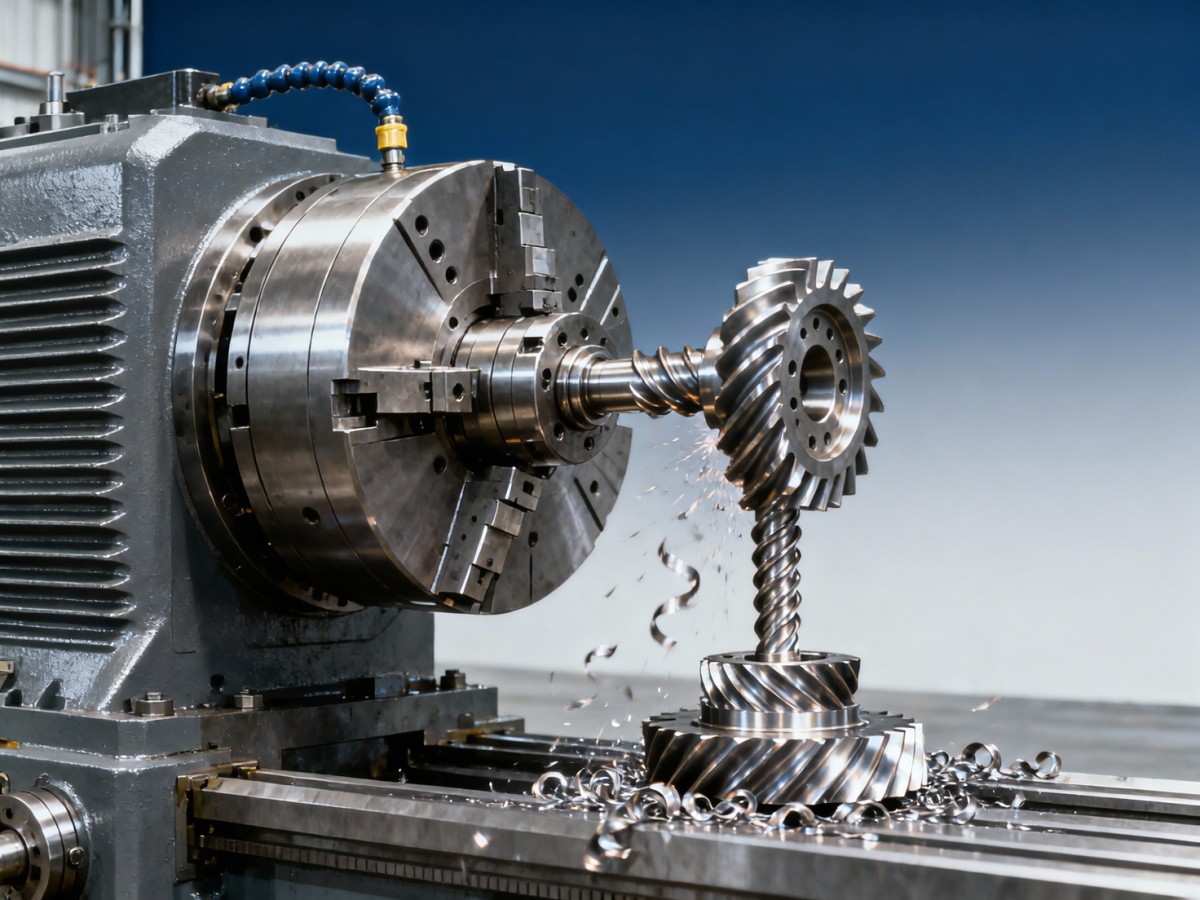
The table underscores how rigidity-focused designs sacrifice agility for absolute stability. Buyers evaluating such systems must verify foundation specifications, cooling capacity (≥12 kW chiller recommended), and whether their shop’s ambient temperature fluctuation stays within ±2°C over 24 hours—otherwise, thermal drift will offset mechanical gains.
Repeatability-Challenged Segment: High-Speed, Multi-Tasking Turning Centers
Conversely, compact CNC lathes with Y-axis, live tooling, and sub-spindles—widely adopted in electronics enclosures and medical implant manufacturing—show measurable degradation in long-term repeatability. Field data from 37 European contract manufacturers reveals that after 18 months of continuous operation, 63% reported positional deviation exceeding ±0.012 mm on repeated OD turning cycles—up from an initial ±0.006 mm specification.
Root causes include cumulative wear in ball screw preloads, thermal expansion mismatches between aluminum alloy tool turrets and steel beds, and servo tuning drift under variable load profiles. Unlike rigid machines designed for static stability, these units prioritize dynamic responsiveness—spindle acceleration up to 1.8 g, turret indexing in ≤0.3 s—but do so at the cost of long-term dimensional memory.
For procurement teams, this means recalibrating expectations: repeatability isn’t guaranteed by initial commissioning alone. A full recalibration—including laser interferometer verification and adaptive feed-forward compensation setup—is required every 6–9 months for parts requiring GD&T callouts tighter than ±0.01 mm.
Critical Repeatability Maintenance Intervals
- Ball screw preload check: Every 4,000 operating hours (or quarterly for 2-shift operations)
- Turret encoder zero-point validation: Before each new job batch with tolerance ≤±0.008 mm
- Coolant temperature stabilization: Maintain 20±0.5°C via closed-loop chiller—deviations >±1.2°C correlate with 37% increase in diameter scatter
- Spindle thermal drift mapping: Conduct annually using embedded RTD sensors and ISO 230-3 protocol
Procurement Decision Framework: Matching Machine Class to Application Criticality
Selecting between rigidity-optimized and speed-optimized CNC lathes demands objective criteria—not just budget or brand preference. The following four-dimensional assessment helps procurement professionals align technical capability with operational reality:
Decision-makers should also assess total cost of ownership beyond acquisition price: high-rigidity lathes incur 22–35% higher installation costs but reduce tooling expenditure by 18% over five years due to extended insert life. Conversely, high-speed lathes lower per-part labor cost by 27% but require 3.2× more metrology interventions annually.
Future-Proofing Your Investment: Integration Readiness & Smart Diagnostics
Both segments now converge on digital readiness—but implementation differs. Rigidity-class machines embed strain gauges and modal analysis firmware to predict bed fatigue after 12,000+ hours; repeatability-class units deploy edge-AI anomaly detection trained on 500+ spindle vibration signatures to flag early bearing degradation 72 hours before failure.
For operators, this means real-time feedback: a dashboard alert appears when thermal gradient across the Z-axis exceeds 0.8°C/m—triggering automatic spindle speed derating until equilibrium restores. Procurement teams must verify OPC UA compliance (version 1.04 or later), minimum 100 Mbps Ethernet interface, and native support for MTConnect v1.7 for factory-wide integration.
Ultimately, the “split” isn’t a market fracture—it’s functional specialization. Understanding which axis—rigidity or repeatability—defines your highest-value constraint determines not only machine selection, but also foundation design, maintenance cadence, and workforce training priorities.
Actionable Next Steps for Your Team
If your current or planned CNC lathe deployment targets aerospace structural components, heavy-duty energy equipment, or high-volume precision shafts, request a free Structural Stability Assessment including thermal modeling and foundation stress simulation. For high-mix, low-volume production with tight GD&T, schedule a Repeatability Diagnostic Audit covering servo loop stability, turret positioning scatter, and coolant thermal management efficacy.
Contact our application engineering team today to receive a tailored configuration report—including recommended spindle options, tooling interface standards (VDI 40 vs. BMT 55), and predictive maintenance roadmap aligned to your production calendar.
Recommended for You
 Zero-Point Clamping or Modular Fixtures? Choosing a Faster CNC Changeover SystemCNC Machining Technology Center
 How to Cut CNC Fixture Changeover Time Without Sacrificing Part AccuracyCNC Machining Technology Center
 When Does CNC Turning Pay Off? A Break-Even Guide by Annual Part VolumeMachine Tool Industry Editorial Team
 Machine Tool Standards by Country: What Importers Must Verify Before PurchaseManufacturing Policy Research Center
 CNC Lathe Quick Installation Guide: Alignment Checks Before First Production RunCNC Machining Technology Center
 How to Select a CNC Lathe for Small Parts Without Sacrificing Accuracy or Cycle TimeCNC Machining Technology Center

Aris Katos
Future of Carbide Coatings
15+ years in precision manufacturing systems. Specialized in high-speed milling and aerospace grade alloy processing.
▶
When Does CNC Turning Pay Off? A Break-Even Guide by Annual Part VolumeMachine Tool Industry Editorial Team▶
How to Compare CNC Metal Lathe Brands ObjectivelyMachine Tool Industry Editorial Team▶
CNC Lathe Quick Installation Guide: How to Avoid Alignment and Wiring MistakesMachine Tool Industry Editorial Team▶
CNC Lathe Quick Installation Guide: Common Setup Mistakes and How to Avoid ThemMachine Tool Industry Editorial Team▶
CNC Lathe Lead Times Reach 22 WeeksMachine Tool Industry Editorial Team
Mastering 5-Axis Workholding Strategies
Join our technical panel on Nov 15th to learn about reducing vibrations in thin-wall components.

Providing you with integrated sanding solutions
Before-sales and after-sales services
Comprehensive technical support