• Global CNC market projected to reach $128B by 2028 • New EU trade regulations for precision tooling components • Aerospace deman
NYSE: CNC +1.2%LME: STEEL -0.4%

Industrial turning isn’t just about speed anymore—here’s where precision trade-offs quietly accumulate
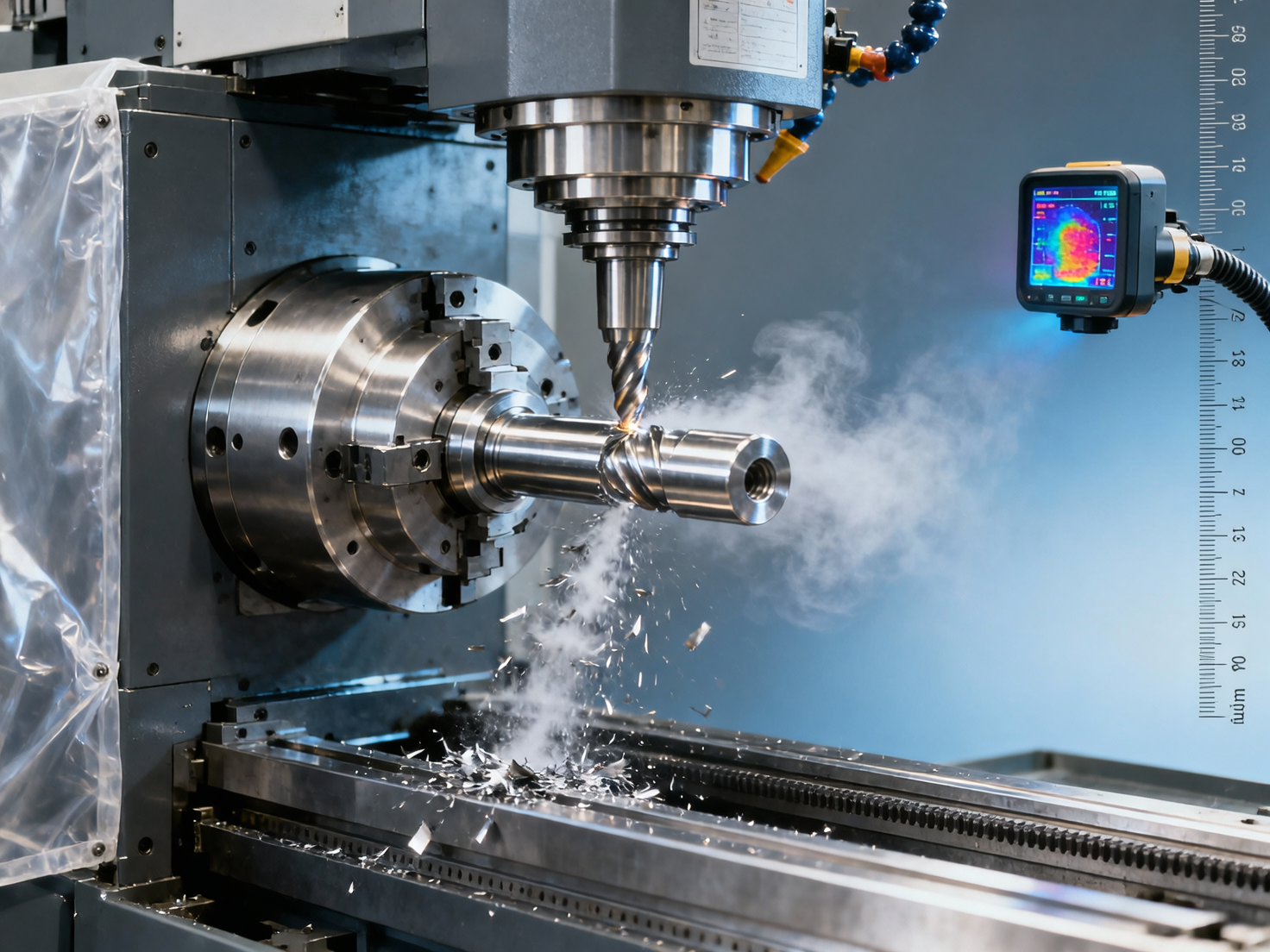
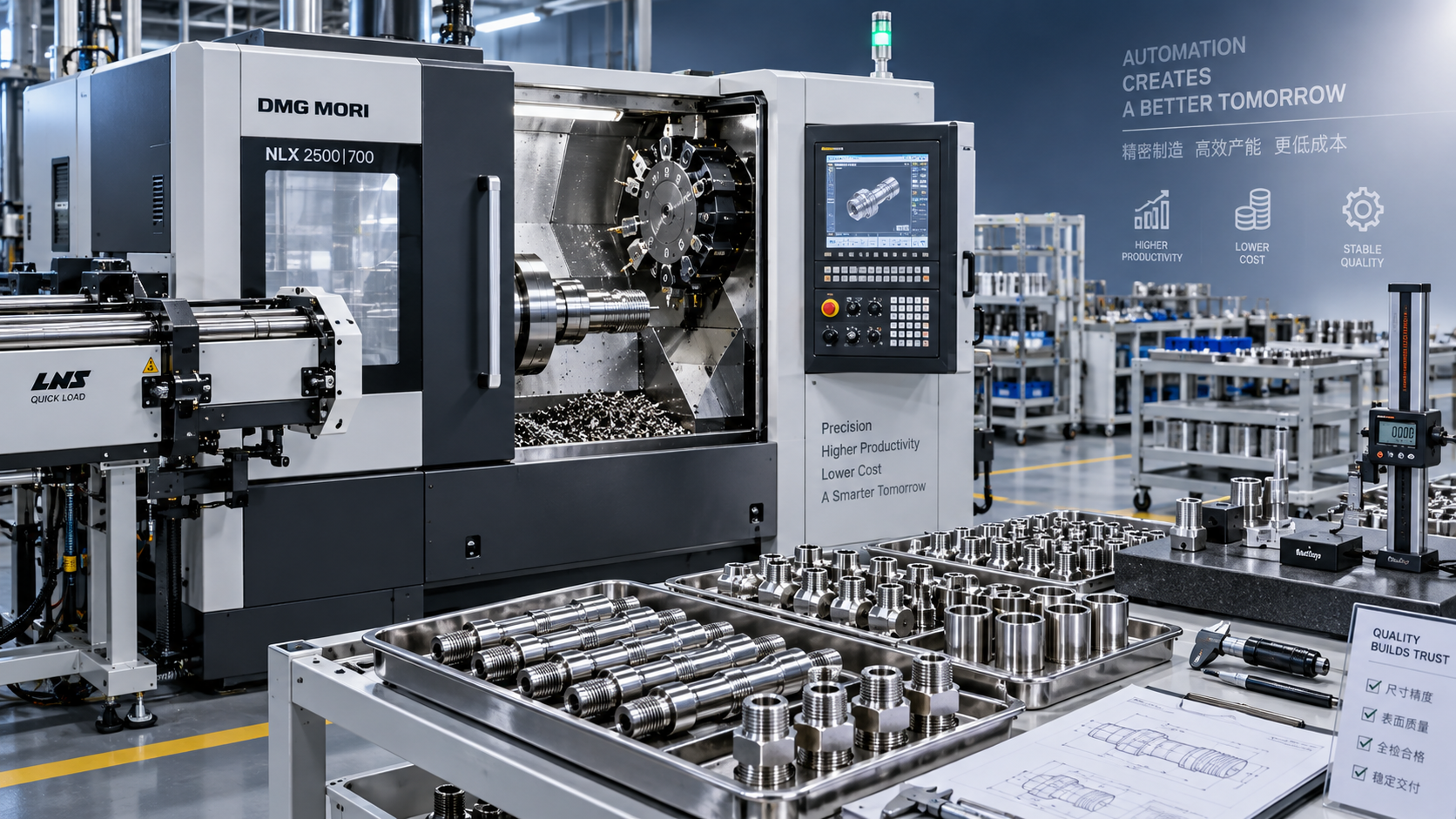
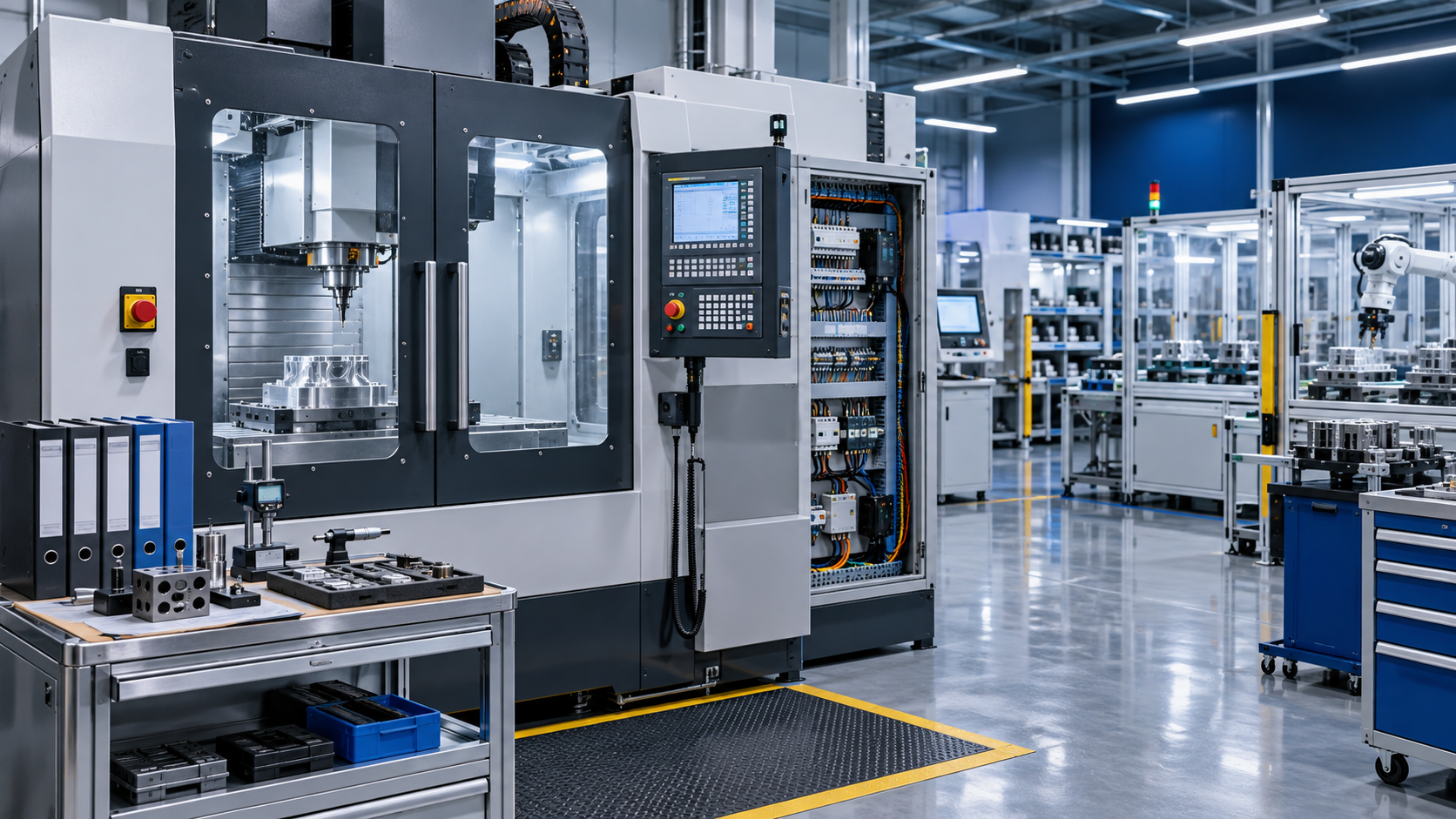
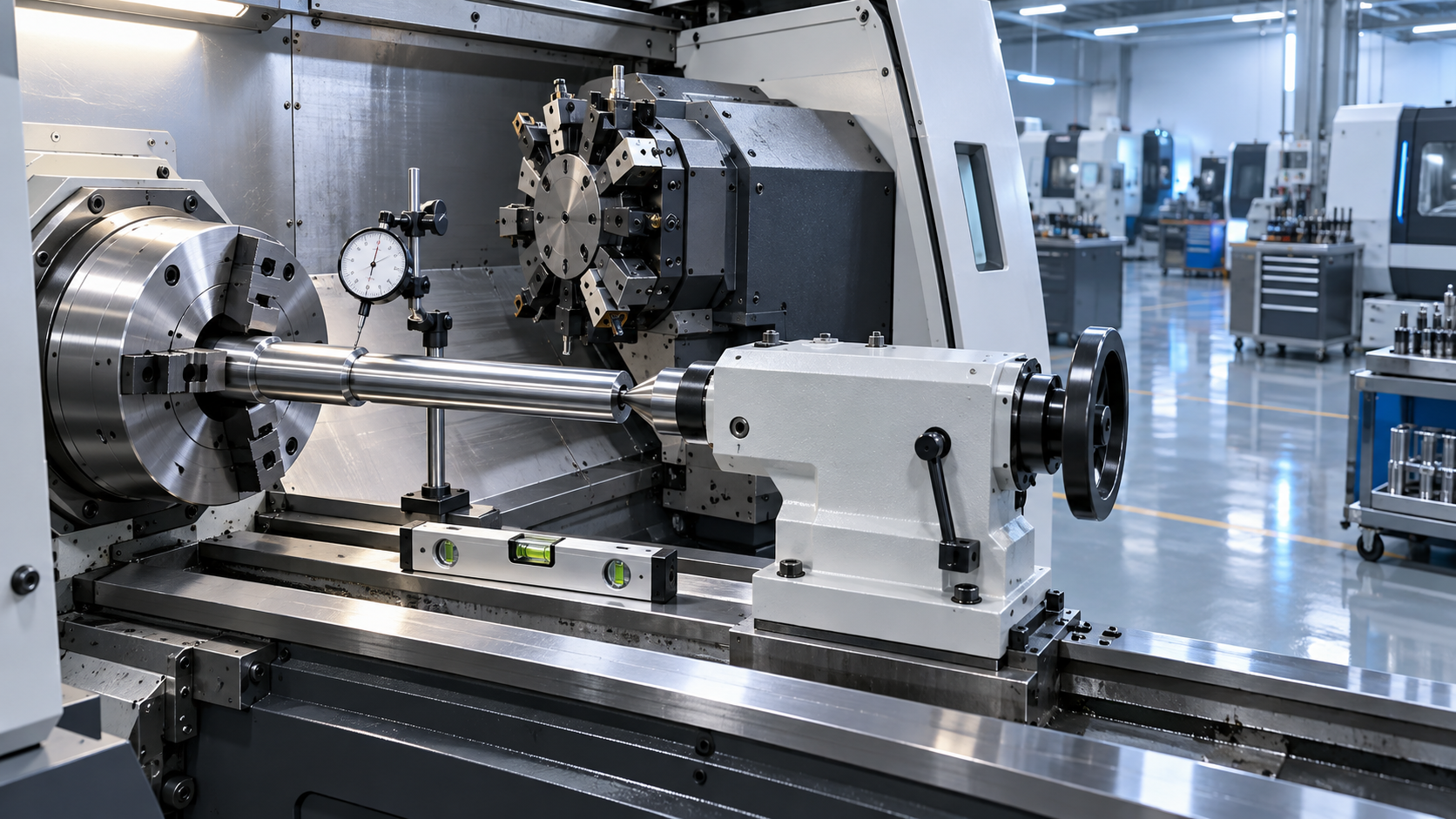
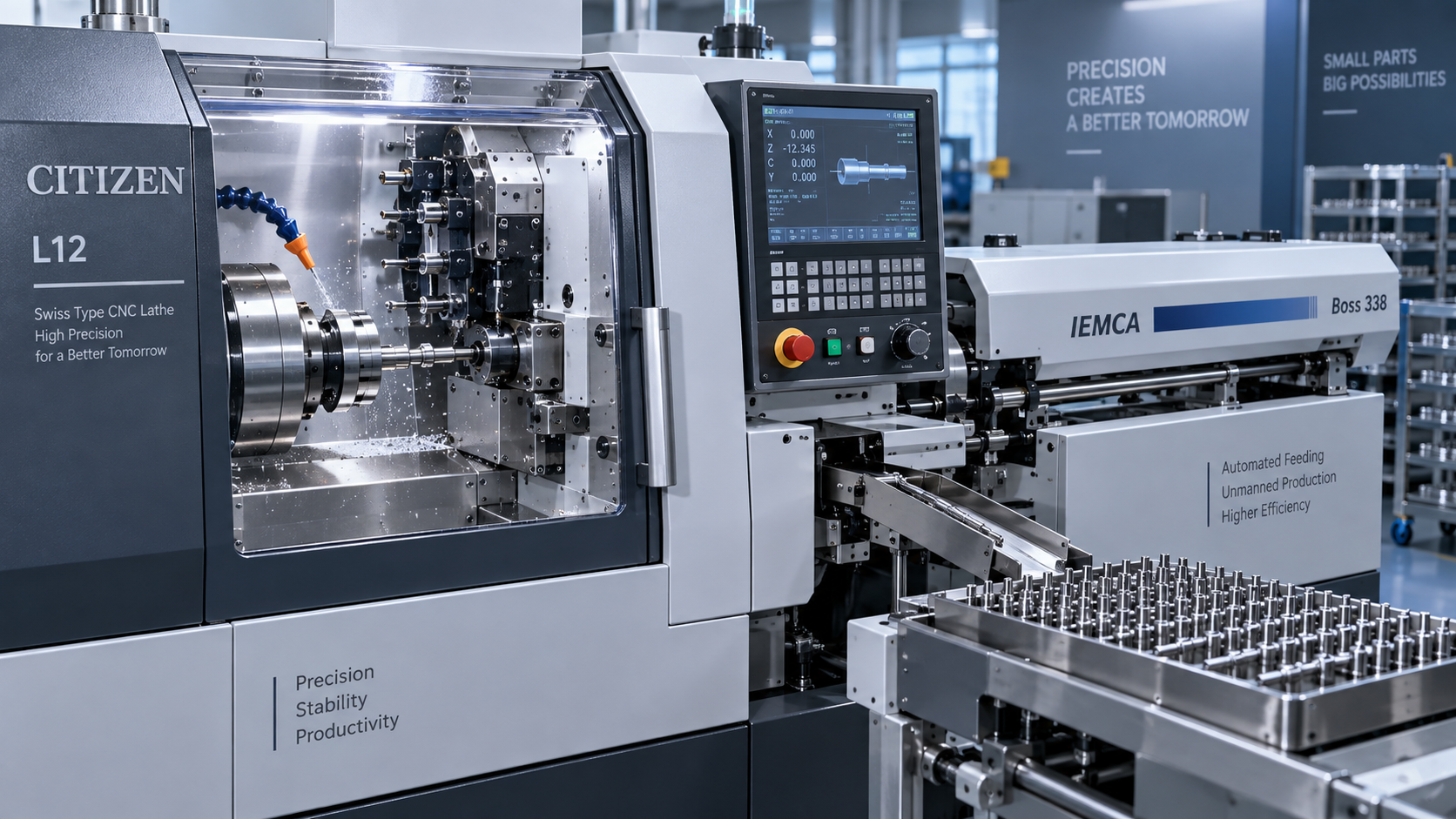
Industrial turning has evolved far beyond raw speed—today’s automated industrial and CNC industrial machines demand uncompromising accuracy at every stage. From high precision lathes to CNC metal cutting systems, subtle deviations in tool wear, thermal drift, or setup consistency silently compound into measurable precision trade-offs. Whether you’re an operator optimizing cycle time, a procurement specialist evaluating CNC production equipment, or a decision-maker scaling industrial machining equipment, understanding where these hidden compromises accumulate is critical. This article unpacks the real-world tensions between throughput and tolerance in modern CNC metalworking—and what it means for your automated production, CNC industrial equipment, and long-term manufacturing competitiveness.
Where Precision Erosion Begins: The Four Critical Accumulation Zones
Precision loss in industrial turning rarely stems from a single catastrophic failure. Instead, it emerges across four interdependent operational zones—each contributing incremental deviation that compounds over time. Studies by the German Machine Tool Builders’ Association (VDW) show that up to 68% of out-of-tolerance parts in high-mix aerospace shaft production trace back to cumulative errors across these zones—not isolated tool breakage or programming mistakes.
Zone 1: Thermal deformation during multi-hour continuous runs. Spindle temperature rise of just 3–5°C above ambient can induce 8–12 µm axial drift in a 300-mm workpiece on a mid-tier CNC lathe. Zone 2: Fixture repeatability degradation after 1,200+ clamping cycles—especially with aluminum vise jaws showing 0.015 mm loss in parallelism per 500 cycles.
Zone 3: Tool wear progression beyond the “stable zone.” Carbide inserts typically maintain ±2.5 µm dimensional consistency for only 12–18 minutes under aggressive 0.35 mm/rev feed rates in hardened steel (HRC 42–48). Zone 4: Post-process handling-induced stress relaxation—verified through strain gauge monitoring on titanium alloy flanges, where 0.008–0.012 mm distortion occurs within 90 minutes of unclamping.
This table reveals why reactive inspection fails: deviations occur faster than traditional QC sampling intervals (typically every 30–50 parts). Proactive mitigation requires real-time sensing integrated into the control loop—not post-process metrology alone.
The Operator’s Dilemma: Cycle Time vs. Tolerance Bandwidth
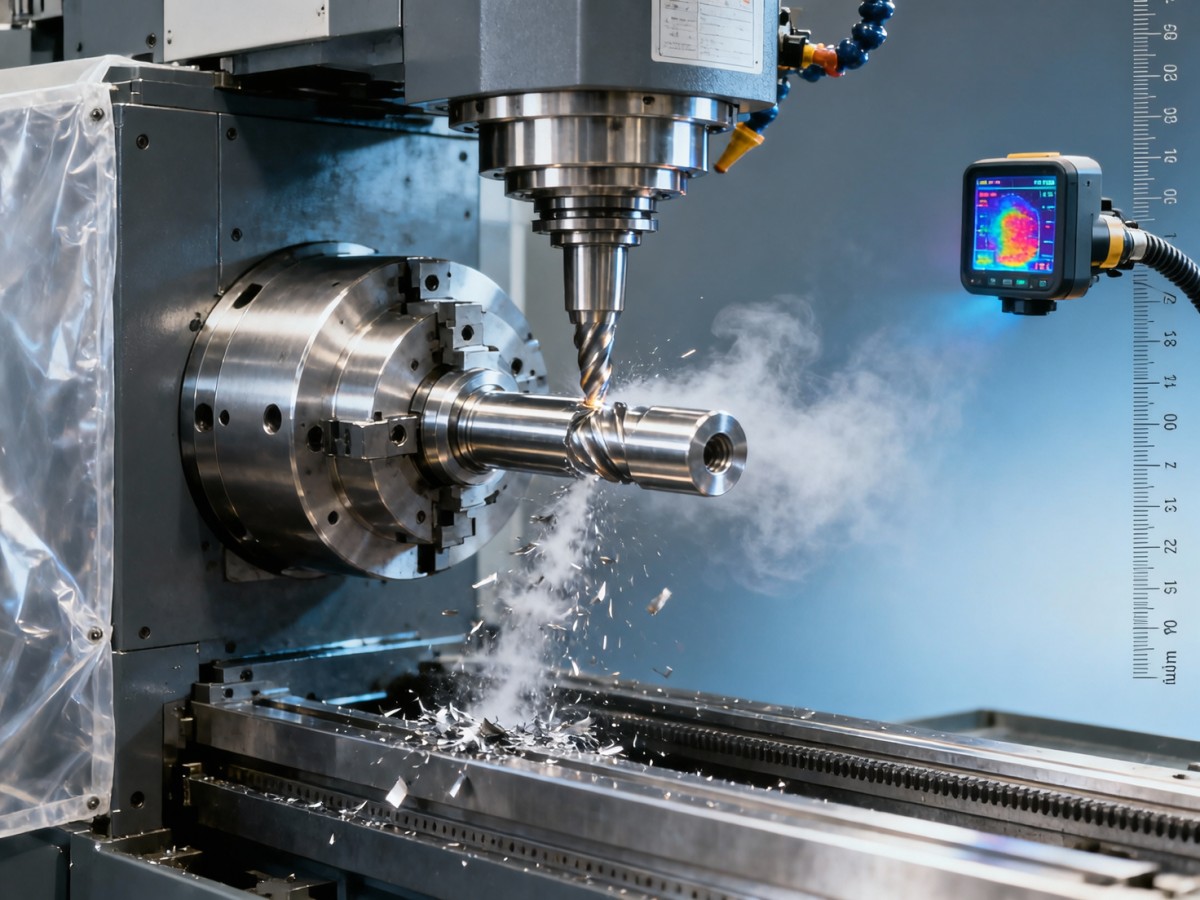
For machine operators managing high-volume automotive CV joint production, the pressure to reduce cycle time often triggers unconscious trade-offs. A 2.3-second reduction per part—achieved by increasing feed rate from 0.28 to 0.33 mm/rev—can elevate surface roughness from Ra 0.8 µm to Ra 1.6 µm and widen diameter variation from ±4 µm to ±9 µm over 120-part batches.
These shifts are rarely visible on the shop floor but directly impact downstream assembly yield. In electric motor rotor machining, a ±7 µm tolerance band is required for magnetic flux consistency. Exceeding this threshold increases no-load current variance by 11–14%, reducing efficiency certification pass rates by 22% in Tier-1 EV suppliers.
Operators need embedded decision support—not just G-code overrides. Modern CNC controls now integrate adaptive feed optimization: using real-time spindle load feedback (sampled at 10 kHz), they dynamically adjust feed to stay within 92–96% of maximum stable torque, preserving both tool life and dimensional stability.
Procurement Pitfalls: What Specs Hide the Real Precision Cost?
When evaluating CNC lathes, procurement teams often prioritize headline specs: positioning accuracy (±0.005 mm), repeatability (±0.002 mm), and rapid traverse (30 m/min). But these static values ignore dynamic performance under thermal load, vibration coupling, and long-term geometric stability.
A leading Japanese OEM reports that 41% of “precision-labeled” lathes fail ISO 230-2 thermal stability tests after 3 hours of continuous operation—despite meeting all factory acceptance criteria at ambient conditions. The gap lies in structural damping: cast iron beds with 12–15 dB damping ratio outperform polymer-concrete composites by 3.2x in suppressing chatter-induced form error at 800–1,200 Hz frequencies.
Procurement must therefore demand full thermal stability documentation—not just static accuracy certificates—and require third-party verification of axis squareness retention over 12 months.
Strategic Mitigation: Building Precision Resilience into Your Production System
Precision resilience isn’t purchased—it’s engineered. Leading manufacturers deploy three integrated layers: hardware (thermally stable structures), software (adaptive compensation algorithms), and process (closed-loop metrology integration).
Hardware: Select machines with dual-temperature-controlled hydraulic chucks (±0.3°C stability) and bed designs featuring internal coolant channels—reducing thermal gradient across the X/Z axes to <1.2°C even after 5-hour continuous cuts.
Software: Implement real-time thermal error compensation (TEC) modules compliant with ISO 230-3 Annex D. These use 12+ embedded temperature sensors and linear regression models updated every 90 seconds to correct positional offsets with <0.8 µm residual error.
- Process Layer: Integrate in-process touch probes capable of measuring 5-axis feature geometry within 12 seconds—triggering automatic offset updates before the next part starts.
- Maintain fixture calibration logs with digital twin synchronization: Every jaw regrind updates the virtual model’s contact geometry, ensuring simulation matches physical reality.
- Deploy predictive tool life analytics using acoustic emission (AE) sensors—detecting micro-chipping onset 47–63 seconds before visual wear appears.
Conclusion: Precision Is a System Metric—Not a Machine Spec
Industrial turning precision is no longer defined by a single machine’s static accuracy rating. It’s the emergent property of how thermal management, fixture integrity, tool dynamics, and real-time control interact across thousands of cycles. Hidden trade-offs accumulate not in milliseconds—but in microns, minutes, and maintenance intervals.
For operators: Prioritize adaptive feed control over manual feed overrides. For procurement teams: Demand thermal stability validation—not just ambient-condition specs. For decision-makers: Treat precision as a KPI measured across the entire production system—not just at the spindle nose.
To evaluate how your current CNC turning infrastructure handles precision accumulation—or to benchmark against industry-resilient configurations—contact our precision engineering team for a free system health assessment. We’ll analyze your typical workpiece materials, cycle profiles, and tolerance requirements to identify your highest-leverage precision intervention points—within 5 business days.
Recommended for You
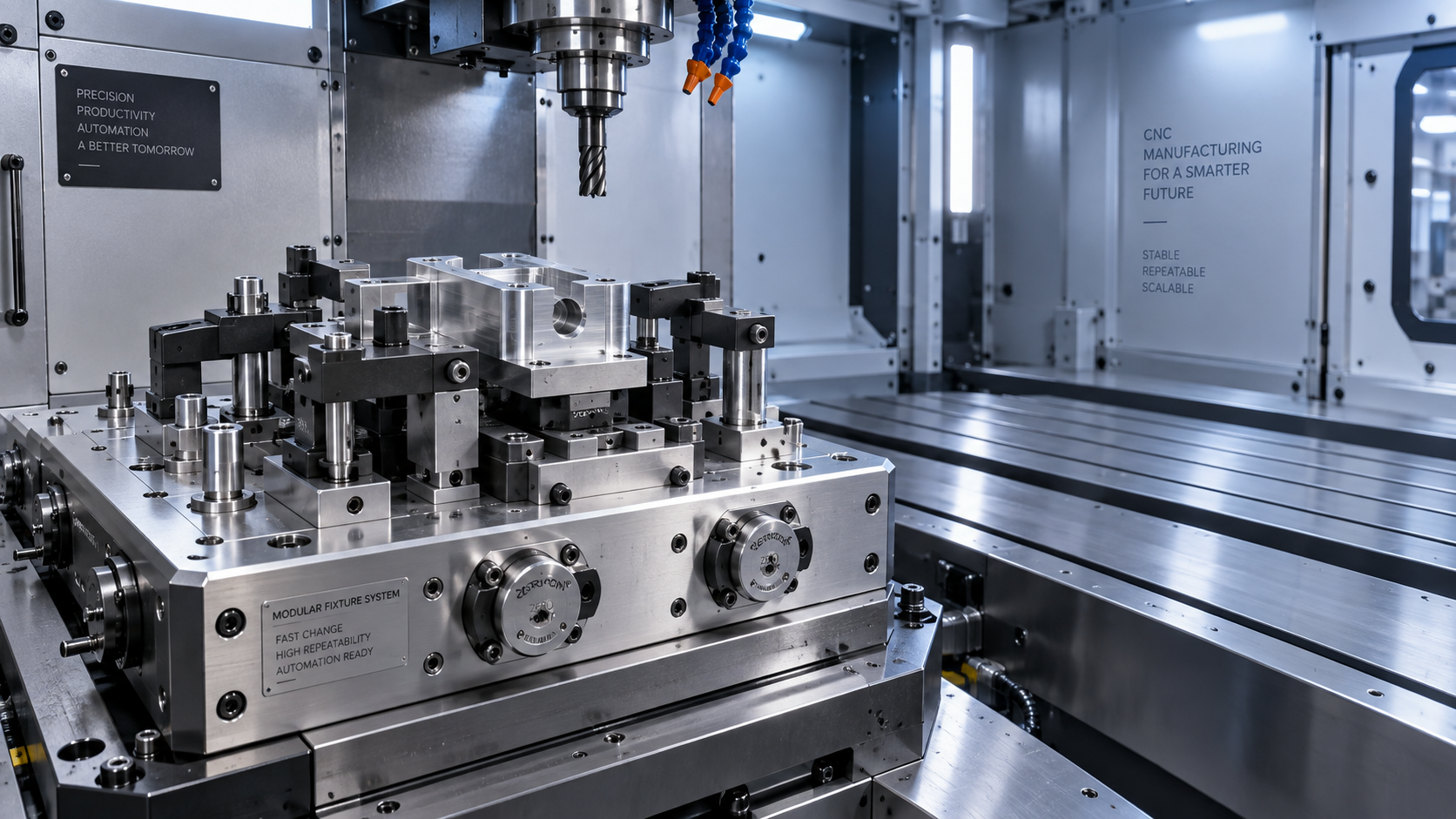
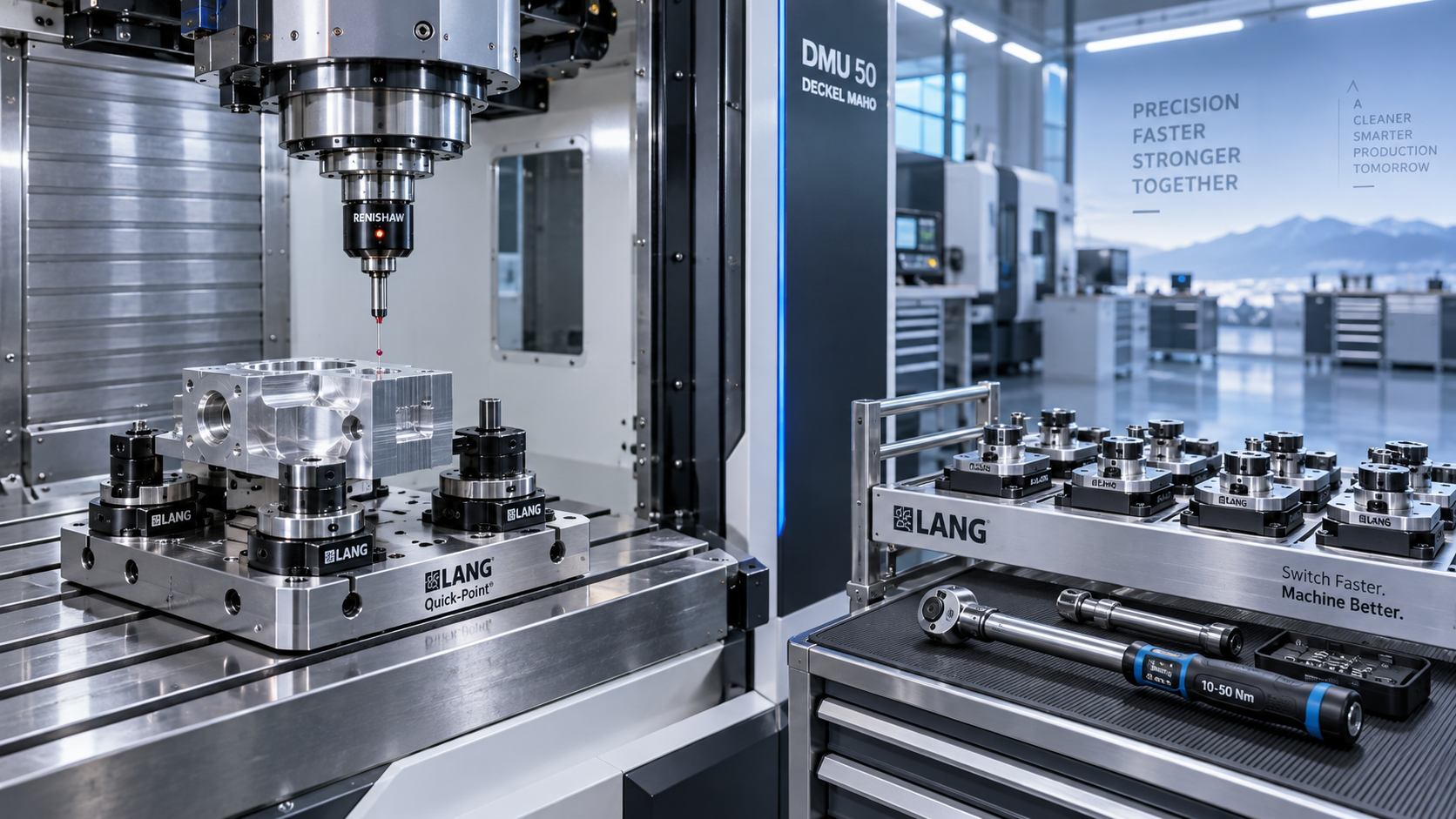
 Zero-Point Clamping or Modular Fixtures? Choosing a Faster CNC Changeover SystemCNC Machining Technology Center
 How to Cut CNC Fixture Changeover Time Without Sacrificing Part AccuracyCNC Machining Technology Center
 When Does CNC Turning Pay Off? A Break-Even Guide by Annual Part VolumeMachine Tool Industry Editorial Team
 Machine Tool Standards by Country: What Importers Must Verify Before PurchaseManufacturing Policy Research Center
 CNC Lathe Quick Installation Guide: Alignment Checks Before First Production RunCNC Machining Technology Center
 How to Select a CNC Lathe for Small Parts Without Sacrificing Accuracy or Cycle TimeCNC Machining Technology Center

Aris Katos
Future of Carbide Coatings
15+ years in precision manufacturing systems. Specialized in high-speed milling and aerospace grade alloy processing.
▶
When Does CNC Turning Pay Off? A Break-Even Guide by Annual Part VolumeMachine Tool Industry Editorial Team▶
How to Compare CNC Metal Lathe Brands ObjectivelyMachine Tool Industry Editorial Team▶
CNC Lathe Quick Installation Guide: How to Avoid Alignment and Wiring MistakesMachine Tool Industry Editorial Team▶
CNC Lathe Quick Installation Guide: Common Setup Mistakes and How to Avoid ThemMachine Tool Industry Editorial Team▶
CNC Lathe Lead Times Reach 22 WeeksMachine Tool Industry Editorial Team
Mastering 5-Axis Workholding Strategies
Join our technical panel on Nov 15th to learn about reducing vibrations in thin-wall components.

Providing you with integrated sanding solutions
Before-sales and after-sales services
Comprehensive technical support