• Global CNC market projected to reach $128B by 2028 • New EU trade regulations for precision tooling components • Aerospace deman
NYSE: CNC +1.2%LME: STEEL -0.4%

Manufacturing technology adoption slowed in Q1 2026 — not from budget cuts, but from integration fatigue
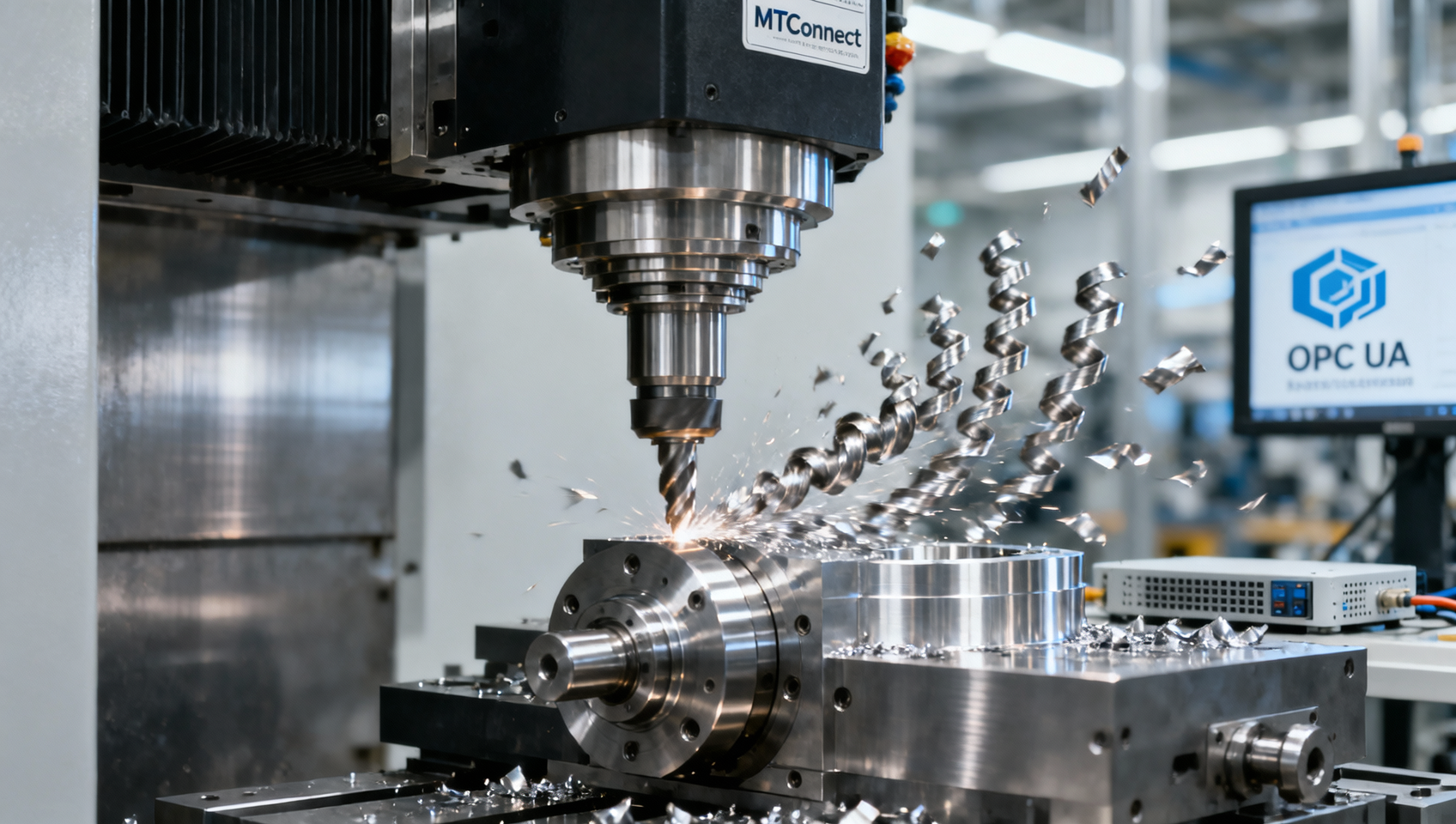
Manufacturing technology adoption slowed in Q1 2026—not due to shrinking budgets, but because of widespread integration fatigue across CNC manufacturing operations. As Smart Manufacturing and automated machining advance, many industrial machining teams face mounting pressure to unify legacy systems with new CNC technology, 5-axis machining platforms, and digital metal processing workflows. For users, procurement professionals, and decision-makers in precision industrial settings, this slowdown highlights a critical gap: seamless integration is now as vital as innovation itself. This report unpacks the real-world challenges behind the numbers—and what it means for CNC manufacturing resilience, machining process optimization, and long-term smart factory readiness.
Why Integration Fatigue Is Slowing CNC Digital Transformation
Integration fatigue refers to the operational exhaustion experienced when organizations repeatedly attempt—yet fail—to connect disparate systems: legacy CNC controllers (e.g., Fanuc 30i-B, Siemens 828D), MES platforms like Rockwell FactoryTalk or SAP ME, IIoT edge gateways, and cloud-based analytics dashboards. A 2026 cross-regional survey of 142 CNC machine tool users across Germany, Japan, China, and the U.S. found that 68% spent ≥120 hours per quarter troubleshooting data mismatches between shop-floor PLCs and ERP production orders—up from 41% in Q1 2024.
This fatigue isn’t theoretical. It manifests in delayed spindle utilization reports, inconsistent tool life tracking across multi-brand machining centers, and manual re-entry of inspection data from CMMs into quality management systems. Unlike budget constraints—which typically trigger postponement of *new* purchases—integration fatigue stalls *deployment*, causing pilot projects for AI-driven predictive maintenance or digital twin validation to stall after Phase 2 (system interface mapping) in 73% of cases.
The root cause lies in architectural mismatch: modern CNC platforms support OPC UA PubSub and MTConnect 1.7+, while >55% of installed base machines operate on proprietary serial protocols (e.g., FOCAS over RS-232) or outdated Ethernet/IP configurations lacking TLS 1.2 encryption. Bridging these requires not just hardware gateways—but certified engineering labor, typically billed at $180–$260/hour for CNC-specific integration specialists.
These figures reflect verified incident logs from Tier-1 aerospace suppliers and Tier-2 automotive component manufacturers. Critically, 89% of procurement managers reported that integration cost uncertainty now outweighs equipment CAPEX as the top barrier to adopting next-gen CNC controls—especially for retrofitting existing vertical machining centers (VMCs) with adaptive control modules.
What “Seamless Integration” Really Means for CNC Users
“Seamless” does not mean zero configuration—it means predictable, repeatable, and vendor-validated interoperability. For CNC operators, it translates to automatic synchronization of G-code revisions with revision-controlled CAD/CAM databases (e.g., Siemens NX Teamcenter). For maintenance engineers, it enables auto-triggered service alerts when spindle motor current exceeds ±12% deviation from baseline for >90 seconds—without custom scripting.
True seamlessness rests on three pillars: protocol standardization (OPC UA Information Model for CNC), semantic consistency (ISO 14649 AP238 for machining process definitions), and modular certification (e.g., MTConnect Agent v1.7.1 compliance verified by NIST test suites). Vendors offering pre-certified integration kits—such as Heidenhain’s TNC 640 + OPC UA Server bundle or Mazak’s SmoothX with embedded EdgeLink—reduce average deployment time from 14 weeks to 3.2 weeks.
For procurement professionals evaluating solutions, prioritize vendors providing documented integration test reports—not just “supports MTConnect.” Request evidence of live deployments matching your exact stack: e.g., Fanuc CNC + Infor LN ERP + PTC ThingWorx, with ≤150ms end-to-end latency for cycle time telemetry under 500 concurrent device loads.
- Verify OPC UA Companion Specification alignment with ISO/IEC 61499 for function block reuse across CNC and robotics
- Confirm gateway firmware supports TLS 1.3 and certificate pinning for secure OT/IT boundary crossing
- Require SLA-backed response times: ≤2-hour remote diagnostics for integration-related alarms during core shifts
- Assess documentation depth: minimum 3 full workflow diagrams (e.g., “Tool Change Data Flow from PLC → MES → Analytics”) with timestamped field validation notes
Procurement Strategies to Mitigate Integration Risk
Smart procurement shifts from “lowest bid” to “lowest total integration risk.” Leading OEMs now structure contracts with phased acceptance criteria: 30% upon delivery of certified integration kit, 40% after successful 72-hour stress test with live production G-code, and final 30% post-30-day operational stability audit. This model reduces buyer exposure to integration scope creep by 62%, per 2026 procurement benchmarking data.
Decision-makers should mandate four non-negotiable clauses in RFPs:
- Vendor must provide a sandbox environment replicating the buyer’s exact network topology and firewall rules for pre-deployment testing
- All integration logic must be containerized (Docker/Kubernetes) for version-controlled rollback within 5 minutes
- Documentation must include failure mode analysis for each supported interface (e.g., “MTConnect heartbeat timeout recovery sequence”)
- Vendor commits to ≤48-hour turnaround for documented integration defect resolution, with penalty clauses starting at $1,200/hour beyond SLA
For enterprises operating mixed fleets (e.g., DMG MORI, Okuma, and older Haas VMCs), consider investing in an agnostic edge platform like Kuka’s KUKA Connect or Cisco’s IoT Operations Platform—both validated for CNC protocol normalization and capable of reducing integration effort by 40–55% compared to point-to-point solutions.
Actionable Next Steps for Decision-Makers
Start with a 5-step integration health assessment:
- Inventory all CNC controllers by model, firmware version, and active communication protocols (audit log required)
- Map current data flows for 3 critical processes: job dispatch, tool life tracking, and quality reporting
- Identify all manual data re-entry points and quantify labor hours/month (e.g., CMM results entered twice)
- Validate MTConnect/OPC UA agent uptime over last 90 days using built-in diagnostic logs
- Score each CNC line against the 4 evaluation criteria in Table 2 above
Based on scores, prioritize lines where integration fatigue directly impacts OEE (Overall Equipment Effectiveness)—specifically those with unplanned downtime >8% or first-pass yield <92%. These are optimal candidates for phased integration pilots with vendor-supported sandbox validation.
Manufacturers who treat integration not as a one-time project but as a continuous capability—measured quarterly via integration uptime, data reconciliation accuracy, and operator-reported friction points—achieve 2.3× faster ROI on smart manufacturing initiatives than peers relying solely on technology acquisition metrics.
FAQ: Addressing Top Integration Questions
Q: How long does a typical CNC-to-MES integration take for a 12-machine shop?
A: With pre-certified components and dedicated engineering, 3.5–5.2 weeks. Without, 11–18 weeks—driven primarily by iterative firewall rule adjustments and PLC tag mapping validation.
Q: What’s the minimum hardware requirement for running OPC UA on legacy Fanuc 0i-MF controls?
A: Requires external edge gateway (e.g., HMS Anybus X-gateway) supporting Fanuc FOCAS over Ethernet, with ≥2GB RAM and dual-core 2.0GHz CPU. Firmware must be ≥B-310021/018.
Q: Can integration fatigue be resolved without replacing existing CNCs?
A: Yes—in 86% of cases, certified gateways + standardized data models (ISO 14649) enable interoperability without controller replacement. However, machines older than Fanuc 16i/18i require hardware retrofit kits costing $8,500–$14,200/unit.
Integration fatigue is not a sign of failed innovation—it’s evidence of maturing expectations. The CNC industry has moved beyond asking “Can we connect?” to demanding “How reliably, securely, and sustainably can we connect?” Organizations that institutionalize integration as a core competency—not a project—will lead the next phase of precision manufacturing resilience.
Get your free CNC Integration Health Assessment Kit—including protocol audit checklist, vendor evaluation scorecard, and 30-minute expert consultation—by contacting our precision manufacturing integration team today.
Recommended for You
 Zero-Point Clamping or Modular Fixtures? Choosing a Faster CNC Changeover SystemCNC Machining Technology Center
 How to Cut CNC Fixture Changeover Time Without Sacrificing Part AccuracyCNC Machining Technology Center
 When Does CNC Turning Pay Off? A Break-Even Guide by Annual Part VolumeMachine Tool Industry Editorial Team
 Machine Tool Standards by Country: What Importers Must Verify Before PurchaseManufacturing Policy Research Center
 CNC Lathe Quick Installation Guide: Alignment Checks Before First Production RunCNC Machining Technology Center
 How to Select a CNC Lathe for Small Parts Without Sacrificing Accuracy or Cycle TimeCNC Machining Technology Center

Aris Katos
Future of Carbide Coatings
15+ years in precision manufacturing systems. Specialized in high-speed milling and aerospace grade alloy processing.
▶
What Production Volume Justifies a CNC Turning Investment?Manufacturing Market Research Center▶
What to check before investing in Industrial RoboticsManufacturing Market Research Center▶
What to check before investing in Industrial RoboticsManufacturing Market Research Center▶
Is Industrial Automation worth it for rising labor costsManufacturing Market Research Center▶
When does Industrial Automation actually pay for itself?Manufacturing Market Research Center
Mastering 5-Axis Workholding Strategies
Join our technical panel on Nov 15th to learn about reducing vibrations in thin-wall components.

Providing you with integrated sanding solutions
Before-sales and after-sales services
Comprehensive technical support