• Global CNC market projected to reach $128B by 2028 • New EU trade regulations for precision tooling components • Aerospace deman
NYSE: CNC +1.2%LME: STEEL -0.4%

Global Manufacturing Is Shifting Again Where Demand Is Moving
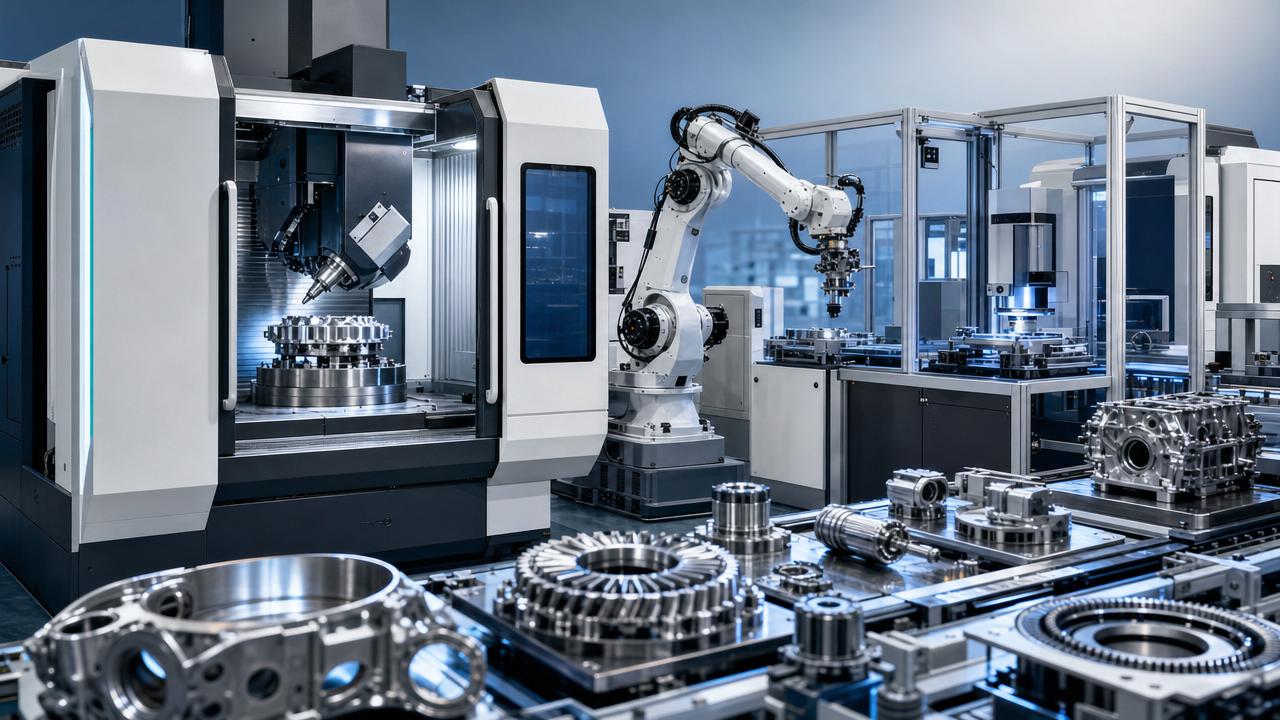
Global Manufacturing is shifting once again as investment, sourcing, and production demand move across regions and industries. In the CNC machine tool sector, these changes directly affect equipment planning, channel expansion, and market timing.
Demand is no longer concentrated in a few traditional production hubs. It is spreading across automotive electrification, aerospace recovery, energy equipment upgrades, electronics localization, and smart factory modernization.
For CNC machining, automation, and precision manufacturing, the key question is simple: where is Global Manufacturing demand moving, and which scenarios deserve faster response?
Why Global Manufacturing Demand Now Depends on Specific Scenarios
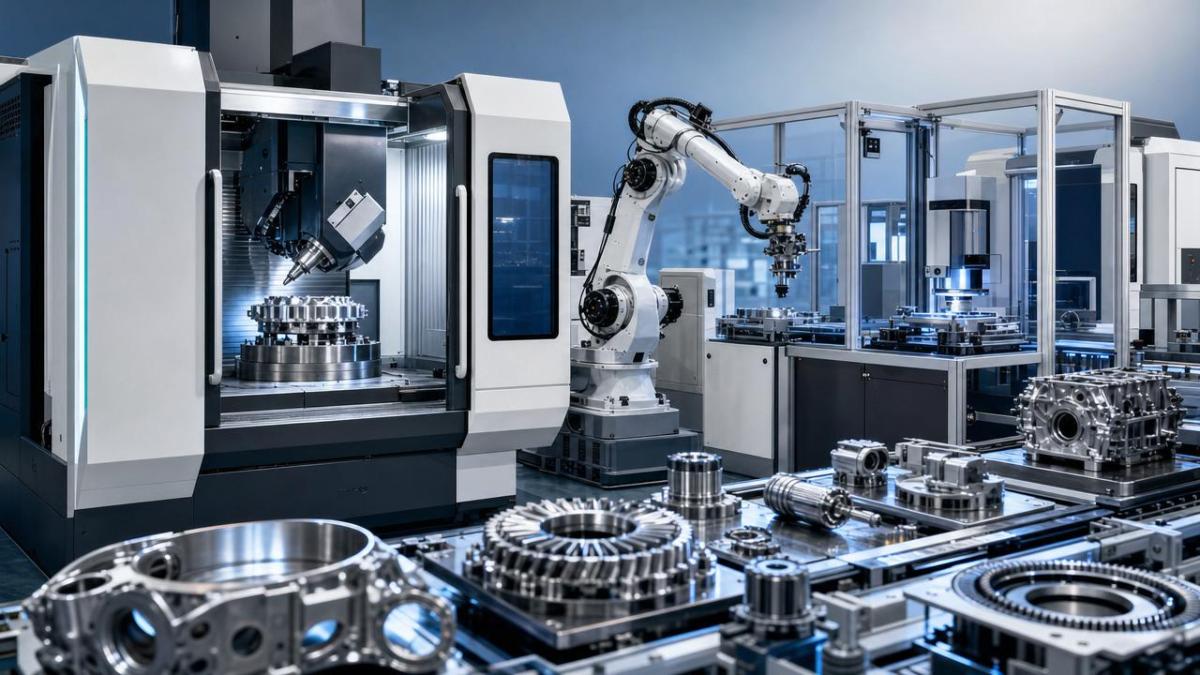
Global Manufacturing does not shift evenly. Demand moves by application, production model, supply risk, and policy support. That makes scenario-based judgment more useful than broad regional assumptions.
A machining center for EV parts faces different demand signals than a lathe for oil and gas components. The same country may show weak demand in one segment and rapid growth in another.
This matters because machine tool sales cycles are long. Automation lines, multi-axis systems, cutting tools, and fixtures require early positioning before project budgets are finalized.
In today’s Global Manufacturing environment, success depends on identifying scenarios with repeatable investment, technical fit, and stable downstream production demand.
Scenario 1: EV and New Energy Supply Chains Are Pulling Precision Capacity
Electric vehicle expansion continues to reshape Global Manufacturing. Battery housings, motor shafts, gearbox parts, thermal management components, and lightweight structural parts require precise and scalable machining.
This scenario favors CNC lathes, vertical machining centers, five-axis systems, robotic loading, and in-line inspection. Demand often rises where vehicle assembly, battery plants, and component localization are expanding together.
What to watch in this scenario
- New battery or EV assembly investments
- Local sourcing targets for machined metal parts
- Demand for automated, high-volume production cells
- Pressure for cycle-time reduction and traceability
In Global Manufacturing, EV-related machining demand often moves faster than general industrial demand. Regions building battery ecosystems can generate sustained equipment orders across several tiers of suppliers.
Scenario 2: Aerospace Recovery Rewards High-Accuracy and Multi-Axis Capability
Aerospace is a different Global Manufacturing scenario. Volumes are lower, but precision standards, material complexity, and process control requirements are much higher.
Demand here centers on structural parts, engine components, landing gear elements, and high-value assemblies. Titanium, aluminum alloys, and heat-resistant materials raise the need for advanced machine tools and tooling systems.
Core judgment points
- Growth in MRO and aircraft production schedules
- Certification and process documentation requirements
- Demand for five-axis machining and tight tolerance control
- Need for stable cutting performance on difficult materials
For Global Manufacturing participants, aerospace opportunities usually require stronger technical support, process validation, and long-term commitment rather than quick-volume transactions.
Scenario 3: Energy Equipment and Heavy Industry Are Upgrading Through Automation
Another important Global Manufacturing shift comes from energy transition and infrastructure renewal. Wind power, grid equipment, pumps, valves, compressors, and heavy rotating parts need reliable machining capacity.
This scenario often combines large workpieces with moderate-to-high precision. Horizontal lathes, boring mills, gantry machining systems, and specialized fixtures remain highly relevant.
Automation matters here too, but the priority is not always maximum speed. It is often repeatability, machine uptime, operator safety, and the ability to handle diverse product sizes.
High-value signals in this scenario
- Energy investment supported by industrial policy
- Expansion of domestic equipment manufacturing
- Replacement demand for aging machine tools
- Interest in digital monitoring and preventive maintenance
Scenario 4: Electronics and Precision Parts Need Flexible, Localized Production
Electronics supply chains are another strong driver of Global Manufacturing realignment. Demand is moving toward localized production, shorter lead times, and fast-response precision machining.
Small, complex parts require compact machining centers, high-speed spindles, precision tooling, and automated handling. Process consistency and rapid changeover become major decision factors.
This scenario is especially important where governments support semiconductor, consumer electronics, telecom, or industrial electronics capacity expansion.
How Demand Differs Across Global Manufacturing Scenarios
This comparison shows why Global Manufacturing cannot be addressed with one product message. Each scenario demands a different value proposition, service model, and timing strategy.
Practical Matching Suggestions for Shifting Global Manufacturing Demand
A practical response starts with matching machine capability to the real production scenario. Capacity, precision, automation level, and engineering support should align with actual downstream needs.
- Map demand by industry project pipeline, not by country alone
- Prioritize sectors with linked supply chain expansion
- Bundle machine tools with fixtures, tooling, and automation
- Prepare scenario-specific technical cases and ROI references
- Strengthen after-sales readiness in target growth regions
In Global Manufacturing, integrated solutions increasingly win over standalone equipment offers. Buyers often want process reliability, digital visibility, and expansion potential rather than only machine specifications.
Common Misjudgments When Reading Global Manufacturing Shifts
One common mistake is assuming all reshoring or friend-shoring creates immediate machine demand. Some announcements reflect long-term intent, while real equipment orders may arrive much later.
Another mistake is focusing only on labor cost. In Global Manufacturing, demand often follows logistics resilience, energy access, export incentives, local technical capability, and political risk reduction.
It is also easy to overlook supporting equipment. Cutting tools, tool management, fixturing, robotic loading, metrology, and software integration often decide whether a project moves forward.
A final blind spot is underestimating replacement demand. Many factories are not building new plants, but they are modernizing existing lines with smarter, faster, and more connected CNC systems.
Next Steps for Capturing New Global Manufacturing Opportunities
The next move is to track Global Manufacturing by application clusters: EV drivetrains, battery enclosures, aerospace structures, energy components, and precision electronics parts.
Then compare each cluster against machine compatibility, local service reach, automation options, and competitive differentiation. This turns broad market noise into an actionable opportunity map.
Global Manufacturing is moving where production ecosystems, policy support, and precision requirements intersect. The strongest results come from entering the right scenario early with a clear technical fit.
For the CNC machine tool industry, demand is not disappearing. It is relocating, segmenting, and upgrading. The best path forward is to follow where manufacturing value is becoming more precise, automated, and digital.
PREVIOUS ARTICLE
Recommended for You
 Zero-Point Clamping or Modular Fixtures? Choosing a Faster CNC Changeover SystemCNC Machining Technology Center
 How to Cut CNC Fixture Changeover Time Without Sacrificing Part AccuracyCNC Machining Technology Center
 When Does CNC Turning Pay Off? A Break-Even Guide by Annual Part VolumeMachine Tool Industry Editorial Team
 Machine Tool Standards by Country: What Importers Must Verify Before PurchaseManufacturing Policy Research Center
 CNC Lathe Quick Installation Guide: Alignment Checks Before First Production RunCNC Machining Technology Center
 How to Select a CNC Lathe for Small Parts Without Sacrificing Accuracy or Cycle TimeCNC Machining Technology Center

Aris Katos
Future of Carbide Coatings
15+ years in precision manufacturing systems. Specialized in high-speed milling and aerospace grade alloy processing.
▶
Global Manufacturing Trends: How Supply Chains and Regional Shifts Affect SourcingManufacturing Market Research Center▶
Small-Batch Production and Smart Manufacturing for Small Businesses: Where to Start FirstManufacturing Market Research Center▶
What Smart Manufacturing Technology for Industry 4.0 Means for Mid-Sized FactoriesManufacturing Market Research Center▶
How Smart Manufacturing Benefits Reduce Downtime and Scrap in Metal Parts ProductionManufacturing Market Research Center▶
Advanced Manufacturing Technology for Energy Equipment: Key Processes and Use CasesManufacturing Market Research Center
Mastering 5-Axis Workholding Strategies
Join our technical panel on Nov 15th to learn about reducing vibrations in thin-wall components.

Providing you with integrated sanding solutions
Before-sales and after-sales services
Comprehensive technical support