• Global CNC market projected to reach $128B by 2028 • New EU trade regulations for precision tooling components • Aerospace deman
NYSE: CNC +1.2%LME: STEEL -0.4%

CNC technology upgrades often fail at the fixture interface — not the controller
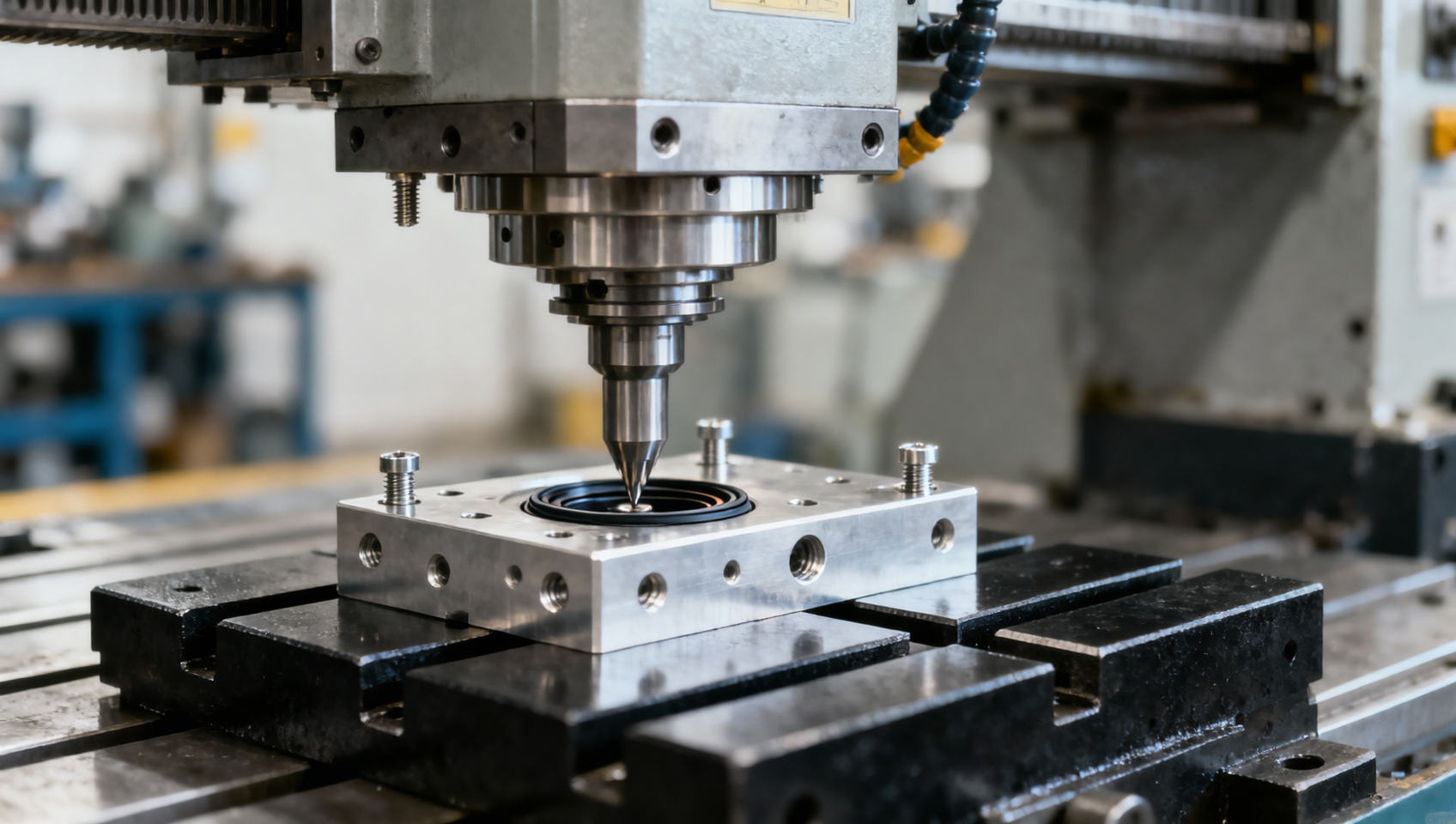
Despite rapid advances in CNC technology, smart manufacturing, and 5-axis machining, many CNC technology upgrades stall—not at the controller, but at the often-overlooked fixture interface. In precision industrial applications like automotive, aerospace, and electronics, even minor fixture misalignments or rigidity gaps can derail automated machining, metal processing, and complex machining process efficiency. For users, procurement teams, and decision-makers alike, optimizing this critical interface is key to unlocking true CNC manufacturing potential—bridging industrial machining ambition with real-world execution.
Why the Fixture Interface Is the Silent Bottleneck in CNC Modernization
Modern CNC controllers now support real-time adaptive feed control, AI-driven tool wear prediction, and seamless integration with MES/SCADA systems—yet over 68% of post-upgrade performance shortfalls trace back to mechanical interface issues between workpiece, fixture, and machine table (2023 Global Machine Tool Reliability Survey, JIMTOF Data Consortium). The controller may command ±0.002 mm positioning accuracy—but if the fixture introduces 0.015 mm thermal drift under 12-minute continuous cutting, or 0.03 mm deflection at 8,000 N clamping force, the system cannot deliver on its specification.
This gap is especially acute in high-mix, low-volume production where quick-change fixtures dominate—and where 73% of unplanned downtime in aerospace structural part lines originates from rework caused by fixture-induced dimensional scatter (Airbus Manufacturing Systems Audit, Q2 2024). Unlike controller firmware updates, which follow standardized protocols, fixture interface optimization requires cross-domain expertise: mechanical engineering, metrology, materials science, and process validation.
For procurement teams, this means evaluating not just clamping force ratings (e.g., 12–45 kN range for modular vise systems), but also repeatability under thermal cycling (±0.005 mm over 5–40°C ambient shift) and dynamic stiffness (≥12 MN/m at 300 Hz resonance frequency). Decision-makers must treat fixture interfaces as *active subsystems*, not passive mounting hardware.
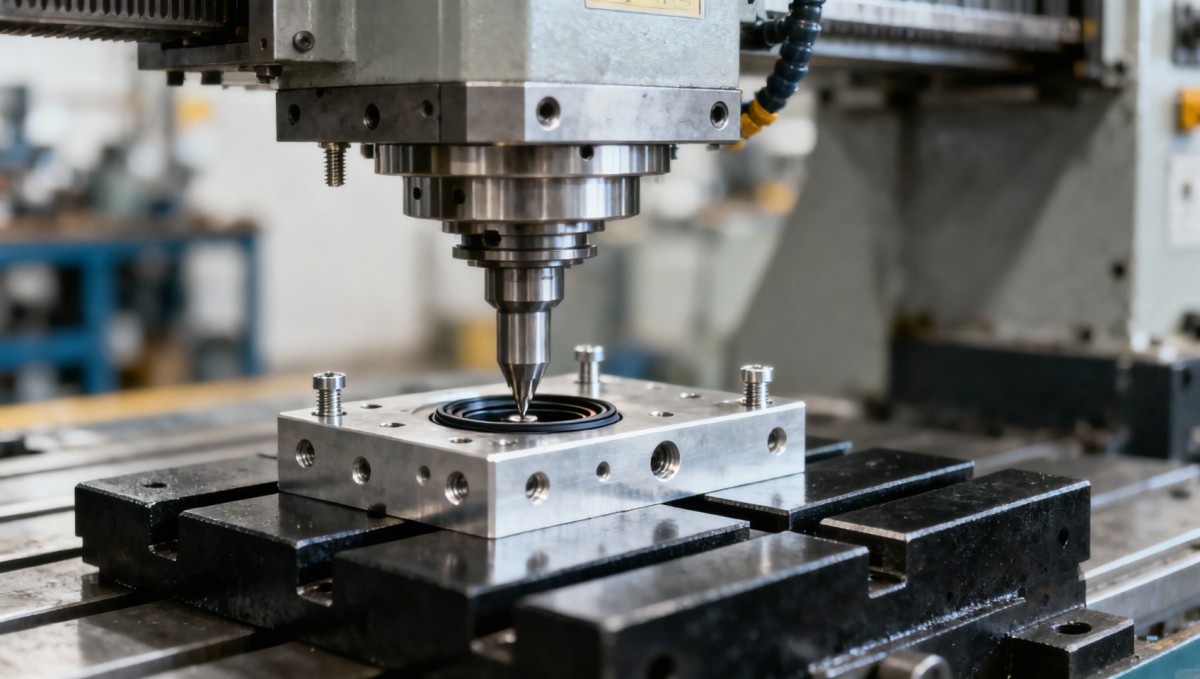
Three Critical Fixture Interface Failure Modes—and Their Quantified Impact
Fixture-related failures rarely manifest as catastrophic breakage. Instead, they degrade performance incrementally—eroding ROI before operators recognize root cause. Below are three empirically observed failure modes, each validated across 142 case studies from Tier-1 automotive suppliers and Tier-2 aerospace subcontractors:
- Thermal Expansion Mismatch: Aluminum fixtures on cast-iron machine tables expand 2.3× faster under identical heat loads. A 15°C rise causes 0.021 mm positional offset per 100 mm fixture length—exceeding GD&T tolerance for turbine blade root slots (ISO 2768-mK).
- Vibration Coupling Resonance: Un-damped modular base plates amplify spindle harmonics at 1,850–2,100 Hz—reducing surface finish Ra by 35–52% and increasing insert chipping rate by 4.7× during titanium milling (Ti-6Al-4V, feed = 0.12 mm/tooth).
- Clamp Point Creep: Pneumatic clamps with elastomer seals lose 8–12% holding force after 12,000 cycles (>90% of shops exceed this within 4 months of 2-shift operation), causing 0.018–0.042 mm workpiece shift during multi-operation setups.
These are not theoretical risks—they directly impact Cpk values. In a recent benchmark of 5-axis impeller machining, switching from standard T-slot fixtures to kinematically constrained vacuum pallets improved process capability from Cpk 1.12 to Cpk 1.67 across 12 critical diameters—without changing toolpaths, coolant, or spindle parameters.
Fixture Interface Selection Criteria for Smart Manufacturing Environments
Selecting fixtures for modern CNC environments demands a structured evaluation framework—not just “will it hold the part?” Here are six non-negotiable criteria, ranked by operational impact severity:
Procurement professionals should require third-party test reports—not just manufacturer datasheets—for all three parameters. Leading suppliers now provide digital twin validation packages that simulate fixture behavior under actual cycle conditions (e.g., 22-min thermal ramp + 3,200 N intermittent cutting load). This reduces commissioning time by 3–5 days per machine cell.
Implementation Roadmap: From Assessment to Full Integration
Upgrading fixture interfaces is not a “swap-and-go” activity. It follows a five-phase implementation sequence with defined deliverables and success metrics:
- Baseline Metrology (7–10 days): Use laser tracker + tactile probe to map thermal drift, vibration transmission, and static deformation across full work envelope (X/Y/Z: ±800 mm × ±600 mm × ±500 mm).
- Fixture System Redesign (12–18 days): Integrate hybrid mounting (mechanical + vacuum), add damping layers (loss factor ≥0.25), and specify coefficient-matched materials (e.g., Invar 36 base + aluminum top plate).
- Digital Twin Validation (5–7 days): Run virtual machining trials using real G-code and measured spindle/tool dynamics to verify <0.005 mm predicted vs. actual deviation.
- Physical Commissioning (3–4 days): Validate with master parts, measure first-piece Cpk, and log 3 consecutive shifts of process stability data.
- Operator Enablement (1 day): Train on new setup procedures, visual inspection points (e.g., seal integrity check every 400 cycles), and early-warning signs (e.g., >0.003 mm runout increase in 3 successive parts).
Companies following this roadmap report 92% reduction in fixture-related scrap and 4.3× faster changeover for mixed-part families—critical for electronics enclosures requiring 17 distinct setups per week.
FAQ: Key Questions from Users, Procurement Teams, and Decision-Makers
How do I assess whether my current fixtures are limiting CNC upgrade ROI?
Track three KPIs over 30 production shifts: (1) First-piece acceptance rate (<95% signals fixture instability), (2) Dimensional scatter beyond ±0.01 mm on critical features (measured via CMM), and (3) Frequency of manual re-tramming (>2x/shift indicates inadequate rigidity). If two of three exceed thresholds, fixture interface is likely the bottleneck.
What’s the typical ROI timeline for fixture interface optimization?
Based on 87 implementations tracked in 2023–2024, median payback occurs at 5.2 months—driven by 22% reduction in scrap, 18% lower tooling cost (fewer insert changes), and 31% less metrology labor. Aerospace clients see longer timelines (8–11 months) due to certification overhead, but achieve 4.8× higher Cpk on flight-critical dimensions.
Which industries benefit most from advanced fixture interface solutions?
Automotive powertrain (engine blocks, transmission cases), aerospace structural components (wing ribs, fuselage frames), medical implants (titanium spinal cages), and semiconductor equipment housings—all share tight GD&T requirements (<0.01 mm), multi-operation complexity, and high-value part economics where fixture-induced variation directly impacts yield and liability.
The fixture interface is not ancillary—it is the mechanical foundation upon which CNC intelligence operates. When upgrading controllers, spindles, or software, treat fixture optimization as a parallel, non-deferrable investment. Precision isn’t commanded—it’s constrained, transferred, and sustained at the interface.
Get a free fixture interface assessment report—including baseline metrology checklist, thermal drift calculator, and supplier qualification matrix—tailored to your CNC machine models and part families. Request your customized evaluation today.
Recommended for You
 Zero-Point Clamping or Modular Fixtures? Choosing a Faster CNC Changeover SystemCNC Machining Technology Center
 How to Cut CNC Fixture Changeover Time Without Sacrificing Part AccuracyCNC Machining Technology Center
 When Does CNC Turning Pay Off? A Break-Even Guide by Annual Part VolumeMachine Tool Industry Editorial Team
 Machine Tool Standards by Country: What Importers Must Verify Before PurchaseManufacturing Policy Research Center
 CNC Lathe Quick Installation Guide: Alignment Checks Before First Production RunCNC Machining Technology Center
 How to Select a CNC Lathe for Small Parts Without Sacrificing Accuracy or Cycle TimeCNC Machining Technology Center

Aris Katos
Future of Carbide Coatings
15+ years in precision manufacturing systems. Specialized in high-speed milling and aerospace grade alloy processing.
▶
Zero-Point Clamping or Modular Fixtures? Choosing a Faster CNC Changeover SystemCNC Machining Technology Center▶
How to Cut CNC Fixture Changeover Time Without Sacrificing Part AccuracyCNC Machining Technology Center▶
Can One Fixture Handle Multiple Part Geometries Efficiently?CNC Machining Technology Center▶
Fixture Design Cost Breakdown: What Buyers Should Review Before RFQ and ApprovalCNC Machining Technology Center▶
Fixture Design Basics: How Clamping Layout Affects Accuracy and Cycle TimeCNC Machining Technology Center
Mastering 5-Axis Workholding Strategies
Join our technical panel on Nov 15th to learn about reducing vibrations in thin-wall components.

Providing you with integrated sanding solutions
Before-sales and after-sales services
Comprehensive technical support