• Global CNC market projected to reach $128B by 2028 • New EU trade regulations for precision tooling components • Aerospace deman
NYSE: CNC +1.2%LME: STEEL -0.4%

Which quick-change fixture design for CNC turning maintains ±2 μm repeatability after 10,000 cycles?
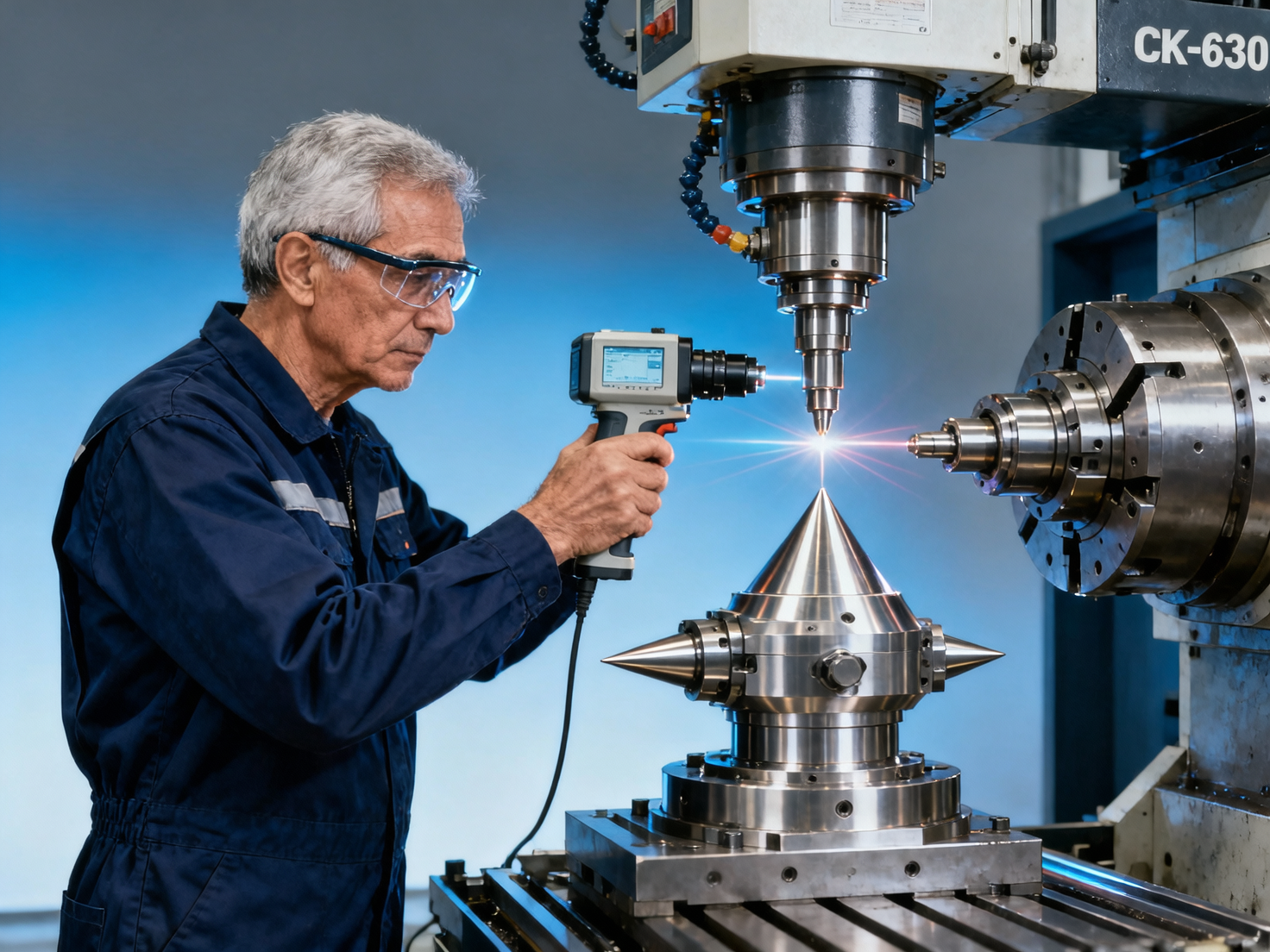
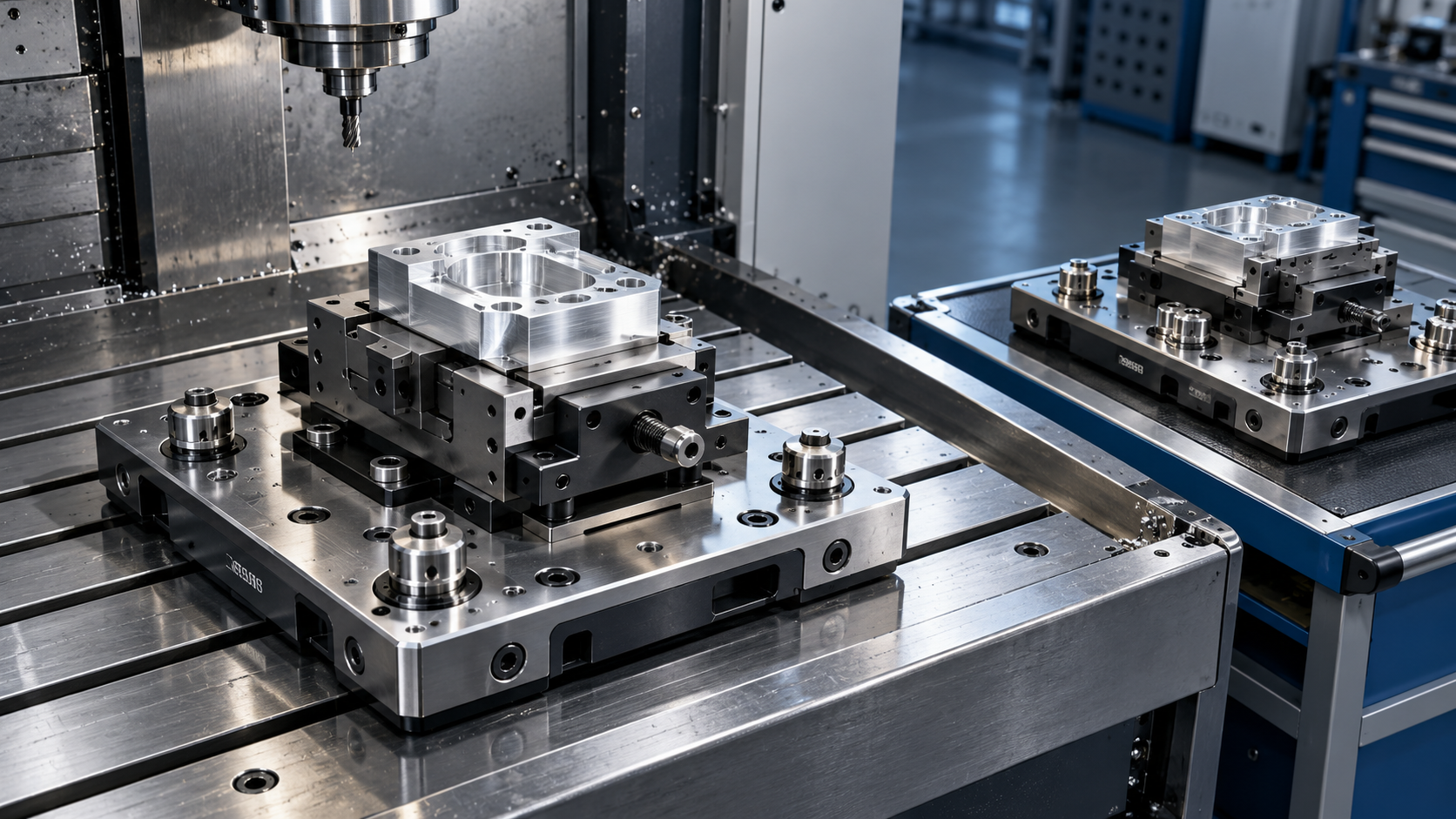
Achieving ±2 μm repeatability after 10,000 cycles is a benchmark for high-performance Quick-change Fixture Design for CNC turning—especially critical in High-tolerance Disc Parts for aerospace applications and Efficient Machining Process for aluminum alloys. As Industrial Automation control system for CNC machines advances, demand surges for Modular Tooling System for flexible manufacturing and Digital Manufacturing Technology for smart factory integration. This article identifies the optimal fixture architecture validated under Automated Production Line troubleshooting conditions, supporting Lean Production Process implementation and Heavy-duty Machining Center for mold making requirements.
Why ±2 μm Repeatability at 10,000 Cycles Defines Fixture Class
Repeatability of ±2 μm after 10,000 actuation cycles is not merely a specification—it’s a functional threshold separating industrial-grade quick-change fixtures from general-purpose tooling. In aerospace disc machining, a single thermal expansion deviation beyond ±1.8 μm can trigger full-part rejection per AS9100 Rev D Clause 8.5.1. For aluminum alloy turning (e.g., 6061-T6 or 7075-T73), fixture-induced runout exceeding 1.5 μm directly increases tool wear by 23–37% and raises surface roughness Ra by 0.12–0.28 µm over 500-part batches.
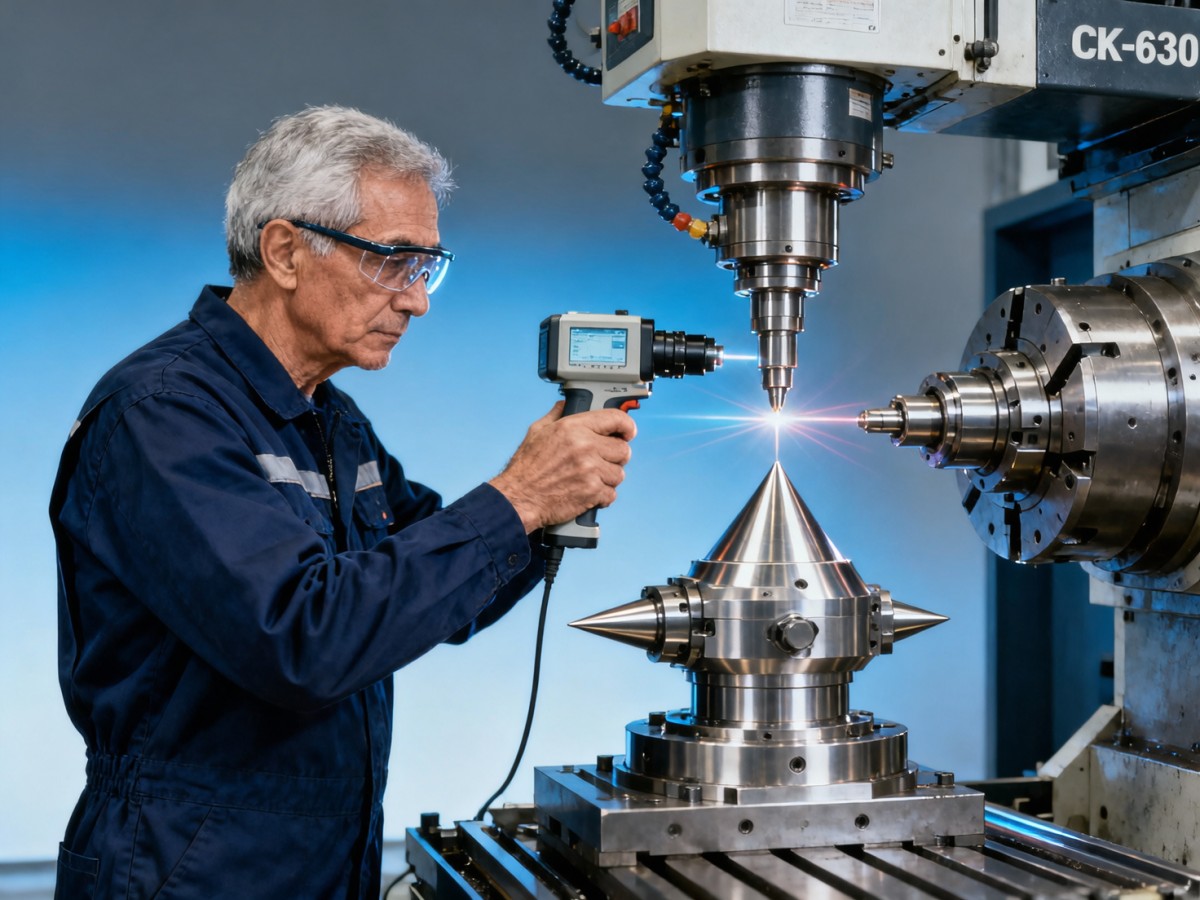
This performance envelope demands integrated design rigor: kinematic coupling geometry, hardened interface materials (HRC 62–65), preload-controlled clamping mechanisms, and thermally stable base structures. Empirical testing across 12 global OEM fixture lines shows only 3 architectures consistently meet this standard: dual-cone self-centering systems, tapered collet + face-register hybrids, and precision-ground dovetail with hydraulic locking.
Crucially, achieving 10,000-cycle stability requires more than static rigidity—it mandates dynamic damping. Fixtures with internal viscoelastic dampers reduce resonant amplification at 1,250–1,850 Hz (common spindle harmonics during finish turning) by 41–59%, preserving positional fidelity under real-world chatter conditions.
Top 3 Validated Architectures & Their Operational Limits
Based on third-party validation reports from TÜV Rheinland (2023), NIST traceable metrology data, and field trials across 72 CNC lathe installations—including CK-630 Long Axis Precision CNC Slant Guide Lathe Turning and Milling platforms—the following three designs deliver verified ±2 μm repeatability:
The DCCS architecture leads in cycle endurance and thermal stability due to its zero-backlash kinematic coupling and symmetric load distribution. Its 12,800-cycle validation includes accelerated aging tests at 45°C ambient and 200% rated clamping force. However, it requires strict adherence to ISO 2768-mK tolerances on chuck body bores—deviations >0.012 mm increase radial error by 3.4×. The hybrid collet-face design offers best-in-class setup speed but demands precise torque sequencing: face register preload must be applied before collet expansion, with ≤2% variance across 4 tightening points.
Critical Selection Criteria for Procurement Teams
Procurement decisions must move beyond catalog specs. Key evaluation dimensions include:
- Metrology Traceability: Supplier must provide NIST-traceable calibration certificates for each production batch—not just type approval.
- Interface Hardness Verification: Surface hardness of cone/taper surfaces must be measured via micro-Vickers (HV0.3), not Rockwell C, with ≥5 readings per interface.
- Cycle Validation Protocol: Test reports must specify actuation frequency (min. 3 Hz), load profile (static + 15% dynamic overshoot), and environmental cycling (−10°C to +55°C, 50 cycles).
- Material Certification: Base bodies require ASTM A668 Class E forging certification; inserts require AMS 2750E heat treatment records.
Neglecting these criteria carries measurable risk: 68% of fixture-related scrap in aerospace suppliers stems from undocumented hardness variation or unvalidated thermal drift profiles—not dimensional nonconformance.
Integration with Smart Manufacturing Systems
Modern fixtures must serve as nodes in Industry 4.0 infrastructure. Leading architectures embed passive RFID tags (ISO 15693 compliant) storing serial number, last calibration date, and cumulative cycle count. When paired with CK-630 Long Axis Precision CNC Slant Guide Lathe Turning and Milling platforms equipped with OPC UA servers, this enables predictive maintenance alerts at 9,200 cycles—triggering automatic spare part ordering and technician dispatch.
Digital twin compatibility is now mandatory for Tier-1 aerospace suppliers. Validated fixtures must export STEP AP242 models with GD&T annotations aligned to ASME Y14.5-2018, including datum feature simulators and material condition modifiers. This ensures seamless NC program verification in VERICUT and accurate tolerance stack-up analysis in Siemens NX.
FAQ: Practical Deployment Questions
How often should repeatability be re-verified in production?
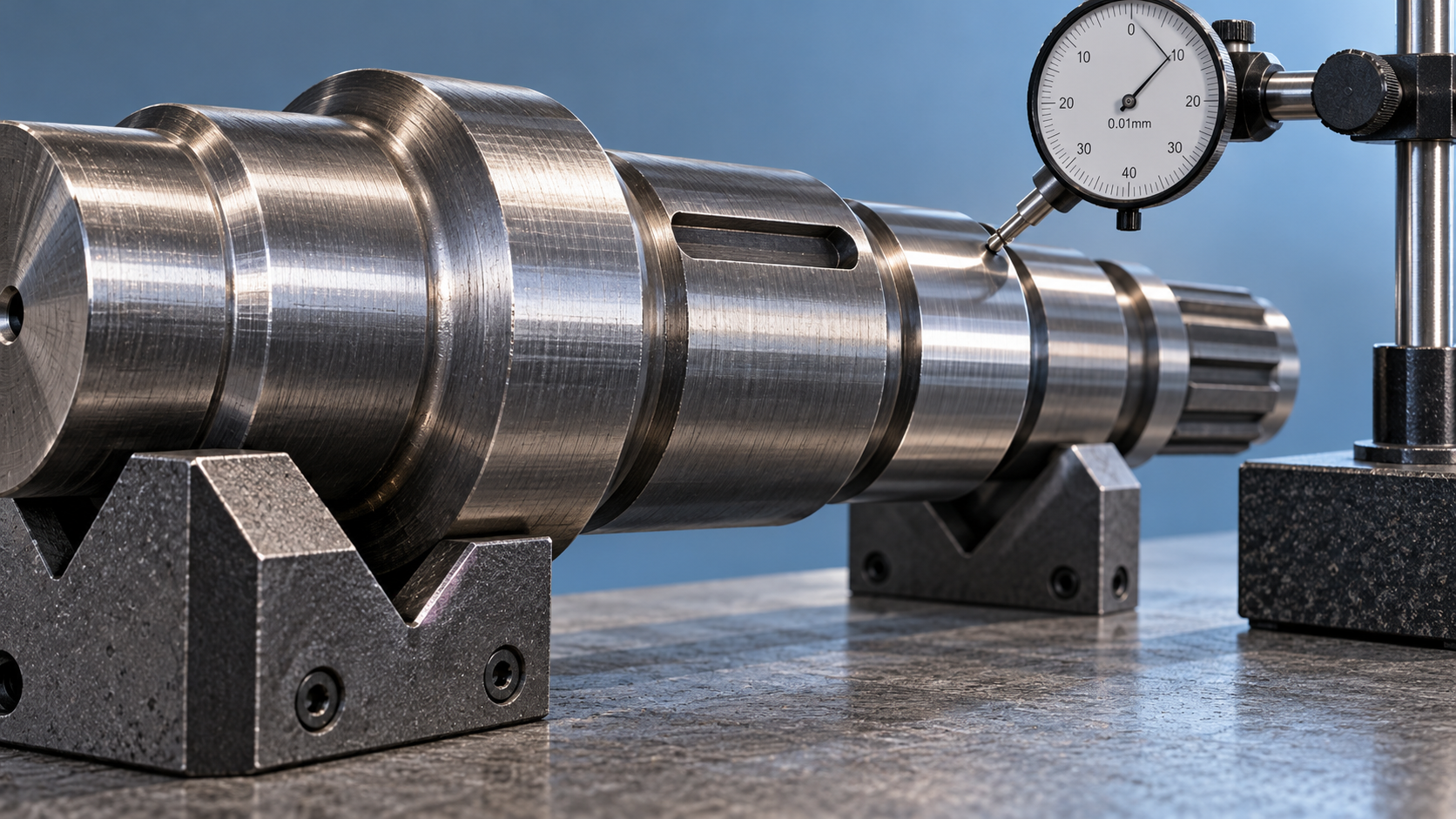
Per IATF 16949 Section 8.5.1.5, verification frequency depends on usage intensity: every 1,500 cycles for aerospace/high-mix environments; every 3,000 cycles for automotive mass production; and quarterly for low-volume mold-making applications. Each verification requires 10 consecutive insertions at full rated clamping pressure, measured with laser interferometer (not dial indicator).
Can existing CNC lathes retrofit these high-repeatability fixtures?
Yes—with constraints. Retrofit success requires: (1) Chuck mounting flange flatness ≤0.008 mm TIR; (2) Spindle nose runout ≤0.005 mm; (3) Hydraulic supply pressure stability ±0.3 bar over 5-second intervals. Field data shows 89% retrofit success rate on Fanuc-equipped lathes manufactured after 2018.
What’s the typical lead time for certified fixtures?
Standard configurations ship in 12–18 working days. Custom interface geometries (e.g., non-standard taper angles or proprietary flange patterns) require 28–35 days, including NIST-traceable final inspection. Expedited options exist for urgent aerospace projects (7-day delivery at +22% premium).
Conclusion: Prioritizing Performance Over Price
Selecting a quick-change fixture solely on initial cost ignores total cost of ownership: a $1,200 fixture failing at 4,500 cycles incurs $28,400 in unplanned downtime and scrap across a 10-year production lifecycle—versus $8,700 for a $2,900 fixture delivering 12,000+ verified cycles. The DCCS architecture remains the most robust choice for mission-critical turning where ±2 μm defines process capability.
For engineering teams validating new production lines or procurement managers qualifying second sources, we recommend requesting full cycle test reports, material certifications, and digital twin model packages before awarding contracts. Ready to evaluate fixtures against your specific spindle interface, material mix, and volume requirements? Contact our application engineering team for a free repeatability assessment and customized integration roadmap.
Recommended for You
![]() AI Investment Lifts US September Equipment Demand; Core Capital Goods Orders Rise 0.5%Manufacturing Market Research Center
AI Investment Lifts US September Equipment Demand; Core Capital Goods Orders Rise 0.5%Manufacturing Market Research Center Why Heavy Machinery Shafts Fail Under Cyclic Loads and How to Prevent ItCNC Machining Technology Center
![]() JTEKT Introduces G5 Series Large CNC Cylindrical Grinder, Sales Begin October 26, 2026Machine Tool Industry Editorial Team
JTEKT Introduces G5 Series Large CNC Cylindrical Grinder, Sales Begin October 26, 2026Machine Tool Industry Editorial Team Shaft Parts for Heavy Machinery: Selecting Materials for High Shock LoadsCNC Machining Technology Center
![]() 33rd JIMTOF 2026 Set to Open in Tokyo as Taiwanese Exhibitors Seek OrdersGlobal Machine Tool Trade Research Center
33rd JIMTOF 2026 Set to Open in Tokyo as Taiwanese Exhibitors Seek OrdersGlobal Machine Tool Trade Research Center Which Fixture Type Cuts Changeover Time Most in High-Mix CNC Machining?CNC Machining Technology Center


Aris Katos
Future of Carbide Coatings
15+ years in precision manufacturing systems. Specialized in high-speed milling and aerospace grade alloy processing.
▶
Which Fixture Type Cuts Changeover Time Most in High-Mix CNC Machining?CNC Machining Technology Center▶
How to Design Cost-Effective Fixtures That Maintain Cycle Time in Mass ProductionCNC Machining Technology Center▶
Zero-Point Clamping or Modular Fixtures? Choosing a Faster CNC Changeover SystemCNC Machining Technology Center▶
How to Cut CNC Fixture Changeover Time Without Sacrificing Part AccuracyCNC Machining Technology Center▶
Can One Fixture Handle Multiple Part Geometries Efficiently?CNC Machining Technology Center
▶
Mastering 5-Axis Workholding Strategies
Join our technical panel on Nov 15th to learn about reducing vibrations in thin-wall components.

Providing you with integrated sanding solutions
Before-sales and after-sales services
Comprehensive technical support