• Global CNC market projected to reach $128B by 2028 • New EU trade regulations for precision tooling components • Aerospace deman
NYSE: CNC +1.2%LME: STEEL -0.4%

Production Process Delays That Quietly Raise Unit Cost
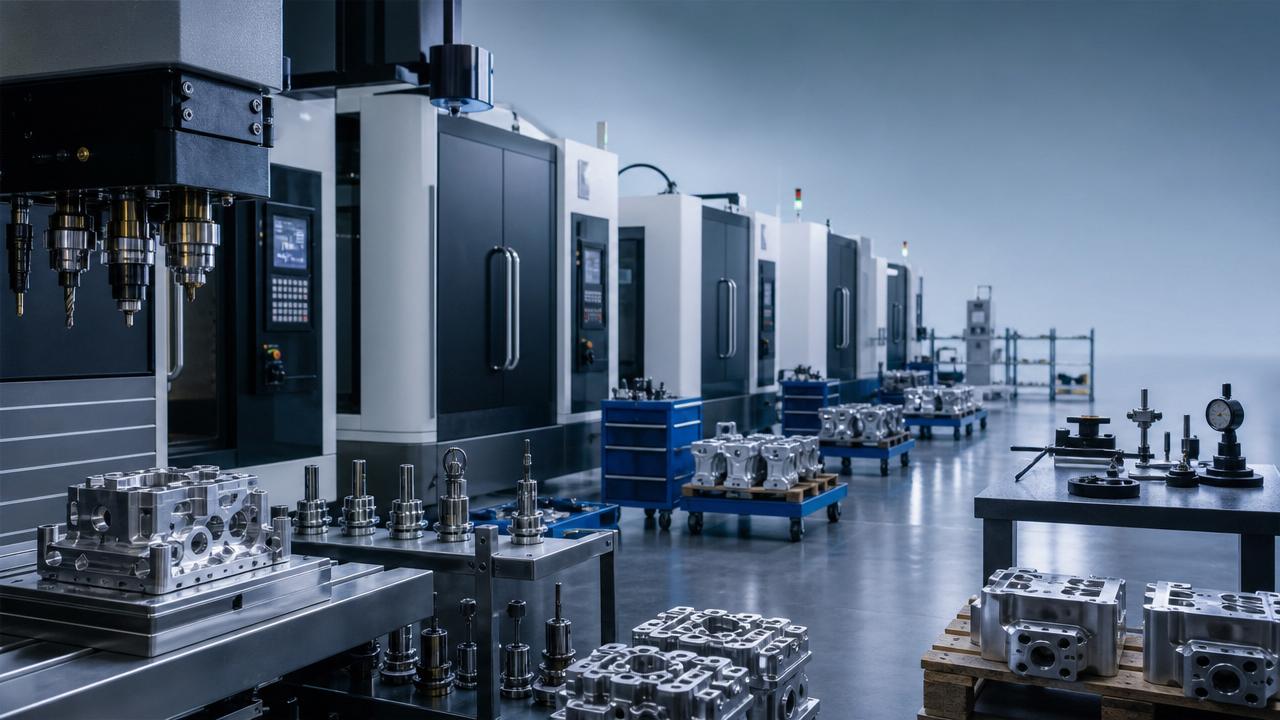
In manufacturing, rising unit costs are often blamed on material prices or labor, yet hidden inefficiencies in the Production Process can quietly erode margins long before they appear in financial reports. For finance decision-makers, understanding how delays across machining, setup, tooling, and workflow affect cost per part is essential to making smarter approvals and protecting profitability.
In CNC machining, even a 10-minute delay repeated across 6 shifts, 20 machines, and 22 working days can translate into substantial monthly losses. These losses rarely show up as a single line item. Instead, they accumulate through lower spindle utilization, overtime, excess WIP, delayed shipments, and unstable gross margin.
For financial approvers, the key issue is not simply whether a machine runs, but whether the entire Production Process converts machine time, tooling, labor, and engineering input into profitable output. In high-mix, precision manufacturing environments serving automotive, aerospace, electronics, and energy equipment, delays often hide inside normal operations.
This article explains where these delays occur, how they quietly raise unit cost, and which approval priorities can reduce cost-per-part without compromising quality or delivery performance.
Where Production Process Delays Begin in CNC Manufacturing
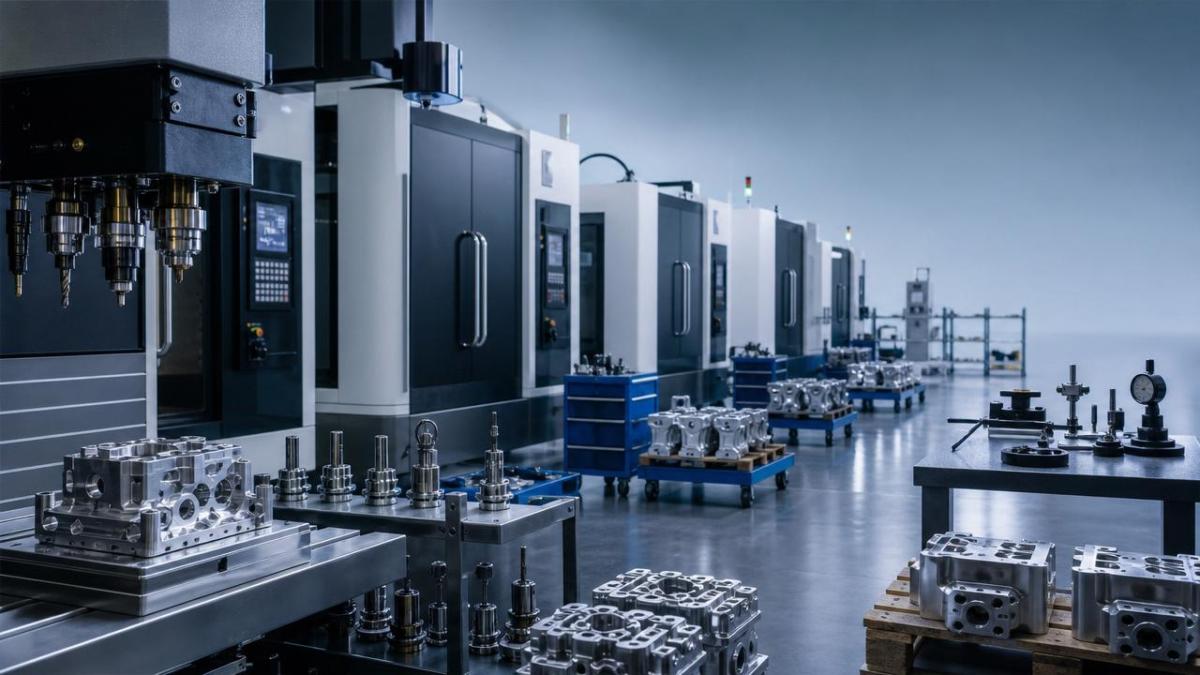
A costly delay does not always mean a full machine stoppage. In many CNC workshops, the more damaging problem is frequent micro-delay: 3 minutes waiting for a fixture, 8 minutes for program verification, 12 minutes for tool replacement, or 20 minutes for first-piece approval. Individually, these events seem manageable. Financially, they can raise unit cost by 5% to 15% across medium-volume production.
Machining and setup delays that often go unpriced
In precision manufacturing, setup loss is a major hidden cost driver. A machining center scheduled for 14 productive hours may only achieve 10.5 to 11.5 actual cutting hours after fixture loading, offset checks, tool measurement, warm-up, and first-article confirmation. The gap directly affects machine-hour absorption and pushes the cost per part higher.
This matters even more when production includes short runs of 50 to 300 parts. In such orders, setup time may represent 15% to 35% of total job time. If approval decisions focus only on quoted cycle time and ignore setup frequency, the Production Process will look efficient on paper while underperforming in reality.
Common delay points inside the shop floor workflow
- Tool presetting completed after machine availability, causing idle spindle time
- Program revisions requiring operator confirmation during production start-up
- Fixture changes that take 20 to 45 minutes instead of the planned 10 to 15 minutes
- Waiting for in-process inspection on tight-tolerance features such as ±0.01 mm bores or concentricity checks
- Material movement delays between turning, milling, deburring, and final inspection cells
For finance teams, these are not only operational issues. They affect depreciation recovery, labor utilization, delivery reliability, and inventory turnover. A production line with 78% machine utilization instead of 88% may still look busy, yet its contribution margin can fall noticeably once fixed cost allocation is recalculated.
Why delay costs are often missed in approval reviews
Most approvals are based on visible inputs: machine purchase price, direct labor rate, tooling budget, and material cost. Hidden delay cost sits between departments. Engineering sees it as process adjustment. Production sees it as schedule pressure. Quality sees it as inspection discipline. Finance often sees the result only after OTD drops or gross margin tightens over 1 or 2 quarters.
In global CNC supply chains, especially where parts move across multiple workshops or subcontractors, even a 24-hour delay in one process can create 3 downstream effects: resequencing, extra handling, and urgent logistics. These secondary costs are easy to underestimate during capital or process approval.
The table below outlines where common delays occur and how they typically affect unit economics in a CNC Production Process.
The main financial takeaway is that not all delays damage cost in the same way. Some reduce capacity, while others increase handling, inspection, or rework. The best approval decisions focus on the delay category with the highest compounding effect on output value.
How Delays Quietly Raise Unit Cost Across the Production Process
Unit cost rises when the planned denominator—good parts produced per shift, per batch, or per month—shrinks faster than fixed and semi-fixed costs can be adjusted. In CNC operations, this often happens without major headline failures. A line can meet quality targets and still lose margin because the Production Process runs below economic speed.
1. Lower machine utilization spreads fixed cost over fewer parts
A machining center financed over 5 to 7 years carries depreciation, maintenance, floor space, power, and support labor whether it cuts metal or waits. If a machine was budgeted at 85% utilization but operates at 68% to 72%, fixed cost per part rises quickly, especially on medium-value components.
For example, if a cell is expected to deliver 1,200 parts per week but repeated delays reduce output to 980 parts, the shortfall is nearly 18.3%. Unless pricing or schedule assumptions change, the variance goes directly against gross margin.
2. Overtime and schedule recovery increase labor cost indirectly
Delays often trigger reactive overtime rather than immediate process correction. The financial problem is not only the overtime premium. Fatigue-related mistakes, extra supervision, and unstable handovers between shifts can increase scrap, reruns, and tool misuse. In plants with 2 or 3 shifts, these effects multiply over a month.
3. WIP and queue time tie up cash
When parts wait 1 to 3 extra days between turning, milling, grinding, or inspection, working capital rises. For finance approvers, this is more than an operations issue. It slows invoice timing, increases handling exposure, and can complicate planning for export orders, especially where final delivery windows are contract-sensitive.
4. Delays increase quality risk and hidden rework
A rushed restart after an interruption can create offset errors, wrong tool calls, or inconsistent clamp pressure. In precision machining, even a small drift on a critical dimension can trigger 100% sorting, secondary inspection, or re-machining. The direct scrap cost is visible, but the hidden cost is the added time burden placed back into the Production Process.
The table below shows how delay-driven cost inflation typically appears in CNC shops from a financial viewpoint.
For financial control, the most useful practice is linking delay data to unit cost by job family, machine group, or value stream. This helps distinguish whether cost inflation comes from pricing pressure or from a weak Production Process.
What Finance Approvers Should Review Before Approving Equipment, Tooling, or Process Changes
Many cost-saving requests in CNC manufacturing are approved based on headline return assumptions. However, a proposal that reduces cycle time by 8% may be less valuable than one that cuts setup time by 30% if the factory runs frequent product changeovers. The review lens should match the actual delay pattern in the Production Process.
Four practical approval questions
- Does the proposal reduce delay frequency or only improve peak-speed performance?
- Will it shorten setup, first-piece release, tool management, or internal transfer time by a measurable amount?
- Can the benefit be tracked within 30, 60, and 90 days after implementation?
- Does it improve throughput for the part mix that drives the highest monthly revenue?
This framework is particularly useful when comparing automation, fixture redesign, tool presetting stations, pallet systems, in-process probing, or digital scheduling tools. Not every investment needs to be large. In many cases, a moderate-cost process change can recover more margin than a major machine purchase.
High-value indicators to request from operations
Minimum data set for approval review
- Average setup time by part family over the last 8 to 12 weeks
- Unplanned stoppage minutes per machine per shift
- First-pass yield and rework ratio by process step
- Queue time between operations, especially on bottleneck machines
- Actual versus planned spindle utilization by work center
- On-time delivery performance before and after prior process changes
With these six checks, finance leaders can avoid approving investments based only on technical promise. They can instead evaluate whether a change will strengthen flow, reduce hidden waiting time, and improve unit economics at scale.
Practical Ways to Reduce Delay-Driven Unit Cost in a CNC Production Process
The best improvements usually combine process discipline, targeted tooling decisions, and better production visibility. For manufacturers handling precision shafts, discs, housings, or structural parts, reducing delay is often more achievable than negotiating lower raw material prices.
Target the highest-frequency delays first
A delay that happens 20 times per week for 6 minutes each may deserve faster action than a larger but rare event. In practical terms, reducing repeated setup adjustment, tool search, probe waiting, or inter-process transport often produces measurable gains within 4 to 8 weeks.
Use staged implementation rather than full disruption
For finance approvers, staged implementation lowers execution risk. Start with one cell, one part family, or one bottleneck operation. Measure setup reduction, output increase, and rework change over 30 days, then expand if the result is stable. This approach supports better capital discipline while preserving production continuity.
Common actions with clear financial logic
- Offline tool presetting to cut machine waiting during batch changeovers
- Standardized fixtures for repeat families to reduce setup variation from 35 minutes to 15 to 20 minutes
- Digital work instructions to reduce operator confirmation delays
- In-process measurement on tolerance-critical parts to lower sorting and re-inspection workload
- Rebalanced workflow to reduce queue time between machining and inspection by 1 to 2 days
In global precision manufacturing, the strongest cost outcomes rarely come from one isolated machine upgrade. They come from a Production Process that connects programming, tooling, machining, inspection, and material movement with fewer interruptions and faster decision points.
Final Considerations for Cost Control and Approval Strategy
Production delays do not always announce themselves through breakdown alarms or missed payroll targets. More often, they show up quietly: lower output from the same assets, extra overtime to recover schedules, rising WIP, and an unexplained increase in unit cost over one or two reporting cycles. That is why finance decision-makers should evaluate the Production Process as a cost system, not just a technical workflow.
When approval decisions are based on setup loss, utilization gaps, queue time, and rework burden, cost control becomes more accurate and investment priorities become clearer. This is especially important in CNC machining and precision manufacturing, where margins depend on disciplined execution as much as on machine capability.
If you are reviewing process upgrades, machine tool investments, or productivity improvement plans, now is the right time to assess where hidden delays are inflating cost per part. Contact us to discuss your production scenario, request a tailored evaluation framework, or learn more solutions for improving CNC manufacturing efficiency and financial return.
PREVIOUS ARTICLE
Recommended for You
 Zero-Point Clamping or Modular Fixtures? Choosing a Faster CNC Changeover SystemCNC Machining Technology Center
 How to Cut CNC Fixture Changeover Time Without Sacrificing Part AccuracyCNC Machining Technology Center
 When Does CNC Turning Pay Off? A Break-Even Guide by Annual Part VolumeMachine Tool Industry Editorial Team
 Machine Tool Standards by Country: What Importers Must Verify Before PurchaseManufacturing Policy Research Center
 CNC Lathe Quick Installation Guide: Alignment Checks Before First Production RunCNC Machining Technology Center
 How to Select a CNC Lathe for Small Parts Without Sacrificing Accuracy or Cycle TimeCNC Machining Technology Center

Aris Katos
Future of Carbide Coatings
15+ years in precision manufacturing systems. Specialized in high-speed milling and aerospace grade alloy processing.
▶
How Does Precision Machining Differ From Standard Machining?CNC Machining Technology Center▶
CNC Precision: Which Tolerances, Materials, and Processes Fit Your Part?CNC Machining Technology Center▶
How to Choose Metal Machining Processes for Tight Tolerances and Production VolumeCNC Machining Technology Center▶
Production Process Explained: Key Stages, Controls, and Quality CheckpointsCNC Machining Technology Center▶
How to Select a Machine Tool for Electronics Manufacturing with Tight Tolerance NeedsCNC Machining Technology Center
Mastering 5-Axis Workholding Strategies
Join our technical panel on Nov 15th to learn about reducing vibrations in thin-wall components.

Providing you with integrated sanding solutions
Before-sales and after-sales services
Comprehensive technical support