• Global CNC market projected to reach $128B by 2028 • New EU trade regulations for precision tooling components • Aerospace deman
NYSE: CNC +1.2%LME: STEEL -0.4%

Shaft Parts Tolerance Problems Often Start With Material Choice
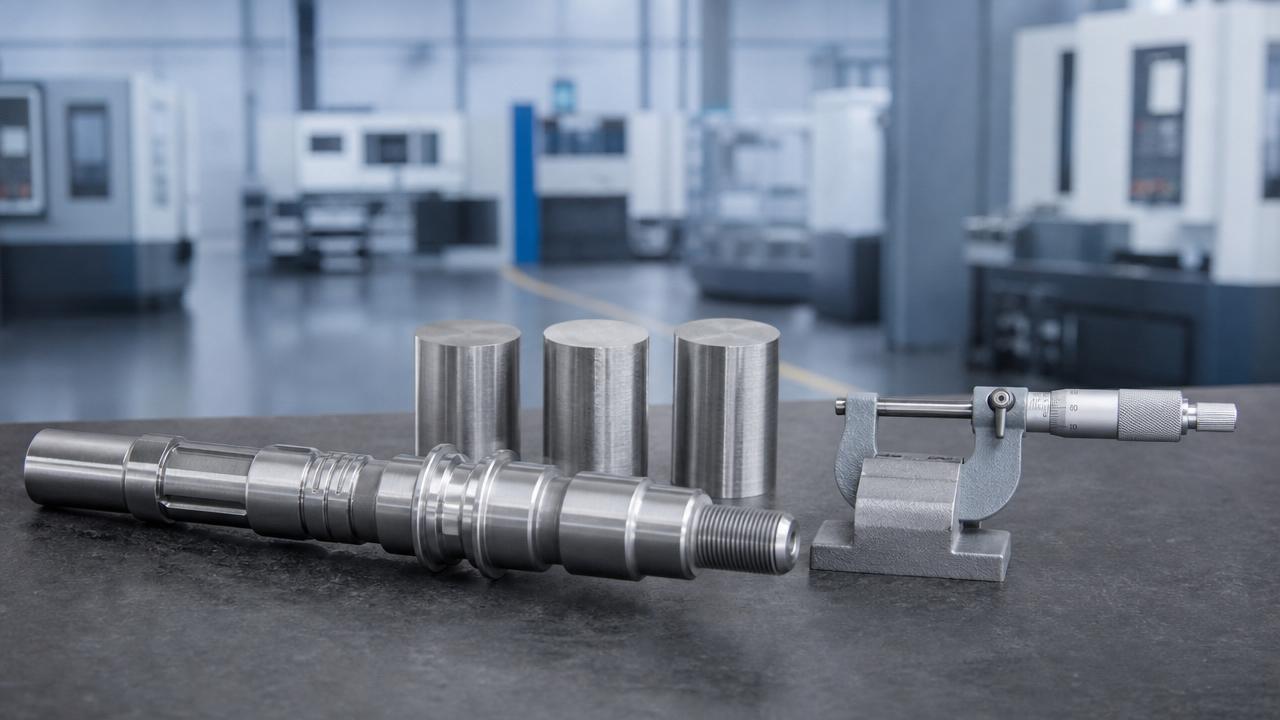
When Shaft Parts fail to hold tolerance, the root cause often begins long before machining starts—with material selection. For quality control and safety teams, understanding how hardness variation, internal stress, and material stability affect dimensional accuracy is essential to reducing defects, preventing assembly risks, and improving production consistency in precision manufacturing.
Why do Shaft Parts tolerance problems often begin with raw material decisions?
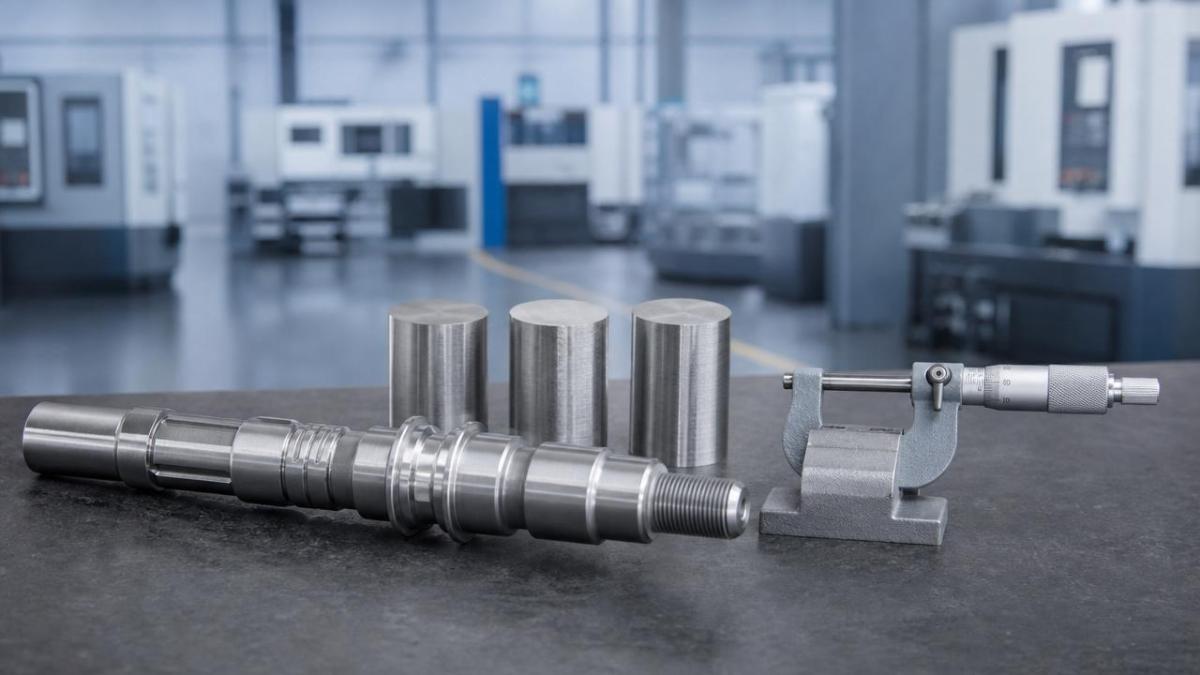
In CNC production, tolerance loss is rarely caused by machining alone. Many Shaft Parts leave the machine within drawing limits, then drift after cooling, grinding, heat treatment, coating, or assembly.
For quality control personnel, this creates a difficult problem. Process data may look acceptable, yet final inspection shows runout, diameter variation, taper, or straightness failure. Safety managers face a related risk when unstable components enter rotating systems.
Material choice influences nearly every stage of dimensional behavior. Chemical composition, grain structure, residual stress, cleanliness, hardness consistency, and heat-treatment response all affect whether Shaft Parts remain stable through production and service.
- A bar with uneven hardness can deflect differently during turning, causing local dimensional variation and inconsistent tool load.
- Material with high internal stress may spring after rough machining, changing straightness before finish operations begin.
- Low cleanliness steel may introduce inclusions that affect surface integrity, fatigue behavior, and measurement repeatability.
- Improper heat-treatment compatibility can produce distortion that no final grinding allowance can fully correct.
In industries such as automotive, aerospace support manufacturing, energy equipment, and electronics machinery, tolerance is not only a quality metric. It also affects vibration, sealing, bearing fit, balancing, and long-term operational safety.
What material characteristics matter most for precision Shaft Parts?
Quality teams often focus on nominal grade, but grade name alone does not guarantee stability. Two lots of the same material can behave differently if stress relief, forging history, or heat-treatment control vary.
Key factors to review before machining
- Hardness range: Excessive variation across one bar or batch affects cutting force, wear pattern, and finish size control.
- Residual stress: Stress from rolling, forging, straightening, or prior heat exposure may release during roughing and alter geometry.
- Microstructure uniformity: Uneven structure reduces predictability during turning, drilling, grinding, and induction hardening.
- Machinability: Poor machinability increases heat generation, burr formation, and dimensional drift over long cycle runs.
- Thermal stability: Shaft Parts used in motors, pumps, reducers, or high-speed systems may see temperature-related expansion changes.
- Surface defect risk: Decarburization, seams, or laps can force rework and compromise final tolerance after stock removal.
For precision manufacturing platforms serving global CNC machining supply chains, this evaluation is especially important because equipment capability alone cannot compensate for unstable raw material behavior.
Material-related failure modes quality teams should detect early
The table below summarizes common material-driven tolerance issues in Shaft Parts and shows why incoming inspection should connect directly with machining and safety risk assessment.
This comparison helps QC teams move beyond final-size inspection. If the same defect pattern repeats across shifts or machines, the issue may sit upstream in the material lot rather than on the CNC program or fixture alone.
How should QC and safety managers evaluate material before release to production?
A practical control plan for Shaft Parts should start at incoming material review and continue through rough machining, stress relief, finish machining, and final verification. This reduces hidden instability that appears only at the end.
Recommended evaluation workflow
- Confirm material certificates against drawing, purchase order, and process route. Verify grade, heat condition, hardness range, and any specified cleanliness or ultrasonic requirements.
- Inspect bar straightness, surface condition, and stock allowance. Poor incoming geometry increases clamping stress and measurement error during shaft machining.
- Use sample hardness mapping when tolerance is tight or shafts are long and slender. A single point reading may hide variation across length or diameter.
- For critical Shaft Parts, require trial roughing and stabilization checks before committing a full batch. Measure movement after rough turning and rest time.
- Align heat-treatment supplier capability with distortion limits. Tight concentricity and straightness targets need controlled quenching, fixturing, and post-treatment inspection.
- Link SPC data to material lot numbers so recurring tolerance shifts can be traced quickly during audit or complaint handling.
For safety managers, traceability matters as much as measurement. If a shaft is used in rotating assemblies, couplings, or driven systems, uncontrolled material variation can increase vibration and premature wear even when initial dimensions appear acceptable.
Which material options are commonly compared for Shaft Parts?
Different Shaft Parts require different balances of machinability, strength, hardenability, and distortion control. The table below gives a general comparison framework for sourcing and process planning.
This type of comparison supports procurement decisions when cost, delivery, and precision must be balanced. The best material for Shaft Parts is not simply the strongest one. It is the option that stays stable through the full manufacturing route.
What are the most common procurement mistakes with Shaft Parts materials?
In global CNC supply chains, procurement pressure often favors price and lead time. However, low visibility into metallurgical stability can create much larger downstream costs in scrap, delay, and safety review.
Mistakes that increase tolerance risk
- Buying by grade only, without defining hardness window, stress condition, or required process documentation.
- Assuming all bars from one supplier behave the same, even after changes in mill source or heat-treatment route.
- Skipping trial validation on long, thin Shaft Parts where movement after rough machining is common.
- Ignoring straightness and decarburization limits on incoming stock, which later consume machining allowance unevenly.
- Separating supplier quality review from actual CNC process data, making root-cause analysis slower and less accurate.
A stronger sourcing practice is to define performance requirements in production terms: distortion control, hardness uniformity, machining response, and traceability by heat number. This language is more useful than generic requests for “good quality material.”
How can standards and process controls reduce risk in critical Shaft Parts?
Standards do not eliminate all variation, but they help build a consistent control framework. For precision shaft manufacturing, teams often reference material standards, dimensional tolerancing practices, heat-treatment controls, and inspection system requirements.
Useful control points in practice
- Define dimensional tolerances and geometric requirements clearly, including straightness, roundness, concentricity, and runout where needed.
- Require documented heat-treatment parameters when distortion sensitivity is high, especially for long Shaft Parts or bearing-seat surfaces.
- Use calibrated measurement systems suited to shaft geometry, including V-block setups, roundness checks, and post-rest measurements.
- Keep material traceability through cutting, rough turning, heat treatment, grinding, and final packing to support nonconformance containment.
For companies serving automotive, energy equipment, and automated machinery, this discipline supports both product quality and operational safety. It also helps during supplier audits and customer corrective action reviews.
FAQ: what do buyers and inspectors ask most about Shaft Parts material control?
How do I know whether a tolerance problem comes from material or machining?
Look for repeat patterns across machines, operators, and tools. If multiple setups show similar post-process movement, or if parts shift after roughing and resting, the material condition is a likely contributor.
Are pre-hardened materials better for precision Shaft Parts?
They can be a good choice when post-machining heat-treatment distortion is a major risk. However, tool wear, machining heat, and required final hardness still need evaluation before switching.
What incoming checks are most useful when delivery is urgent?
Prioritize certificate verification, hardness spot checks, bar straightness inspection, and a small rough-machining trial for critical Shaft Parts. These checks give fast insight without stopping the entire production plan.
Why do Shaft Parts pass turning but fail after grinding?
Grinding often reveals hidden stress, heat-treatment distortion, or insufficient stock balance from earlier operations. Material instability may stay masked until the final finishing stage removes the remaining allowance.
Why choose us when evaluating material risk for precision Shaft Parts?
Our industry focus is centered on global CNC machining and precision manufacturing, where Shaft Parts are produced for demanding sectors such as automotive systems, energy equipment, industrial automation, and electronics machinery.
That means discussions are not limited to raw material labels. We support practical evaluation around machining behavior, distortion risk, inspection priorities, production consistency, and supply-chain coordination across precision manufacturing environments.
You can contact us for specific support on
- Parameter confirmation for Shaft Parts, including tolerance focus points, hardness expectations, and dimensional stability concerns.
- Material and process selection, especially when deciding between carbon steel, alloy steel, stainless steel, or pre-hardened options.
- Delivery planning for trial batches, sample validation, and risk review before mass production release.
- Custom solutions for critical shafts involving heat treatment, grinding, runout control, or assembly-fit requirements.
- Documentation and compliance discussions related to traceability, inspection records, and general industry standard expectations.
- Quotation communication based on actual technical conditions rather than price-only comparison, helping reduce hidden scrap and rework cost.
If your team is facing recurring tolerance loss, unstable batches, or uncertainty in Shaft Parts sourcing, a focused technical review can save time before the next production run. Share your drawing requirements, material concerns, target quantities, and delivery window to start a more accurate evaluation.
PREVIOUS ARTICLE
Recommended for You
 Zero-Point Clamping or Modular Fixtures? Choosing a Faster CNC Changeover SystemCNC Machining Technology Center
 How to Cut CNC Fixture Changeover Time Without Sacrificing Part AccuracyCNC Machining Technology Center
 When Does CNC Turning Pay Off? A Break-Even Guide by Annual Part VolumeMachine Tool Industry Editorial Team
 Machine Tool Standards by Country: What Importers Must Verify Before PurchaseManufacturing Policy Research Center
 CNC Lathe Quick Installation Guide: Alignment Checks Before First Production RunCNC Machining Technology Center
 How to Select a CNC Lathe for Small Parts Without Sacrificing Accuracy or Cycle TimeCNC Machining Technology Center

Aris Katos
Future of Carbide Coatings
15+ years in precision manufacturing systems. Specialized in high-speed milling and aerospace grade alloy processing.
▶
How Does Precision Machining Differ From Standard Machining?CNC Machining Technology Center▶
CNC Precision: Which Tolerances, Materials, and Processes Fit Your Part?CNC Machining Technology Center▶
How to Choose Metal Machining Processes for Tight Tolerances and Production VolumeCNC Machining Technology Center▶
Production Process Explained: Key Stages, Controls, and Quality CheckpointsCNC Machining Technology Center▶
How to Select a Machine Tool for Electronics Manufacturing with Tight Tolerance NeedsCNC Machining Technology Center
Mastering 5-Axis Workholding Strategies
Join our technical panel on Nov 15th to learn about reducing vibrations in thin-wall components.

Providing you with integrated sanding solutions
Before-sales and after-sales services
Comprehensive technical support