• Global CNC market projected to reach $128B by 2028 • New EU trade regulations for precision tooling components • Aerospace deman
NYSE: CNC +1.2%LME: STEEL -0.4%

CNC production bottlenecks often begin before machining starts
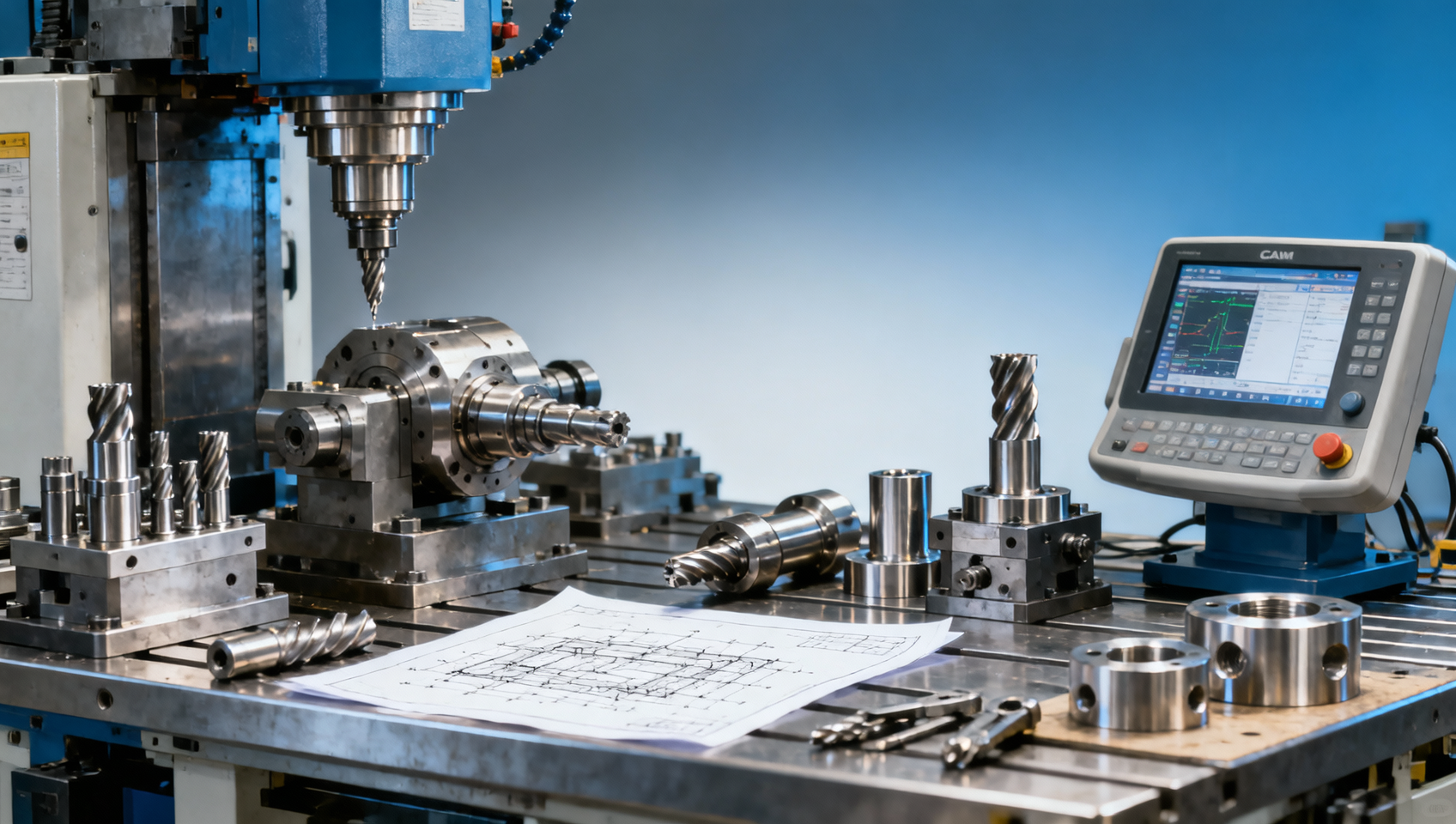
Many CNC production delays begin long before the first cut, often hidden in planning, tooling, programming, and workflow design. In today’s Global Manufacturing environment, metal machining success depends not only on industrial CNC equipment, but also on a smarter production process, automated production line coordination, and accurate CNC Programming that keep CNC metalworking efficient, predictable, and competitive.
For researchers, machine operators, buyers, and business decision-makers, this point is more than a process detail. It affects quote accuracy, delivery stability, scrap rates, spindle utilization, and ultimately customer trust. In many CNC machining projects, the visible machine tool is only one part of the system. The less visible upstream work—drawing review, fixture planning, tool selection, CAM setup, material flow, and inspection logic—often determines whether a production order runs smoothly or turns into a series of costly interruptions.
In modern precision manufacturing, bottlenecks usually appear as schedule slippage, frequent setup changes, unbalanced production cells, tool shortages, and repeated program edits. These issues are common across automotive parts, aerospace structures, electronics housings, energy equipment, and general industrial components. Understanding where they begin allows companies to improve throughput before adding another machine, another shift, or another supplier.
Why CNC bottlenecks start upstream, not on the machine
A CNC production line may look efficient when viewed from the shop floor, yet the first real bottleneck often begins 24 to 72 hours earlier. In that upstream window, engineering teams confirm tolerances, purchasing checks material availability, programmers build toolpaths, and planners assign machine capacity. If any one of these steps is delayed by even 6 to 12 hours, the machine may stand idle despite being technically available.
This is especially true in high-mix, low- to medium-volume manufacturing, where a shop may process 20 to 80 part numbers per week. A machining center can only cut what has been fully prepared. Missing tool assemblies, unclear datum definitions, incomplete setup sheets, or unresolved drawing revisions can stop a production order before the first workpiece is loaded. In many cases, the machine is not the constraint; preparation quality is.
For procurement teams, upstream bottlenecks also affect supplier evaluation. A supplier with advanced 5-axis machining capability may still struggle with on-time delivery if pre-production control is weak. Lead time performance is often shaped less by peak spindle speed and more by how fast the supplier can finalize fixtures, verify programs, and align raw material, tooling, and inspection resources across multiple jobs.
Decision-makers should therefore measure CNC productivity as a system. Instead of focusing only on machine count, useful indicators include first-pass setup success, programming revision frequency, tool preset readiness, and average time from drawing release to production release. Shops that reduce pre-machining uncertainty by 15% to 25% often see more stable output without immediate capital expansion.
Common sources of hidden delay
The following upstream issues are frequently responsible for metal machining delays in both contract manufacturing and in-house production environments:
- Incomplete drawing review, such as missing GD&T interpretation, unclear surface finish requirements, or unrealistic tolerance stack-up.
- Tooling mismatch, including unavailable inserts, long lead-time holders, or fixture designs that do not support repeatable clamping.
- Programming instability, where CAM strategies require multiple edits because stock allowance, machine travel, or collision zones were not confirmed early.
- Workflow imbalance, where material arrives before programs are approved, or inspection resources become available only after machining has started.
Each of these problems can add 2 to 8 hours to a single job, and the cumulative effect across a week can be larger than the output of one additional machine shift.
The pre-machining control points that shape delivery performance
Before machining begins, strong manufacturers usually manage a sequence of control points. These points do not require overly complex systems, but they do require consistency. For many shops, the most effective improvements come from standardizing 5 to 7 preparation checkpoints rather than buying new equipment too early. This matters in global manufacturing because mixed orders, export requirements, and tighter delivery windows leave less tolerance for informal coordination.
A practical rule is that every CNC job should have three things confirmed before release: process feasibility, resource readiness, and quality verification logic. Process feasibility means the part can be machined with available machine travel, spindle power, cutting tools, and fixture access. Resource readiness covers material, setup sheets, offsets, tools, and operator instructions. Quality verification logic ensures measurement points, gauges, and critical dimensions are defined in advance.
When these items are not synchronized, delivery risk rises sharply. A part with 4-axis or 5-axis features may require only 40 minutes of machine time, but 6 hours of extra preparation if fixture access and tool reach are not resolved early. In high-precision work, especially with tolerances around ±0.01 mm to ±0.05 mm, upstream decisions influence whether the first batch is acceptable or repeatedly reworked.
The table below summarizes key pre-machining checkpoints and their operational impact in CNC production planning.
The key takeaway is that preparation quality directly affects capacity. A shop that closes these four control points consistently can shorten setup-related interruptions, improve first-pass acceptance, and reduce scheduling variability across multiple production orders.
A simple release sequence for better shop-floor readiness
- Review drawing revision, tolerances, and material specification.
- Confirm fixture method, datum strategy, and tool list.
- Simulate CNC programming with actual stock and holder conditions.
- Prepare setup sheet, offsets, and operator notes.
- Align inspection plan and first-article approval route.
Even in smaller workshops, this 5-step sequence can reduce confusion and make automated production line coordination far more predictable.
How tooling, programming, and workflow design interact
CNC bottlenecks rarely come from a single cause. More often, tooling, programming, and workflow design reinforce one another—for better or worse. A high-speed machining center with a 12,000 to 20,000 rpm spindle will not deliver expected output if tool assemblies are inconsistent. Likewise, a stable tool package will not help much if the program generates excessive tool changes, long non-cutting travel, or poor roughing-to-finishing balance.
Operators feel this interaction immediately. If setup instructions are vague, they spend extra time checking offsets, proving programs, and adjusting clamping. If the CNC programming team receives incomplete production information, they may optimize for geometry but not for actual shop conditions. That creates friction between digital planning and machine-side execution, especially when multiple shifts share the same equipment.
Workflow design adds a third layer. In an automated production line, machine loading, pallet movement, tool replacement, and in-process inspection must be synchronized. A delay in one station can cascade across 3 to 5 downstream steps. For example, if preset tooling is not ready on time, a machine operator may delay setup, which pushes first-article inspection, which then delays batch release and final assembly scheduling.
For buyers comparing CNC suppliers, this interaction is worth examining during audits. Ask not only what machines a supplier owns, but also how they manage tool life, program verification, setup documentation, and cross-department handoff. These factors often separate stable suppliers from those that appear capable on paper but struggle in real delivery conditions.
Typical coordination gaps in CNC metalworking
The matrix below shows how upstream decisions influence machining efficiency and production stability.
The table shows that metal machining efficiency depends on system alignment. Even a modest improvement in tooling and programming coordination can produce faster setup recovery and more predictable cycle time across batches.
What operators and engineers should standardize first
- Use a fixed setup sheet format with datum, tool list, clamping notes, and first-article checkpoints.
- Record actual cycle time versus programmed cycle time for the first 3 to 5 runs.
- Create a tool replacement threshold based on wear patterns, not only on theoretical cutting time.
- Define who approves program edits during production to avoid uncontrolled revisions.
These actions are relatively simple, but they help close the gap between digital planning and real machine behavior.
What buyers and decision-makers should evaluate before investing
When delivery performance is unstable, many companies first consider adding another CNC machine, outsourcing overflow work, or expanding shifts. These may be valid options, but they should come after a process review. In many factories, 10% to 20% of lost capacity comes from preventable pre-machining issues rather than physical machine shortage. Investment decisions should therefore start with diagnosis, not only equipment comparison.
For procurement teams selecting a machining partner, one useful approach is to score the supplier on both hardware and process maturity. Hardware includes machine type, axis capability, spindle range, and inspection equipment. Process maturity includes engineering response speed, tooling preparation discipline, scheduling visibility, and first-article control. A supplier with fewer machines but stronger preparation may deliver more reliably than a larger shop with fragmented workflows.
Business decision-makers should also consider order profile. If production involves frequent design changes, small batches, or complex parts with multiple reference surfaces, flexibility matters more than pure machine count. If the product mix is stable and annual volume exceeds several thousand units, then automation, pallet systems, and standardized fixtures may deliver stronger returns over a 12- to 24-month horizon.
A practical evaluation framework is shown below. It can help manufacturers compare internal improvement projects, new machine purchases, or external supplier options using consistent criteria.
For purchasing and executive teams, the main conclusion is clear: evaluate CNC capacity as a combination of machine capability and production readiness. That approach supports better sourcing, lower delivery risk, and more effective capital allocation.
Questions worth asking a CNC supplier or internal production team
- How long does it typically take to move from drawing release to first setup approval—1 day, 3 days, or more?
- What percentage of jobs require program edits after machine prove-out?
- Are fixtures standardized for repeat orders, or redesigned each time?
- How are urgent orders inserted without disrupting existing schedules?
These questions reveal process maturity faster than a basic machine list alone.
Practical ways to remove bottlenecks before machining starts
Improvement does not always require a major digital transformation project. Many factories can remove pre-machining bottlenecks through focused operational changes over 30 to 90 days. The goal is to shorten the path between engineering intent and stable machine execution. In most CNC metalworking environments, that means making information easier to transfer, setups easier to repeat, and approval decisions faster to complete.
One effective method is to classify jobs into three levels: routine repeat parts, moderate-change parts, and complex new parts. Routine parts should have locked process sheets, fixture references, and tool libraries. Moderate-change parts need faster engineering review and controlled parameter adjustments. Complex new parts require deeper simulation, trial machining, and inspection planning. This triage model prevents low-risk orders from being delayed by high-risk review workflows.
Another practical step is to align programming and setup ownership. When programmers receive feedback from operators after the first 1 to 3 batches, they can refine entry moves, tool engagement, and non-cutting travel. Over time, this reduces prove-out duration and creates reusable process knowledge. For companies running multiple machining centers, these small refinements can add up to significant capacity recovery across a quarter.
Companies moving toward smart manufacturing should also prioritize data they can actually act on. Useful signals include setup time by machine family, tool shortage frequency, first-article approval lead time, and number of unplanned program revisions per order. If these four indicators improve, the production system is becoming healthier even before more advanced automation is introduced.
A realistic improvement roadmap
- Weeks 1 to 2: map the current release process and identify the top 5 recurring delays.
- Weeks 3 to 4: standardize setup sheets, tool lists, and first-article checkpoints.
- Weeks 5 to 8: build a reusable library for common fixtures, proven tools, and stable cutting strategies.
- Weeks 9 to 12: review data on setup time, rework, and schedule adherence, then adjust priorities.
FAQ: common questions from users, buyers, and managers
How long should pre-machining preparation take? For routine repeat parts, preparation may take less than 1 day if tools and fixtures are already qualified. For new or complex parts, 2 to 5 working days is more realistic when programming, simulation, and inspection planning are included.
What is the most common hidden cause of CNC delay? In many workshops, it is not machine breakdown but incomplete release conditions—missing tools, unstable setup instructions, unresolved drawing details, or inspection plans that are created too late.
Should a company buy another machine to solve bottlenecks? Not always. If the current line loses 10% to 15% of capacity because of setup and planning issues, process improvement often delivers faster payback than immediate expansion.
Which KPI is most useful for early improvement? Start with setup time, first-article approval time, program revision count, and schedule adherence. These indicators show whether upstream preparation is actually improving shop-floor output.
CNC production bottlenecks often begin long before the spindle starts turning. In precision manufacturing, the real leverage lies in better planning, stronger tooling discipline, accurate CNC programming, and coordinated workflow design. When drawing review, fixture strategy, tool readiness, inspection planning, and production scheduling are aligned, metal machining becomes more stable, scalable, and cost-effective.
For operators, this means fewer disruptions and clearer setup execution. For buyers, it means more reliable supplier evaluation. For business leaders, it means smarter use of equipment investment and stronger delivery performance in global manufacturing. If you want to improve CNC metalworking efficiency, reduce hidden delays, or build a more responsive automated production line, contact us to discuss your application, request a tailored solution, or learn more about practical process optimization strategies.
PREVIOUS ARTICLE
NEXT ARTICLE
Recommended for You
 Heavy-duty Machining Center for mold making: Why coolant filtration standards evolve faster than OEM manualsMachine Tool Industry Editorial Team
 Quick-change Fixture Design for CNC turning: Why clamping force consistency drops after 200 cyclesCNC Machining Technology Center
 5 Axis Machining for impeller manufacturing: Why toolpath smoothing affects surface fatigue lifeCNC Machining Technology Center
 Lean Production Process implementation: Where value stream mapping fails to expose hidden machine downtimeManufacturing Market Research Center
 Modular Tooling System for flexible manufacturing: Why interface repeatability degrades faster than expectedMachine Tool Industry Editorial Team
 Industrial Automation control system for CNC machines: When cybersecurity updates disrupt scheduled maintenanceMachine Tool Industry Editorial Team

Aris Katos
Future of Carbide Coatings
15+ years in precision manufacturing systems. Specialized in high-speed milling and aerospace grade alloy processing.
▶
Heavy-duty Machining Center for mold making: Why coolant filtration standards evolve faster than OEM manualsMachine Tool Industry Editorial Team▶
Quick-change Fixture Design for CNC turning: Why clamping force consistency drops after 200 cyclesCNC Machining Technology Center▶
5 Axis Machining for impeller manufacturing: Why toolpath smoothing affects surface fatigue lifeCNC Machining Technology Center▶
Lean Production Process implementation: Where value stream mapping fails to expose hidden machine downtimeManufacturing Market Research Center▶
Modular Tooling System for flexible manufacturing: Why interface repeatability degrades faster than expectedMachine Tool Industry Editorial Team
Mastering 5-Axis Workholding Strategies
Join our technical panel on Nov 15th to learn about reducing vibrations in thin-wall components.

Providing you with integrated sanding solutions
Before-sales and after-sales services
Comprehensive technical support