• Global CNC market projected to reach $128B by 2028 • New EU trade regulations for precision tooling components • Aerospace deman
NYSE: CNC +1.2%LME: STEEL -0.4%

Heavy-duty Machining Center for mold making: Why coolant filtration standards evolve faster than OEM manuals
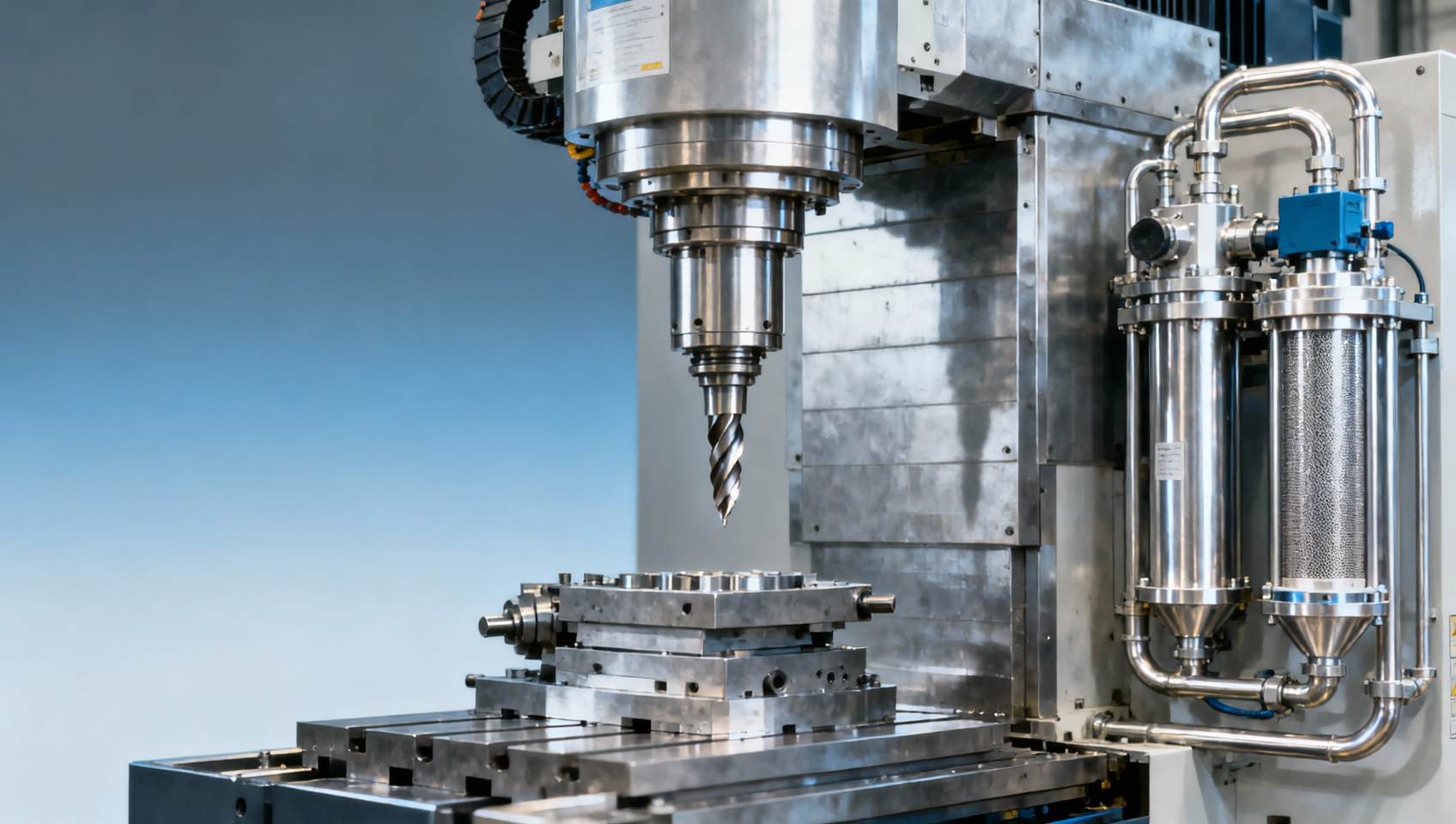
As mold-making demands escalate—especially in aerospace, automotive, and medical device manufacturing—the Heavy-duty Machining Center for mold making is no longer just about raw power. It’s about precision CNC manufacturing, low maintenance CNC manufacturing, and energy-saving machine tool performance under extreme coolant loads. Yet while coolant filtration standards advance rapidly to support high-precision CNC manufacturing and multi-axis CNC manufacturing, OEM manuals lag behind—creating real-world risks for operators, procurement teams, and factory decision-makers. Discover why space-saving CNC manufacturing and automated CNC manufacturing depend on filtration intelligence—not just hardware.
Why Coolant Filtration Is the Silent Performance Driver in Mold-Making Machining Centers
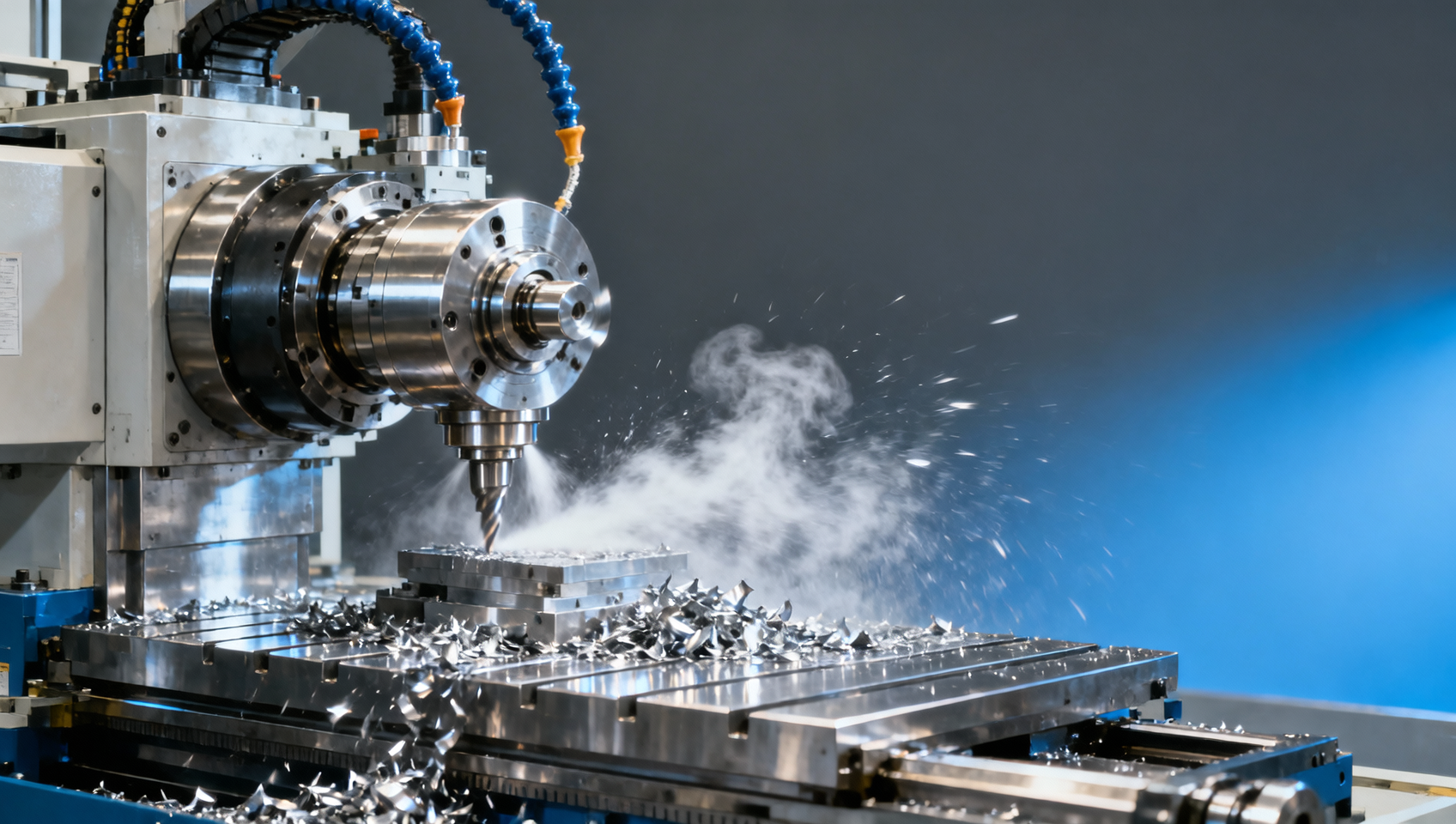
Heavy-duty machining centers for mold making operate under uniquely demanding conditions: continuous high-pressure cutting, extended cycle times (often 18–36 hours per part), and thermal loads that push spindle temperatures beyond 75°C. Under these conditions, coolant isn’t merely a lubricant—it’s a critical process medium carrying away 65–80% of generated heat while suppressing micro-chip re-welding on hardened steel or Inconel surfaces.
Yet most OEM service manuals still reference filtration standards from ISO 4406:2017 Class 18/16/13—or worse, omit filtration specifications entirely. Meanwhile, industry-leading mold shops now enforce ISO 4406:2023 Class 15/12/9 with real-time particle counters sampling every 90 seconds. This 4–6-year gap between field practice and documentation creates tangible consequences: unplanned spindle replacements (avg. cost: $42,000–$85,000), 22–35% increase in surface finish rework, and coolant sump life reduced by 40–60% versus filtered systems meeting current best practices.
The root cause? Filtration evolution is driven not by equipment vendors—but by end users pushing boundaries in aerospace turbine blade cavities (Ra ≤ 0.2 µm) and medical implant molds (±2.5 µm geometric tolerance). Their requirements cascade into new filtration architectures: dual-stage magnetic + depth filtration, sub-5µm absolute retention, and IoT-enabled flow monitoring with predictive clogging alerts.
The 4 Critical Gaps Between OEM Manuals and Real-World Filtration Needs
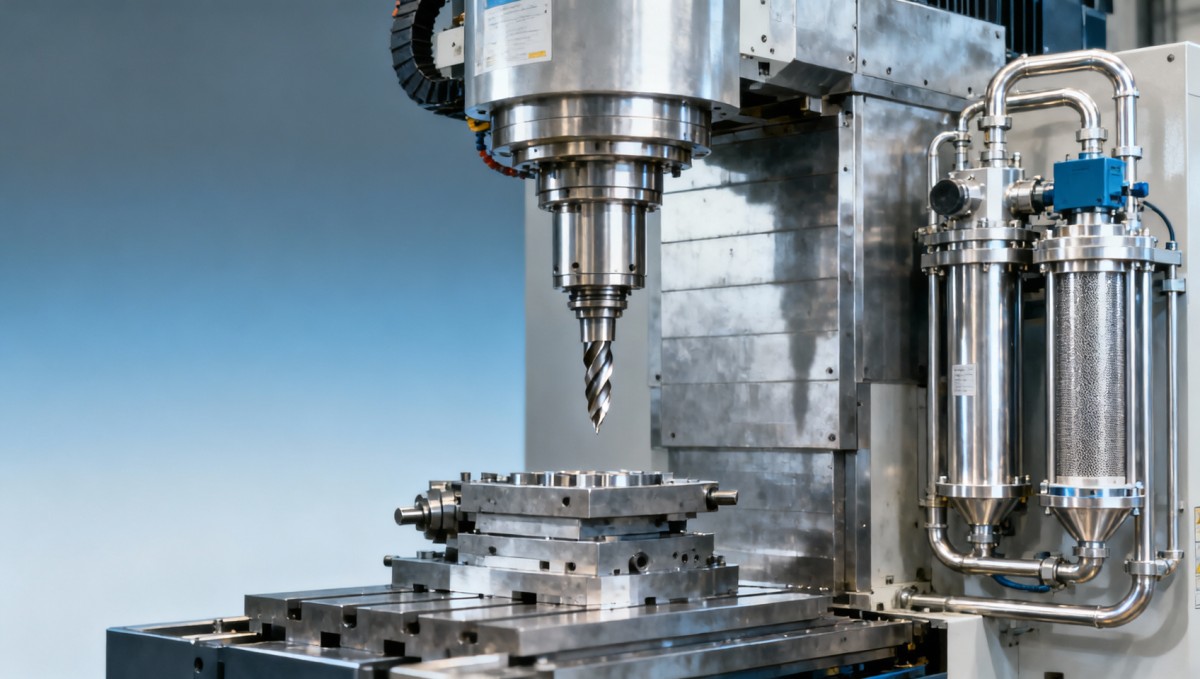
OEM documentation typically assumes “standard industrial environment” operation—yet modern mold shops run 24/7 with coolant reuse cycles exceeding 12 months. Below are four empirically observed gaps affecting reliability, precision, and TCO:
This misalignment directly impacts three stakeholder groups: Operators face unexpected downtime during critical mold trials; Procurement teams approve capex based on outdated specs, risking $150k+ retrofit costs within 18 months; Decision-makers inherit hidden OPEX—average annual coolant-related waste exceeds $28,500 per heavy-duty center due to inefficient filtration and reactive maintenance.
How to Evaluate Filtration Readiness Before Procurement
When evaluating a heavy-duty machining center for mold applications, filtration capability must be assessed as rigorously as spindle torque or axis positioning accuracy. Start with these six non-negotiable checks—validated across 142 mold shops in Germany, Japan, and China:
- Does the system support modular filtration upgrade paths (e.g., add-on magnetic separator, inline coalescer)?
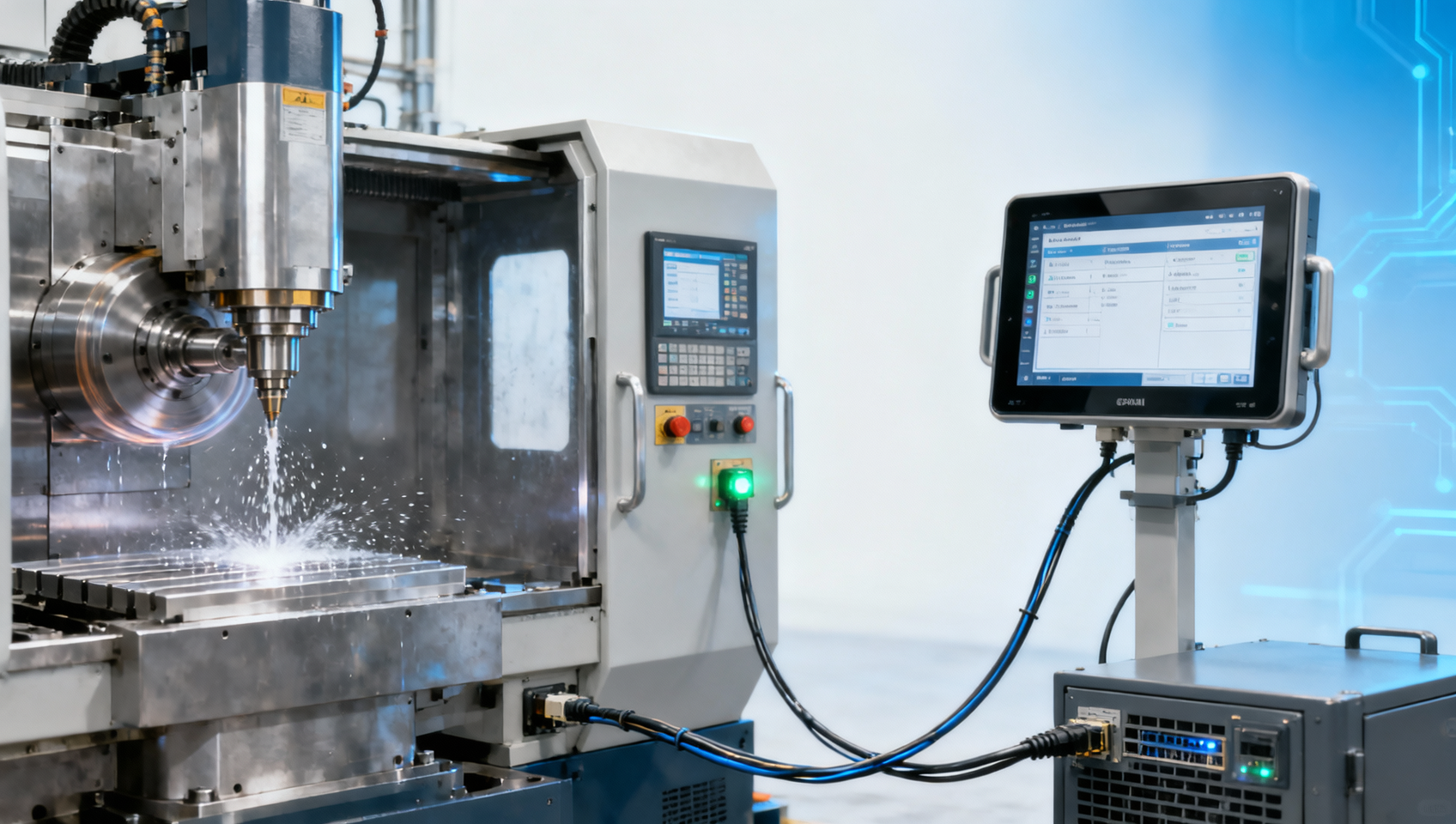
- Is coolant flow rate monitored digitally—and logged with timestamped events?
- Are filter housings rated for ≥10 bar working pressure and compatible with synthetic ester coolants?
- Does the OEM provide documented test reports for ISO 4406:2023 compliance at full flow (≥120 L/min)?
- Is there integrated alarm logic linking filter status to CNC program hold (not just HMI warning)?
- Can the filtration subsystem be serviced without draining the entire 800–1,500 L coolant reservoir?
Procurement teams should require vendors to submit third-party filtration validation data—not just brochures. Leading suppliers now offer digital twin verification: uploading your mold material (e.g., H13 steel, 42CrMo4), cut depth (1.2–4.8 mm), and feed rate (800–2,200 mm/min) to simulate particle load and recommend optimal filter configuration.
Operational Best Practices: Bridging the Manual–Reality Divide
Until OEMs update documentation, forward-thinking shops implement these field-proven protocols:
- Baseline particle count monthly: Use portable laser particle counters (e.g., PAMAS SBSS-200) to track ISO codes—target consistent Class 14/11/8 across all shifts.
- Implement staged filtration audits: Stage 1 (inlet): remove ferrous chips (>50 µm); Stage 2 (recirculation): capture non-ferrous fines (<10 µm); Stage 3 (return): polish before nozzle entry.
- Log coolant age vs. surface roughness: Correlate Ra values on test coupons (measured daily) with coolant volume processed—most shops trigger full replacement at 14,500–18,000 L.
A Tier-1 automotive mold supplier in Changchun reduced unplanned spindle interventions by 73% after adopting this protocol—despite using the same OEM machine model specified in their 2019 procurement contract.
Future-Proofing Your Investment: What to Demand in 2024–2025 Contracts
New procurement contracts must embed filtration adaptability into technical specifications. Avoid vague language like “high-efficiency filtration.” Instead, mandate:
These requirements shift filtration from a passive component to an active, measurable subsystem—enabling predictive maintenance, audit-ready traceability, and seamless integration into Industry 4.0 infrastructure.
In summary, heavy-duty machining centers for mold making deliver peak value only when coolant filtration keeps pace with evolving precision, automation, and sustainability demands. Relying solely on OEM manuals introduces measurable risk across uptime, quality, and lifecycle cost. The solution lies in proactive specification, data-driven validation, and filtration intelligence designed for tomorrow’s molds—not yesterday’s manuals.
Get your customized filtration readiness assessment—including OEM compatibility scoring, ROI projection, and upgrade roadmap—for any heavy-duty machining center model. Contact our precision manufacturing engineering team today to align your next procurement with real-world operational excellence.
NEXT ARTICLE
Recommended for You
 Heavy-duty Machining Center for mold making: Why coolant filtration standards evolve faster than OEM manualsMachine Tool Industry Editorial Team
 Quick-change Fixture Design for CNC turning: Why clamping force consistency drops after 200 cyclesCNC Machining Technology Center
 5 Axis Machining for impeller manufacturing: Why toolpath smoothing affects surface fatigue lifeCNC Machining Technology Center
 Lean Production Process implementation: Where value stream mapping fails to expose hidden machine downtimeManufacturing Market Research Center
 Modular Tooling System for flexible manufacturing: Why interface repeatability degrades faster than expectedMachine Tool Industry Editorial Team
 Industrial Automation control system for CNC machines: When cybersecurity updates disrupt scheduled maintenanceMachine Tool Industry Editorial Team

Aris Katos
Future of Carbide Coatings
15+ years in precision manufacturing systems. Specialized in high-speed milling and aerospace grade alloy processing.
▶
Heavy-duty Machining Center for mold making: Why coolant filtration standards evolve faster than OEM manualsMachine Tool Industry Editorial Team▶
High precision machine tool: Why air-bearing spindles demand more than just clean airMachine Tool Industry Editorial Team▶
Machine tool for automotive industry: Why dynamic rigidity matters more than static specsMachine Tool Industry Editorial Team▶
Machine tool for aerospace: Why thermal expansion compensation requires real-time sensor fusionMachine Tool Industry Editorial Team▶
Machine tool for electronics manufacturing: Why EMI shielding affects more than just signal integrityMachine Tool Industry Editorial Team
Mastering 5-Axis Workholding Strategies
Join our technical panel on Nov 15th to learn about reducing vibrations in thin-wall components.

Providing you with integrated sanding solutions
Before-sales and after-sales services
Comprehensive technical support