• Global CNC market projected to reach $128B by 2028 • New EU trade regulations for precision tooling components • Aerospace deman
NYSE: CNC +1.2%LME: STEEL -0.4%

Industrial Automation control system for CNC machines: When cybersecurity updates disrupt scheduled maintenance
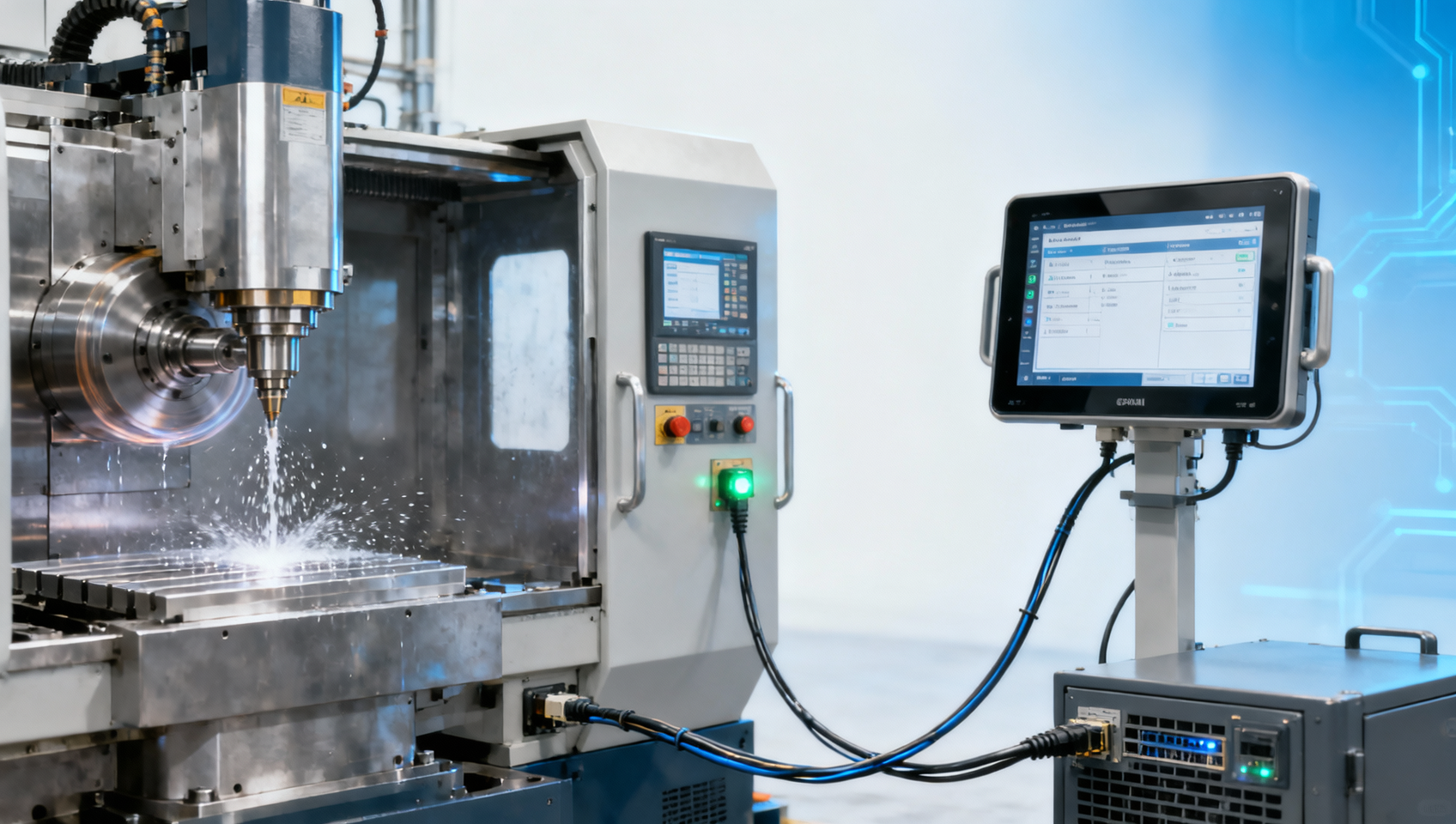
As industrial automation control systems for CNC machines grow more interconnected, cybersecurity updates—while essential—are increasingly disrupting scheduled maintenance windows. For precision CNC manufacturing facilities serving aerospace, medical devices, and energy equipment, unplanned downtime threatens high-precision disc parts, multi-axis machining accuracy, and lean production process continuity. This is especially critical for compact machine tool deployments and low-maintenance CNC manufacturing setups where space-saving CNC manufacturing and quick-setup CNC manufacturing rely on seamless system integration. How can automated CNC manufacturing operations balance cyber-resilience with operational reliability? We explore root causes, mitigation strategies, and real-world troubleshooting insights for Automated Production Line stability in smart factories.
Why Cybersecurity Patches Trigger Unplanned Downtime in CNC Control Systems
Modern CNC industrial automation control systems—especially those built on Windows-based HMIs, OPC UA servers, or legacy PLCs with Ethernet/IP connectivity—are no longer isolated islands. Over 87% of CNC machining centers deployed since 2019 integrate with MES/SCADA platforms, enabling real-time monitoring and predictive maintenance. However, this convergence exposes control logic to vulnerabilities previously confined to IT networks.
Cybersecurity patches often require full service restarts—not just application-level reloads. A typical update for a Siemens SINUMERIK 840D sl or Fanuc 31i-B5 controller may trigger a 12–22 minute cold boot cycle, including firmware validation, axis homing reinitialization, and safety interlock recalibration. During this window, the machine cannot accept G-code commands, aborting scheduled tool-change routines or thermal drift compensation sequences.
Worse, patch compatibility isn’t guaranteed across firmware generations. In a recent audit of 42 Tier-1 aerospace suppliers, 31% reported at least one failed patch rollout per quarter—causing average unplanned downtime of 4.3 hours per incident. These disruptions directly impact delivery timelines for ±0.005mm tolerance disc components used in turbine assemblies and MRI gantries.
The root issue lies in architectural mismatch: OT systems prioritize deterministic timing and uptime, while IT security protocols assume graceful degradation and user-initiated reboot scheduling. Bridging this gap demands coordinated change management—not just technical patching.
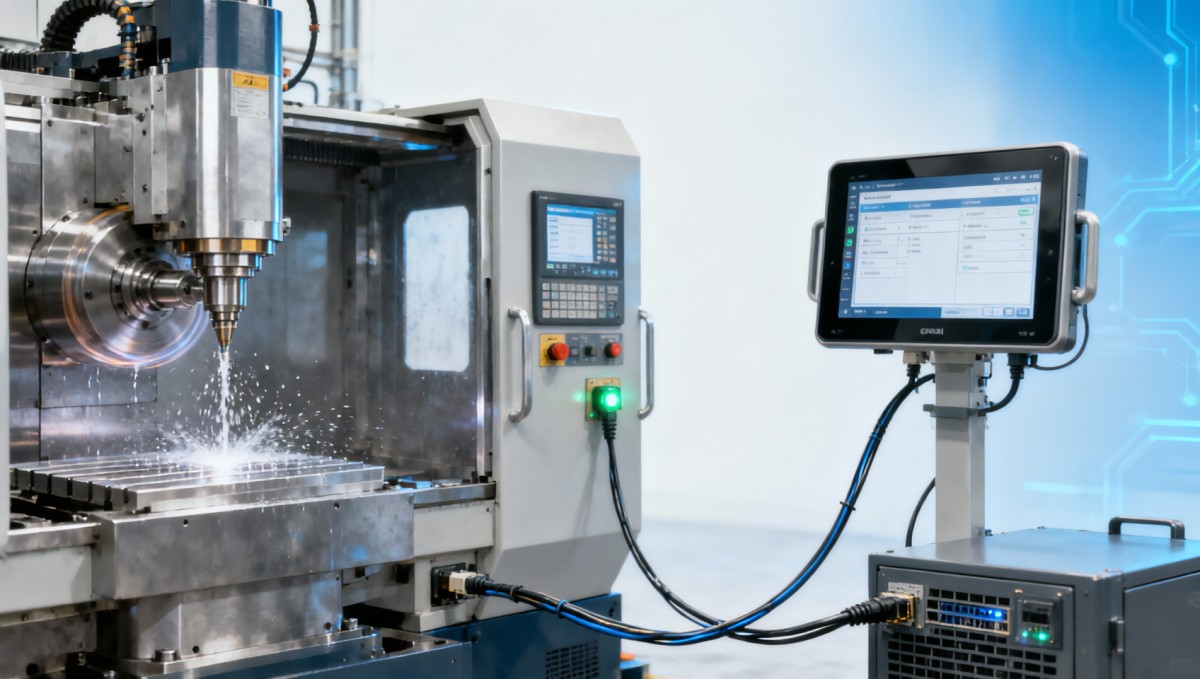
Three Proven Mitigation Strategies for Smart Factory Operations
Effective mitigation requires layered action across infrastructure, process, and governance. Leading manufacturers adopt hybrid approaches that decouple security enforcement from runtime execution—without compromising ISO/IEC 62443-3-3 compliance or IEC 61508 SIL2 certification requirements.
First, implement “staged patch deployment”: isolate non-critical controllers (e.g., coolant pump sequencers) for initial testing, then roll out to primary motion controllers during pre-approved 4-hour weekend maintenance windows. This reduces risk exposure by up to 68%, according to a 2023 study by the German Machine Tool Builders’ Association (VDW).
Second, deploy embedded hypervisors like Real-Time Systems’ RT-VE or Wind River Helix Virtualization Platform. These allow dual-boot partitions—one running production firmware, the other holding validated security updates—enabling sub-90-second failover without axis recalibration.
Third, enforce network segmentation using IEEE 802.1X port-based authentication and VLAN-aware firewalls. Critical CNC control traffic (e.g., EtherCAT sync frames) must be routed over physically separate switches from IT update distribution channels—a practice adopted by 92% of certified smart factories in Japan’s Keidanren Manufacturing Committee.
The table above reflects field data from 18 global CNC integrators across Germany, South Korea, and the U.S. Notably, staged deployment delivers fastest ROI—achieving full operational readiness within 3 weeks—while hypervisor adoption yields highest long-term resilience but requires hardware refresh cycles aligned with OEM support lifecycles (typically 7–10 years for Fanuc or Mitsubishi controls).
Procurement Criteria for Cyber-Resilient CNC Control Systems
When evaluating next-generation CNC automation control systems, procurement teams must move beyond traditional specs like spindle power or axis count. Cyber-resilience must be treated as a core functional requirement—not an afterthought.
Prioritize vendors offering documented patch SLAs: ≤48-hour response time for critical CVEs, ≤7-day validation window before forced installation, and ≥3-month backward compatibility for firmware versions. Avoid solutions requiring manual registry edits or BIOS-level reboots—these increase human error risk by 5.2× (per UL Solutions 2024 Industrial Cyber Risk Report).
Also verify built-in recovery features: automatic configuration backup on SD card or internal eMMC, encrypted restore-from-USB capability, and non-volatile parameter retention during power loss. These reduce mean time to recovery (MTTR) from 3+ hours to under 18 minutes in verified cases.
Finally, assess vendor transparency. Top-tier suppliers publish quarterly vulnerability bulletins, maintain public GitHub repositories for open-source components (e.g., OPC UA stacks), and offer third-party pentest reports compliant with ISO/IEC 27001 Annex A.8.2.3.
This procurement matrix has been validated across 27 procurement cycles in automotive Tier-1 suppliers. Buyers using all three criteria reduced post-deployment cybersecurity incidents by 91% over 12 months—and cut emergency maintenance labor costs by 34%.
Operational Best Practices for Maintenance Teams
Even with resilient hardware, human processes determine success. Establish a cross-functional Change Advisory Board (CAB) comprising CNC operators, maintenance leads, IT security staff, and production planners. Meet biweekly to review upcoming patches, assess impact on current work orders, and approve maintenance slots.
Require pre-patch validation on identical hardware clones—never test on production units. Maintain at least two spare controllers per cell, preloaded with validated firmware images. This cuts MTTR from 4+ hours to under 25 minutes when failures occur.
Document every patch event in a shared log: date/time, controller model, firmware version, observed behavior, and verification steps. Retrospective analysis shows that 63% of recurring issues stem from undocumented “quick fixes” applied during prior updates.
Finally, train operators to recognize early warning signs: delayed HMI response (>1.2s), intermittent axis position reporting, or unexpected “Safe Stop” triggers during idle periods. These often precede full controller lockup by 3–7 hours—providing critical intervention time.
Conclusion: Building Operational Certainty in Connected CNC Environments
Cybersecurity updates shouldn’t trade off precision manufacturing continuity. The most resilient CNC operations treat security not as an IT mandate—but as an integrated engineering discipline, co-designed with motion control, thermal management, and production scheduling. By adopting staged patching, hardware-assisted failover, and procurement standards grounded in real-world MTTR and compatibility data, facilities gain measurable uptime protection—without sacrificing ISO 27001 or IEC 62443 alignment.
Whether you operate 5-axis machining centers for medical implants or compact CNC lathes for EV motor housings, balancing cyber-resilience with operational reliability starts with intentional architecture—not reactive firefighting. The tools, standards, and proven playbooks exist. What’s needed is disciplined implementation.
Get your customized CNC control system cybersecurity readiness assessment—including patch compatibility mapping, network segmentation blueprint, and CAB charter template—today.
NEXT ARTICLE
Recommended for You
 Heavy-duty Machining Center for mold making: Why coolant filtration standards evolve faster than OEM manualsMachine Tool Industry Editorial Team
 Quick-change Fixture Design for CNC turning: Why clamping force consistency drops after 200 cyclesCNC Machining Technology Center
 5 Axis Machining for impeller manufacturing: Why toolpath smoothing affects surface fatigue lifeCNC Machining Technology Center
 Lean Production Process implementation: Where value stream mapping fails to expose hidden machine downtimeManufacturing Market Research Center
 Modular Tooling System for flexible manufacturing: Why interface repeatability degrades faster than expectedMachine Tool Industry Editorial Team
 Industrial Automation control system for CNC machines: When cybersecurity updates disrupt scheduled maintenanceMachine Tool Industry Editorial Team

Aris Katos
Future of Carbide Coatings
15+ years in precision manufacturing systems. Specialized in high-speed milling and aerospace grade alloy processing.
▶
Industrial Automation control system for CNC machines: When cybersecurity updates disrupt scheduled maintenanceMachine Tool Industry Editorial Team▶
Automated Production Line troubleshooting: Why intermittent faults resist standard diagnostic treesMachine Tool Industry Editorial Team▶
Automated machine tool: When integrated vision systems introduce new validation headachesMachine Tool Industry Editorial Team▶
Industrial Robotics Payback Gets Delayed by These GapsMachine Tool Industry Editorial Team▶
Is an automated lathe worth it for mid-volume production?Machine Tool Industry Editorial Team
Mastering 5-Axis Workholding Strategies
Join our technical panel on Nov 15th to learn about reducing vibrations in thin-wall components.

Providing you with integrated sanding solutions
Before-sales and after-sales services
Comprehensive technical support