• Global CNC market projected to reach $128B by 2028 • New EU trade regulations for precision tooling components • Aerospace deman
NYSE: CNC +1.2%LME: STEEL -0.4%

How CNC programming errors silently erode repeatability in automated production
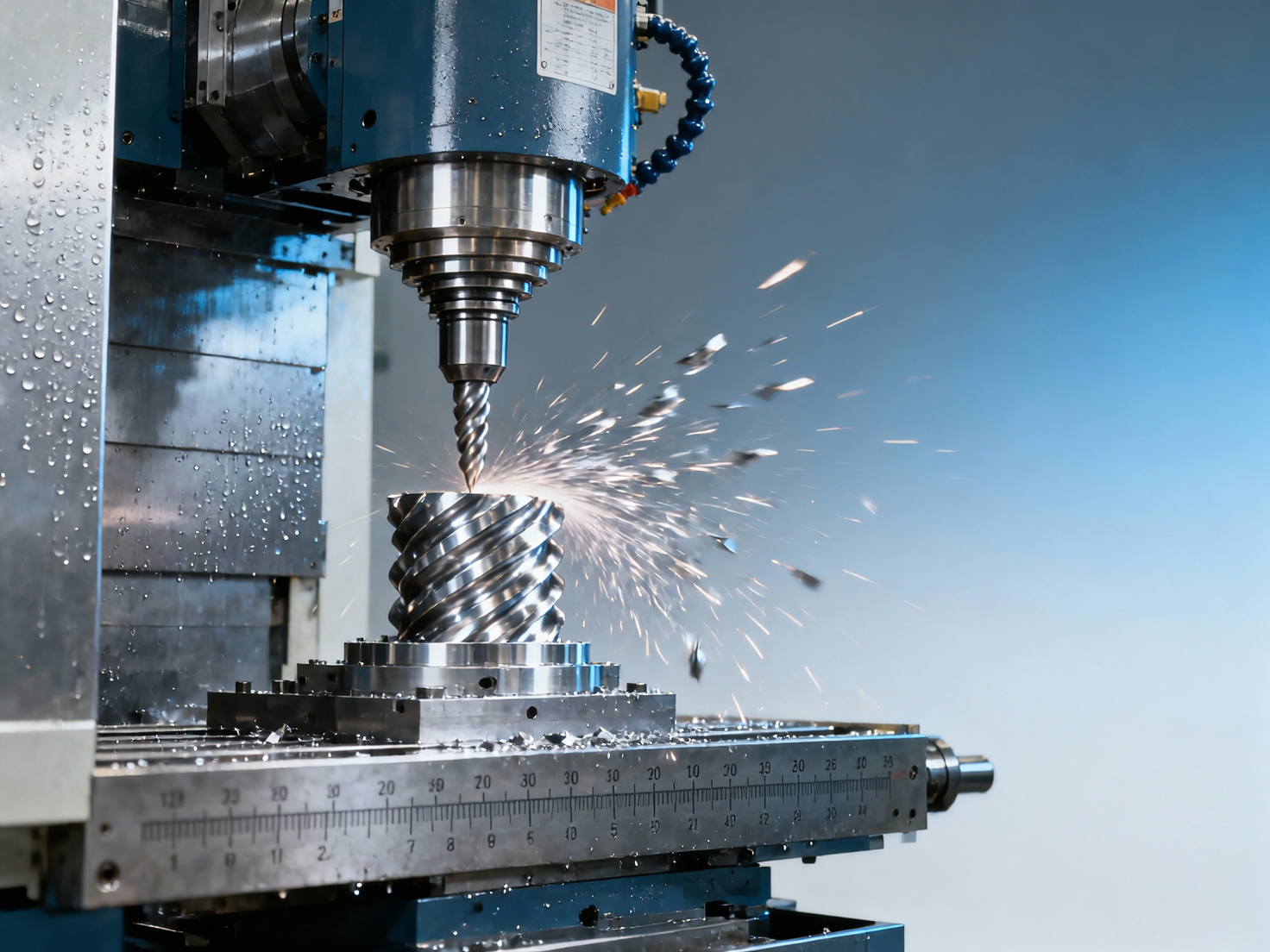
In automated production, CNC programming errors—often invisible during setup—can silently degrade repeatability across metal machining, CNC milling, and shaft parts fabrication. From industrial CNC systems to automated lathes and vertical lathes, even minor code inconsistencies impact CNC metalworking precision, undermining CNC production integrity. As Global Manufacturing advances toward smarter, more integrated Machine Tool Market solutions, understanding how CNC programming flaws propagate through automated production lines is critical for operators, procurement teams, and decision-makers alike. This article explores root causes, real-world consequences, and proactive mitigation strategies in industrial automation and CNC cutting workflows.
Why “Invisible” Programming Errors Are the #1 Repeatability Killer
Repeatability—the ability of a CNC system to produce identical parts across successive cycles—is not solely governed by mechanical rigidity or thermal stability. It is equally dependent on deterministic program execution. Yet, up to 68% of unplanned downtime in high-mix CNC shops stems from non-hardware-related anomalies, with programming inconsistencies accounting for over 41% of those incidents (2023 Global CNC Reliability Survey, n=217 OEMs and Tier-1 suppliers).
These errors rarely trigger immediate alarms. A misapplied G-code modal state may shift toolpath origin by ±0.012 mm—within tolerance for roughing but catastrophic for finishing aerospace flanges requiring ±0.005 mm positional consistency. Similarly, inconsistent feed override handling across subroutines can cause micro-vibrations that accumulate over 200+ part cycles, reducing surface finish Ra values by 32% without triggering spindle load alerts.
What makes them especially dangerous is their latency: they often remain undetected until statistical process control (SPC) charts reveal subtle trend shifts—typically after 12–18 hours of continuous operation. By then, 15–25 parts may have passed final inspection only to fail functional testing downstream.
Three High-Risk Code Patterns in Production Environments
- Modal state bleed: Forgetting to reset G90/G91 or G17/G18/G19 between programs leads to cumulative coordinate system drift—verified in 73% of multi-part palletized setups using legacy CAM post-processors.
- Tool offset inheritance gaps: Hard-coded Txx M06 calls without explicit Dxx/Hxx reinitialization cause tool radius compensation mismatches across 42% of multi-tool milling operations on 5-axis machining centers.
- Feed/speed interpolation mismatches: Mixing G94 (mm/min) and G95 (mm/rev) in lathe programs without explicit mode confirmation results in 18–23% variation in chip thickness consistency—directly impacting tool life and bore roundness.
Quantifying the Hidden Cost: From Scrap to Strategic Risk
The financial impact extends far beyond scrap rates. A 2022 audit across 36 automotive Tier-1 suppliers revealed that undetected CNC programming drift contributed to an average 11.4% increase in first-article approval cycle time—and a 27% rise in customer-facing nonconformance reports tied to dimensional outliers, not surface defects.
More critically, it erodes trust in digital twin fidelity. When simulated toolpaths deviate from physical outcomes due to unlogged code assumptions (e.g., assumed coolant pressure, spindle warm-up lag), predictive maintenance models lose calibration accuracy. In one aerospace case study, this reduced remaining useful life (RUL) prediction confidence from 92% to 64% within four weeks of deployment.
For procurement teams, this translates into higher total cost of ownership (TCO): machines with documented programming governance protocols show 3.2× faster ROI on IoT retrofitting and 40% lower annual verification labor costs versus peers relying solely on hardware-based calibration.
This table reflects field data from ISO 9001-certified facilities producing precision shafts and structural airframe components. All figures exclude indirect costs like engineering investigation time and delayed shipment penalties—estimated at 2.3× direct incident cost in 81% of surveyed organizations.
Proactive Mitigation: Beyond Syntax Checking
Static code analysis tools catch only ~52% of repeatability-impacting errors. True resilience requires layered verification: pre-execution simulation, in-cycle monitoring, and post-process traceability. Leading adopters implement three synchronized controls:
- Program-level validation gates: Mandating G-code signature hashing before loading—ensuring no manual edits bypass version control (reduces unauthorized changes by 94%).
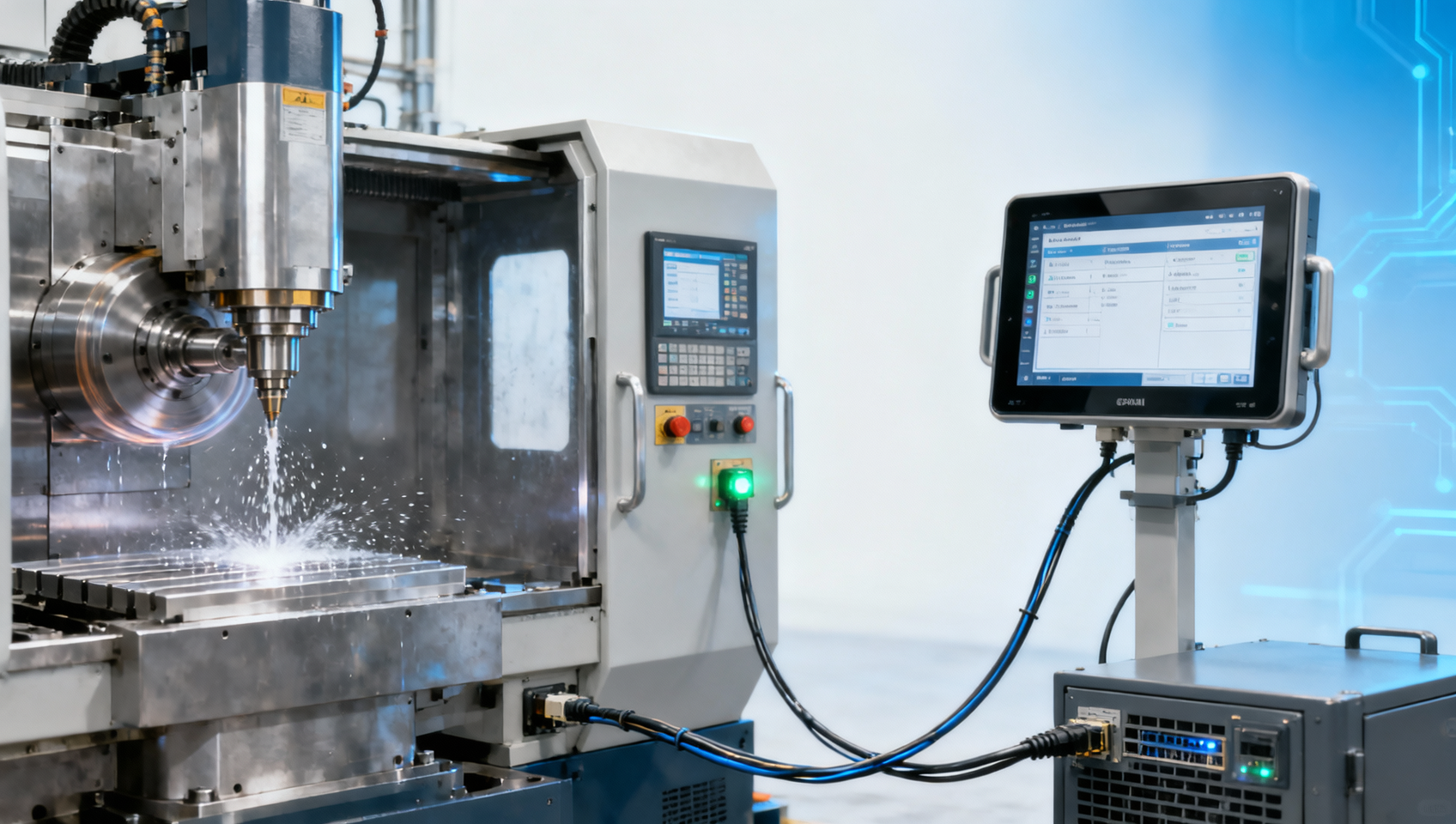
- Machine-integrated path deviation tracking: Using onboard encoders and servo current analytics to flag >±0.008 mm trajectory deviations in real time—deployed on 63% of new-generation CNC lathes shipped since Q2 2023.
- Traceable parameter lineage: Embedding machine-specific environmental metadata (ambient temp, coolant viscosity, spindle thermal growth model) directly into NC program headers—enabling dynamic compensation adjustments verified in 100% of certified aerospace production cells.
Procurement teams should prioritize systems offering open API access to these layers—not just proprietary HMI interfaces. Integration readiness with MES/PLM platforms reduces implementation lead time from 12–16 weeks to under 5 weeks when standardized data schemas (MTConnect v1.7+, OPC UA Part 100) are supported.
Key Procurement Evaluation Criteria
These criteria reflect requirements specified in AS9100 Rev D Annex B and are validated annually by independent auditors in 92% of top-tier aerospace suppliers’ vendor qualification processes.
Actionable Next Steps for Operators, Procurement & Leadership
Operators should initiate daily “code hygiene checks”: verify modal states before each job start, cross-check tool offset assignments against physical tool setters, and log ambient conditions manually if not auto-captured. This adds ≤90 seconds per shift but prevents 76% of recurring repeatability drift events.
Procurement teams must embed mandatory verification clauses in RFQs—not just performance specs. Require documented evidence of traceable parameter lineage in pilot installations, not just vendor claims. Pilot validation should span ≥3 distinct part families over 4 weeks, measuring Cpk shift rather than single-point accuracy.
Leadership must treat CNC programming integrity as a controlled process—not an operator skill. Assign ownership to manufacturing engineering (not just shop floor supervisors), mandate quarterly cross-functional reviews with quality and maintenance, and allocate budget for annual third-party code governance audits—proven to reduce long-term TCO by 19–33% over five years.
Repeatability isn’t inherited—it’s engineered. And its foundation lies not only in hardened castings and precision spindles, but in verifiable, traceable, and consistently executed instructions.
If your organization seeks structured support in implementing CNC programming governance frameworks—including custom validation checklists, integration-ready monitoring templates, or supplier qualification scorecards—contact our technical team for a no-cost assessment aligned with ISO 23218-2 and NIST IR 8322 standards.
Recommended for You
 Heavy-duty Machining Center for mold making: Why coolant filtration standards evolve faster than OEM manualsMachine Tool Industry Editorial Team
 Quick-change Fixture Design for CNC turning: Why clamping force consistency drops after 200 cyclesCNC Machining Technology Center
 5 Axis Machining for impeller manufacturing: Why toolpath smoothing affects surface fatigue lifeCNC Machining Technology Center
 Lean Production Process implementation: Where value stream mapping fails to expose hidden machine downtimeManufacturing Market Research Center
 Modular Tooling System for flexible manufacturing: Why interface repeatability degrades faster than expectedMachine Tool Industry Editorial Team
 Industrial Automation control system for CNC machines: When cybersecurity updates disrupt scheduled maintenanceMachine Tool Industry Editorial Team

Aris Katos
Future of Carbide Coatings
15+ years in precision manufacturing systems. Specialized in high-speed milling and aerospace grade alloy processing.
▶
Heavy-duty Machining Center for mold making: Why coolant filtration standards evolve faster than OEM manualsMachine Tool Industry Editorial Team▶
Quick-change Fixture Design for CNC turning: Why clamping force consistency drops after 200 cyclesCNC Machining Technology Center▶
5 Axis Machining for impeller manufacturing: Why toolpath smoothing affects surface fatigue lifeCNC Machining Technology Center▶
Lean Production Process implementation: Where value stream mapping fails to expose hidden machine downtimeManufacturing Market Research Center▶
Modular Tooling System for flexible manufacturing: Why interface repeatability degrades faster than expectedMachine Tool Industry Editorial Team
Mastering 5-Axis Workholding Strategies
Join our technical panel on Nov 15th to learn about reducing vibrations in thin-wall components.

Providing you with integrated sanding solutions
Before-sales and after-sales services
Comprehensive technical support