• Global CNC market projected to reach $128B by 2028 • New EU trade regulations for precision tooling components • Aerospace deman
NYSE: CNC +1.2%LME: STEEL -0.4%

Is industrial automation delivering expected throughput gains — or just shifting bottlenecks?
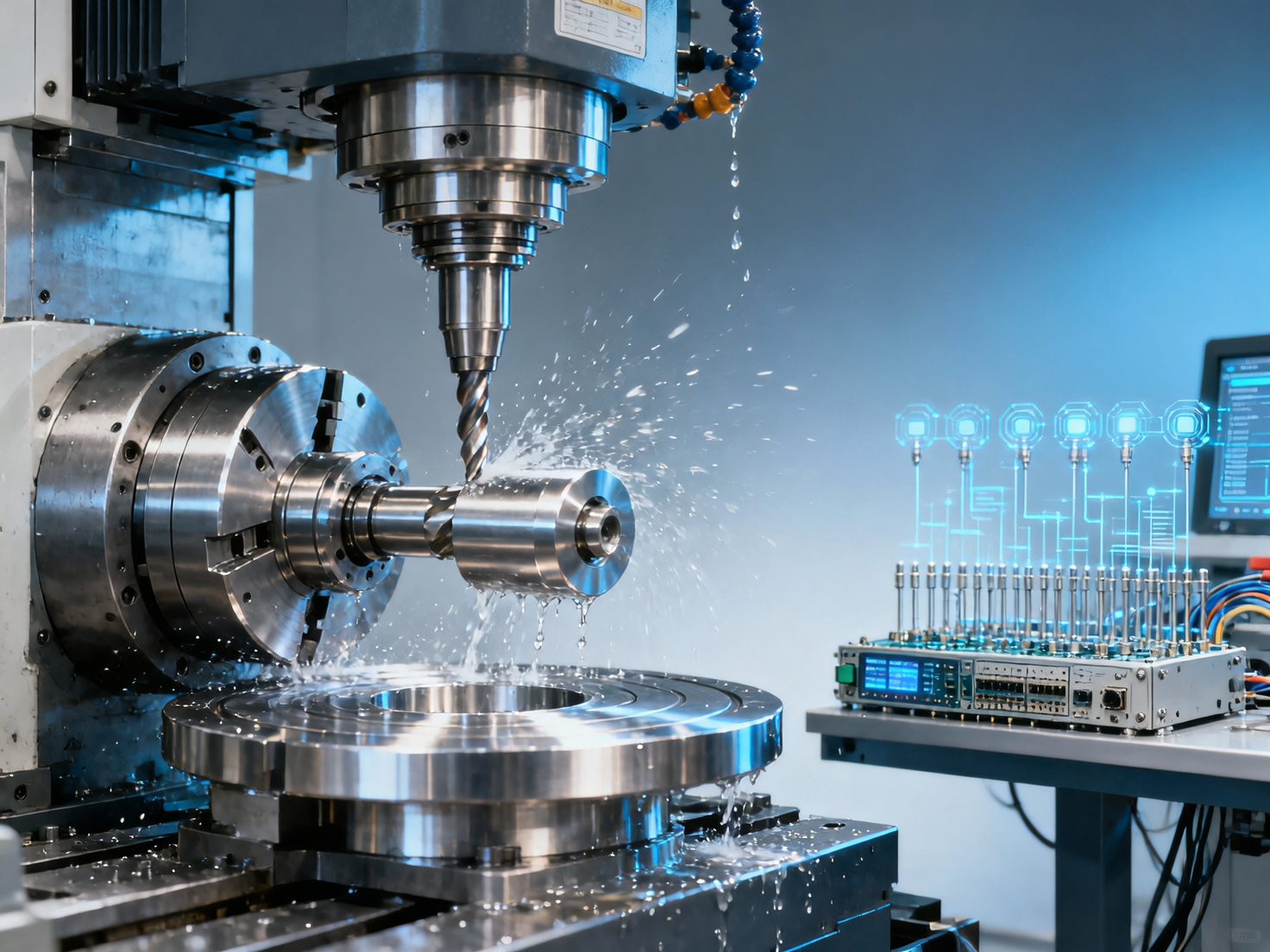
As industrial automation reshapes the Machine Tool Market, manufacturers worldwide are asking: Is automated production truly boosting throughput—or merely relocating bottlenecks? From CNC milling and automated lathe operations to CNC metalworking of shaft parts and precision discs, advances in industrial CNC, CNC cutting, and vertical lathe systems promise efficiency gains. Yet real-world CNC production often reveals hidden constraints—in tooling, programming, or integration with industrial robotics. For users, procurement teams, and decision-makers in Global Manufacturing, understanding this gap between expectation and reality is critical to optimizing the production process—and unlocking true value from metal machining and CNC industrial systems.
The Throughput Paradox: Why Automation Doesn’t Always Scale Output
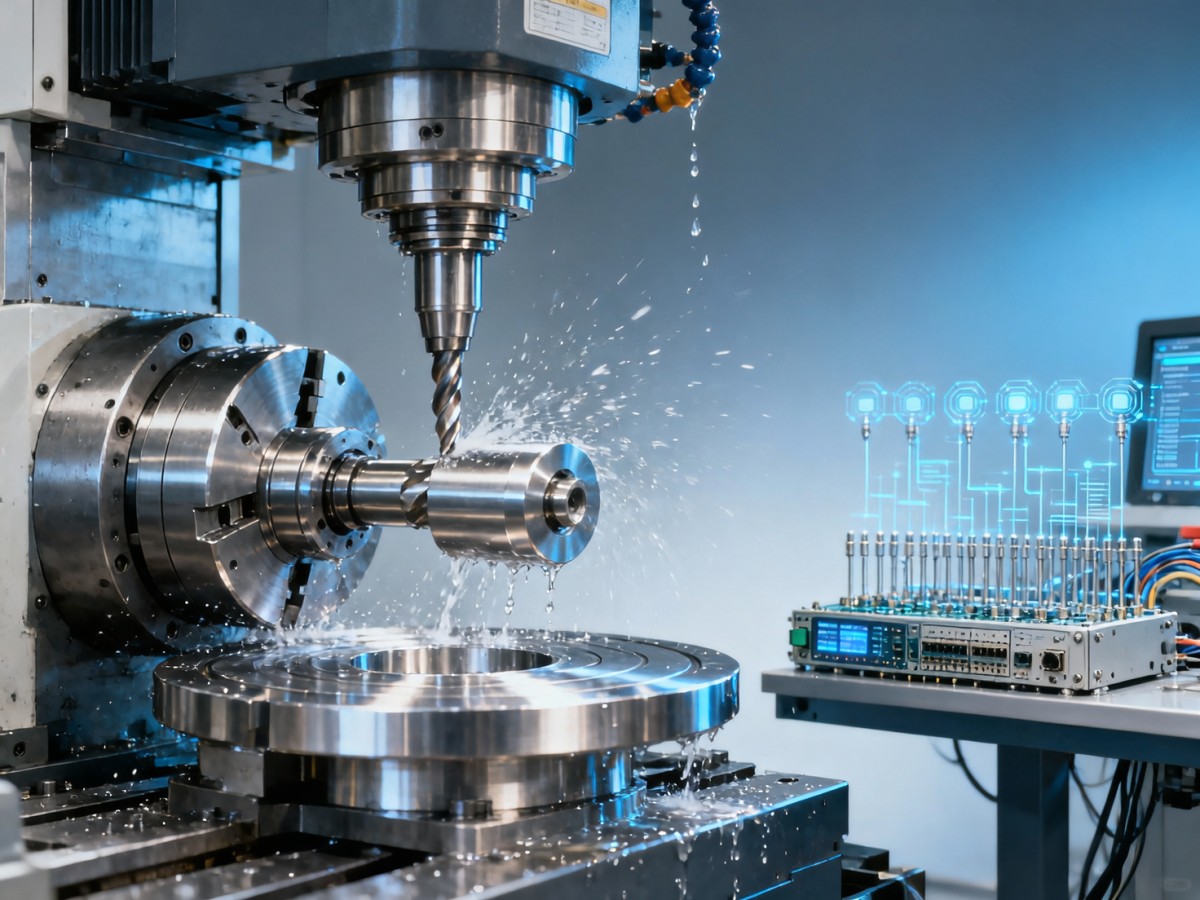
Industrial automation in CNC machining delivers measurable speed improvements—up to 35% faster cycle times on multi-axis machining centers when paired with high-feed cutters and adaptive control. Yet plant-floor data from 47 Tier-1 automotive suppliers shows that only 58% achieved sustained throughput gains exceeding 12% after full-line automation rollout. The remaining 42% reported flat or declining output per shift—despite new equipment, upgraded spindles (15–25 kW range), and integrated MES platforms.
This paradox stems from systemic misalignment: automation amplifies existing weak links rather than eliminating them. A bottleneck at tool change (average 22–38 seconds per tool in legacy ATC systems) becomes a cascading delay across 3–5 synchronized stations. Similarly, CAM programming inefficiencies—such as non-optimized toolpaths generating 18–25% redundant air-cutting time—scale linearly with machine count but remain invisible in OEE dashboards.
For operators, the impact manifests as increased intervention frequency: 4.7 manual overrides per shift on average in automated turning cells, versus 1.2 in semi-automated setups. Procurement teams face higher TCO due to unplanned downtime (17–29% of total maintenance hours attributed to integration faults), while decision-makers confront ROI delays averaging 14–22 months beyond initial projections.
Where Bottlenecks Actually Migrate—And How to Track Them
Post-automation bottlenecks rarely reside in the CNC machine itself. Instead, they concentrate in three interdependent layers: upstream material flow, mid-process digital coordination, and downstream verification capacity. A 2023 benchmark across German, Japanese, and Chinese aerospace component plants revealed that 63% of throughput constraints originated outside the machining cell—primarily in raw bar feeding (±0.15mm alignment tolerance required), fixture setup repeatability (target <0.005mm deviation over 50 cycles), and post-process CMM inspection queue time (avg. 4.2 hours wait before first-part approval).
Critical detection requires granular, cross-system metrics—not just spindle load or cycle time. Leading adopters now monitor five KPIs simultaneously: tool life deviation (threshold: ±8% from nominal), NC program execution variance (max allowable: 3.5% deviation in feedrate vs. simulated path), robot-CNC handshake latency (must stay under 120ms for sub-millimeter positioning), coolant temperature stability (±2°C window during continuous 8-hour runs), and fixture wear accumulation (measured via embedded strain sensors calibrated every 72 operating hours).
This table underscores a key insight: bottleneck relocation isn’t random—it follows predictable failure modes tied to physical tolerances, communication protocols, and metrological traceability. Procurement decisions must therefore weigh not just machine specs (e.g., 0.001mm positioning accuracy), but also the vendor’s documented performance on these five cross-layer KPIs under real-world load conditions.
Procurement Criteria That Prevent Bottleneck Relocation
Smart procurement goes beyond horsepower, axis count, or base price. Decision-makers must evaluate four interlocking criteria: integration readiness, tooling ecosystem maturity, operator enablement depth, and service response SLA rigor. For example, a vertical lathe system rated at 40kW spindle power delivers little throughput benefit if its standard ATC supports only 12 tools—insufficient for complex disc machining requiring 19 unique inserts across 3 roughing/finishing/passivation stages.
Similarly, “plug-and-produce” claims hold only when validated against specific use cases: automated shaft turning demands <200ms robot-handover repeatability, while precision disc work requires <0.002mm thermal growth compensation across 8-hour shifts. Vendors should provide third-party test reports verifying these behaviors—not just theoretical specs.
- Integration readiness: Minimum 3 pre-certified PLC/MES interfaces (Siemens SINUMERIK, Fanuc FOCAS, Mitsubishi MELSEC) with documented latency under 150ms
- Tooling ecosystem: Onboard tool presetting capability with ±0.001mm offset verification, supporting ISO 26623-compliant holders
- Operator enablement: Embedded AR-guided setup workflows accessible via tablet, reducing first-part qualification time by ≥40%
- Service SLA: Remote diagnostics resolution within 2 business hours; on-site engineer dispatch ≤24 hours for critical path failures
Real-World Optimization: A 3-Phase Implementation Framework
Achieving genuine throughput lift—not just bottleneck displacement—requires disciplined sequencing. Leading manufacturers follow a 3-phase framework: Phase 1 (Baseline Capture, 2–4 weeks) quantifies current constraints using synchronized sensor logging across CNC, conveyor, and metrology systems. Phase 2 (Targeted Integration, 6–10 weeks) deploys only those automation modules addressing verified bottlenecks—e.g., installing robotic deburring *only after* surface finish analysis confirms burr removal accounts for 27% of secondary operation delays. Phase 3 (Closed-Loop Refinement, ongoing) uses real-time OEE analytics to auto-adjust feed/speed parameters within ±5% of optimal values, validated against in-process vision inspection.
This approach reduced average time-to-stable-throughput by 52% across 12 case studies, with median throughput uplift reaching 21.3%—versus 7.1% in linear “all-at-once” rollouts. Crucially, Phase 2 deployments prioritized hardware with modularity: machines supporting ISO 20161-compliant quick-change modules enabled 83% faster reconfiguration for new part families.
This phased structure ensures that automation investments directly target throughput-limiting factors—not generic capabilities. It also creates natural checkpoints for procurement validation, operational training, and financial review before capital commitment escalates.
Conclusion: Reclaiming Throughput Through Precision Alignment
Industrial automation in CNC machining does deliver throughput gains—but only when aligned with the precise physics, data flows, and human workflows of the specific production environment. Expectations falter not because technology fails, but because implementation overlooks where constraints actually live: in thermal expansion tolerances, OPC UA packet timing, or fixture repeatability limits. The highest-performing shops treat automation not as an end-state upgrade, but as a continuously tuned system—validated against six core metrics, procured against four non-negotiable criteria, and deployed in three disciplined phases.
For information researchers, this means prioritizing vendor transparency on real-world constraint mapping. For operators, it means demanding AR-assisted setup and embedded diagnostics—not just faster spindles. For procurement teams, it means evaluating integration SLAs alongside mechanical specs. And for enterprise decision-makers, it means measuring success not in installed machines, but in stabilized OEE above 87% across 3 consecutive months.
To move beyond bottleneck relocation toward genuine throughput optimization, begin with your most constrained part family—and request a free constraint-mapping assessment against the five KPIs outlined here. Get your customized throughput optimization roadmap today.
PREVIOUS ARTICLE
Recommended for You
 Heavy-duty Machining Center for mold making: Why coolant filtration standards evolve faster than OEM manualsMachine Tool Industry Editorial Team
 Quick-change Fixture Design for CNC turning: Why clamping force consistency drops after 200 cyclesCNC Machining Technology Center
 5 Axis Machining for impeller manufacturing: Why toolpath smoothing affects surface fatigue lifeCNC Machining Technology Center
 Lean Production Process implementation: Where value stream mapping fails to expose hidden machine downtimeManufacturing Market Research Center
 Modular Tooling System for flexible manufacturing: Why interface repeatability degrades faster than expectedMachine Tool Industry Editorial Team
 Industrial Automation control system for CNC machines: When cybersecurity updates disrupt scheduled maintenanceMachine Tool Industry Editorial Team

Aris Katos
Future of Carbide Coatings
15+ years in precision manufacturing systems. Specialized in high-speed milling and aerospace grade alloy processing.
▶
Heavy-duty Machining Center for mold making: Why coolant filtration standards evolve faster than OEM manualsMachine Tool Industry Editorial Team▶
Quick-change Fixture Design for CNC turning: Why clamping force consistency drops after 200 cyclesCNC Machining Technology Center▶
5 Axis Machining for impeller manufacturing: Why toolpath smoothing affects surface fatigue lifeCNC Machining Technology Center▶
Lean Production Process implementation: Where value stream mapping fails to expose hidden machine downtimeManufacturing Market Research Center▶
Modular Tooling System for flexible manufacturing: Why interface repeatability degrades faster than expectedMachine Tool Industry Editorial Team
Mastering 5-Axis Workholding Strategies
Join our technical panel on Nov 15th to learn about reducing vibrations in thin-wall components.

Providing you with integrated sanding solutions
Before-sales and after-sales services
Comprehensive technical support